
📖 Daily Scripture
June 18, 2026 — Thursday of the Eleventh Week in Ordinary Time
Readings: Sirach 48:1-14 • Psalm 97 • Matthew 6:7-15
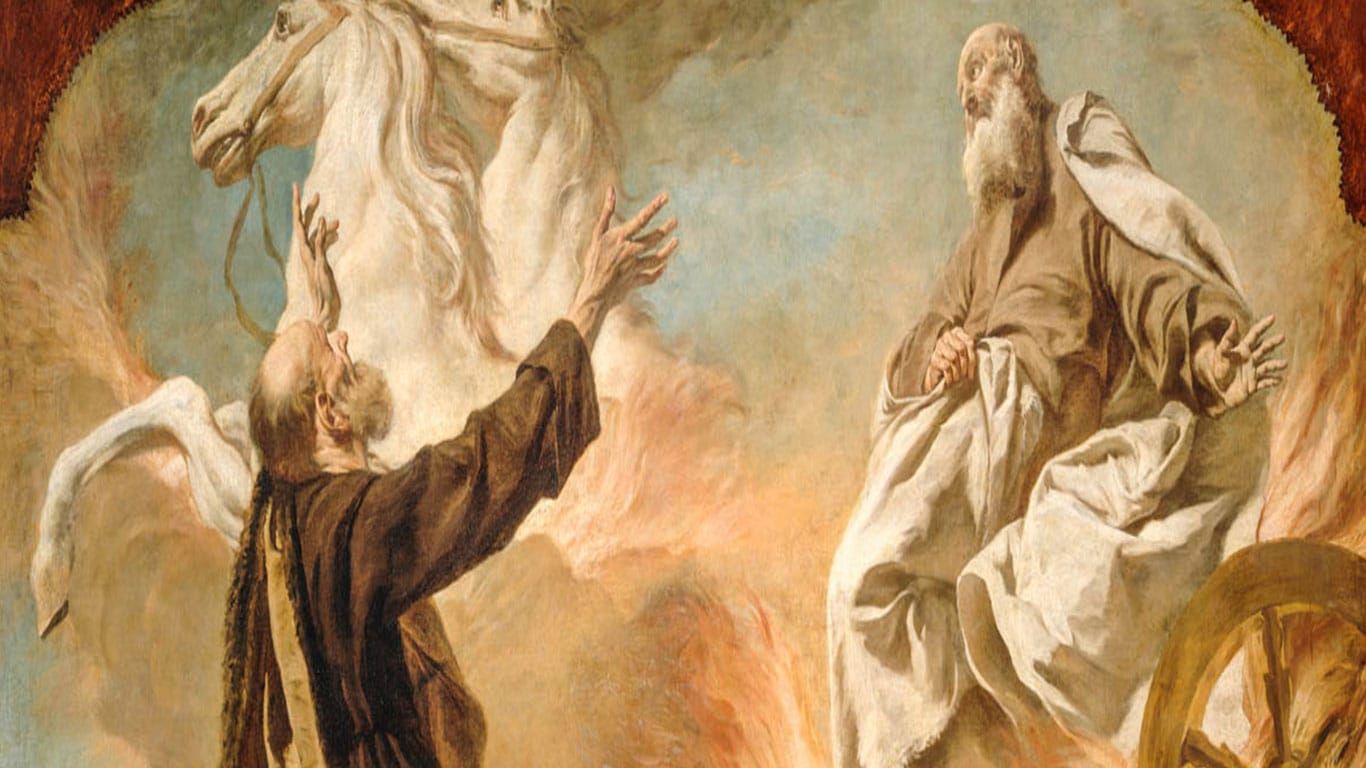
The readings of this day begin in fire. Elijah comes before us “like a fire,” his word “a flaming furnace”; he seals the heavens, calls down flame upon the mountain, and summons the dead to life again. The Psalmist takes up the same vision and carries it higher still, setting the Lord upon a throne of cloud and lightning, before whom “the mountains melt like wax” and the earth itself sees and trembles. Were the soul to rest only here, it might well draw back in reverent fear, persuaded that a God so wrapped in majesty must dwell forever beyond its reach, in a glory no creature may approach and live.
And yet it is the singular wonder of the Gospel that the fire should come near, and not consume. The same Lord whose holiness unsettles the mountains inclines toward His creatures and says, “Your Father knows what you need before you ask him.” Then, with a tenderness that exceeds all expectation, He sets upon the lips of His own the prayer the Church has carried through every age: Our Father. Here is the paradox in which the whole of faith is contained. The God of the whirlwind and the flame is the very God who desires to be addressed as Father; and reverence and intimacy, which the natural mind holds apart, are discovered at last to be one. The Majesty that fills the heavens stoops to claim us as His children, and in that stooping loses nothing of its grandeur.
The Fathers understood the greatness of the gift. Tertullian named the Lord's Prayer “the summary of the whole Gospel,” for in a few words our Savior has gathered all things: the hallowing of the divine name, the coming of the Kingdom, the bread of each day, and the mercy that must be at once received and given. Augustine, writing to the widow Proba, went so far as to say that “if we pray rightly and fittingly, we can say nothing but what is already contained in the Lord's Prayer.” When language fails, when the heart is too burdened to frame its own petition, this is the prayer to which one may always return; for in it Christ teaches not merely how to pray, but what it is that a soul ought to desire.
But there is a word joined to this prayer that we are not permitted to pass over lightly, the single petition the Lord pauses to explain: “If you forgive others their transgressions, your heavenly Father will forgive you. But if you do not forgive others, neither will your Father forgive your transgressions.” The Catechism calls the saying “astonishing,” and teaches that the mercy of God “cannot penetrate our hearts as long as we have not forgiven those who have trespassed against us.” It is a sentence to be received with trembling. We approach the throne to beg a pardon we are ourselves slow to grant; we ask to be forgiven beyond all measure, while measuring out our own forgiveness with a careful and reluctant hand.
Herein lies the lesson the day quietly presses upon the conscience. The worth of prayer is disclosed not in the eloquence of its words but in the breadth of its mercy. “The Lord's Prayer,” the Catechism observes, “reveals us to ourselves at the same time that it reveals the Father to us.” To say Our Father in sincerity is to confess that the one who has wounded me is a child of the selfsame Father — a brother, a sister, beloved of the God whom I presume to call my own. I cannot stretch the one hand toward heaven while I close the other against my neighbor.
Let the soul, then, look inward before it lifts its voice. Is there one whom it will not forgive? The fire of Elijah, the trembling of the mountains, the Kingdom for whose coming we daily plead — all of it must pass through this narrow and holy gate. Our Lord does not require that the wound be unfelt; He asks only that the debt be laid down, that His own patience and mercy be suffered to remake us, until, as the Catechism so beautifully says, “his face may be reflected in ours as in a mirror.”
For the God who knows our need before we speak does not wait to be impressed; He waits to be imitated. Let the soul begin where He bids it begin, with mercy, and the whole of this prayer will unfold into life within it. The fire that once fell upon the prophets burns now, gently and without consuming, in every heart that forgives; and that fire is nothing other than the love of God Himself.
Father most holy, who know our every need before we speak, yet in Your tenderness bid us call You Father: teach me to pray as Your child, and pour Your mercy so deeply within me that I forgive as I have been forgiven, until Your face is reflected in mine. Through Christ our Lord. Amen.
Sources & References
- Sacred Scripture: Sirach 48:1-14; Psalm 97; Matthew 6:7-15.
- “The summary of the whole Gospel” — Tertullian, On Prayer, ch. 1.
- “If we pray rightly and fittingly…” — St. Augustine, Letter 130 (to Proba).
- “Astonishing”; “cannot penetrate our hearts…” — Catechism of the Catholic Church, 2838.
- “The Lord's Prayer reveals us to ourselves…” — Catechism of the Catholic Church, 2783.
- “His face may be reflected in ours as in a mirror” — papal teaching, Angelus, 27 July 2025.
📖 Lectura del día
18 de junio de 2026 — Jueves de la undécima semana del Tiempo Ordinario
Lecturas: Eclesiástico (Sirácide) 48,1-14 • Salmo 97 • Mateo 6,7-15
Las lecturas de este día comienzan en fuego. Elías se nos presenta «como un fuego», su palabra «como una antorcha ardiente»; sella los cielos, hace bajar la llama sobre el monte y llama de nuevo a la vida a los muertos. El salmista retoma la misma visión y la lleva aún más alto, poniendo al Señor sobre un trono de nube y de relámpago, ante quien «los montes se derriten como cera» y la tierra misma ve y tiembla. Si el alma se detuviera sólo aquí, bien podría retroceder en temor reverente, persuadida de que un Dios tan envuelto en majestad ha de morar por siempre más allá de su alcance, en una gloria a la que ninguna criatura puede acercarse y vivir.
Y sin embargo es la singular maravilla del Evangelio que el fuego se acerque, y no consuma. El mismo Señor cuya santidad sacude los montes se inclina hacia sus criaturas y dice: «Vuestro Padre sabe lo que necesitáis antes de que se lo pidáis». Luego, con una ternura que excede toda expectativa, pone en los labios de los suyos la oración que la Iglesia ha llevado a través de todas las edades: Padre nuestro. Aquí está la paradoja en que se contiene toda la fe. El Dios del torbellino y de la llama es el mismo Dios que desea ser invocado como Padre; y la reverencia y la intimidad, que la mente natural mantiene separadas, se descubren al fin ser una sola. La Majestad que llena los cielos se abaja para reclamarnos como hijos suyos, y en ese abajarse nada pierde de su grandeza.
Los Padres comprendieron la grandeza del don. Tertuliano llamó al Padrenuestro «el compendio de todo el Evangelio», pues en pocas palabras nuestro Salvador ha recogido todas las cosas: la santificación del nombre divino, la venida del Reino, el pan de cada día, y la misericordia que ha de ser a la vez recibida y dada. Agustín, escribiendo a la viuda Proba, llegó a decir que «si oramos recta y debidamente, no podemos decir nada que no esté ya contenido en la Oración del Señor». Cuando el lenguaje falla, cuando el corazón está demasiado cargado para formar su propia petición, esta es la oración a la que siempre se puede volver; pues en ella Cristo enseña no sólo cómo orar, sino qué es lo que un alma debe desear.
Pero hay una palabra unida a esta oración que no se nos permite pasar a la ligera, la única petición que el Señor se detiene a explicar: «Si perdonáis a los demás sus ofensas, vuestro Padre celestial os perdonará. Pero si no perdonáis a los demás, tampoco vuestro Padre os perdonará vuestras ofensas». El Catecismo llama «asombrosa» esta sentencia, y enseña que la misericordia de Dios «no puede penetrar en nuestro corazón mientras no hayamos perdonado a quienes nos han ofendido». Es una frase que ha de recibirse con temblor. Nos acercamos al trono a mendigar un perdón que nosotros mismos somos lentos en conceder; pedimos ser perdonados sin medida, mientras medimos nuestro propio perdón con mano cuidadosa y reacia.
Aquí yace la lección que el día imprime quedamente en la conciencia. El valor de la oración no se manifiesta en la elocuencia de sus palabras sino en la amplitud de su misericordia. «El Padrenuestro —observa el Catecismo— nos revela a nosotros mismos al mismo tiempo que nos revela al Padre». Decir Padre nuestro con sinceridad es confesar que aquel que me ha herido es hijo del mismo Padre —un hermano, una hermana, amado del Dios a quien me atrevo a llamar mío. No puedo tender una mano hacia el cielo mientras cierro la otra contra mi prójimo.
Mire, pues, el alma hacia dentro antes de alzar la voz. ¿Hay alguien a quien no quiera perdonar? El fuego de Elías, el temblor de los montes, el Reino por cuya venida suplicamos cada día —todo ello ha de pasar por esta puerta estrecha y santa. Nuestro Señor no exige que la herida no se sienta; pide sólo que la deuda se deponga, que su propia paciencia y misericordia se dejen rehacernos, hasta que, como tan bellamente dice el Catecismo, «su rostro se refleje en el nuestro como en un espejo».
Pues el Dios que conoce nuestra necesidad antes de que hablemos no espera ser impresionado; espera ser imitado. Comience el alma donde Él le manda comenzar, por la misericordia, y todo el resto de esta oración se desplegará en vida dentro de ella. El fuego que antaño cayó sobre los profetas arde ahora, suavemente y sin consumir, en todo corazón que perdona; y ese fuego no es otra cosa que el amor de Dios mismo.
Padre santísimo, que conoces toda nuestra necesidad antes de que hablemos, y sin embargo en tu ternura nos mandas llamarte Padre: enséñame a orar como hijo tuyo, y derrama tu misericordia tan hondamente dentro de mí que perdone como he sido perdonado, hasta que tu rostro se refleje en el mío. Por Jesucristo nuestro Señor. Amén.
Fuentes y referencias
- Sagrada Escritura: Eclesiástico (Sirácide) 48,1-14; Salmo 97; Mateo 6,7-15.
- «El compendio de todo el Evangelio» — Tertuliano, Sobre la oración (De Oratione), cap. 1.
- «Si oramos recta y debidamente…» — San Agustín, Carta 130 (a Proba).
- «Asombrosa»; «no puede penetrar en nuestro corazón…» — Catecismo de la Iglesia Católica, 2838.
- «El Padrenuestro nos revela a nosotros mismos…» — Catecismo de la Iglesia Católica, 2783.
- «Su rostro se refleje en el nuestro como en un espejo» — cf. enseñanza papal, Ángelus, 27 de julio de 2025.