
📖 Daily Scripture
Saturday, June 27, 2026 — Saturday of the Twelfth Week in Ordinary Time
Readings: Lamentations 2:2, 10-14, 18-19 • Psalm 74:1b-2, 3-5, 6-7, 20-21 • Matthew 8:5-17
There is a strange consolation in the way Scripture refuses to hide the soul’s desolation. The prophet who weeps over a fallen city does not avert his gaze from the rubble, nor does he pretend that the wound is small; rather, his eyes are worn out from weeping, his heart is poured upon the ground, and yet from that very ruin he draws the only counsel that can save: to rise in the night, to lift up the hands, to pour out the heart like water in the presence of God. The lesson is set before the soul at the very opening of the day, that grief and trust are not enemies, and that the lowest place is often the place where faith is born.
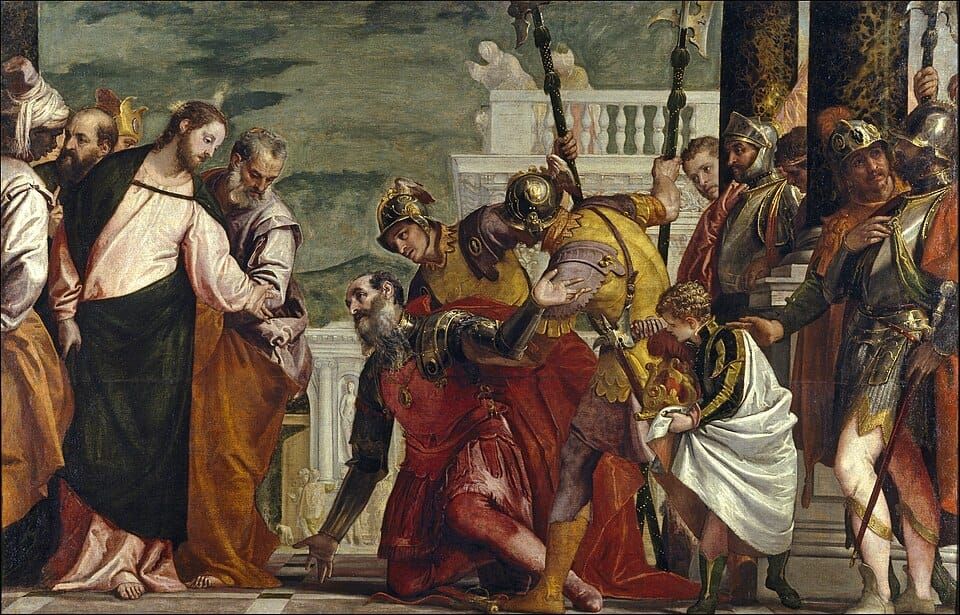
It is into such lowliness that the Gospel introduces a soldier of Rome, a man accustomed to command, who comes to Christ not with the bearing of authority but with the confession of his own unworthiness. He does not ask that the Lord be troubled to enter his house; he asks only for a word, certain that the word of Christ carries the same obedience that his own orders carry among his men, and immeasurably more. Here is faith stripped of every pretension, and the Lord, who is seldom said to marvel, marvels at it. The soul should mark well what it is that moves the heart of God: not the grandeur of the house, but the humility that knows itself unworthy to receive so great a guest.
Faith, after all, is the theological virtue by which we believe in God and believe all that he has said and revealed to us, and that Holy Church proposes for our belief, because he is truth itself. The centurion believed because he trusted the word above his own eyes; he had not seen his servant healed, he had only the word, and the word was enough. An ancient teacher of the Church saw the paradox plainly: by calling himself unworthy, he showed himself worthy for Christ to come not into his house, but into his heart. So it was that the man who would not open his door flung wide the chamber of his soul.
Another of the early shepherds of the faithful drew out the reward hidden in this humility: because he made himself out unworthy even to receive Christ into his house, he became worthy both of a kingdom, and of attaining unto those good things which Abraham enjoyed. The lesson is exact, and it presses upon every soul: the kingdom is not seized by those who reckon themselves deserving, but received by those who, knowing they have no claim, cast themselves wholly upon the mercy and the word of the Lord. The children of privilege may be driven out, while many come from the east and the west to take their place at the table; inheritance saves no one, and faith leaves no one outside.
And the Gospel does not leave the soul merely admiring a distant virtue. The same Christ who healed by a word went on, that very evening, to take the fevered hand of Peter’s mother-in-law, and to bear away the sicknesses of the whole town, that the word of the prophet might be fulfilled. The Church reads in this the very heart of the mystery: moved by so much suffering Christ not only allows himself to be touched by the sick, but he makes their miseries his own; he took our infirmities and bore our diseases. He heals not as one untouched by our pain, but as one who gathers it into himself and carries it to the Cross.
So the soul that began the day amid the ashes of Lamentations is led, by its end, to the threshold of an immense hope. The poor whom God does not forget, the afflicted who lift their hands in the night, the servant lying paralyzed and beyond all help — none of these is at a distance from the One who bears every infirmity and answers with a single word. To confess one’s own unworthiness is not to despair; it is to make room for the only Guest who is able to heal. And the word he speaks is never an empty word, but the word by which the world was made and by which the soul is remade, spoken still over every heart that dares to trust him.
Lord, I am not worthy that you should enter under my roof; teach me the humility of the centurion, that I may trust your word above my own sight. Speak, and heal what is broken within me; take my infirmities upon yourself, and let me rest in your mercy. Through Christ our Lord. Amen.
Sources & References
- “Lord, I am not worthy that you should enter under my roof; only say the word and my servant will be healed.” — Gospel, Matthew 8:5-17.
- “Christ took away our infirmities and bore our diseases.” — Gospel acclamation, Matthew 8:17 (cf. Isaiah 53:4).
- “Worn out from weeping are my eyes… Pour out your heart like water in the presence of the Lord; lift up your hands to him.” — First Reading, Lamentations 2:2, 10-14, 18-19.
- “Lord, forget not the souls of your poor ones… may the afflicted and the poor praise your name.” — Responsorial Psalm, Psalm 74:1b-2, 3-5, 6-7, 20-21.
- “Faith is the theological virtue by which we believe in God and believe all that he has said and revealed to us…” — Catechism of the Catholic Church, no. 1814.
- “Before so great a sacrament, the faithful can only echo humbly and with ardent faith the centurion’s words: ‘Lord, I am not worthy…’” — Catechism of the Catholic Church, no. 1386.
- “Moved by so much suffering Christ not only allows himself to be touched by the sick, but he makes their miseries his own: ‘He took our infirmities and bore our diseases.’” — Catechism of the Catholic Church, no. 1505 (citing Matthew 8:17; Isaiah 53:4).
- “By calling himself unworthy, he showed himself worthy for Christ to come not into his house, but into his heart.” — St. Augustine, Sermon LXII (Sermon 12 on the New Testament), no. 1.
- “Because he made himself out unworthy even to receive Christ into his house, he became worthy both of a kingdom, and of attaining unto those good things which Abraham enjoyed.” — St. John Chrysostom, Homily 26 on the Gospel of Matthew.
- Papal note: Vatican News “Word of the Day” for 27 June 2026 was not yet published at the time of writing; reflection drawn from the day’s readings and the Church’s tradition.
Una Sola Palabra
📖 Sagrada Escritura Diaria
Sábado 27 de junio de 2026 — Sábado de la XII semana del Tiempo ordinario
Lecturas: Lamentaciones 2, 2. 10-14. 18-19 • Salmo 73, 1-2. 3-5a. 5b-7. 20-21 • Mateo 8, 5-17
Hay una extraña consolación en el modo en que la Sagrada Escritura se niega a ocultar la desolación del alma. El profeta que llora sobre una ciudad caída no aparta la mirada de los escombros ni finge que la herida es pequeña; antes bien, sus ojos se consumen de tanto llorar, su corazón se derrama por tierra, y, sin embargo, de aquella misma ruina extrae el único consejo que puede salvar: levantarse en la noche, alzar las manos y derramar el corazón como agua en la presencia de Dios. La lección se pone ante el alma en la apertura misma del día: que la aflicción y la confianza no son enemigas, y que el lugar más bajo es muchas veces aquel donde nace la fe.
Y es a semejante humildad adonde el Evangelio hace entrar a un soldado de Roma, hombre acostumbrado a mandar, que se acerca a Cristo no con el porte de la autoridad, sino con la confesión de su propia indignidad. No pide que el Señor se moleste en entrar en su casa; pide tan sólo una palabra, seguro de que la palabra de Cristo lleva consigo la misma obediencia que sus propias órdenes tienen entre sus soldados, e incomparablemente más. Aquí está la fe despojada de toda pretensión, y el Señor, de quien rara vez se dice que se admira, se admira de ella. Bien debe notar el alma qué es lo que mueve el corazón de Dios: no la grandeza de la casa, sino la humildad que se sabe indigna de recibir a tan gran huésped.
Porque la fe es la virtud teologal por la que creemos en Dios y en todo lo que Él nos ha dicho y revelado, y que la santa Iglesia nos propone, porque Él es la verdad misma. El centurión creyó porque se fió de la palabra por encima de sus propios ojos; no había visto sanar a su criado, sólo tenía la palabra, y la palabra le bastó. Un antiguo maestro de la Iglesia vio con claridad la paradoja: al llamarse indigno, se mostró digno de que Cristo entrara, no en su casa, sino en su corazón. Y así, el hombre que no abriría su puerta abrió de par en par la morada de su alma.
Otro de los primeros pastores de los fieles sacó a la luz la recompensa escondida en esta humildad: porque se tuvo por indigno aun de recibir a Cristo en su casa, se hizo digno de un reino y de alcanzar aquellos bienes de que gozaba Abrahán. La lección es exacta y urge a toda alma: el reino no lo arrebatan los que se juzgan merecedores, sino que lo reciben aquellos que, sabiéndose sin derecho alguno, se arrojan por entero sobre la misericordia y la palabra del Señor. A los hijos del privilegio pueden echarlos fuera, mientras muchos vienen de oriente y de occidente a ocupar su lugar en el banquete; la herencia a nadie salva, y la fe a nadie deja fuera.
Y el Evangelio no deja al alma meramente admirando una virtud lejana. El mismo Cristo que sanó con una palabra fue, aquella misma tarde, a tomar la mano afiebrada de la suegra de Pedro y a llevarse las dolencias de todo el pueblo, para que se cumpliera la palabra del profeta. La Iglesia lee en esto el corazón mismo del misterio: conmovido por tanto sufrimiento, Cristo no sólo se deja tocar por los enfermos, sino que hace suyas sus miserias; Él tomó nuestras flaquezas y cargó con nuestras enfermedades. No sana como quien permanece intacto ante nuestro dolor, sino como quien lo recoge en sí mismo y lo lleva hasta la Cruz.
Así, el alma que comenzó el día entre las cenizas de las Lamentaciones es conducida, al término, al umbral de una esperanza inmensa. El pobre a quien Dios no olvida, el afligido que alza sus manos en la noche, el criado que yace paralítico y más allá de todo auxilio: ninguno de ellos está lejos de Aquel que lleva toda enfermedad y responde con una sola palabra. Confesar la propia indignidad no es desesperar; es hacer sitio al único Huésped capaz de sanar. Y la palabra que Él pronuncia nunca es palabra vacía, sino la palabra por la cual fue hecho el mundo y por la cual el alma es rehecha, pronunciada todavía sobre todo corazón que se atreve a fiarse de Él.
Señor, no soy digno de que entres en mi casa; enséñame la humildad del centurión, para que me fíe de tu palabra por encima de mi propia vista. Di una sola palabra, y sana lo que en mí está roto; toma sobre ti mis flaquezas y déjame descansar en tu misericordia. Por Jesucristo nuestro Señor. Amén.
Fuentes y referencias
- «Señor, no soy digno de que entres en mi casa; con que digas una sola palabra, mi criado quedará sano.» — Evangelio, Mateo 8, 5-17.
- «Cristo hizo suyas nuestras debilidades y cargó con nuestros dolores.» — Aclamación antes del Evangelio, Mateo 8, 17 (cf. Isaías 53, 4).
- «Mis ojos se consumen de tanto llorar… Derrama como agua tu corazón en la presencia de Dios; alza tus manos hacia él.» — Primera lectura, Lamentaciones 2, 2. 10-14. 18-19.
- «No te olvides, Señor, de nosotros… que los pobres y afligidos alaben tu nombre.» — Salmo responsorial, Salmo 73, 1-2. 3-5a. 5b-7. 20-21.
- «La fe es la virtud teologal por la que creemos en Dios y en todo lo que Él nos ha dicho y revelado…» — Catecismo de la Iglesia Católica, 1814.
- «Ante la grandeza de este sacramento, el fiel sólo puede repetir humildemente y con fe ardiente las palabras del Centurión: ‘Señor, no soy digno…’» — Catecismo de la Iglesia Católica, 1386.
- «Conmovido por tantos sufrimientos, Cristo… hace suyas sus miserias: ‘Él tomó nuestras flaquezas y cargó con nuestras enfermedades.’» — Catecismo de la Iglesia Católica, 1505 (citando Mateo 8, 17; Isaías 53, 4).
- «Al llamarse indigno, se mostró digno de que Cristo entrara, no en su casa, sino en su corazón.» — San Agustín, Sermón 62 (Sermón 12 sobre el Nuevo Testamento), 1.
- «Porque se tuvo por indigno aun de recibir a Cristo en su casa, se hizo digno de un reino y de alcanzar aquellos bienes de que gozaba Abrahán.» — San Juan Crisóstomo, Homilía 26 sobre el Evangelio de san Mateo.
- Nota papal: La «Palabra del día» de Vatican News para el 27 de junio de 2026 aún no estaba publicada al momento de redactar; la reflexión se basa en las lecturas del día y la tradición de la Iglesia.