
📖 Daily Scripture
Sunday, June 21, 2026 — Twelfth Sunday in Ordinary Time
Readings: Jeremiah 20:10-13 • Psalm 69:8-10, 14, 17, 33-35 • Romans 5:12-15 • Matthew 10:26-33
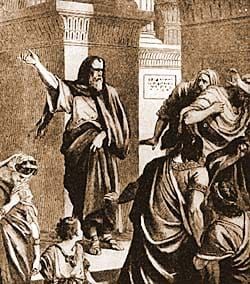
There is a particular loneliness that visits the soul who has resolved to be faithful, and it is the loneliness of Jeremiah, who hears about him the whisperings of many and feels the watchfulness of former friends grown cold. Scripture does not flinch from this; it sets before us a prophet hemmed in by derision, naming his fear even as he refuses to be governed by it. For in the same breath that he confesses terror on every side, he professes that the Lord is with him like a mighty champion. Here is the first lesson the readings press upon us: that courage is not the absence of fear but the conquest of it, the steady turning of a frightened heart toward the One who probes mind and heart and forgets none of His own.
The Gospel takes up this theme and refines it. Three times the Lord says to those He sends, do not be afraid, and each time He widens the horizon of the soul until the things that frighten us are seen in their true and lesser proportion. The world can wound the body, He tells us, but it cannot touch that inmost sanctuary where God alone is king; and so the soul learns to measure its dangers rightly, to dread not the loss of comfort or reputation but only the loss of God. Saint John Chrysostom, contemplating these very words, observed that even should our persecutors prevail, it will be over the inferior part, the body, which nature herself will one day take from us in any case. The fear that masters so many of our days is revealed, under this light, as a fear of shadows.
Yet the Lord does not leave us merely unafraid; He makes us secure. Not a single sparrow falls without the Father's knowledge, and the very hairs of our head are counted — an image of such tender particularity that it overturns every suspicion that we are forgotten, or that our small sufferings pass unseen. The Church gathers this confidence into a single counsel, bidding us a filial trust in the providence of our heavenly Father, and repeating with the Apostle Peter, cast all your anxieties on him, for he cares about you. The soul that believes this can walk through a hostile world as a child walks through a crowd holding its father's hand: aware of the press, untroubled at its heart.
From such trust the moral lesson follows plainly. We are not permitted to keep our faith hidden, as a thing whispered in the dark; we are commanded to proclaim it upon the housetops, to acknowledge Christ before others that He may acknowledge us before His Father. The disciple of Christ must not only keep the faith and live on it, but also profess it, confidently bear witness to it, and spread it, prepared to confess Christ before men and to follow Him along the way of the Cross, amid the persecutions which the Church never lacks. This is no rare heroism reserved for the martyr; it is the ordinary vocation of every baptized soul, lived out in the small daily refusals to be ashamed of Christ. And where such witness has indeed cost blood, the Church has only grown the greater, for as Tertullian saw amid the cruelties of his own age, the blood of Christians is seed.
And if we should fear that our weakness will undo us, let Saint Paul restore our hope, for the whole drama of sin and rescue runs in our favor. Death reigned from Adam, but the gift is not like the transgression; the grace of God in the one man Jesus Christ has overflowed for the many, so that where sin increased, grace abounded all the more. Whatever the soul has lost in Adam, it has gained back more abundantly in Christ. This is why, in the end, we need not be afraid. We are worth more than many sparrows; we are watched over by a love that counts even our hairs, and redeemed by a grace that outruns every sin — and a soul so loved, and so kept, has nothing left in all the world that it must finally fear.
Lord, teach me to fear nothing but the loss of You, and to carry my faith not as a secret but as a lamp held high. When I am tempted to hide, awaken within me the courage to acknowledge You before others; when I am afraid, remind me that I am numbered and known and held in Your hand. Let Your grace abound in me beyond all my sin. Through Christ our Lord. Amen.
Sources & References
- Jeremiah's lament and trust — Jeremiah 20:10-13 (First Reading).
- “Lord, in your great love, answer me” — Psalm 69 (Responsorial Psalm).
- “The gift is not like the transgression”; grace overflowing for the many — Romans 5:12-15 (Second Reading).
- “Do not be afraid”; sparrows; the hairs of your head counted; acknowledging Christ — Matthew 10:26-33 (Gospel).
- “It will be over the inferior part, the body” — St. John Chrysostom, Homily 34 on Matthew.
- Filial trust in the providence of our heavenly Father; “cast all your anxieties on him” — Catechism of the Catholic Church, 322 (1 Peter 5:7).
- To profess the faith and confess Christ before men — Catechism of the Catholic Church, 1816.
- “The blood of Christians is seed” — Tertullian, Apologeticus 50.
- “Where sin increased, grace abounded all the more” — Catechism of the Catholic Church, 420 (Romans 5:20).
- Pope Francis, Angelus, 21 June 2020, on fearless witness and the Father's care.
📖 Lectura del día
Domingo 21 de junio de 2026 — Duodécimo Domingo del Tiempo Ordinario
Lecturas: Jeremías 20,10-13 • Salmo 69,8-10.14.17.33-35 • Romanos 5,12-15 • Mateo 10,26-33
Hay una soledad particular que visita al alma que se ha resuelto a ser fiel, y es la soledad de Jeremías, que oye en torno a sí los cuchicheos de muchos y siente la acechanza de antiguos amigos vueltos fríos. La Escritura no rehúye esto; pone ante nosotros a un profeta cercado de burlas, que nombra su temor aun cuando rehúsa dejarse gobernar por él. Pues en el mismo aliento en que confiesa el terror que lo rodea, profesa que el Señor está con él como un guerrero poderoso. He aquí la primera lección que las lecturas nos imprimen: que el valor no es la ausencia de temor sino su victoria, el firme volver de un corazón asustado hacia Aquel que sondea la mente y el corazón y no olvida a ninguno de los suyos.
El Evangelio retoma este tema y lo afina. Tres veces dice el Señor a quienes envía: no temáis, y cada vez ensancha el horizonte del alma hasta que las cosas que nos atemorizan se ven en su verdadera y menor proporción. El mundo puede herir el cuerpo, nos dice, pero no puede tocar aquel santuario íntimo donde sólo Dios es rey; y así el alma aprende a medir rectamente sus peligros, a no temer la pérdida del bienestar o de la fama sino sólo la pérdida de Dios. San Juan Crisóstomo, contemplando estas mismas palabras, observó que aun cuando nuestros perseguidores prevalezcan, será sobre la parte inferior, el cuerpo, que la naturaleza misma un día nos quitará de todos modos. El temor que domina tantos de nuestros días queda revelado, bajo esta luz, como un temor de sombras.
Mas el Señor no nos deja meramente sin temor; nos hace seguros. Ni un solo gorrión cae sin que el Padre lo sepa, y aun los cabellos de nuestra cabeza están contados —imagen de una ternura tan particular que derriba toda sospecha de que estemos olvidados, o de que nuestros pequeños sufrimientos pasen inadvertidos. La Iglesia recoge esta confianza en un solo consejo, mandándonos una confianza filial en la providencia de nuestro Padre celestial, y repitiendo con el apóstol Pedro: descargad en él todas vuestras inquietudes, porque él cuida de vosotros. El alma que cree esto puede caminar por un mundo hostil como un niño camina entre la multitud tomado de la mano de su padre: consciente del apretón, sereno en su corazón.
De tal confianza se sigue claramente la lección moral. No se nos permite guardar oculta nuestra fe, como cosa susurrada en lo oscuro; se nos manda proclamarla desde las azoteas, reconocer a Cristo ante los hombres para que Él nos reconozca ante su Padre. El discípulo de Cristo no sólo debe guardar la fe y vivir de ella, sino también profesarla, dar testimonio de ella con firmeza y propagarla, dispuesto a confesar a Cristo ante los hombres y a seguirle por el camino de la Cruz, en medio de las persecuciones que a la Iglesia nunca le faltan. No es éste un heroísmo raro reservado al mártir; es la vocación ordinaria de toda alma bautizada, vivida en las pequeñas negativas cotidianas a avergonzarse de Cristo. Y allí donde tal testimonio ha costado en verdad sangre, la Iglesia sólo ha crecido más, pues, como vio Tertuliano en medio de las crueldades de su tiempo, la sangre de los cristianos es semilla.
Y si temiéramos que nuestra debilidad nos pierda, que San Pablo restaure nuestra esperanza, pues todo el drama del pecado y del rescate corre a nuestro favor. La muerte reinó desde Adán, pero el don no es como la transgresión; la gracia de Dios en el único hombre Jesucristo se ha desbordado para los muchos, de modo que donde abundó el pecado, sobreabundó la gracia. Cuanto el alma perdió en Adán, lo ha recobrado con mayor abundancia en Cristo. Por eso, al fin, no debemos temer. Valemos más que muchos gorriones; somos custodiados por un amor que cuenta hasta nuestros cabellos, y redimidos por una gracia que sobrepasa todo pecado —y un alma tan amada, y tan guardada, ya no tiene en todo el mundo nada que finalmente deba temer.
Señor, enséñame a no temer sino la pérdida de ti, y a llevar mi fe no como un secreto sino como una lámpara en alto. Cuando me sienta tentado a esconderme, despierta dentro de mí el valor de reconocerte ante los demás; cuando tenga miedo, recuérdame que soy contado y conocido y sostenido en tu mano. Que tu gracia abunde en mí más allá de todo mi pecado. Por Jesucristo nuestro Señor. Amén.
Fuentes y referencias
- «Los cuchicheos de muchos», «terror por todas partes», «el Señor está conmigo como un guerrero poderoso», «sondeas la mente y el corazón» — Jeremías 20,10-13 (Primera lectura).
- «Señor, en tu gran amor, respóndeme» — Salmo 69 (Salmo responsorial).
- «El don no es como la transgresión»; «la muerte reinó desde Adán»; la gracia «se desbordó para los muchos» — Romanos 5,12-15 (Segunda lectura).
- «No temáis»; «no tengáis miedo de nadie»; matan el cuerpo pero no el alma; dos gorriones; los cabellos contados; «me reconoce ante los hombres» — Mateo 10,26-33 (Evangelio).
- «Será sobre la parte inferior, el cuerpo» — San Juan Crisóstomo, Homilía 34 sobre el Evangelio de Mateo.
- Confianza filial en la providencia de nuestro Padre celestial; «descargad en él todas vuestras inquietudes, porque él cuida de vosotros» — Catecismo de la Iglesia Católica, 322 (citando 1 Pedro 5,7).
- No sólo guardar la fe y vivir de ella, sino profesarla, dar testimonio de ella y propagarla… confesar a Cristo ante los hombres y seguirle por el camino de la Cruz — Catecismo de la Iglesia Católica, 1816.
- «La sangre de los cristianos es semilla» — Tertuliano, Apologético 50.
- «Donde abundó el pecado, sobreabundó la gracia» — Catecismo de la Iglesia Católica, 420 (citando Romanos 5,20).
- Enseñanza papal sobre el testimonio sin miedo y el cuidado providente del Padre — Papa Francisco, Ángelus, 21 de junio de 2020.