
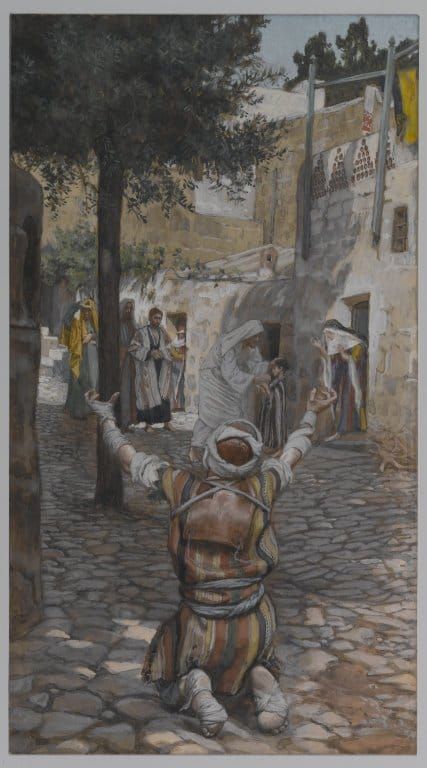
The Hand Outstretched in Our Exile
📖 Daily Scripture
June 26, 2026 — Friday of the Twelfth Week in Ordinary Time
Readings: 2 Kings 25:1-12 • Psalm 137:1-2, 3, 4-5, 6 • Matthew 8:1-4
There is a sorrow that runs beneath the readings of this day like a hidden stream, and it is the sorrow of exile. The sacred history sets before the soul the last hours of Jerusalem: the siege walls rising on every side, the famine within the gates, the king fleeing by night only to be overtaken in the plains near Jericho, and at the last the house of the Lord itself given over to the flames. A whole people, who had once been chosen and cherished, are led away in chains to a foreign country, and there, by the streams of Babylon, they sit down and weep when they remember Zion. It is the oldest grief of the human heart, this ache of being far from home, of having lost through one’s own infidelity the place where God was near; and the soul that is honest with itself will recognize in that captivity the very image of its own condition whenever it has wandered away from God.
Yet the Church does not leave us beside those bitter waters. To the lament of the exile she joins the Gospel of a man who was himself an exile in his own land, cut off from temple and from neighbor by the uncleanness of his flesh, and who nonetheless dared to come near and to kneel. “Lord, if you wish, you can make me clean.” There is in those few words a whole education of the soul, for the leper does not bargain, nor instruct, nor presume; he lays the entire matter upon the will of Christ and waits. Saint John Chrysostom marvels that he did not say, if you will entreat God, nor, if you will pray, but simply, if you will, you can make me clean, confessing thereby that all authority belonged to the Lord himself. This is the prayer that heaven never refuses: a few words borne upon complete trust.
And the answer comes not in word only but in a gesture that breaks through every barrier. Christ stretches out his hand and touches the very flesh the law had declared untouchable. He who might have healed by a word alone chooses to touch, and in touching he is not defiled but cleanses; for, as the same Father teaches, his hand became not unclean from the leprosy, but the leprous body was made clean by his holy hand. Here the soul learns what manner of God it serves: one whose compassion toward the sick is a resplendent sign that God has visited his people and that the Kingdom of God is close at hand. He does not heal from a distance, as one fastidious of our wounds; moved by so much suffering, he makes their miseries his own, taking our infirmities and bearing our diseases.
The lesson for daily life is clear and searching. The leprosy that truly disfigures us is sin, and Chrysostom bids us dread that alone; the captivity that truly enslaves us is the love of things that pass away, for the waters of Babylon, as Saint Augustine says, are all the things that here are loved and slip through our hands. To sit and weep beside those waters is not despair but humility — the refusal to be swept under by them, the steady turning of the heart toward the city we have not yet reached. And the soul that has been touched is not meant to keep that mercy to itself; for the same hand that cleansed the leper now sends the cleansed to draw near to others, unafraid to touch the poor and the excluded in whom Christ still hides. The Lord who once touched the leper still reaches out, and in the sacraments he continues to touch us in order to heal us.
There is no stain so deep, no exile so far, that his hand cannot reach across it. Let the soul then learn from this poor man to come near without long speeches, to kneel, to trust, and to whisper its own confidence in the goodness of God: if you wish, you can make me clean. For he does wish it; he has only been waiting to be asked.
Lord, if you wish, you can make me clean. Stretch out your hand to the leprosy I cannot heal in myself, and touch the places I am most ashamed to show you. Teach me to sit in humility beside the waters of my exile without being drowned by them, and to long above all for the homeland where you are. Through Christ our Lord. Amen.
Sources & References
- “Lord, if you wish, you can make me clean” — Gospel, Matthew 8:1-4
- The fall and exile of Jerusalem — First Reading, 2 Kings 25:1-12
- “By the streams of Babylon we sat and wept… Let my tongue be silenced, if I ever forget you” — Responsorial Psalm, Psalm 137:1-2, 3, 4-5, 6
- “Christ took away our infirmities and bore our diseases” — Alleluia, Matthew 8:17
- “a resplendent sign that God has visited his people… the Kingdom of God is close at hand” — Catechism of the Catholic Church, 1503
- “in the sacraments Christ continues to touch us in order to heal us” — Catechism of the Catholic Church, 1504
- “moved by so much suffering… he makes their miseries his own: He took our infirmities and bore our diseases” — Catechism of the Catholic Church, 1505
- “his hand became not unclean from the leprosy, but the leprous body was rendered clean by his holy hand”; the leprosy to be dreaded “is sin” — Saint John Chrysostom, Homily 25 on the Gospel of Matthew
- “the waters of Babylon are all things which here are loved, and pass away” — Saint Augustine, Exposition on Psalm 137 (Vulgate 136)
- “Jesus teaches us not to be afraid to touch the poor and the excluded, because He is in them” — Pope Francis, General Audience, 22 June 2016 (used in place of the Vatican News “Word of the Day,” whose entry for today was not yet published)
La mano extendida en nuestro destierro
📖 Sagrada Escritura Diaria
26 de junio de 2026 — Viernes de la XII semana del Tiempo ordinario
Lecturas: 2 Reyes 25, 1-12 • Salmo 136, 1-2. 3. 4-5. 6 • Mateo 8, 1-4
Hay una tristeza que corre por debajo de las lecturas de este día como una corriente escondida, y es la tristeza del destierro. La historia sagrada pone ante el alma las últimas horas de Jerusalén: las torres de asalto que se alzan por todas partes, el hambre dentro de los muros, el rey que huye de noche para ser alcanzado en los llanos cercanos a Jericó, y al final la casa misma del Señor entregada a las llamas. Todo un pueblo, que había sido elegido y amado, es llevado encadenado a una tierra extranjera, y allí, junto a los ríos de Babilonia, se sienta a llorar de nostalgia cuando se acuerda de Sión. Es la pena más antigua del corazón humano, esta congoja de estar lejos del hogar, de haber perdido por la propia infidelidad el lugar donde Dios estaba cerca; y el alma que es sincera consigo misma reconocerá en aquel cautiverio la imagen misma de su propia condición siempre que se ha alejado de Dios.
Pero la Iglesia no nos deja junto a aquellas aguas amargas. Al lamento del desterrado une el Evangelio de un hombre que era él mismo un desterrado en su propia tierra, separado del templo y del prójimo por la impureza de su carne, y que sin embargo se atrevió a acercarse y a postrarse. «Señor, si quieres, puedes curarme.» Hay en esas pocas palabras toda una educación del alma, porque el leproso no regatea, ni instruye, ni presume; lo deja todo en la voluntad de Cristo y espera. San Juan Crisóstomo se admira de que no dijera «si se lo pides a Dios», ni «si oras», sino sencillamente «si quieres, puedes curarme», confesando así que toda la autoridad pertenece al Señor mismo. Ésta es la oración que el cielo nunca rechaza: pocas palabras llevadas sobre una confianza entera.
Y la respuesta llega no sólo en palabra, sino en un gesto que rompe toda barrera. Cristo extiende su mano y toca la carne misma que la ley había declarado intocable. El que podía haber sanado con sola una palabra elige tocar, y al tocar no queda contaminado, sino que purifica; pues, como enseña el mismo Padre, su mano no quedó impura por la lepra, sino que el cuerpo leproso fue limpiado por su mano santa. Aquí aprende el alma a qué clase de Dios sirve: aquel cuya compasión hacia los enfermos es un signo maravilloso de que Dios ha visitado a su pueblo y de que el Reino de Dios está muy cerca. No sana desde lejos, como quien siente repugnancia de nuestras heridas; conmovido por tanto sufrimiento, hace suyas nuestras miserias, tomando nuestras flaquezas y cargando con nuestras enfermedades.
La lección para la vida diaria es clara y penetrante. La lepra que de verdad nos desfigura es el pecado, y Crisóstomo nos manda temer sólo a ésta; el cautiverio que de verdad nos esclaviza es el amor de las cosas que pasan, porque las aguas de Babilonia, como dice san Agustín, son todas las cosas que aquí se aman y se escurren entre las manos. Sentarse a llorar junto a aquellas aguas no es desesperación, sino humildad: el rechazo a dejarse arrastrar por ellas, el vuelco sereno del corazón hacia la ciudad que aún no hemos alcanzado. Y el alma que ha sido tocada no está hecha para guardar esa misericordia para sí; pues la misma mano que limpió al leproso envía ahora al limpiado a acercarse a los demás, sin miedo de tocar al pobre y al excluido en quienes Cristo todavía se esconde. El Señor que una vez tocó al leproso sigue extendiendo la mano, y en los sacramentos continúa tocándonos para sanarnos.
No hay mancha tan honda, ni destierro tan lejano, que su mano no pueda alcanzarlo. Aprenda, pues, el alma de este hombre pobre a acercarse sin largos discursos, a postrarse, a confiar, y a susurrar su propia certeza en la bondad de Dios: si quieres, puedes curarme. Porque Él sí quiere; sólo ha estado esperando que se lo pidan.
Señor, si quieres, puedes curarme. Extiende tu mano hacia la lepra que no puedo sanar en mí, y toca los lugares que más me avergüenza mostrarte. Enséñame a sentarme con humildad junto a las aguas de mi destierro sin ahogarme en ellas, y a anhelar sobre todo la patria donde tú estás. Por Jesucristo nuestro Señor. Amén.
Fuentes y referencias
- «Señor, si quieres, puedes curarme» — Evangelio, Mateo 8, 1-4
- La caída y el destierro de Jerusalén — Primera lectura, 2 Reyes 25, 1-12
- «Junto a los ríos de Babilonia nos sentábamos a llorar… Tu recuerdo, Señor, es mi alegría» — Salmo responsorial, Salmo 136, 1-2. 3. 4-5. 6
- «Cristo hizo suyas nuestras debilidades y cargó con nuestros dolores» — Aclamación, Mateo 8, 17
- «un signo maravilloso de que Dios ha visitado a su pueblo… el Reino de Dios está muy cerca» — Catecismo de la Iglesia Católica, 1503
- «en los sacramentos, Cristo continúa tocándonos para sanarnos» — Catecismo de la Iglesia Católica, 1504
- «conmovido por tantos sufrimientos… hace suyas sus miserias: El tomó nuestras flaquezas y cargó con nuestras enfermedades» — Catecismo de la Iglesia Católica, 1505
- «su mano no quedó impura por la lepra, sino que el cuerpo leproso fue limpiado por su mano santa»; la lepra que se ha de temer «es el pecado» — San Juan Crisóstomo, Homilía 25 sobre el Evangelio de san Mateo
- «las aguas de Babilonia son todas las cosas que aquí se aman y pasan» — San Agustín, Comentario al Salmo 137 (Vulgata 136)
- «Jesús nos enseña a no tener miedo de tocar al pobre y al excluido, porque Él está en ellos» — Papa Francisco, Audiencia General, 22 de junio de 2016 (utilizada en lugar de la «Palabra del día» de Vatican News, cuya entrada de hoy aún no estaba publicada)