
📖 Daily Scripture
June 25, 2026 — Thursday of the Twelfth Week in Ordinary Time
Readings: 2 Kings 24:8-17 • Psalm 79:1b-2, 3-5, 8, 9 • Matthew 7:21-29
There is a kind of ruin that announces itself long before it comes, and another that hides until the storm lays it bare; and the soul, if it is wise, will ask in the calm which of the two foundations it has been quietly laying. Today the Lord sets before us two houses, alike in everything the eye can measure — alike in walls and roof, alike in the rain that falls and the floods that rise and the winds that beat against them — and unlike only in the one thing the eye cannot see, the ground on which each was built. The whole of their difference is hidden beneath them, in the foundation; and it is precisely the hidden thing, and not the visible structure, that decides whether a life will stand or fall.
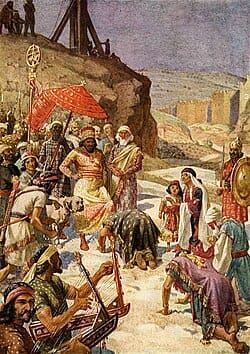
The first reading shows us a house that fell. Jerusalem, with its temple of cedar and gold, the vessels that Solomon had fashioned for the worship of the Lord, the city that bore the very Name of God — all of it is stripped and carried into Babylon, its treasures broken up, its people led away, and nothing left but the poorest of the land. It is a grievous scene, and the psalmist weeps over it; yet the deeper ruin had come long before the Babylonian armies, when king after king did evil in the sight of the Lord, when the worship of the Temple became a thing of words and walls without the obedience of the heart. The gold could be counted and seized; the fidelity that should have been its foundation had already crumbled. Magnificence is no foundation. A house may be adorned with everything and still be built on sand.
And so the Lord turns, in the Gospel, from the structure to the ground beneath it. Not everyone who says to him, Lord, Lord, will enter the Kingdom of heaven, but only the one who does the will of his Father. It is a sobering word, for he allows that a man might say the holy Name, might even prophesy and cast out demons and work wonders in that Name, and yet hear at the last, I never knew you. The Church teaches us plainly that we enter the Kingdom not by speaking words but by doing the will of the Father; and that the prayer of faith itself consists not only in saying Lord, Lord, but in disposing the heart to do that will and beginning to do it. Hearing is not enough, nor is eloquence, nor even the appearance of power. As one ancient teacher of the Church warned, faith is of no avail without works, and a man who has wrought many signs yet done nothing good is shut out no less than the rest. The wise builder is not the one who admires the Lord’s words, but the one who acts on them.
Here, then, is the lesson the soul must carry into the ordinary day. The rock is laid in secret. No one sees the foundation; it is poured in the unseen choices, the small obediences, the quiet doing of the Father’s will when no storm is near and no one is watching. The rains will come to the wise and the foolish alike — the bereavements, the reverses, the long anxieties of a life — and they are no measure of God’s favor or displeasure; the only measure is what was laid beneath. To build on the rock is not to escape the storm but to stand within it; and the rock, in the end, is not a thing but a Person, Christ himself, who alone gives the soul its freedom and its security. To hear his word and to do it is to build a house that the floods cannot carry off, and to rest at last upon the love of God our savior, who for the glory of his Name will not let the work of his hands be swept away.
Lord, you are the rock on which alone my life can stand; teach me not merely to call you by name but to do the will of your Father in the hidden hours of each day. Lay your foundation deep within me, where no eye but yours can see, so that when the storms come I may not be moved. Make me a Christian of action and of truth, and let me rest secure upon your love. Through Christ our Lord. Amen.
Sources & References
- "He did evil in the sight of the LORD"; "broke up all the gold utensils that Solomon… had provided in the temple of the LORD" — 2 Kings 24:9, 13 (First Reading).
- "Help us, O God our savior, because of the glory of your name; deliver us and pardon our sins" — Psalm 79:9 (Responsorial Psalm; refrain, "For the glory of your name, O Lord, deliver us").
- "Not everyone who says to me, ‘Lord, Lord,’ will enter the Kingdom of heaven, but only the one who does the will of my Father… I never knew you… a wise man who built his house on rock… a fool who built his house on sand… he taught them as one having authority" — Matthew 7:21-29 (Gospel).
- "The prayer of faith consists not only in saying ‘Lord, Lord,’ but in disposing the heart to do the will of the Father and to begin doing it" — Catechism of the Catholic Church, 2611.
- "Jesus teaches us that one enters the Kingdom of heaven, not by speaking words, but by doing ‘the will of my Father in heaven’" — Catechism of the Catholic Church, 2826.
- "Faith is of no avail without works"; a man who has "wrought many signs, yet… done nothing good… is equally shut out" — St. John Chrysostom, Homily 24 on the Gospel of Matthew (on Mt 7:21-27).
- Pope Francis, Morning Meditation of 27 June 2013 ("Christians of action and truth"), on this same Gospel: we need "Christians of action and truth" and not "Christians of words," and must build our life "on the rock that is Christ." (Vatican News "Word of the Day" for 25 June 2026 was not yet published — marked "Coming soon" — so this directly relevant papal teaching on today’s Gospel was used in its place.)
- Daily Mass readings: USCCB, Thursday of the Twelfth Week in Ordinary Time (Lectionary 374).
La Casa Que Permanece
📖 Sagrada Escritura Diaria
25 de junio de 2026 — Jueves de la XII semana del Tiempo ordinario
Lecturas: 2 Reyes 24, 8-17 • Salmo 78, 1-2. 3-5. 8. 9 • Mateo 7, 21-29
Hay una ruina que se anuncia mucho antes de llegar, y otra que se oculta hasta que la tormenta la deja al descubierto; y el alma, si es prudente, preguntará en la calma cuál de los dos cimientos ha ido poniendo en silencio. Hoy el Señor pone ante nosotros dos casas, semejantes en todo lo que el ojo puede medir —semejantes en muros y techo, semejantes en la lluvia que cae, en las crecientes que suben y en los vientos que las golpean—, y distintas sólo en lo único que el ojo no puede ver: el suelo sobre el que cada una fue edificada. Toda su diferencia está escondida debajo, en el cimiento; y es precisamente lo escondido, y no la estructura visible, lo que decide si una vida permanecerá o caerá.
La primera lectura nos muestra una casa que cayó. Jerusalén, con su templo de cedro y oro, los objetos que Salomón había fabricado para el culto del Señor, la ciudad que llevaba el Nombre mismo de Dios, todo es despojado y llevado a Babilonia, destrozados sus tesoros, deportado su pueblo, sin quedar más que la gente pobre de la región. Es una escena dolorosa, y el salmista la llora; sin embargo, la ruina más honda había llegado mucho antes que los ejércitos de Babilonia, cuando rey tras rey hizo lo que el Señor reprueba, cuando el culto del Templo se volvió cosa de palabras y muros sin la obediencia del corazón. El oro podía contarse y arrebatarse; la fidelidad que debía ser su cimiento ya se había desmoronado. La magnificencia no es cimiento. Una casa puede estar adornada con todo y, aun así, estar edificada sobre arena.
Y por eso el Señor vuelve, en el Evangelio, de la estructura al suelo que la sostiene. No todo el que le diga: «Señor, Señor», entrará en el Reino de los cielos, sino el que cumpla la voluntad de su Padre. Es una palabra que estremece, pues admite que un hombre pueda pronunciar el Nombre santo, e incluso profetizar y arrojar demonios y hacer prodigios en ese Nombre, y oír al final: «Nunca los he conocido». La Iglesia nos enseña con claridad que se entra en el Reino no mediante palabras, sino haciendo la voluntad del Padre que está en los cielos; y que la oración de fe no consiste sólo en decir «Señor, Señor», sino en disponer el corazón para hacer esa voluntad y comenzar a cumplirla. No basta el escuchar, ni la elocuencia, ni siquiera la apariencia de poder. Como advirtió un antiguo maestro de la Iglesia, la fe de nada aprovecha sin las obras, y quien ha hecho muchos prodigios pero nada bueno queda excluido no menos que los demás. El constructor prudente no es el que admira las palabras del Señor, sino el que las pone en práctica.
He aquí, pues, la lección que el alma ha de llevar al día ordinario. La roca se pone en secreto. Nadie ve el cimiento; se vierte en las decisiones ocultas, en las pequeñas obediencias, en el callado cumplir la voluntad del Padre cuando ninguna tormenta se acerca y nadie está mirando. Las lluvias vendrán igualmente sobre el prudente y sobre el insensato —los duelos, los reveses, las largas angustias de una vida—, y no son medida del favor ni del desagrado de Dios; la única medida es lo que se puso debajo. Edificar sobre roca no es escapar de la tormenta, sino permanecer en pie dentro de ella; y la roca, al fin, no es una cosa, sino una Persona, Cristo mismo, el único que da al alma su libertad y su seguridad. Escuchar su palabra y ponerla en práctica es edificar una casa que las crecientes no pueden arrastrar, y descansar al cabo en el amor de Dios, salvador nuestro, que por la gloria de su Nombre no dejará que la obra de sus manos sea arrasada.
Señor, tú eres la roca sobre la cual únicamente puede sostenerse mi vida; enséñame no sólo a llamarte por tu nombre, sino a cumplir la voluntad de tu Padre en las horas ocultas de cada día. Pon tu cimiento hondo dentro de mí, donde ningún ojo sino el tuyo puede ver, para que, cuando lleguen las tormentas, yo no sea derribado. Hazme un cristiano de acción y de verdad, y déjame descansar seguro en tu amor. Por Jesucristo nuestro Señor. Amén.
Fuentes y referencias
- "Joaquín… hizo lo que el Señor reprueba"; "Destrozó todos los objetos de oro que Salomón… había hecho para el templo" — 2 Reyes 24, 9. 13 (Primera lectura).
- "Socórrenos, Dios, salvador nuestro… sálvanos y perdona nuestros pecados" — Salmo 78, 9 (Salmo responsorial; antífona: "Socórrenos, Dios, salvador nuestro").
- "No todo el que me diga: ‘¡Señor, Señor!’, entrará en el Reino de los cielos, sino el que cumpla la voluntad de mi Padre… Nunca los he conocido… un hombre prudente, que edificó su casa sobre roca… un hombre imprudente, que edificó su casa sobre arena… les enseñaba como quien tiene autoridad" — Mateo 7, 21-29 (Evangelio).
- "La oración de fe no consiste sólo en decir ‘Señor, Señor’, sino en disponer el corazón para hacer la voluntad del Padre" — Catecismo de la Iglesia Católica, 2611.
- "Jesús nos enseña que se entra en el Reino de los cielos, no mediante palabras, sino ‘haciendo la voluntad de mi Padre que está en los cielos’" — Catecismo de la Iglesia Católica, 2826.
- "La fe de nada aprovecha sin las obras" — San Juan Crisóstomo, Homilía 24 sobre el Evangelio de san Mateo (sobre Mt 7, 21-27).
- Papa Francisco, Meditación matutina del 27 de junio de 2013 ("Cristianos de acción y de verdad"), sobre este mismo Evangelio: hacen falta "cristianos de acción y de verdad" y no "cristianos de palabras", y hay que edificar la vida "sobre la roca que es Cristo". (La "Palabra del día" de Vatican News para el 25 de junio de 2026 aún no estaba publicada — "Coming soon" — por lo que se usó esta enseñanza papal directamente relacionada con el Evangelio de hoy.)
- Lecturas de la Misa: USCCB, Jueves de la XII semana del Tiempo ordinario (Leccionario 374).