
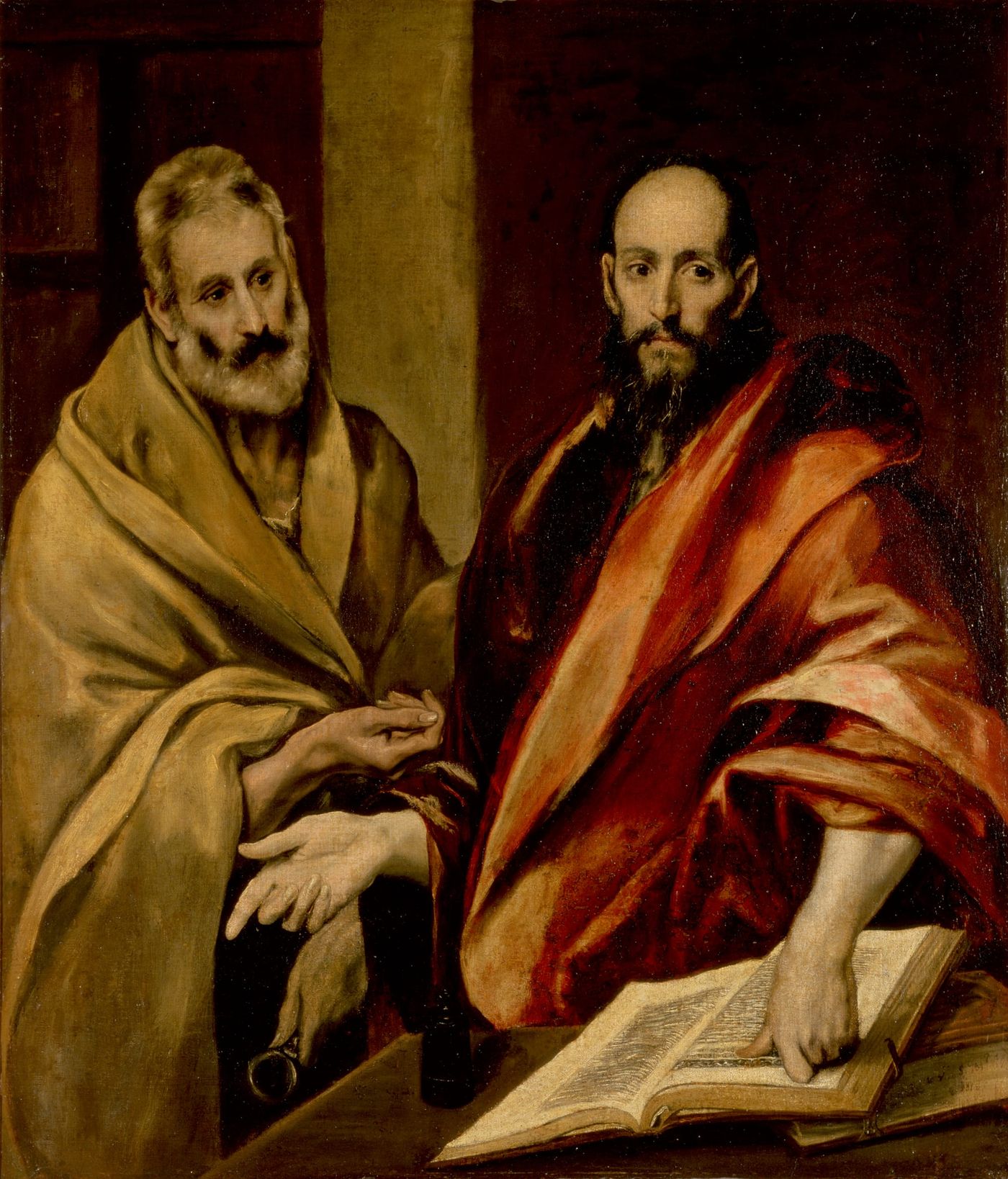
The Rock of a Confessed Faith
📖 Daily Scripture
June 29, 2026 — Solemnity of Saints Peter and Paul, Apostles
Readings: Acts 12:1-11 • Psalm 34:2-9 • 2 Timothy 4:6-8, 17-18 • Matthew 16:13-19
There comes a moment in the life of every soul when the opinions of the crowd, the guesses and rumors of the many, must give way to a single searching word spoken directly to the heart. By the roads of Caesarea Philippi the Lord first asked His disciples what others were saying of Him, and then, turning from rumor to the persons before Him, He asked the question that no one may answer for another: “But who do you say that I am?” It is a question that cannot be inherited, nor borrowed, nor supplied by the murmur of the age; it waits upon each of us alone, and the whole weight of a life rests upon the reply. Simon’s answer rose not from calculation but from a light kindled within him: “You are the Christ, the Son of the living God.” And the Lord, knowing whence that light had come, declared that flesh and blood had not revealed it, but the Father in heaven.
Here is the first lesson the soul must take to itself: that faith is never the achievement of our own cleverness, but a gift descending from above, to be received in humility and then confessed with courage. “Moved by the grace of the Holy Spirit and drawn by the Father, we believe in Jesus and confess: ‘You are the Christ, the Son of the living God.’ On the rock of this faith, confessed by St. Peter, Christ has built his Church.” The foundation upon which all is raised is not the strength of a man, for Peter was weak and would soon deny his Master in a courtyard; it is rather the faith confessed, held fast, and entrusted to him to guard. So it is also within us: what stands firm is not the force of our resolve but the truth to which we cleave, and the soul that would not be shaken must take its stand upon that same confession. “Christ, the living Stone, thus assures his Church, built on Peter, of victory over the powers of death.”
Yet a confession made once is not enough; it must be lived to its very end. Paul, writing as the hour of his sacrifice drew near, looked back upon a long and costly course and could say, “I have competed well; I have finished the race; I have kept the faith.” The crown he awaited was not the reward of a single bright hour but of a whole life laid down, poured out like a libation drop by drop. So the second lesson follows upon the first: the faith we confess with our lips must be confirmed by our perseverance, even unto suffering, for “martyrdom is the supreme witness given to the truth of the faith; it means bearing witness even unto death.” Few are asked to shed their blood, yet every soul is asked for that same fidelity in the small daily dyings of self, and it was of such constancy that the ancient Church could declare, “The blood of the martyrs is the seed of the Church.”
And lest the soul grow fearful before so high a calling, the readings set before us a tender consolation. Peter, bound with double chains and sleeping between his guards, was awakened by the angel of the Lord; the chains fell from his wrists, the iron gate opened of itself, and he came to know with certainty that the Lord had sent His angel to rescue him. Paul, abandoned by men, could yet write that the Lord stood by him and gave him strength. The God who calls us to confess Him does not leave us to our own weakness; He stands beside the faithful soul and breaks its chains. It was fitting, then, that the Church should keep one feast for these two apostles, for as Augustine taught, “Both apostles share the same feast day, for these two were one; and even though they suffered on different days, they were as one.” Let the soul take heart: the same Lord who upheld Peter and Paul upholds us, and the love that bound them to Christ is offered freely to all who will confess His name and keep it faithfully to the end.
Lord Jesus, who once asked Your apostles who You were, ask that question again within me, and teach me to answer not from the murmur of the world but from the light You have kindled in my soul. Make the faith I confess the firm rock on which I build, and grant that, like Your apostles, I may keep it faithfully to the end. When fear would chain me, send Your angel to set me free, and bring me safely at last to Your heavenly Kingdom. Through Christ our Lord. Amen.
Sources & References
- “But who do you say that I am?” … “You are the Christ, the Son of the living God.” — Matthew 16:15-16 (Gospel, Matthew 16:13-19)
- “I have competed well; I have finished the race; I have kept the faith.” — 2 Timothy 4:7 (Second Reading)
- Peter rescued by the angel, the chains falling from his wrists — Acts 12:1-11 (First Reading)
- “Moved by the grace of the Holy Spirit and drawn by the Father, we believe in Jesus and confess: ‘You are the Christ, the Son of the living God.’ On the rock of this faith, confessed by St. Peter, Christ has built his Church.” — Catechism of the Catholic Church, 424
- “Christ, the living Stone, thus assures his Church, built on Peter, of victory over the powers of death.” — Catechism of the Catholic Church, 552
- “Martyrdom is the supreme witness given to the truth of the faith; it means bearing witness even unto death.” — Catechism of the Catholic Church, 2473
- “The blood of the martyrs is the seed of the Church.” — Tertullian, Apologeticus 50
- “Both apostles share the same feast day, for these two were one; and even though they suffered on different days, they were as one.” — St. Augustine, Sermon 295 (Office of Readings, Solemnity of Saints Peter and Paul)
- Papal insight: Pope Leo XIV, Homily, 29 June 2025 (“Who do you say that I am?” — Mt 16:15), via Vatican News “Word of the Day,” 29 June 2026
La roca de una fe confesada
📖 Sagrada Escritura Diaria
29 de junio de 2026 — Solemnidad de san Pedro y san Pablo, Apóstoles
Lecturas: Hechos 12, 1-11 • Salmo 33, 2-9 • 2 Timoteo 4, 6-8. 17-18 • Mateo 16, 13-19
Llega un momento en la vida de toda alma en que las opiniones de la multitud, las conjeturas y los rumores de los muchos, han de ceder ante una sola palabra penetrante dirigida directamente al corazón. Por los caminos de Cesarea de Filipo el Señor preguntó primero a sus discípulos qué decían de Él los demás, y luego, pasando del rumor a las personas que tenía delante, hizo la pregunta que nadie puede responder en lugar de otro: “Y ustedes, ¿quién dicen que soy yo?” Es una pregunta que no se hereda, ni se toma prestada, ni la suple el murmullo de la época; aguarda a cada uno de nosotros a solas, y todo el peso de una vida descansa en la respuesta. La respuesta de Simón no brotó del cálculo, sino de una luz encendida en su interior: “Tú eres el Mesías, el Hijo de Dios vivo.” Y el Señor, sabiendo de dónde venía aquella luz, declaró que no se lo había revelado ningún hombre, sino su Padre que está en los cielos.
He aquí la primera lección que el alma ha de hacer suya: que la fe nunca es el logro de nuestra propia astucia, sino un don que desciende de lo alto, para ser recibido con humildad y luego confesado con valentía. “Movidos por la gracia del Espíritu Santo y atraídos por el Padre, nosotros creemos y confesamos a propósito de Jesús: ‘Tú eres el Cristo, el Hijo de Dios vivo’. Sobre la roca de esta fe, confesada por san Pedro, Cristo ha construido su Iglesia.” El cimiento sobre el que todo se levanta no es la fuerza de un hombre, pues Pedro era débil y pronto negaría a su Maestro en un patio; es más bien la fe confesada, guardada firmemente y confiada a él para que la custodiara. Así también dentro de nosotros: lo que permanece firme no es el vigor de nuestra resolución, sino la verdad a la que nos adherimos, y el alma que no quiera ser sacudida ha de apoyarse en esa misma confesión. “Cristo, ‘Piedra viva’, asegura a su Iglesia, edificada sobre Pedro, la victoria sobre los poderes de la muerte.”
Pero una confesión hecha una sola vez no basta; ha de vivirse hasta el final. Pablo, escribiendo cuando se acercaba la hora de su sacrificio, contempló un camino largo y costoso y pudo decir: “He luchado bien en el combate, he corrido hasta la meta, he perseverado en la fe.” La corona que esperaba no era el premio de una sola hora luminosa, sino de toda una vida entregada, derramada gota a gota como una libación. Así la segunda lección sigue a la primera: la fe que confesamos con los labios ha de confirmarse con nuestra perseverancia, aun en medio del sufrimiento, porque “el martirio es el supremo testimonio de la verdad de la fe; designa un testimonio que llega hasta la muerte.” A pocos se les pide derramar su sangre, y sin embargo a toda alma se le pide esa misma fidelidad en las pequeñas muertes cotidianas del propio yo; y de tal constancia pudo decir la Iglesia antigua: “La sangre de los mártires es semilla de cristianos.”
Y para que el alma no se atemorice ante llamado tan alto, las lecturas ponen ante nosotros un tierno consuelo. Pedro, atado con dos cadenas y durmiendo entre sus guardias, fue despertado por el ángel del Señor; las cadenas cayeron de sus manos, la puerta de hierro se abrió por sí sola, y llegó a saber con certeza que el Señor había enviado a su ángel para librarlo. Pablo, abandonado por los hombres, pudo escribir, sin embargo, que el Señor estuvo a su lado y le dio fuerzas. El Dios que nos llama a confesarlo no nos deja entregados a nuestra propia debilidad; permanece junto al alma fiel y rompe sus cadenas. Fue conveniente, pues, que la Iglesia guardara una sola fiesta para estos dos apóstoles, porque, como enseñó san Agustín, “estos dos apóstoles tienen un mismo día festivo, porque los dos eran uno solo; y, aunque padecieron en días distintos, eran como uno solo.” Anímese el alma: el mismo Señor que sostuvo a Pedro y a Pablo nos sostiene a nosotros, y el amor que los unió a Cristo se ofrece gratuitamente a todos los que confiesen su nombre y lo guarden fielmente hasta el fin.
Señor Jesús, que un día preguntaste a tus apóstoles quién eras tú, vuelve a hacer esa pregunta dentro de mí, y enséñame a responder no desde el rumor del mundo, sino desde la luz que has encendido en mi alma. Haz que la fe que confieso sea la roca firme sobre la que edifique mi vida, y concédeme que, como tus apóstoles, la conserve fielmente hasta el fin. Cuando el miedo quiera encadenarme, envía a tu ángel para librarme, y llévame al fin sano y salvo a tu Reino celestial. Por Jesucristo nuestro Señor. Amén.
Fuentes y referencias
- “Y ustedes, ¿quién dicen que soy yo?” … “Tú eres el Mesías, el Hijo de Dios vivo.” — Mateo 16, 15-16 (Evangelio, Mateo 16, 13-19)
- “He luchado bien en el combate, he corrido hasta la meta, he perseverado en la fe.” — 2 Timoteo 4, 7 (Segunda Lectura)
- Pedro librado por el ángel, las cadenas cayendo de sus manos — Hechos 12, 1-11 (Primera Lectura)
- “Movidos por la gracia del Espíritu Santo y atraídos por el Padre, nosotros creemos y confesamos a propósito de Jesús: ‘Tú eres el Cristo, el Hijo de Dios vivo’. Sobre la roca de esta fe, confesada por san Pedro, Cristo ha construido su Iglesia.” — Catecismo de la Iglesia Católica, 424
- “Cristo, ‘Piedra viva’, asegura a su Iglesia, edificada sobre Pedro, la victoria sobre los poderes de la muerte.” — Catecismo de la Iglesia Católica, 552
- “El martirio es el supremo testimonio de la verdad de la fe; designa un testimonio que llega hasta la muerte.” — Catecismo de la Iglesia Católica, 2473
- “La sangre de los mártires es semilla de cristianos.” — Tertuliano, Apologético 50
- “Estos dos apóstoles tienen un mismo día festivo, porque los dos eran uno solo; y, aunque padecieron en días distintos, eran como uno solo.” — San Agustín, Sermón 295 (Oficio de Lecturas, Solemnidad de san Pedro y san Pablo)
- Reflexión papal: Papa León XIV, Homilía del 29 de junio de 2025 (“¿Quién dicen que soy yo?” — Mt 16, 15), vía Vatican News “Palabra del día,” 29 de junio de 2026