
📖 Daily Scripture
June 20, 2026 — Saturday of the Eleventh Week in Ordinary Time
Readings: 2 Chronicles 24:17–25 • Psalm 89:4–5, 29–30, 31–32, 33–34 • Matthew 6:24–34
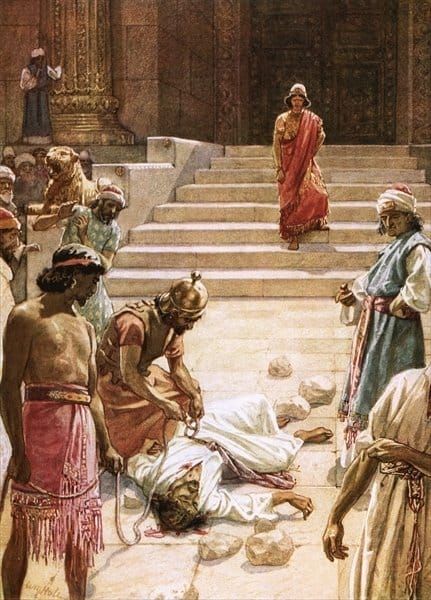
There is a quiet tragedy hidden in the history of Joash, a king who walked uprightly while the priest Jehoiada lived to steady him, yet who, when that guiding hand was withdrawn, turned his affection elsewhere and forsook the temple of the Lord. The soul does well to read such a chronicle not as the distant record of a fallen court but as a mirror held up to its own inconstancy; for a heart that is anchored in no single love will be carried away by every passing tide, and a man who consents to many masters has, in the end, no master at all save his own restlessness. Joash did not begin in rebellion. He drifted into it, by small degrees, because his devotion had been borrowed rather than his own, propped up by another and never rooted within. And when the prophet was sent to recall him, he answered the warning with violence, stoning in the very court of the temple the son of the man who had once preserved his throne.
It is against this backdrop of a divided allegiance that the words of the Lord in the Gospel fall with such searching clarity: no one can serve two masters, and a man cannot serve God and mammon. The danger here is not chiefly that of open wickedness but of a quieter and more respectable idolatry, the slow enthronement of some lesser good in the place that belongs to God alone. The Church teaches that such idolatry consists in divinizing what is not God, in honoring a creature in place of the Creator, and the heart is never so endangered as when it persuades itself that it may keep two thrones occupied at once. The ancient pastor John Chrysostom saw the matter plainly when he observed that the Lord calls mammon a master, not from its own nature, but on account of the wretchedness of those who bow themselves beneath it. Wealth has no true sovereignty; it reigns only over the soul that kneels.
And yet the Lord does not leave the soul merely warned; He turns its anxious gaze upward and outward, to the birds that neither sow nor reap and the lilies that neither toil nor spin, and bids it learn from them the trust it has forgotten. Here the moral lesson is gentle but exacting: the cure for a heart enslaved to possessions is not a tighter grip but an open hand, the childlike abandonment to the providence of a Father who takes care of His children's smallest needs. To seek first the Kingdom of God is not to despise tomorrow's bread but to refuse to be ruled by the fear of its absence. Saint Augustine, contemplating this very sermon, wrote that we should let the proud seek and love earthly kingdoms, but blessed are the poor in spirit, for theirs is the Kingdom of heaven. Such poverty of spirit is no destitution; it is the liberty of one who has placed his whole weight upon God and found Him faithful. For abandonment to the providence of the Father in heaven frees the soul from anxiety about tomorrow, and a worry surrendered is a small idol overthrown.
This, then, is the labor to which today's word summons the soul: to let no second master quietly establish himself in the chambers of the heart, to recall, before drifting begins, the goodness that has upheld us, and to entrust the unknown morrow to the One who clothes the grass of the field. The heart was made for a single love, and it is restless until it rests in Him; but resting there, it finds that nothing needful is ever wanting, and that the Father who feeds the sparrow has counted His child of far greater worth.
O Lord, teach me to serve You alone, and to root out of my heart every rival that would divide it. Quiet within me the anxious fear of tomorrow, and grow in me the childlike trust that rests wholly upon Your providence. Make my heart single, that it may be wholly Yours. Through Christ our Lord. Amen.
Sources & References
- “No one can serve two masters… You cannot serve God and mammon”; the birds and the lilies; “seek first the Kingdom of God” — Gospel, Matthew 6:24–34.
- The drifting and downfall of King Joash — First Reading, 2 Chronicles 24:17–25.
- “For ever I will maintain my love for my servant” — Responsorial Psalm, Psalm 89.
- Childlike abandonment to the providence of our heavenly Father — Catechism of the Catholic Church, 305.
- Idolatry consists in divinizing what is not God — Catechism of the Catholic Church, 2113.
- Abandonment to the providence of the Father frees us from anxiety about tomorrow — Catechism of the Catholic Church, 2547.
- “Blessed are the poor in spirit, for theirs is the Kingdom of heaven” — St. Augustine, On the Sermon on the Mount, I.1.3.
- The Lord calls mammon a master on account of those who bow beneath it — St. John Chrysostom, Homily 21 on Matthew.
- “The heart is restless until it rests in Him” — St. Augustine, Confessions, Book I.
📖 Lectura del día
20 de junio de 2026 — Sábado de la undécima semana del Tiempo Ordinario
Lecturas: 2 Crónicas 24,17-25 • Salmo 89,4-5.29-30.31-32.33-34 • Mateo 6,24-34
Hay una callada tragedia escondida en la historia de Joás, un rey que caminó rectamente mientras vivió el sacerdote Joiadá para sostenerlo, pero que, cuando aquella mano que lo guiaba se retiró, volvió su afecto a otra parte y abandonó el templo del Señor. El alma hace bien en leer tal crónica no como el lejano registro de una corte caída sino como un espejo levantado ante su propia inconstancia; pues un corazón que no está anclado en un solo amor será arrastrado por cada marea que pasa, y un hombre que consiente en muchos señores no tiene, al fin, señor alguno salvo su propia inquietud. Joás no comenzó en la rebelión. Se deslizó en ella, por pequeños grados, porque su devoción había sido prestada antes que propia, apuntalada por otro y nunca arraigada dentro. Y cuando el profeta fue enviado a llamarlo de nuevo, respondió a la advertencia con violencia, apedreando en el atrio mismo del templo al hijo del hombre que una vez había preservado su trono.
Es contra este trasfondo de una lealtad dividida que caen con tan penetrante claridad las palabras del Señor en el Evangelio: nadie puede servir a dos señores, y no se puede servir a Dios y al dinero. El peligro aquí no es principalmente el de la maldad abierta sino el de una idolatría más callada y más respetable, la lenta entronización de algún bien menor en el lugar que pertenece a Dios solo. La Iglesia enseña que tal idolatría consiste en divinizar lo que no es Dios, en honrar a una criatura en lugar del Creador, y el corazón nunca está tan en peligro como cuando se persuade de que puede tener dos tronos ocupados a la vez. El antiguo pastor Juan Crisóstomo vio el asunto con claridad cuando observó que el Señor llama señor al dinero, no por su propia naturaleza, sino por causa de la miseria de quienes se inclinan bajo él. La riqueza no tiene verdadera soberanía; reina sólo sobre el alma que se arrodilla.
Y sin embargo el Señor no deja al alma meramente advertida; vuelve su mirada angustiada hacia arriba y hacia afuera, a las aves que ni siembran ni siegan y a los lirios que ni trabajan ni hilan, y le manda aprender de ellos la confianza que ha olvidado. Aquí la lección moral es suave pero exigente: la cura para un corazón esclavizado a las posesiones no es un puño más apretado sino una mano abierta, el abandono filial a la providencia de un Padre que cuida de las más pequeñas necesidades de sus hijos. Buscar primero el Reino de Dios no es despreciar el pan de mañana sino rehusar ser gobernado por el temor de su ausencia. San Agustín, contemplando este mismo sermón, escribió que dejemos a los soberbios buscar y amar los reinos terrenos, pero bienaventurados los pobres de espíritu, porque de ellos es el Reino de los cielos. Tal pobreza de espíritu no es indigencia; es la libertad de quien ha puesto todo su peso sobre Dios y lo ha hallado fiel. Pues el abandono a la providencia del Padre celestial libra al alma de la angustia por el mañana, y una preocupación entregada es un pequeño ídolo derribado.
Este es, pues, el trabajo al que la palabra de hoy convoca al alma: no dejar que ningún segundo señor se establezca calladamente en las cámaras del corazón, recordar, antes de que comience el deslizamiento, la bondad que nos ha sostenido, y confiar el mañana desconocido a Aquel que viste la hierba del campo. El corazón fue hecho para un solo amor, y está inquieto hasta que descansa en Él; pero descansando allí, halla que nada necesario le falta jamás, y que el Padre que alimenta al gorrión ha contado a su hijo como de mucho mayor valor.
Oh Señor, enséñame a servirte sólo a ti, y arranca de mi corazón todo rival que quisiera dividirlo. Aquieta dentro de mí el angustioso temor del mañana, y haz crecer en mí la confianza filial que descansa por entero en tu providencia. Haz mi corazón uno, para que sea del todo tuyo. Por Jesucristo nuestro Señor. Amén.
Fuentes y referencias
- «Nadie puede servir a dos señores… No podéis servir a Dios y al dinero»; «Mirad las aves del cielo… Aprended de cómo crecen los lirios del campo»; «buscad primero el Reino de Dios» — Evangelio, Mateo 6,24-34.
- El deslizamiento y la caída del rey Joás tras abandonar el templo del Señor — Primera lectura, 2 Crónicas 24,17-25.
- «Mi amor le será fiel para siempre» — Salmo responsorial, Salmo 89.
- Abandono filial a la providencia de nuestro Padre celestial, que cuida de las más pequeñas necesidades de sus hijos — Catecismo de la Iglesia Católica, 305.
- La idolatría consiste en divinizar lo que no es Dios, en honrar a una criatura en lugar de Dios; «No podéis servir a Dios y al dinero» — Catecismo de la Iglesia Católica, 2113.
- «El abandono a la providencia del Padre celestial libra de la inquietud por el mañana» — Catecismo de la Iglesia Católica, 2547.
- «Dejad a los soberbios buscar y amar los reinos terrenos, pero bienaventurados los pobres de espíritu» — San Agustín, Sobre el Sermón de la Montaña, I,1,3.
- El Señor «llama señor al dinero… por causa de la miseria de quienes se inclinan bajo él» — San Juan Crisóstomo, Homilía 21 sobre el Evangelio de Mateo.
- «Nuestro corazón está inquieto hasta que descansa en ti» — San Agustín, Confesiones, libro I.