
📖 Daily Scripture
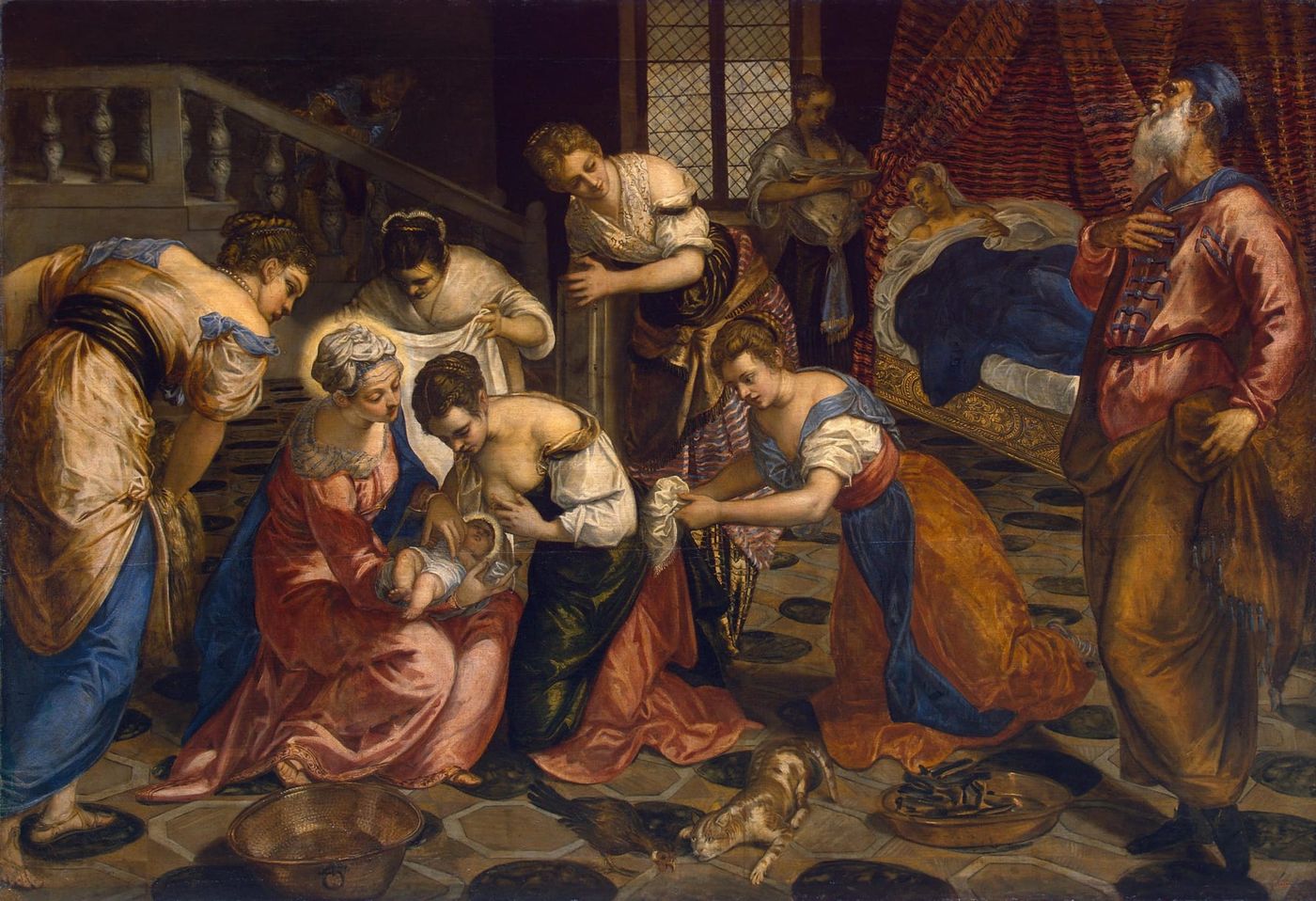
June 24, 2026 — Solemnity of the Nativity of Saint John the Baptist
Readings: Isaiah 49:1-6 • Psalm 139:1b-3, 13-14ab, 14c-15 • Acts 13:22-26 • Luke 1:57-66, 80
There is a hiddenness at the root of every great calling, and the Church, in keeping this feast, draws the soul gently back toward its own beginnings, to that secret place in which it was first known. Long before the child of Elizabeth was laid in the arms of his kinfolk, before the neighbors turned to one another to ask what this child would be, he had already been claimed, named, and set apart by a love that does not wait upon our consent. The prophet had said as much of himself in words the liturgy now lends to the Baptist: the Lord called me from birth, and from my mother's womb he gave me my name. And the psalmist, in lines of trembling intimacy, confessed the selfsame wonder, that he had been knit together in secret and fashioned in the depths, fearfully and wonderfully made, his very frame not unknown to the God who probes him and understands his thoughts from afar.
It is a thought to be dwelt upon slowly, for it quietly overturns the proud assumption that we are the authors of ourselves. The soul did not summon itself into being, nor did it appoint its own hour or choose its own name; it was thought of, willed, and loved before ever it could love in return. This is why the small domestic scene of the Gospel carries so great a weight: when the relatives would have named the child after his father, his mother said simply, No, he will be called John, and Zechariah took a tablet and wrote, John is his name. The name was not theirs to bestow, for it had been given from heaven; and the Church teaches us that the name is the icon of the person, a sign of the dignity of the one who bears it, since God calls each one by name.
Yet to be called is not to be exalted in one's own eyes, and here the readings turn from wonder to instruction. John, who was filled with the Holy Spirit even from his mother's womb, who might have gloried in a greatness that the Lord himself would one day praise, spent the whole of his strength in pointing away from himself. He grew and became strong in spirit and withdrew into the desert until the day of his showing to Israel; and when at last he stood before the people, he would say only, I am not he, for one is coming after me, and I am not worthy to unfasten the sandals of his feet. This is the lesson the day presses upon the heart: that the highest use of any God-given vocation is not the display of the self but the heralding of Another. John is the voice, but the Lord is the Word who was in the beginning; John is the voice that lasts for a time, while from the beginning Christ is the Word who lives for ever. The voice without the word strikes the ear but does not build up the heart; it sounds for its appointed season and then falls silent, and it exists wholly for the sake of the Word it carries.
What this asks of the ordinary soul is no small thing, and no distant thing. We too are called from the womb and made, in Isaiah's image, a polished arrow hidden away in God's quiver, fashioned with care, kept for a while in obscurity, and brought forth in his own time and not in ours. The long hidden years in the desert, the seeming waste of strength that even the prophet was tempted to lament, are not the failure of a calling but its forging. The soul that learns to wait, to decrease, to make room for the Lord in the small repentances of each day, becomes at last a light to the nations, not by any brightness of its own but by the One whom it reflects. To know that we are named and held is to be set free from the anxious labor of making ourselves great, until it is enough to be the voice that announces the Word. And so the wondering question of the neighbors becomes our own — what, then, will this child be? — and the answer rests still in the hand of the Lord that was with him, the love that formed us in secret and will never abandon the work of its own fingers.
Lord, you knew me before I was made and called me by my name; teach me to receive my life as a gift and never as a possession. Hollow out within me the humility of your servant John, that I may decrease and you increase, and that the whole of my life may become a clear voice announcing your Word. Keep me faithful through the hidden years, and bring to its completion the work your love has begun in me. Through Christ our Lord. Amen.
Sources & References
- “The Lord called me from birth, from my mother's womb he gave me my name… He made me a polished arrow, in his quiver he hid me… I will make you a light to the nations” — Isaiah 49:1, 2, 6 (First Reading).
- “Truly you have formed my inmost being; you knit me in my mother's womb… I am fearfully, wonderfully made” — Psalm 139:13-14 (Responsorial Psalm).
- “I am not he. Behold, one is coming after me; I am not worthy to unfasten the sandals of his feet” — Acts 13:25 (Second Reading).
- “No. He will be called John… What, then, will this child be?… The child grew and became strong in spirit, and he was in the desert until the day of his manifestation to Israel” — Luke 1 (Gospel).
- St. John the Baptist is the Lord's immediate precursor, sent to prepare his way — Catechism of the Catholic Church, 523.
- John was “filled with the Holy Spirit even from his mother's womb” by Christ himself — Catechism of the Catholic Church, 717.
- God calls each one by name; the name is the icon of the person, a sign of the dignity of the one who bears it — Catechism of the Catholic Church, 2158.
- “John is the voice, but the Lord is the Word… the voice without the word strikes the ear but does not build up the heart” — St. Augustine, Sermon 293.
- Pope Benedict XVI, Angelus of 24 June 2012: John proclaimed Christ “with deep humility and prophetic fervour.”
📖 Lectura del día
24 de junio de 2026 — Solemnidad de la Natividad de San Juan Bautista
Lecturas: Isaías 49,1-6 • Salmo 139,1b-3.13-14ab.14c-15 • Hechos 13,22-26 • Lucas 1,57-66.80
Hay una ocultación en la raíz de toda gran vocación, y la Iglesia, al celebrar esta fiesta, conduce al alma suavemente de regreso hacia sus propios comienzos, hacia aquel lugar secreto en el que fue conocida por primera vez. Mucho antes de que el hijo de Isabel fuera puesto en brazos de sus parientes, antes de que los vecinos se preguntaran unos a otros qué llegaría a ser este niño, ya había sido reclamado, nombrado y apartado por un amor que no espera nuestro consentimiento. Así lo había dicho el profeta de sí mismo, en palabras que la liturgia presta ahora al Bautista: el Señor me llamó desde el seno materno, y desde las entrañas de mi madre pronunció mi nombre. Y el salmista, en versos de temblorosa intimidad, confesó la misma maravilla: que había sido tejido en lo secreto y formado en lo profundo, prodigio de Dios, y que su propio ser no era desconocido para Aquel que lo escudriña y comprende sus pensamientos desde lejos.
Es un pensamiento para detenerse en él despacio, porque echa por tierra en silencio la soberbia presunción de que somos los autores de nosotros mismos. El alma no se llamó a sí misma a la existencia, ni señaló su propia hora ni eligió su propio nombre; fue pensada, querida y amada antes de que pudiera amar a su vez. Por eso la pequeña escena doméstica del Evangelio encierra tanto peso: cuando los parientes querían poner al niño el nombre de su padre, su madre dijo sencillamente: No, se llamará Juan; y Zacarías tomó una tablilla y escribió: Juan es su nombre. El nombre no era de ellos para darlo, porque había sido dado desde el cielo; y la Iglesia nos enseña que el nombre es como un icono de la persona, signo de la dignidad de quien lo lleva, pues Dios llama a cada uno por su nombre.
Mas ser llamado no es ser exaltado a los propios ojos, y aquí las lecturas pasan del asombro a la enseñanza. Juan, que fue lleno del Espíritu Santo ya desde el seno de su madre, que pudo haberse gloriado en una grandeza que el Señor mismo un día alabaría, gastó todas sus fuerzas en señalar lejos de sí. Crecía y se fortalecía en espíritu, y vivió en el desierto hasta el día de su manifestación a Israel; y cuando al fin estuvo ante el pueblo, sólo decía: Yo no soy, pues detrás de mí viene uno a quien no soy digno de desatar la correa de sus sandalias. Esta es la lección que el día imprime en el corazón: que el uso más alto de toda vocación dada por Dios no es la exhibición de uno mismo, sino el anuncio de Otro. Juan es la voz, pero el Señor es la Palabra que estaba en el principio; Juan es la voz que dura un tiempo, mientras que desde el principio Cristo es la Palabra que vive para siempre. La voz sin la palabra hiere el oído pero no edifica el corazón; suena por su estación señalada y luego calla, y existe enteramente en favor de la Palabra que lleva.
Lo que esto pide al alma común no es cosa pequeña, ni cosa lejana. También nosotros somos llamados desde el seno y formados, según la imagen de Isaías, como flecha afilada escondida en la aljaba de Dios, labrada con esmero, guardada un tiempo en la oscuridad, y sacada a la luz en el momento suyo y no en el nuestro. Los largos años ocultos en el desierto, el aparente desperdicio de fuerzas que incluso el profeta se sintió tentado a lamentar, no son el fracaso de una vocación sino su forja. El alma que aprende a esperar, a disminuir, a hacer sitio al Señor en los pequeños arrepentimientos de cada día, llega a ser al fin luz de las naciones, no por brillo propio sino por Aquel a quien refleja. Saber que somos nombrados y sostenidos es quedar libres del afán angustioso de hacernos grandes, hasta que baste con ser la voz que anuncia la Palabra. Y así la pregunta admirada de los vecinos se hace nuestra —¿qué llegará a ser este niño?—, y la respuesta sigue descansando en la mano del Señor que estaba con él, el amor que nos formó en lo secreto y que nunca abandonará la obra de sus propios dedos.
Señor, tú me conociste antes de que fuera formado y me llamaste por mi nombre; enséñame a recibir mi vida como don y nunca como posesión. Ahueca dentro de mí la humildad de tu siervo Juan, para que yo disminuya y tú crezcas, y para que toda mi vida se vuelva una voz clara que anuncia tu Palabra. Guárdame fiel a través de los años ocultos, y lleva a su plenitud la obra que tu amor ha comenzado en mí. Por Jesucristo nuestro Señor. Amén.
Fuentes y referencias
- «El Señor me llamó desde el seno materno, desde las entrañas de mi madre pronunció mi nombre… Me hizo flecha afilada, en su aljaba me guardó… Te haré luz de las naciones» — Isaías 49,1.2.6 (Primera lectura).
- «Tú has formado mis entrañas, me has tejido en el seno de mi madre… soy un prodigio» — Salmo 139,13-14 (Salmo responsorial).
- «Yo no soy. Detrás de mí viene uno a quien no soy digno de desatar la correa de sus sandalias» — Hechos 13,25 (Segunda lectura).
- «No. Se llamará Juan… Juan es su nombre… ¿Qué llegará a ser este niño?… El niño crecía y su espíritu se fortalecía, y vivió en lugares desiertos hasta el día de su manifestación a Israel» — Lucas 1,60.63.66.80 (Evangelio).
- San Juan Bautista es el precursor inmediato del Señor, enviado a preparar su camino… ya desde el seno de su madre acoge la venida de Cristo — Catecismo de la Iglesia Católica, 523.
- Juan fue «lleno del Espíritu Santo ya desde el seno de su madre» por Cristo mismo — Catecismo de la Iglesia Católica, 717.
- Dios llama a cada uno por su nombre. El nombre de cada uno es sagrado. El nombre es el icono de la persona; exige respeto, como signo de la dignidad de quien lo lleva — Catecismo de la Iglesia Católica, 2158.
- «Juan es la voz, pero el Señor es la Palabra que estaba en el principio… la voz sin la palabra hiere el oído pero no edifica el corazón» — San Agustín de Hipona, Sermón 293.
- Benedicto XVI, Ángelus del 24 de junio de 2012: Juan anunció a Cristo «con profunda humildad y fervor profético» e invita a «hacer sitio al Señor en el corazón».
- Lecturas de la Misa: Solemnidad de la Natividad de San Juan Bautista, Misa del día.