
📖 Daily Scripture
Friday, June 19, 2026 — Friday of the Eleventh Week in Ordinary Time
Readings: 2 Kings 11:1-4, 9-18, 20 • Psalm 132:11, 12, 13-14, 17-18 • Matthew 6:19-23
There is a hidden continuity between the two scenes the Church sets before the soul this day, though at first they seem to share nothing. In the one, a queen grasps at a throne by blood, and her power, which seemed so absolute, endures but seven years before it is torn from her in a single morning; in the other, the Lord speaks quietly of moth and decay and of the thief who breaks in by night, and bids the soul lay up for itself a treasure that no ruin can reach. Both are concerned with the same question, the question that lies beneath every life however it is spent: where shall a person place that which he most loves, and what shall he trust to keep it safe?
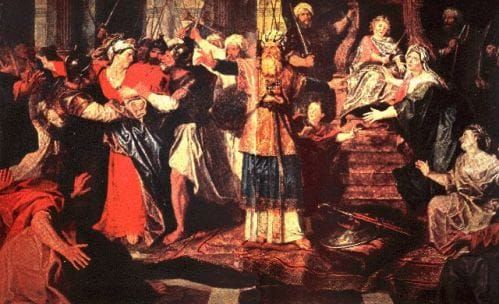
For Athaliah had her treasure, and it was a treasure of dominion and of fear; she had bound her whole heart to it, and when the trumpets sounded for another she could only cry treason and be led out to her death. Yet through all those years, while she reigned and thought herself secure, the true heir lay hidden in the temple of the Lord, and the lamp of David was not extinguished. The psalmist understood this well, who heard the Lord declare that He had chosen Zion for His resting place, and that there He would make a lamp to shine for His anointed. The treasure that endures is always the one kept in God's own house, guarded not by our anxious watching but by His fidelity.
This is the lesson the soul is asked to take to itself: that the heart is never neutral, never without a master, but follows wherever its treasure has gone before it. For where your treasure is, there also will your heart be. The danger against which the Lord warns is named with precision in the Church's teaching, that idolatry consists in divinizing what is not God, and that a man commits it whenever he honors and reveres a creature in place of the Creator, be it power or pleasure or money. The peril is not that gold is evil, but that the heart, fastening itself to what cannot last, is dragged downward and enslaved. Chrysostom saw this with unsparing clarity: even should a man escape the moth and the decay and the thief, the enslaving of his heart, the nailing of it to all that is below, he will not escape.
And here the Lord turns from the treasure to the eye, for the two are one teaching. The lamp of the body is the eye, He says, and if the eye is sound, the whole body will be filled with light. So it is with the inward eye, the intention by which the soul looks out upon the world and chooses what it shall love. If that gaze is single, bent wholly upon God, the whole interior man is luminous; but if it is divided, half upon heaven and half upon the things that perish, then the very light within becomes darkness, and how great is that darkness. For the heart is our hidden center, the place of truth where we choose life or death; and what we treasure there will either kindle it or quench it.
What is asked of the soul, then, is not contempt for the good things of this life, but a right ordering of its love, that desire for true happiness which frees a man from his immoderate attachment to the goods of this world so that he can find his fulfillment in the vision and beatitude of God. To give alms, to loosen the grip of possessions, to fix the affections upon what is eternal, is not to lose but to transfer one's treasure to the only place where it can be kept whole, where it bears fruits that never die. Augustine, who had scattered his heart among many things before he found the one thing necessary, confessed at last the secret hidden in every restlessness: that God has made us for Himself, and our heart is restless until it rests in Him. The soul that lays up its treasure in heaven is simply the soul that has consented, at last, to dwell where it was always meant to rest, and there to find its lamp forever lit.
Lord, teach me to know where my treasure truly lies, and to loosen my grasp upon all that cannot last. Cleanse the eye of my heart that it may look upon You with a single gaze, and let the lamp You kindle within me never fall into darkness. Draw my restless heart home to its rest in You alone. Through Christ our Lord. Amen.
Sources & References
- Athaliah and the hidden heir Joash — 2 Kings 11 (First Reading).
- The Lord has chosen Zion; “I will place a lamp for my anointed” — Psalm 132 (Responsorial Psalm).
- “Where your treasure is, there also will your heart be” — Matthew 6:21 (Gospel).
- “The lamp of the body is the eye… how great will the darkness be” — Matthew 6:22-23 (Gospel).
- Idolatry consists in divinizing what is not God — Catechism of the Catholic Church, 2113.
- The heart is our hidden center, where we choose life or death — Catechism of the Catholic Church, 2563.
- Desire for true happiness frees man from immoderate attachment to the goods of this world — Catechism of the Catholic Church, 2548.
- The enslaving of your heart you will not escape — St. John Chrysostom, Homily 20 on Matthew.
- “You have made us for Yourself, and our heart is restless until it rests in You” — St. Augustine, Confessions, Book I.
- Pope Francis, morning meditation “Treasure hunt,” 20 June 2014.
📖 Lectura del día
Viernes 19 de junio de 2026 — Viernes de la undécima semana del Tiempo Ordinario
Lecturas: 2 Reyes 11,1-4.9-18.20 • Salmo 132,11.12.13-14.17-18 • Mateo 6,19-23
Hay una continuidad oculta entre las dos escenas que la Iglesia pone hoy ante el alma, aunque al principio parezcan no compartir nada. En la una, una reina se aferra a un trono por la sangre, y su poder, que parecía tan absoluto, dura apenas siete años antes de serle arrancado en una sola mañana; en la otra, el Señor habla quedamente de la polilla y la herrumbre y del ladrón que horada en la noche, y manda al alma atesorarse un tesoro que ninguna ruina pueda alcanzar. Ambas se ocupan de la misma pregunta, la pregunta que yace bajo toda vida, como quiera que se gaste: ¿dónde pondrá una persona aquello que más ama, y a qué confiará su custodia?
Pues Atalía tenía su tesoro, y era un tesoro de dominio y de miedo; había atado a él todo su corazón, y cuando las trompetas sonaron por otro, sólo pudo gritar traición y ser llevada a la muerte. Y sin embargo, durante todos aquellos años, mientras reinaba y se creía segura, el verdadero heredero yacía oculto en el templo del Señor, y la lámpara de David no se apagó. Bien lo entendió el salmista, que oyó al Señor declarar que había escogido a Sión como lugar de su reposo, y que allí haría brillar una lámpara para su ungido. El tesoro que perdura es siempre el que se guarda en la casa misma de Dios, custodiado no por nuestra vigilancia angustiosa sino por su fidelidad.
Esta es la lección que se pide al alma que haga suya: que el corazón nunca es neutral, nunca está sin señor, sino que sigue dondequiera que su tesoro haya ido antes que él. Pues donde está tu tesoro, allí estará también tu corazón. El peligro contra el que advierte el Señor se nombra con precisión en la enseñanza de la Iglesia: que la idolatría consiste en divinizar lo que no es Dios, y que el hombre la comete siempre que honra y reverencia a una criatura en lugar del Creador, sea el poder, el placer o el dinero. El peligro no es que el oro sea malo, sino que el corazón, prendiéndose a lo que no puede durar, es arrastrado hacia abajo y esclavizado. Crisóstomo lo vio con claridad implacable: aun cuando un hombre escape de la polilla y la herrumbre y el ladrón, la esclavitud de su corazón, el clavarlo a todo lo que está abajo, no la escapará.
Y aquí el Señor pasa del tesoro al ojo, pues los dos son una sola enseñanza. La lámpara del cuerpo es el ojo, dice, y si el ojo está sano, todo el cuerpo estará lleno de luz. Así es con el ojo interior, la intención por la que el alma mira al mundo y elige lo que ha de amar. Si esa mirada es simple, vuelta enteramente hacia Dios, todo el hombre interior es luminoso; pero si está dividida, mitad en el cielo y mitad en las cosas que perecen, entonces la luz misma de dentro se vuelve tinieblas, y cuán grandes serán esas tinieblas. Pues el corazón es nuestro centro escondido, el lugar de la verdad donde elegimos la vida o la muerte; y lo que allí atesoremos lo encenderá o lo apagará.
Lo que se pide al alma, entonces, no es el desprecio de los bienes de esta vida, sino el recto orden de su amor, ese deseo de la verdadera felicidad que libra al hombre de su apego inmoderado a los bienes de este mundo para que halle su plenitud en la visión y la bienaventuranza de Dios. Dar limosna, aflojar el puño de las posesiones, fijar los afectos en lo eterno, no es perder sino trasladar el tesoro al único lugar donde puede guardarse entero, donde da frutos que nunca mueren. Agustín, que había esparcido su corazón entre muchas cosas antes de hallar la única necesaria, confesó al fin el secreto escondido en toda inquietud: que Dios nos ha hecho para sí, y nuestro corazón está inquieto hasta que descansa en Él. El alma que atesora su tesoro en el cielo es sencillamente el alma que ha consentido, al fin, en morar donde siempre estuvo destinada a descansar, y allí hallar su lámpara para siempre encendida.
Señor, enséñame a saber dónde está verdaderamente mi tesoro, y a aflojar mi puño sobre todo lo que no puede durar. Limpia el ojo de mi corazón para que te mire con una sola mirada, y que la lámpara que enciendes dentro de mí nunca caiga en tinieblas. Atrae mi corazón inquieto a su descanso en ti solo. Por Jesucristo nuestro Señor. Amén.
Fuentes y referencias
- Atalía y el heredero oculto Joás; la caída de la reina usurpadora — 2 Reyes 11 (Primera lectura).
- El Señor ha escogido a Sión para su morada; «haré brillar una lámpara para mi ungido» — Salmo 132 (Salmo responsorial).
- «Donde está tu tesoro, allí estará también tu corazón» — Mateo 6,21 (Evangelio, Mateo 6,19-23).
- «La lámpara del cuerpo es el ojo… cuán grandes serán las tinieblas» — Mateo 6,22-23 (Evangelio).
- La idolatría consiste en divinizar lo que no es Dios; honrar a una criatura en lugar de Dios —poder, placer, dinero— Catecismo de la Iglesia Católica, 2113.
- El corazón es nuestro centro escondido; es el lugar de la verdad, donde elegimos la vida o la muerte — Catecismo de la Iglesia Católica, 2563.
- El deseo de la verdadera felicidad libra al hombre de su apego inmoderado a los bienes de este mundo — Catecismo de la Iglesia Católica, 2548.
- «La esclavitud de tu corazón… no la escaparás»; el tesoro celestial que da frutos que nunca mueren — San Juan Crisóstomo, Homilía 20 sobre el Evangelio de Mateo.
- «Nos has hecho para ti, y nuestro corazón está inquieto hasta que descansa en ti» — San Agustín, Confesiones, libro I.
- Enseñanza papal — Papa Francisco, meditación «La caza del tesoro», Casa Santa Marta, 20 de junio de 2014.