
📖 Daily Scripture
September 3, 2026 — Memorial of Saint Gregory the Great, Pope and Doctor of the Church
Readings: 1 Corinthians 3:18-23 • Psalm 24:1bc-2, 3-4ab, 5-6 • Luke 5:1-11
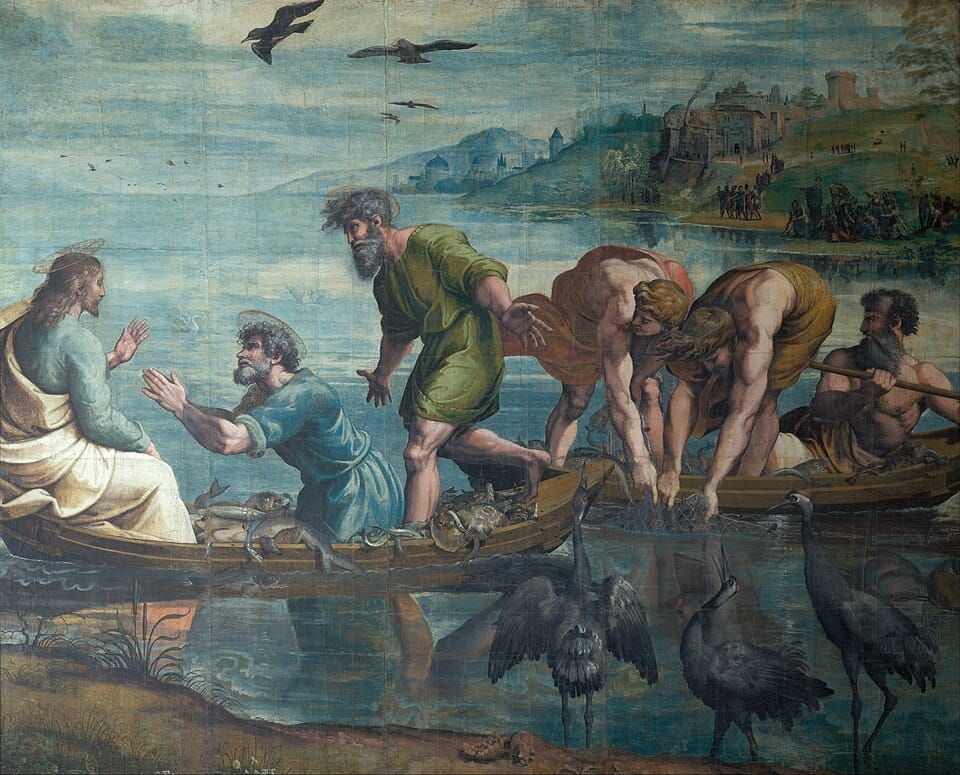
There is a particular weariness that belongs to the morning after a fruitless night, and it is with that weariness that today's Gospel opens. The fishermen have come in from the lake; the nets are being washed, not mended for another attempt; the water has kept its silence. Into that ordinary scene of exhaustion the Lord steps, and He does not begin by consoling Simon, nor by explaining Himself, but by asking for the loan of a boat. Christ asks first for a small thing, a little distance from the shore, before He asks for anything greater. The soul that fears He will demand everything at once may take comfort in this: He begins where we are, in the boat we already own, at the hour when we have least to give.
Then comes the word that changes the day. "Put out into deep water and lower your nets for a catch." To Simon this was not a devout suggestion but a professional absurdity. He had fished those waters all his life; he knew that the night had failed and that daylight was worse. Here the first reading meets the Gospel with unusual precision, for Saint Paul writes that the wisdom of this world is foolishness in the eyes of God, and warns the man who considers himself wise to become a fool that he may become wise. Simon's judgment was not stupid; it was expert, accurate, and thoroughly reasonable. That is precisely the difficulty. Worldly wisdom is dangerous not because it is usually wrong but because it is usually right, and so it acquires an authority in the soul it was never meant to hold — an authority that quietly forecloses the possibility of God asking something unreasonable of us.
The lesson, then, is not that we should think less carefully, but that our carefulness must learn to keep silence when the Lord has spoken. Simon's answer is the hinge upon which the whole scene turns: "Master, we have worked hard all night and have caught nothing, but at your command I will lower the nets." He does not pretend to agree. He simply lets the word of Christ outrank his own conclusion, and lowers the net a second time into water he is certain is empty. This is the ordinary shape of obedience in a Christian life — not a feeling, but a decision taken against the grain of one's own competence. Saint John Chrysostom, preaching upon this very passage of the Apostle, observed that that which was accounted to be foolishness became unto us the cause of wisdom; and the Church says the same of the Cross itself, teaching that Christ crucified is the power of God and the wisdom of God, for the foolishness of God is wiser than men.
What follows is not merely a large catch but a revelation. The nets tear, the boats begin to sink, and Simon does not shout for joy — he falls at the knees of Jesus and says, "Depart from me, Lord, for I am a sinful man." Abundance has shown him his poverty. This is the strange courtesy of grace: it does not flatter the soul, it exposes it, and the exposure is itself a mercy, for humility is the foundation of prayer, and only the soul that knows itself a beggar before God is able to receive freely what God delights to give. Peter is not sent away. He is given a name for his future, and the fear that would have paralysed him is answered before it can settle: do not be afraid.
And then the detail the Evangelist sets down almost without comment: they left everything and followed Him. They left the greatest catch of their lives lying on the shore. Jesus enjoins His disciples to prefer Him to everything and everyone, and bids them renounce all that they have for His sake and that of the Gospel; and it is worth observing that the renunciation came at the moment of success, not of failure. It is easy to abandon an empty net. To walk away from a full one is another thing entirely, and it is the measure of what the disciple has come to love more.
Saint Gregory the Great, whose memory the Church keeps today, understood this reluctance from within. Drawn out of the quiet of the cloister into the government of the Church, he called himself the servant of the servants of God and wrote that the government of souls is the art of arts — a labour he never sought and never laid down. He too put out into deep water at a word he had not chosen. The soul that finds itself asked for more than it feels able to give may take him as a companion, and take courage: the nets are not filled by our skill, and the Lord who commands the casting is Himself the abundance He supplies.
Lord, teach me to distrust the wisdom that would keep my nets on the shore, and to lower them again at Your word. Where my own strength has laboured all night and caught nothing, let me not despair but obey. Give me the humility of Peter, who knew himself a sinner in the very hour of abundance, and the courage to leave behind whatever I have gathered, that I may follow You. Through Christ our Lord. Amen.
Sources & References
- "Let no one deceive himself… let him become a fool, so as to become wise" / "the wisdom of this world is foolishness in the eyes of God" — 1 Corinthians 3:18-23 (First Reading, Lectionary 434)
- "To the Lord belongs the earth and all that fills it" — Psalm 24:1bc-2, 3-4ab, 5-6 (Responsorial Psalm)
- "Put out into deep water and lower your nets for a catch" / "Master, we have worked hard all night and have caught nothing, but at your command I will lower the nets" / "Depart from me, Lord, for I am a sinful man" / "Do not be afraid" / "they left everything and followed him" — Luke 5:1-11 (Gospel)
- "Come after me, says the Lord, and I will make you fishers of men" — Matthew 4:19 (Alleluia verse)
- "Christ crucified is the power of God and the wisdom of God, for the foolishness of God is wiser than men" — Catechism of the Catholic Church, 272 (quoting 1 Corinthians 1:24-25)
- "Humility is the foundation of prayer" / "Man is a beggar before God" — Catechism of the Catholic Church, 2559
- "Jesus enjoins his disciples to prefer him to everything and everyone, and bids them 'renounce all that [they have]' for his sake and that of the Gospel" — Catechism of the Catholic Church, 2544
- "That which was accounted to be foolishness became unto us the cause of wisdom" — Saint John Chrysostom, Homily 10 on First Corinthians
- "The government of souls is the art of arts" — Saint Gregory the Great, The Book of Pastoral Rule, Book I, ch. 1
- Papal commentary: "It is the pedagogy of God's call, which does not consider the quality of those who are chosen so much as their faith… it is our task to cast our nets in faith — the Lord will do the rest" — Pope Benedict XVI, Angelus, 10 February 2013 (carried as the papal meditation in Vatican News, Word of the Day, 3 September 2026)
Confiado en Tu Palabra Echaré las Redes
📖 Sagrada Escritura Diaria
3 de septiembre de 2026 — Memoria de San Gregorio Magno, papa y doctor de la Iglesia
Lecturas: 1 Corintios 3, 18-23 • Salmo 23, 1-2. 3-4ab. 5-6 • Lucas 5, 1-11
Hay un cansancio muy particular que pertenece a la mañana siguiente a una noche estéril, y con ese cansancio se abre el Evangelio de hoy. Los pescadores han vuelto del lago; las redes se están lavando, no remendando para otro intento; el agua ha guardado su silencio. En esa escena ordinaria de agotamiento entra el Señor, y no comienza consolando a Simón, ni explicándose a sí mismo, sino pidiendo prestada una barca. Cristo pide primero una cosa pequeña, un poco de distancia de la orilla, antes de pedir algo mayor. El alma que teme que Él lo exija todo de una vez puede consolarse con esto: Él comienza donde estamos, en la barca que ya poseemos, en la hora en que menos tenemos para dar.
Entonces llega la palabra que cambia el día: "Lleva la barca mar adentro y echen sus redes para pescar". Para Simón aquello no era una sugerencia piadosa, sino un absurdo profesional. Había pescado en aquellas aguas toda su vida; sabía que la noche había fracasado y que la luz del día era peor. Aquí la primera lectura se encuentra con el Evangelio con una precisión poco común, porque san Pablo escribe que la sabiduría de este mundo es ignorancia ante Dios, y advierte al que se tiene a sí mismo por sabio que se haga ignorante para llegar a ser verdaderamente sabio. El juicio de Simón no era necio; era experto, exacto y del todo razonable. Ahí está precisamente la dificultad. La sabiduría del mundo es peligrosa no porque suela equivocarse, sino porque suele acertar, y así adquiere en el alma una autoridad que nunca le correspondió tener: una autoridad que en silencio cierra la posibilidad de que Dios nos pida algo irrazonable.
La lección, pues, no es que pensemos con menos cuidado, sino que nuestro cuidado aprenda a callar cuando el Señor ha hablado. La respuesta de Simón es el gozne sobre el que gira toda la escena: "Maestro, hemos trabajado toda la noche y no hemos pescado nada; pero, confiado en tu palabra echaré las redes". No finge estar de acuerdo. Sencillamente deja que la palabra de Cristo prevalezca sobre su propia conclusión, y baja la red por segunda vez en un agua que él sabe vacía. Ésta es la forma ordinaria de la obediencia en la vida cristiana: no un sentimiento, sino una decisión tomada a contrapelo de la propia competencia. San Juan Crisóstomo, predicando sobre este mismo pasaje del Apóstol, observó que lo que era tenido por necedad vino a ser para nosotros causa de sabiduría; y la Iglesia dice lo mismo de la Cruz, enseñando que Cristo crucificado es poder de Dios y sabiduría de Dios, porque la necedad divina es más sabia que la sabiduría de los hombres.
Lo que sigue no es solamente una pesca abundante, sino una revelación. Las redes se rompen, las barcas empiezan a hundirse, y Simón no grita de alegría: se arroja a los pies de Jesús y dice: "¡Apártate de mí, Señor, porque soy un pecador!". La abundancia le ha mostrado su pobreza. Ésta es la extraña cortesía de la gracia: no adula al alma, la desnuda, y esa desnudez es ya una misericordia, porque la humildad es la base de la oración, y sólo el alma que se sabe mendiga delante de Dios es capaz de recibir gratuitamente lo que Dios se complace en dar. Pedro no es despedido. Recibe un nombre para su porvenir, y el miedo que lo habría paralizado queda respondido antes de que llegue a asentarse: no temas.
Y luego el detalle que el evangelista consigna casi sin comentario: dejándolo todo, lo siguieron. Dejaron en la orilla la mayor pesca de sus vidas. Jesús exhorta a sus discípulos a preferirle a Él respecto a todo y a todos y les propone renunciar a todos sus bienes por Él y por el Evangelio; y vale la pena advertir que la renuncia llegó en el momento del éxito, no en el del fracaso. Es fácil abandonar una red vacía. Alejarse de una red llena es cosa muy distinta, y es la medida de lo que el discípulo ha llegado a amar más.
San Gregorio Magno, cuya memoria celebra hoy la Iglesia, conoció esta resistencia desde dentro. Sacado del silencio del claustro para el gobierno de la Iglesia, se llamó a sí mismo siervo de los siervos de Dios y escribió que el gobierno de las almas es el arte de las artes: una tarea que nunca buscó y que nunca abandonó. También él se adentró mar adentro por una palabra que no había elegido. El alma que se ve pedir más de lo que se siente capaz de dar puede tomarlo por compañero, y cobrar ánimo: las redes no se llenan con nuestra destreza, y el Señor que manda echarlas es Él mismo la abundancia que concede.
Señor, enséñame a desconfiar de la sabiduría que dejaría mis redes en la orilla, y a echarlas de nuevo por tu palabra. Donde mi propia fuerza ha trabajado toda la noche sin pescar nada, que no me desanime, sino que obedezca. Dame la humildad de Pedro, que se reconoció pecador en la hora misma de la abundancia, y el valor de dejar atrás cuanto he reunido, para seguirte. Por Jesucristo nuestro Señor. Amén.
Fuentes y referencias
- "Que nadie se engañe… que se haga ignorante para llegar a ser verdaderamente sabio" / "la sabiduría de este mundo es ignorancia ante Dios" — 1 Corintios 3, 18-23 (Primera lectura, Leccionario 434)
- "El Señor bendice al hombre justo" — Salmo 23, 1-2. 3-4ab. 5-6 (Salmo responsorial; numeración de la Vulgata según el Leccionario en español)
- "Lleva la barca mar adentro y echen sus redes para pescar" / "Maestro, hemos trabajado toda la noche y no hemos pescado nada; pero, confiado en tu palabra echaré las redes" / "¡Apártate de mí, Señor, porque soy un pecador!" / "No temas" / "dejándolo todo, lo siguieron" — Lucas 5, 1-11 (Evangelio)
- "Síganme, dice el Señor, y yo los haré pescadores de hombres" — Mateo 4, 19 (Aclamación antes del Evangelio)
- "Cristo crucificado es 'poder de Dios y sabiduría de Dios. Porque la necedad divina es más sabia que la sabiduría de los hombres'" — Catecismo de la Iglesia Católica, 272 (cf. 1 Corintios 1, 24-25)
- "La humildad es la base de la oración" / "el hombre es un mendigo de Dios" — Catecismo de la Iglesia Católica, 2559
- "Jesús exhorta a sus discípulos a preferirle a Él respecto a todo y a todos y les propone 'renunciar a todos sus bienes' (Lc 14, 33) por Él y por el Evangelio" — Catecismo de la Iglesia Católica, 2544
- "Lo que era tenido por necedad vino a ser para nosotros causa de sabiduría" — San Juan Crisóstomo, Homilía 10 sobre la Primera Carta a los Corintios
- "El gobierno de las almas es el arte de las artes" — San Gregorio Magno, Regla Pastoral, Libro I, cap. 1
- Comentario papal: "Es la pedagogía de la llamada de Dios, que no mira tanto la calidad de los elegidos, sino su fe… a nosotros nos corresponde echar las redes con fe, el Señor hace el resto" — Benedicto XVI, Ángelus, 10 de febrero de 2013 (recogido como meditación papal en Vatican News, Palabra del día, 3 de septiembre de 2026)