
📖 Daily Scripture
Thursday, July 2, 2026 — Thursday of the Thirteenth Week in Ordinary Time
Readings: Amos 7:10-17 • Psalm 19:8, 9, 10, 11 • Matthew 9:1-8
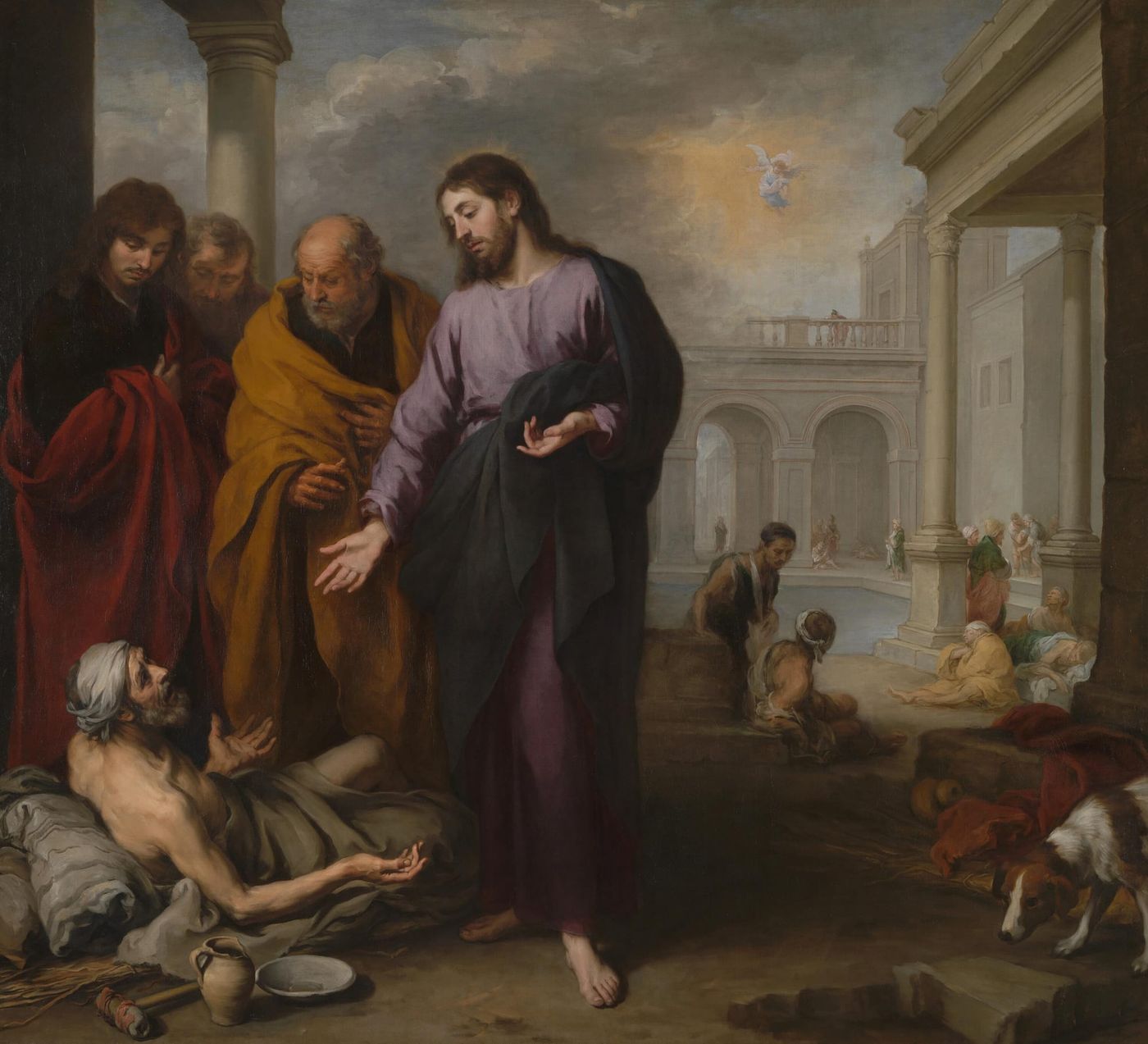
There is, in the Gospel of this day, a healing that the eye can see and a healing that it cannot, and the soul does well to notice which of the two the Lord attends to first. Men carry their friend to Jesus upon a stretcher, hoping, no doubt, only for the restoration of his limbs; and when Jesus sees their faith, He speaks not to the withered body but to the burdened conscience: "Courage, child, your sins are forgiven." Before He commands the paralytic to rise, He looses within him a heavier chain than any that bound his legs, as though to teach that beneath every visible affliction there lies a graver one, and that the mercy of God descends first to the deepest wound.
For there is a paralysis of the soul more crippling than that of the body. Evil, taking root within, binds a person with the ties of falsehood, anger, and envy, and little by little stills the very faculties by which he might walk in the path of the good. The soul that examines itself honestly will recognize how such cords tighten quietly, unnoticed, until the will that once moved freely toward what is right can scarcely stir at all. It is this interior stiffening, and not merely the outward misfortune, that Christ has come to undo.
The scribes murmur that He blasphemes, for only God can forgive sins; and in this they are more right than they know. Only God forgives sins; since He is the Son of God, Jesus says of Himself, "The Son of Man has authority on earth to forgive sins," and exercises this divine power: "Your sins are forgiven." The very act that scandalizes them is the revelation of who He is: the pardon they think impossible is the proof of His divinity, offered not to confound them but to save the man lying helpless at His feet.
The first reading sets the same truth in sterner colors. Amos, no prophet by trade but a shepherd summoned from his flock, is told to take his troubling words elsewhere; yet the word of the Lord is not so easily dismissed, for it comes to confront and, in confronting, to heal. So the psalmist sings that the law of the Lord is perfect, refreshing the soul, and that His ordinances are sweeter than honey from the comb. The soul is inclined to reverse the Lord's own order of urgency, craving the visible cure, the power to rise and walk, while resisting the invisible one that would forgive; but the divine word that refreshes the soul is the very medicine that restores it, and it is no burden but a mercy.
Christ, then, is the physician of souls, and He bends over each one of the sick who need Him to cure them. Yet a wound concealed cannot be tended: if the sick man is too ashamed to show his wound to the doctor, the medicine cannot heal what it does not know. Here lies the concrete lesson of the day. The soul must not hide; it must bring its true affliction into the light, for concealment is itself a kind of paralysis, and honesty the first movement of healing. He who confesses his sins is already working with God; and again, destroy what you have made, so that God may save what He has made.
This healing the Lord did not keep to Himself, but entrusted to His Church, willing that she should be the sign and instrument of the forgiveness and reconciliation that He acquired for us at the price of His blood. The authority the crowds glorified, given such power to men, endures still, that no one need lie paralyzed in his sin. Rise, then, and take up the mat; the forgiven soul walks. And it walks homeward, into the house of a Father whose love heals not a part of us but the whole, and whose mercy is always the first and the last word.
Lord Jesus, physician of my soul, teach me to bring You not only the burdens I can no longer carry but the wounds I would rather hide. Loosen within me the cords of falsehood, anger, and envy that have slowly stilled my steps, and speak over me the word that forgives before it commands. Give me the courage to rise, that, healed in heart, my whole life may walk again toward You. Through Christ our Lord. Amen.
Sources & References
- "Courage, child, your sins are forgiven"; "Rise, pick up your stretcher, and go home" — Gospel, Matthew 9:1-8
- "The law of the LORD is perfect, refreshing the soul"; "sweeter also than syrup or honey from the comb" — Responsorial Psalm, Psalm 19:8, 11
- Amos, taken by the LORD "from following the flock" — First Reading, Amos 7:10-17
- "Only God forgives sins… 'The Son of Man has authority on earth to forgive sins'… 'Your sins are forgiven'" — Catechism of the Catholic Church, 1441
- "the sign and instrument of the forgiveness and reconciliation that he acquired for us at the price of his blood" — Catechism of the Catholic Church, 1442
- "He is the physician tending each one of the sick who need him to cure them" — Catechism of the Catholic Church, 1484
- "if the sick man is too ashamed to show his wound to the doctor, the medicine cannot heal what it does not know" — St. Jerome, Commentary on Ecclesiastes 10:11 (cited in CCC 1456)
- "He who confesses his sins… is already working with God"; "Destroy what you have made, so that God may save what He has made" — St. Augustine, Tractates on the Gospel of John 12:13 (cited in CCC 1458)
- "The paralyzed man is the image of every human being whom sin prevents from moving about freely… their whole life might flourish anew" — Pope Benedict XVI, Angelus, 19 February 2006
Ten confianza, hijo
📖 Sagrada Escritura Diaria
Jueves 2 de julio de 2026 — Jueves de la XIII semana del Tiempo ordinario
Lecturas: Amós 7, 10-17 • Salmo 18, 8. 9. 10. 11 • Mateo 9, 1-8
Hay, en el Evangelio de este día, una curación que el ojo puede ver y otra que no puede, y el alma hace bien en advertir a cuál de las dos atiende primero el Señor. Unos hombres llevan a su amigo hasta Jesús sobre una camilla, esperando, sin duda, solo la restauración de sus miembros; y cuando Jesús ve su fe, no habla al cuerpo paralizado, sino a la conciencia agobiada: "Ten confianza, hijo. Se te perdonan tus pecados." Antes de mandar al paralítico que se levante, desata en él una cadena más pesada que cualquiera que atara sus piernas, como para enseñar que bajo toda aflicción visible yace otra más grave, y que la misericordia de Dios desciende primero hasta la herida más honda.
Porque hay una parálisis del alma más incapacitante que la del cuerpo. El mal, anidando en el interior, ata a la persona con los lazos de la mentira, la ira y la envidia, y poco a poco paraliza las facultades mismas por las que podría caminar por la senda del bien. El alma que se examina con honradez reconocerá cómo tales lazos se estrechan en silencio, sin ser notados, hasta que la voluntad que antes se movía libremente hacia lo recto apenas puede ya moverse. Es este endurecimiento interior, y no solo la desgracia exterior, lo que Cristo ha venido a deshacer.
Los escribas murmuran que blasfema, pues solo Dios puede perdonar los pecados; y en esto tienen más razón de la que saben. Sólo Dios perdona los pecados; porque Jesús es el Hijo de Dios, dice de sí mismo: "El Hijo del hombre tiene poder de perdonar los pecados en la tierra", y ejerce ese poder divino: "Tus pecados están perdonados." El mismo acto que los escandaliza es la revelación de quién es Él: el perdón que juzgan imposible es la prueba de su divinidad, ofrecida no para confundirlos, sino para salvar al hombre que yace impotente a sus pies.
La primera lectura presenta la misma verdad con colores más severos. Amós, que no era profeta de oficio sino un pastor sacado de junto a su rebaño, recibe la orden de llevar sus palabras molestas a otra parte; pero la palabra del Señor no se descarta tan fácilmente, pues viene a confrontar y, al confrontar, a sanar. Por eso el salmista canta que la ley del Señor es perfecta del todo y reconforta el alma, y que sus normas son más dulces que la miel de un panal que gotea. El alma se inclina a invertir el orden de urgencia del propio Señor, anhelando la cura visible, el poder de levantarse y andar, mientras resiste la invisible que la perdonaría; pero la palabra divina que reconforta el alma es la medicina misma que la restaura, y no es carga, sino misericordia.
Cristo, pues, es el médico de las almas, y se inclina sobre cada uno de los enfermos que tienen necesidad de él para curarlos. Mas una herida oculta no puede ser atendida: si el enfermo se avergüenza de descubrir su llaga al médico, la medicina no cura lo que ignora. Aquí está la lección concreta del día. El alma no debe esconderse; debe traer su verdadera aflicción a la luz, porque el ocultamiento es ya una especie de parálisis, y la sinceridad, el primer movimiento de la curación. Quien confiesa y se acusa de sus pecados hace las paces con Dios; y añade: deshaz lo que hiciste para que Dios salve lo que hizo.
Esta curación no la guardó el Señor para sí, sino que la confió a su Iglesia, queriendo que ella fuera el signo y el instrumento del perdón y de la reconciliación que nos adquirió al precio de su sangre. La autoridad que las multitudes glorificaron, dado tanto poder a los hombres, permanece todavía, para que nadie tenga que yacer paralizado en su pecado. Levántate, pues, y toma tu camilla; el alma perdonada camina. Y camina hacia su casa, hacia la morada de un Padre cuyo amor no sana una parte de nosotros, sino el todo, y cuya misericordia es siempre la primera y la última palabra.
Señor Jesús, médico de mi alma, enséñame a traerte no solo las cargas que ya no puedo llevar, sino también las heridas que preferiría esconder. Desata en mí los lazos de la mentira, la ira y la envidia que poco a poco han detenido mis pasos, y pronuncia sobre mí la palabra que perdona antes de mandar. Dame el valor de levantarme, para que, sanado en el corazón, toda mi vida vuelva a caminar hacia Ti. Por Jesucristo nuestro Señor. Amén.
Fuentes y referencias
- "Ten confianza, hijo. Se te perdonan tus pecados"; "Levántate, toma tu camilla y vete a tu casa" — Evangelio, Mateo 9, 1-8
- "La ley del Señor es perfecta del todo y reconforta el alma"; "más dulces que la miel de un panal que gotea" — Salmo responsorial, Salmo 18, 8. 11
- Amós, a quien el Señor sacó "de junto al rebaño" — Primera lectura, Amós 7, 10-17
- "Sólo Dios perdona los pecados… 'El Hijo del hombre tiene poder de perdonar los pecados en la tierra'… 'Tus pecados están perdonados'" — Catecismo de la Iglesia Católica, 1441
- "el signo y el instrumento del perdón y de la reconciliación que nos adquirió al precio de su sangre" — Catecismo de la Iglesia Católica, 1442
- "se inclina sobre cada uno de los enfermos que tienen necesidad de él para curarlos" — Catecismo de la Iglesia Católica, 1484
- "si el enfermo se avergüenza de descubrir su llaga al médico, la medicina no cura lo que ignora" — San Jerónimo, Comentario al Eclesiastés 10, 11 (citado en el CIC 1456)
- "Quien confiesa y se acusa de sus pecados hace las paces con Dios"; "Deshaz lo que hiciste para que Dios salve lo que hizo" — San Agustín, Tratados sobre el Evangelio de san Juan 12, 13 (citado en el CIC 1458)
- "El paralítico es imagen de todo ser humano al que el pecado impide moverse libremente… toda su existencia pueda renovarse" — Papa Benedicto XVI, Ángelus, 19 de febrero de 2026