
📖 Daily Scripture
Sunday, November 15, 2026 — Thirty-third Sunday in Ordinary Time
Readings: Proverbs 31:10-13, 19-20, 30-31 • Psalm 128:1-2, 3, 4-5 • 1 Thessalonians 5:1-6 • Matthew 25:14-30
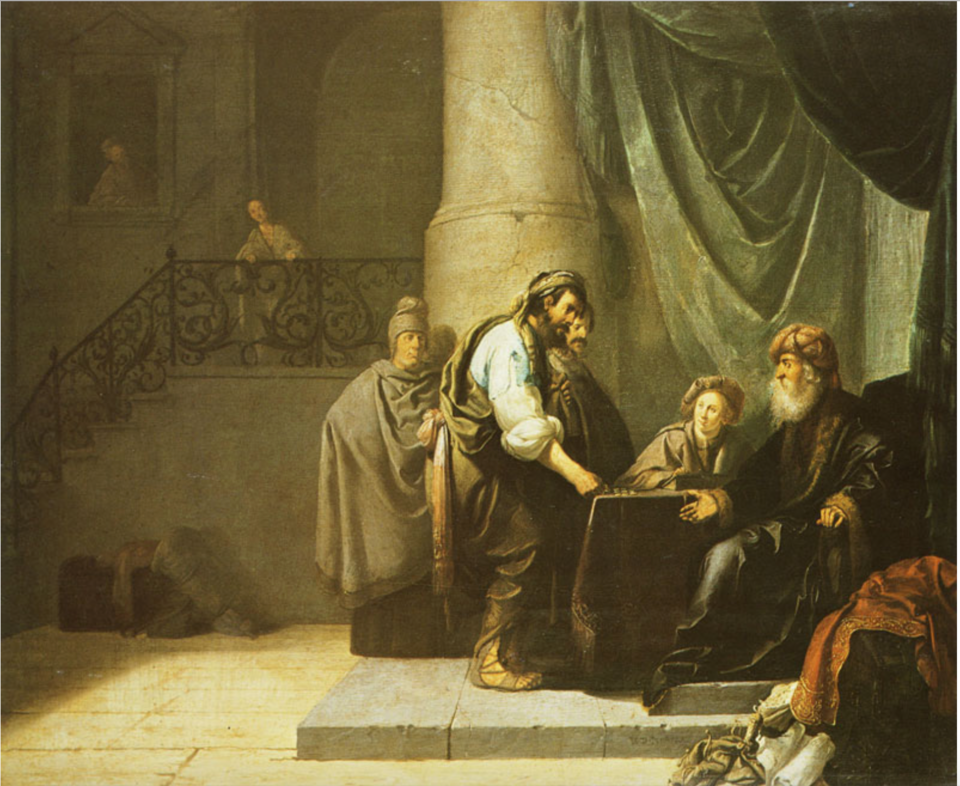
There is a kind of fear which wears the garments of prudence, and which, because it does nothing wrong, persuades the soul that it has done nothing amiss. The third servant of the parable is its perfect portrait. He does not squander his master's silver; he does not steal it; he keeps it, carefully and secretly, and returns it whole. And yet his own confession condemns him: “out of fear I went off and buried your talent in the ground.” He mistook the burying of a gift for the keeping of it, and in the end he lost what he had refused to risk.
It is worth pondering how quietly this happens within us. A soul rarely decides, in one solemn act, to bury what God has given it. Rather it postpones: the kindness that would cost a little humility, the word of faith that might be received coldly, the prayer deferred until a more convenient hour, the forgiveness withheld until the other party should ask for it. None of these omissions seems grave on any single day, and so the earth is heaped upon the talent a handful at a time. The moral lesson of this Sunday is plain and searching: before God, the unused gift is not a neutral thing. To hide what was given for increase is already, in a measure, to refuse the Giver.
Yet the root of the matter is not idleness but a false image of God. The servant buried his talent because he thought his master hard and grasping, and a soul that imagines God as an exacting creditor will always prefer the safety of the hole in the ground to the venture of love. The Catechism names the remedy with great tenderness: the moral life animated by charity frees the Christian, so that “he no longer stands before God as a slave, in servile fear,” but “as a son responding to the love of him who ‘first loved us.’” The Psalm, too, speaks of fear, “Blessed are those who fear the Lord,” but this is the holy fear of reverence, which draws near, and not the craven fear that hides. Pope Francis, reflecting on this very parable, set the two side by side with a single sentence: “trust frees, always; fear paralyses.”
Nor may the soul excuse itself by the smallness of its portion. St. John Chrysostom, preaching on this Gospel, would allow no such retreat: “Let no man say, I have but one talent, and can do nothing; for you can even by one approve yourself.” The talents differ, and the Church teaches that the difference is itself providential, so “that those endowed with particular ‘talents’ share the benefits with those who need them.” The gift is never given for the soul alone; it is given to pass through the soul into the lives of others.
Here the valiant woman of Proverbs becomes our quiet teacher. Her greatness lies in no single brilliant deed, but in hands that are faithful to the spindle and open to the poor, day after day. “Charm is deceptive and beauty fleeting; the woman who fears the LORD is to be praised.” And St. Paul, writing of the Day of the Lord that comes like a thief in the night, reminds the soul of what it already is: “children of the light and children of the day.” To stay alert and sober is not to live in anxious dread of the Master's return, but to be found, when He comes, with the work of love still warm in one's hands.
So let the soul ask itself, honestly and without discouragement, which talent it has buried, and let it take up the spade not to dig deeper but to bring the gift back into the light. For the God who entrusts is not a hard man reaping where He did not sow. His desire is our flourishing, as St. Irenaeus saw so clearly: “the glory of God is man fully alive.” And to the one who has ventured even a little for His sake, He speaks the words which are the whole hope of the Christian life: “Well done, my good and faithful servant. Come, share your master's joy.”
Lord Jesus, You have entrusted to me gifts I did not earn and cannot keep by hiding them. Cast out from within me the fear that buries, and teach me the trust that ventures all for love of You, so that on the day of Your coming I may be found faithful in little things and may enter into Your joy. Through Christ our Lord. Amen.
Sources & References
- “out of fear I went off and buried your talent in the ground”; “Well done, my good and faithful servant. Come, share your master's joy” — Matthew 25:25, 25:21 (USCCB Lectionary for Mass)
- “Blessed are those who fear the Lord” — Psalm 128, refrain (cf. 1a)
- “Charm is deceptive and beauty fleeting; the woman who fears the LORD is to be praised” — Proverbs 31:30
- “children of the light and children of the day”; “stay alert and sober” — 1 Thessalonians 5:5-6
- “he no longer stands before God as a slave, in servile fear” … “as a son responding to the love of him who ‘first loved us’” — Catechism of the Catholic Church, 1828
- “that those endowed with particular ‘talents’ share the benefits with those who need them” — Catechism of the Catholic Church, 1937
- “the glory of God is man fully alive” — St. Irenaeus of Lyons, Against Heresies IV, 20, 7; quoted in Catechism of the Catholic Church, 294
- “Let no man say, I have but one talent, and can do nothing; for you can even by one approve yourself” — St. John Chrysostom, Homilies on the Gospel of Matthew, Homily 78 (NPNF, trans. Prevost and Riddle)
- “trust frees, always; fear paralyses” — Pope Francis, Angelus, 19 November 2023 (Vatican News, Word of the Day, 15 November 2026)
El miedo que entierra, la confianza que da fruto
📖 Sagrada Escritura Diaria
Domingo, 15 de noviembre de 2026 — XXXIII Domingo Ordinario
Lecturas: Proverbios 31, 10-13. 19-20. 30-31 • Salmo 127, 1-2. 3. 4-5 • 1 Tesalonicenses 5, 1-6 • Mateo 25, 14-30
Hay una clase de miedo que se reviste con los ropajes de la prudencia y que, por no hacer nada malo, persuade al alma de que nada ha hecho mal. El tercer siervo de la parábola es su retrato perfecto. No derrocha la plata de su señor; no la roba; la guarda, con cuidado y en secreto, y la devuelve entera. Y, sin embargo, su propia confesión lo condena: “Por eso tuve miedo y fui a esconder tu talento bajo tierra.” Confundió el enterrar un don con el custodiarlo, y al final perdió lo que se había negado a arriesgar.
Vale la pena considerar con cuánto silencio sucede esto dentro de nosotros. Rara vez decide el alma, en un solo acto solemne, enterrar lo que Dios le ha dado. Más bien aplaza: la bondad que le costaría un poco de humildad, la palabra de fe que quizá sería recibida con frialdad, la oración diferida para una hora más oportuna, el perdón retenido hasta que el otro lo pida. Ninguna de estas omisiones parece grave en un solo día, y así la tierra se va amontonando sobre el talento, un puñado a la vez. La lección moral de este domingo es clara y penetrante: ante Dios, el don no usado no es cosa indiferente. Esconder lo que fue dado para crecer es ya, en cierta medida, rechazar al Dador.
Pero la raíz del asunto no es la pereza, sino una imagen falsa de Dios. El siervo enterró su talento porque creía que su señor era duro y codicioso, y un alma que imagina a Dios como un acreedor exigente preferirá siempre la seguridad del hoyo en la tierra a la aventura del amor. El Catecismo nombra el remedio con gran ternura: la práctica de la vida moral animada por la caridad da al cristiano “la libertad espiritual de los hijos de Dios”, de modo que “no se halla ante Dios como un esclavo, en el temor servil”. También el Salmo habla de temor, “Dichoso el que teme al Señor”, pero es el santo temor de la reverencia, que se acerca, y no el miedo cobarde que se esconde. El Papa Francisco, meditando esta misma parábola, puso ambos frente a frente en una sola frase: “la confianza libera, siempre, el miedo paraliza.”
Tampoco puede el alma excusarse por la pequeñez de su porción. San Juan Crisóstomo, predicando sobre este Evangelio, no permitía semejante retirada: “Que nadie diga: Tengo un solo talento y nada puedo hacer; porque aun con uno puedes ser aprobado.” Los talentos difieren, y la Iglesia enseña que la diferencia misma es providencial, para que “quienes disponen de «talentos» particulares comuniquen sus beneficios a los que los necesiten”. El don nunca se da para el alma sola; se da para pasar a través del alma a la vida de los demás.
Aquí la mujer hacendosa de los Proverbios se convierte en nuestra callada maestra. Su grandeza no está en una sola hazaña brillante, sino en unas manos fieles al huso y abiertas al pobre, día tras día. “Son engañosos los encantos y vana la hermosura; merece alabanza la mujer que teme al Señor.” Y san Pablo, escribiendo del Día del Señor que llega como un ladrón en la noche, recuerda al alma lo que ya es: “hijos de la luz y del día”. Mantenerse despiertos y vivir sobriamente no es vivir con angustioso temor del regreso del Señor, sino ser hallados, cuando Él venga, con la obra del amor todavía tibia entre las manos.
Pregúntese, pues, el alma, con sinceridad y sin desaliento, cuál es el talento que ha enterrado, y tome la pala no para cavar más hondo, sino para devolver el don a la luz. Porque el Dios que confía no es un hombre duro que cosecha donde no sembró. Su deseo es nuestra plenitud, como lo vio con tanta claridad san Ireneo: “la gloria de Dios es que el hombre viva”. Y a quien ha arriesgado aunque sea un poco por amor a Él, le dirige las palabras que son toda la esperanza de la vida cristiana: “Te felicito, siervo bueno y fiel. Entra a tomar parte en la alegría de tu señor.”
Señor Jesús, me has confiado dones que no he merecido y que no puedo conservar escondiéndolos. Arroja de dentro de mí el miedo que entierra, y enséñame la confianza que lo arriesga todo por amor a Ti, para que el día de tu venida sea hallado fiel en lo pequeño y pueda entrar en tu alegría. Por Jesucristo nuestro Señor. Amén.
Fuentes y referencias
- “Por eso tuve miedo y fui a esconder tu talento bajo tierra”; “Te felicito, siervo bueno y fiel. Entra a tomar parte en la alegría de tu señor” — Mateo 25, 25. 21 (Leccionario, USCCB en español)
- “Dichoso el que teme al Señor” — Salmo 127, estribillo (cf. 1a)
- “Son engañosos los encantos y vana la hermosura; merece alabanza la mujer que teme al Señor” — Proverbios 31, 30
- “hijos de la luz y del día” — 1 Tesalonicenses 5, 5
- “la libertad espiritual de los hijos de Dios”; “no se halla ante Dios como un esclavo, en el temor servil” — Catecismo de la Iglesia Católica, 1828
- “quienes disponen de «talentos» particulares comuniquen sus beneficios a los que los necesiten” — Catecismo de la Iglesia Católica, 1937
- “la gloria de Dios es que el hombre viva” — San Ireneo de Lyon, Contra las herejías IV, 20, 7; citado en el Catecismo de la Iglesia Católica, 294
- “Que nadie diga: Tengo un solo talento y nada puedo hacer; porque aun con uno puedes ser aprobado” — San Juan Crisóstomo, Homilías sobre el Evangelio de san Mateo, Homilía 78 (traducción al español de la versión inglesa NPNF)
- “la confianza libera, siempre, el miedo paraliza” — Papa Francisco, Ángelus, 19 de noviembre de 2023 (Vatican News, Evangelio y palabra del día, 15 de noviembre de 2026)