
📖 Daily Scripture
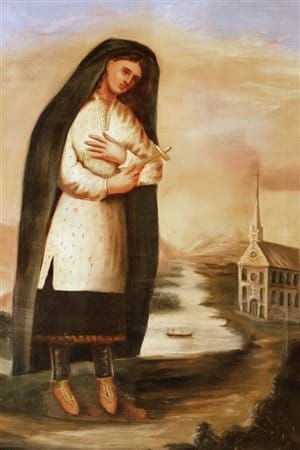
July 14, 2026 — Memorial of Saint Kateri Tekakwitha, Virgin (Tuesday of the Fifteenth Week in Ordinary Time)
Readings: Isaiah 7:1-9 • Psalm 48:2-3a, 3b-4, 5-6, 7-8 • Matthew 11:20-24
Two armies stand before Jerusalem, and the heart of the king and the heart of the people tremble "as the trees of the forest tremble in the wind." It is one of the most faithful pictures in all Scripture of the soul under fear: not reasoning, only shaking. And into that shaking God sends His prophet with a strange command — remain tranquil, do not fear; these dreaded kings are but "two stumps of smoldering brands," embers already going out. Then comes the word on which the whole oracle turns, and with it the whole spiritual life: "Unless your faith is firm you shall not be firm!"
Fear magnifies its objects; faith measures them truly. What terrified Ahaz was real enough, yet it was already burnt out in the counsels of God, who sees the end of every blazing anger. The psalm sings the same lesson from within the city walls: "God upholds his city for ever." The kings assemble, they come on together — and at the sight of what God defends they are stunned and routed. The Catechism dares to say of this steadiness: "Faith is certain. It is more certain than all human knowledge because it is founded on the very word of God who cannot lie"; and it lets St. John Henry Newman add the seal, "Ten thousand difficulties do not make one doubt." The soul is not asked to feel no wind, only to be rooted in something the wind cannot reach.
Yet the Gospel warns that there is a stillness worse than trembling: the unmoved heart. Jesus reproaches Chorazin, Bethsaida, and Capernaum — the towns that saw most of His mighty deeds — not for persecuting Him, but for remaining as they were. His woe is not the anger of thwarted power; it is the grief of slighted love. Tyre and Sidon would have repented, He says, had they seen so much. The judgment is sobering precisely because it falls on the familiar: on those who had the Lord in their streets and let Him become ordinary. Grace received and not answered does not remain neutral; it becomes the measure of the account.
How, then, does the hardened heart become firm rather than merely stubborn? Not by its own effort. "The human heart is heavy and hardened," the Catechism confesses; "God must give man a new heart," for conversion "is first of all a work of the grace of God who makes our hearts return to him." Pope Francis, preaching on this very struggle, warned that the discouraged thought "I can't do it" is quicksand — "the quicksand of a mediocre existence" — and that the remedy is to remember that conversion is a grace to be begged for, from a God who is not a harsh father but tender. "Pray, walk," he said, "and you will always take a step forward." St. Augustine knew both the trembling and the grace: "You have made us for yourself, O Lord, and our heart is restless until it rests in you."
The Church sets before us today a soul who answered. St. Kateri Tekakwitha was orphaned by plague, scarred and half-blinded by smallpox, and opposed by her own village when she believed; she had seen none of the mighty deeds of Capernaum. Yet with the little given her she gave everything, and the Lily of the Mohawks now stands where the favored towns fell. "Faith is an entirely free gift," says the Catechism, and therefore fragile if neglected: "To live, grow, and persevere in the faith until the end we must nourish it with the word of God; we must beg the Lord to increase our faith."
And if the soul fears it has answered too slowly, Augustine again speaks for it: "Late have I loved you, O Beauty ever ancient, ever new; late have I loved you!" Late is not lost. The embers that threaten are going out; the city of God is upheld for ever; and the tender God who asks for firmness is Himself the one who supplies it.
Lord Jesus, make my faith firm when my heart trembles like the trees of the forest. Give me the new heart You have promised, and never let Your wonders grow ordinary in my sight. Teach me, as You taught Saint Kateri, to answer little graces with an entire love, and to walk one step forward each day toward You. Through Christ our Lord. Amen.
Sources & References
- "The heart of the king and the heart of the people trembled, as the trees of the forest tremble in the wind… Unless your faith is firm you shall not be firm!" — Isaiah 7:1-9 (First Reading, USCCB Lectionary no. 390)
- "God upholds his city for ever." — Psalm 48:9d (Responsorial Psalm: Psalm 48:2-3a, 3b-4, 5-6, 7-8)
- "Woe to you, Chorazin! Woe to you, Bethsaida!…" — Matthew 11:20-24 (Gospel)
- "Faith is certain. It is more certain than all human knowledge because it is founded on the very word of God who cannot lie… Ten thousand difficulties do not make one doubt (Newman)." — Catechism of the Catholic Church, 157
- "The human heart is heavy and hardened. God must give man a new heart. Conversion is first of all a work of the grace of God who makes our hearts return to him." — Catechism of the Catholic Church, 1432
- "To live, grow, and persevere in the faith until the end we must nourish it with the word of God; we must beg the Lord to increase our faith." — Catechism of the Catholic Church, 162
- "You have made us for yourself, O Lord, and our heart is restless until it rests in you." — St. Augustine, Confessions I, 1
- "Late have I loved you, O Beauty ever ancient, ever new; late have I loved you!" — St. Augustine, Confessions X, 27
- "Quicksand of a mediocre existence… conversion is a grace… Pray, walk, and you will always take a step forward." — Pope Francis, Angelus, 6 December 2020 (via Vatican News, Word of the Day, 14 July 2026)
Fe firme en un mundo que tiembla
📖 Sagrada Escritura Diaria
14 de julio de 2026 — Memoria de Santa Kateri Tekakwitha, virgen (martes de la XV semana del Tiempo Ordinario)
Lecturas: Isaías 7, 1-9 • Salmo 47, 2-3a. 3b-4. 5-6. 7-8 • Mateo 11, 20-24
Dos ejércitos se presentan ante Jerusalén, y el corazón del rey y el del pueblo se estremecen "como se estremecen los árboles del bosque, agitados por el viento". Es una de las imágenes más fieles de toda la Escritura del alma bajo el miedo: ya no razona, solamente tiembla. Y en medio de ese temblor Dios envía a su profeta con un mandato extraño: mantente tranquilo, no temas; esos reyes temidos no son más que "un par de tizones humeantes", brasas que ya se apagan. Luego viene la palabra sobre la cual gira todo el oráculo, y con él toda la vida espiritual: "Si ustedes no creen en mí, también irán a la ruina".
El miedo agranda sus objetos; la fe los mide en su verdad. Lo que aterraba a Ajaz era bastante real, y sin embargo ya estaba consumido en los designios de Dios, que ve el final de toda cólera encendida. El salmo canta la misma lección desde dentro de las murallas: "Dios es nuestro defensor". Los reyes se alían, atacan juntos, y al ver lo que Dios defiende quedan aterrados y huyen. El Catecismo se atreve a decir de esta firmeza: "La fe es cierta, más cierta que todo conocimiento humano, porque se funda en la Palabra misma de Dios, que no puede mentir"; y deja que san John Henry Newman le ponga el sello: "Diez mil dificultades no hacen una sola duda". Al alma no se le pide no sentir el viento, sino estar arraigada en algo que el viento no puede alcanzar.
Pero el Evangelio advierte que hay una quietud peor que el temblor: el corazón inmóvil. Jesús reprende a Corozaín, a Betsaida y a Cafarnaúm — las ciudades que vieron la mayor parte de sus milagros — no por haberlo perseguido, sino por haber permanecido como estaban. Su lamento no es la ira del poder frustrado; es el dolor del amor desairado. Tiro y Sidón se habrían arrepentido, dice, si hubieran visto tanto. El juicio estremece precisamente porque cae sobre lo familiar: sobre quienes tuvieron al Señor en sus calles y dejaron que se volviera ordinario. La gracia recibida y no correspondida no permanece neutral; se convierte en la medida de la cuenta.
¿Cómo, entonces, se vuelve firme — y no simplemente terco — el corazón endurecido? No por su propio esfuerzo. "El corazón del hombre es rudo y endurecido", confiesa el Catecismo; "es preciso que Dios dé al hombre un corazón nuevo", porque la conversión "es primeramente una obra de la gracia de Dios que hace volver a él nuestros corazones". El Papa Francisco, predicando sobre esta misma lucha, advirtió que el pensamiento desalentado "no puedo" es arena movediza — la arena movediza de una existencia mediocre — y que el remedio es recordar que la conversión es una gracia que hay que pedir con fuerza, a un Dios que no es un padre duro sino tierno. Reza, camina, dijo, y siempre darás un paso adelante. San Agustín conoció el temblor y la gracia: "Nos hiciste, Señor, para ti, y nuestro corazón está inquieto hasta que descanse en ti".
La Iglesia nos pone hoy delante un alma que respondió. Santa Kateri Tekakwitha quedó huérfana por la peste, marcada y medio ciega por la viruela, y su propia aldea se opuso a ella cuando creyó; no había visto ninguno de los milagros de Cafarnaúm. Y sin embargo, con lo poco que se le dio lo entregó todo, y el Lirio de los Mohawks está hoy en pie donde cayeron las ciudades favorecidas. La fe es un don enteramente gratuito, dice el Catecismo, y por eso frágil si se descuida: "Para vivir, crecer y perseverar hasta el fin en la fe debemos alimentarla con la Palabra de Dios" y pedir al Señor que la aumente.
Y si el alma teme haber respondido demasiado tarde, Agustín habla de nuevo por ella: "¡Tarde te amé, Hermosura tan antigua y tan nueva, tarde te amé!". Tarde no es perdido. Las brasas que amenazan se están apagando; la ciudad de Dios permanece defendida para siempre; y el Dios tierno que pide firmeza es Él mismo quien la concede.
Señor Jesús, haz firme mi fe cuando mi corazón tiemble como los árboles del bosque. Dame el corazón nuevo que has prometido, y no permitas que tus maravillas se vuelvan ordinarias ante mis ojos. Enséñame, como enseñaste a santa Kateri, a responder a las gracias pequeñas con un amor entero, y a caminar cada día un paso adelante hacia ti. Por Jesucristo nuestro Señor. Amén.
Fuentes y referencias
- "Se estremeció su corazón y el del pueblo, como se estremecen los árboles del bosque… Y si ustedes no creen en mí, también irán a la ruina." — Isaías 7, 1-9 (Primera lectura, Leccionario n. 390, USCCB en español)
- "Dios es nuestro defensor." — Salmo 47, 9d (Salmo responsorial: Salmo 47, 2-3a. 3b-4. 5-6. 7-8; numeración del Leccionario mexicano usado por USCCB)
- "¡Ay de ti, Corozaín! ¡Ay de ti, Betsaida!…" — Mateo 11, 20-24 (Evangelio)
- "La fe es cierta, más cierta que todo conocimiento humano, porque se funda en la Palabra misma de Dios, que no puede mentir… Diez mil dificultades no hacen una sola duda (Newman)." — Catecismo de la Iglesia Católica, 157
- "El corazón del hombre es rudo y endurecido. Es preciso que Dios dé al hombre un corazón nuevo. La conversión es primeramente una obra de la gracia de Dios que hace volver a él nuestros corazones." — Catecismo de la Iglesia Católica, 1432
- "Para vivir, crecer y perseverar hasta el fin en la fe debemos alimentarla con la Palabra de Dios." — Catecismo de la Iglesia Católica, 162
- "Nos hiciste, Señor, para ti, y nuestro corazón está inquieto hasta que descanse en ti." — San Agustín, Confesiones I, 1
- "¡Tarde te amé, Hermosura tan antigua y tan nueva, tarde te amé!" — San Agustín, Confesiones X, 27
- "Arena movediza de una existencia mediocre… la conversión es una gracia… Reza, camina, y siempre darás un paso adelante." — Papa Francisco, Ángelus, 6 de diciembre de 2020 (traducción fiel del texto publicado en Vatican News, Word of the Day, 14 de julio de 2026)