
📖 Daily Scripture
Wednesday, July 22, 2026 — Feast of Saint Mary Magdalene
Readings: Song of Songs 3:1-4b (or 2 Corinthians 5:14-17) • Psalm 63:2, 3-4, 5-6, 8-9 • John 20:1-2, 11-18
There is a night in the Song of Songs, and a darkness before dawn in the Gospel, and between them lies the whole history of the soul. "On my bed at night I sought him whom my heart loves — I sought him but I did not find him." So speaks the bride; and so, centuries later, a woman moves through the streets of Jerusalem before first light, toward a borrowed tomb, carrying her grief as the bride carried her longing. The Church, in setting these two readings side by side on the feast of Saint Mary Magdalene, would have the soul understand that they are one story: that every ache of human love, when it is purified, becomes an apprenticeship in the love of God.
What is this seeking that will not let the soul rest? The Psalmist names it thirst: "My soul is thirsting for you, O Lord my God... like the earth, parched, lifeless and without water." The Catechism teaches that "the desire for God is written in the human heart, because man is created by God and for God; and God never ceases to draw man to himself." Augustine confessed the same from his own long wandering: "You have made us for yourself, and our heart is restless until it rests in you." The restlessness the soul feels beneath its occupations and its amusements, the vague sense that no possession quite satisfies, is not a disorder to be cured but a summons to be followed.
Magdalene's greatness lay in this, that she followed it to the end. The apostles came to the empty tomb, saw, and returned home; she stayed. She had no argument to offer, no expectation of resurrection; she had only love, and love kept her at her post when reason had finished its work. Saint Gregory the Great, pondering this very scene, observed that "holy desires grow by delay." God's apparent absences are not refusals. He withdraws the sense of His presence that the soul's desire may deepen and enlarge, as the parched earth opens to receive the rain. The soul that will not go home from the tomb is the soul that finds Him.
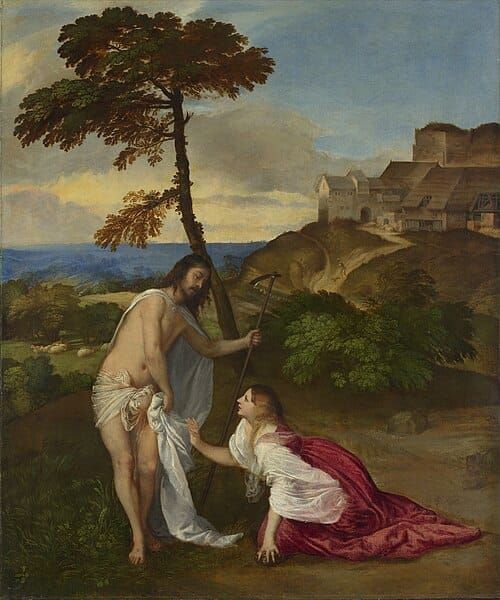
And observe how near He was the whole while. She turned and saw Jesus standing there, "but did not know it was Jesus"; she took the Lord of glory for the gardener. So it is within me: Christ stands among the ordinary figures and duties of my day, unrecognized, while I weep for Him as for one lost. Pope Leo XIV, meditating upon this scene, has said that "tears are a gift of life when they purify our eyes and liberate our gaze." Sorrow itself, offered to God, becomes a lens; and Mary's turning toward the one she did not yet recognize is the very image of conversion, the turning by which every soul passes from grief to sight.
Then the single word: "Mary!" He does not argue her out of her sorrow; He names her. The soul is known before it knows; sought before it seeks. And no sooner is she found than she is sent: "Go to my brothers." The Catechism observes that the women at the tomb "were the first messengers of Christ's Resurrection for the apostles themselves." Here the lesson becomes concrete: consolation is given not to be held but to be handed on. "Stop holding on to me," He says — for the soul must not build a tent upon its consolations, but rise and carry the news of them into the lives of others, where Christ means to be found again.
And beneath all our seeking lies a stiller truth: "prayer is the encounter of God's thirst with ours. God thirsts that we may thirst for him." The soul's long search was itself the work of God, who had already found it. He whom my heart loves has loved my heart first; He waited in the garden before I came weeping to it; and every night of seeking ends, in His good time, with my own name spoken in the dark, and the morning.
Lord Jesus, teach me to seek You in the night of my own heart, and to remain at my post when I do not find You at once. Purify my tears, that they may clear my eyes rather than close them, and let me hear my name upon Your lips. Then send me, as You sent Mary, to carry to others the joy I could not keep for myself. Through Christ our Lord. Amen.
Sources & References
- "him whom my heart loves" — Song of Songs 3:1-4b, First Reading, Feast of Saint Mary Magdalene (Lectionary 603, USCCB)
- "My soul is thirsting for you, O Lord my God" / "like the earth, parched, lifeless and without water" — Psalm 63:2 (Responsorial Psalm)
- "but did not know it was Jesus" / "Mary!" / "Go to my brothers" / "Stop holding on to me" — John 20:1-2, 11-18 (Gospel)
- "The desire for God is written in the human heart..." — Catechism of the Catholic Church, no. 27
- "were the first messengers of Christ's Resurrection for the apostles themselves" — Catechism of the Catholic Church, no. 641
- "prayer is the encounter of God's thirst with ours. God thirsts that we may thirst for him." — Catechism of the Catholic Church, no. 2560
- "You have made us for yourself, and our heart is restless until it rests in you." — St. Augustine, Confessions I, 1
- "holy desires grow by delay" — St. Gregory the Great, Homily 25 on the Gospels (on John 20:11-18)
- "tears are a gift of life when they purify our eyes and liberate our gaze" — Pope Leo XIV, General Audience, November 19, 2025 (today's Vatican News "Word of the Day" was not yet published)
El amor de mi alma
📖 Sagrada Escritura Diaria
Miércoles, 22 de julio de 2026 — Fiesta de Santa María Magdalena
Lecturas: Cantar de los Cantares 3, 1-4 (o bien 2 Corintios 5, 14-17) • Salmo 62, 2. 3-4. 5-6. 8-9 • Juan 20, 1-2. 11-18
Hay una noche en el Cantar de los Cantares, y una oscuridad antes del alba en el Evangelio, y entre ambas se extiende toda la historia del alma. "En mi lecho, por las noches, a mi amado yo buscaba. Lo busqué, pero fue en vano." Así habla la esposa; y así, siglos después, una mujer atraviesa las calles de Jerusalén antes de la primera luz, hacia un sepulcro prestado, llevando su dolor como la esposa llevaba su anhelo. La Iglesia, al poner estas dos lecturas una junto a la otra en la fiesta de Santa María Magdalena, quiere que el alma comprenda que son una sola historia: que todo dolor del amor humano, cuando es purificado, se convierte en aprendizaje del amor de Dios.
¿Qué es esta búsqueda que no deja descansar al alma? El salmista la llama sed: "Señor, tú eres mi Dios, a ti te busco; de ti sedienta está mi alma... como el suelo reseco añora el agua." El Catecismo enseña que "el deseo de Dios está inscrito en el corazón del hombre, porque el hombre ha sido creado por Dios y para Dios; y Dios no cesa de atraer al hombre hacia sí". Agustín confesó lo mismo desde su propio largo extravío: "Nos hiciste, Señor, para ti, y nuestro corazón está inquieto hasta que descanse en ti." La inquietud que el alma siente bajo sus ocupaciones y sus distracciones, esa vaga certeza de que ninguna posesión sacia del todo, no es un desorden que curar sino una llamada que seguir.
La grandeza de la Magdalena consistió en esto: en que la siguió hasta el final. Los apóstoles llegaron al sepulcro vacío, vieron y volvieron a casa; ella se quedó. No tenía argumento que ofrecer, ni esperanza alguna de resurrección; tenía solamente amor, y el amor la mantuvo en su puesto cuando la razón había terminado su trabajo. San Gregorio Magno, meditando esta misma escena, observó que "los santos deseos crecen con la dilación". Las aparentes ausencias de Dios no son negativas. Él retira el sentimiento de su presencia para que el deseo del alma se ahonde y se ensanche, como la tierra reseca se abre para recibir la lluvia. El alma que no se vuelve a casa desde el sepulcro es el alma que lo encuentra.
Y adviértase cuán cerca estuvo Él todo el tiempo. Ella se volvió y vio a Jesús de pie, "pero no sabía que era Jesús"; tomó al Señor de la gloria por el jardinero. Así sucede dentro de mí: Cristo está de pie entre las figuras y los deberes ordinarios de mi jornada, sin ser reconocido, mientras yo lo lloro como a alguien perdido. El Papa León XIV, meditando sobre esta escena, ha dicho que las lágrimas son un don de la vida cuando purifican nuestros ojos y liberan nuestra mirada. El dolor mismo, ofrecido a Dios, se convierte en lente; y el volverse de María hacia aquel a quien todavía no reconocía es la imagen misma de la conversión, ese girarse por el cual toda alma pasa del llanto a la visión.
Entonces, la única palabra: "¡María!" Él no la saca de su tristeza con razones; la llama por su nombre. El alma es conocida antes de conocer; buscada antes de buscar. Y apenas es encontrada, es enviada: "Ve a decir a mis hermanos." El Catecismo observa que las mujeres junto al sepulcro "fueron las primeras mensajeras de la Resurrección de Cristo para los propios Apóstoles". Aquí la lección se hace concreta: el consuelo no se da para retenerlo sino para transmitirlo. "Déjame ya", le dice Él — porque el alma no debe levantar su tienda sobre sus consolaciones, sino ponerse en pie y llevar la noticia de ellas a la vida de los demás, donde Cristo quiere ser encontrado de nuevo.
Y bajo toda nuestra búsqueda yace una verdad más honda: "La oración... es el encuentro de la sed de Dios y de la sed del hombre. Dios tiene sed de que el hombre tenga sed de Él." La larga búsqueda del alma era ya obra de Dios, que la había encontrado primero. El amor de mi alma amó primero a mi alma; me esperaba en el jardín antes de que yo llegara llorando a él; y toda noche de búsqueda termina, en Su buena hora, con mi propio nombre pronunciado en la oscuridad, y la mañana.
Señor Jesús, enséñame a buscarte en la noche de mi propio corazón, y a permanecer en mi puesto cuando no te encuentre enseguida. Purifica mis lágrimas, para que aclaren mis ojos en vez de cerrarlos, y déjame oír mi nombre en tus labios. Envíame después, como enviaste a María, a llevar a otros la alegría que no pude guardar para mí. Por Jesucristo nuestro Señor. Amén.
Fuentes y referencias
- "a mi amado yo buscaba" / "buscaré al amor de mi alma" — Cantar de los Cantares 3, 1-4, Primera lectura, Fiesta de Santa María Magdalena (Leccionario 603, USCCB en español)
- "Señor, mi alma tiene sed de ti" / "como el suelo reseco añora el agua" — Salmo 62, 2 (Salmo responsorial; numeración del Leccionario mexicano)
- "pero no sabía que era Jesús" / "¡María!" / "Ve a decir a mis hermanos" / "Déjame ya" — Juan 20, 1-2. 11-18 (Evangelio)
- "El deseo de Dios está inscrito en el corazón del hombre..." — Catecismo de la Iglesia Católica, n. 27
- "las mujeres fueron las primeras mensajeras de la Resurrección de Cristo para los propios Apóstoles" — Catecismo de la Iglesia Católica, n. 641
- "La oración... es el encuentro de la sed de Dios y de la sed del hombre. Dios tiene sed de que el hombre tenga sed de Él" — Catecismo de la Iglesia Católica, n. 2560
- "Nos hiciste, Señor, para ti, y nuestro corazón está inquieto hasta que descanse en ti." — San Agustín, Confesiones I, 1
- "los santos deseos crecen con la dilación" — San Gregorio Magno, Homilía 25 sobre los Evangelios (sobre Juan 20, 11-18)
- Las lágrimas que purifican los ojos y liberan la mirada — Papa León XIV, Audiencia General, 19 de noviembre de 2025 (traducción fiel del texto oficial)