
📖 Daily Scripture
Wednesday, October 7, 2026 — Memorial of Our Lady of the Rosary
Readings: Galatians 2:1-2, 7-14 • Psalm 117:1bc, 2 • Luke 11:1-4
Saint Paul's account of his dealings with the apostles is for the most part a record of concord. He laid before the pillars of the Church in Jerusalem the Gospel he had been preaching among the nations; the grace at work in him was recognised as the same grace at work in Peter. Then the narrative turns, and a scene at Antioch is set before us in which Peter, who had eaten freely with the Gentile believers, began to draw back and separated himself from them. The fault is not heresy; no article of faith is denied. What happens is smaller, and more searching: a man moves away from a table.
The reason given is fear. Peter withdrew because he dreaded the judgement of those who were watching him, and in dreading it he conveyed, without ever stating it, that the brethren beside him were not altogether his brethren. Here is the particular cowardice to which the devout soul is liable: not the open denial, which at least has the dignity of plainness, but the quiet retreat — an affection cooled because it has become inconvenient, a warmth shown in private and withheld in public. Paul names it for what it is, a walking out of line with the truth of the Gospel, because a Gospel confessed with the lips and contradicted at the table has been contradicted.
It is against this background that the Gospel of the day places the request of the disciple: Lord, teach us to pray. The answer given is not a method but a word, and the word is Father. In this short prayer the whole of revelation is gathered, for the Lord's Prayer is truly the summary of the whole gospel. The soul does not approach as a servant calculating its standing, but as a child who has received the Spirit of adoption and may therefore cry out, Abba.
Yet the prayer does not leave the soul at liberty in what follows. Forgive us our sins, it says, for we ourselves forgive everyone in debt to us — and that small joining word is a hinge upon which everything turns. The Catechism puts the matter without softening: this outpouring of mercy cannot penetrate our hearts as long as we have not forgiven those who have trespassed against us. The mercy is not withheld by God; it is kept out by us. Peter had refused forgiveness to no one, yet he had put distance where the Lord had set a common table.
Saint Augustine, having searched the Scriptures for every form of petition, concluded that one may run through all the words of the holy prayers without finding anything that is not contained and included in the Lord's Prayer. The examination of conscience is therefore simpler than the soul might wish: it is enough to ask whether the Our Father can still be said entire — whether any face rises up at the word our and makes the word difficult.
The lesson, then, is not an abstraction but an inventory. Consider the withdrawals of this week: the message left unanswered because answering would have been awkward; the colleague from whom one has learned to keep a careful half-step of distance. Each is a small movement of the chair, and each is undone not by a feeling but by an act — a word spoken, a seat taken, a debt released — and the act may be performed today.
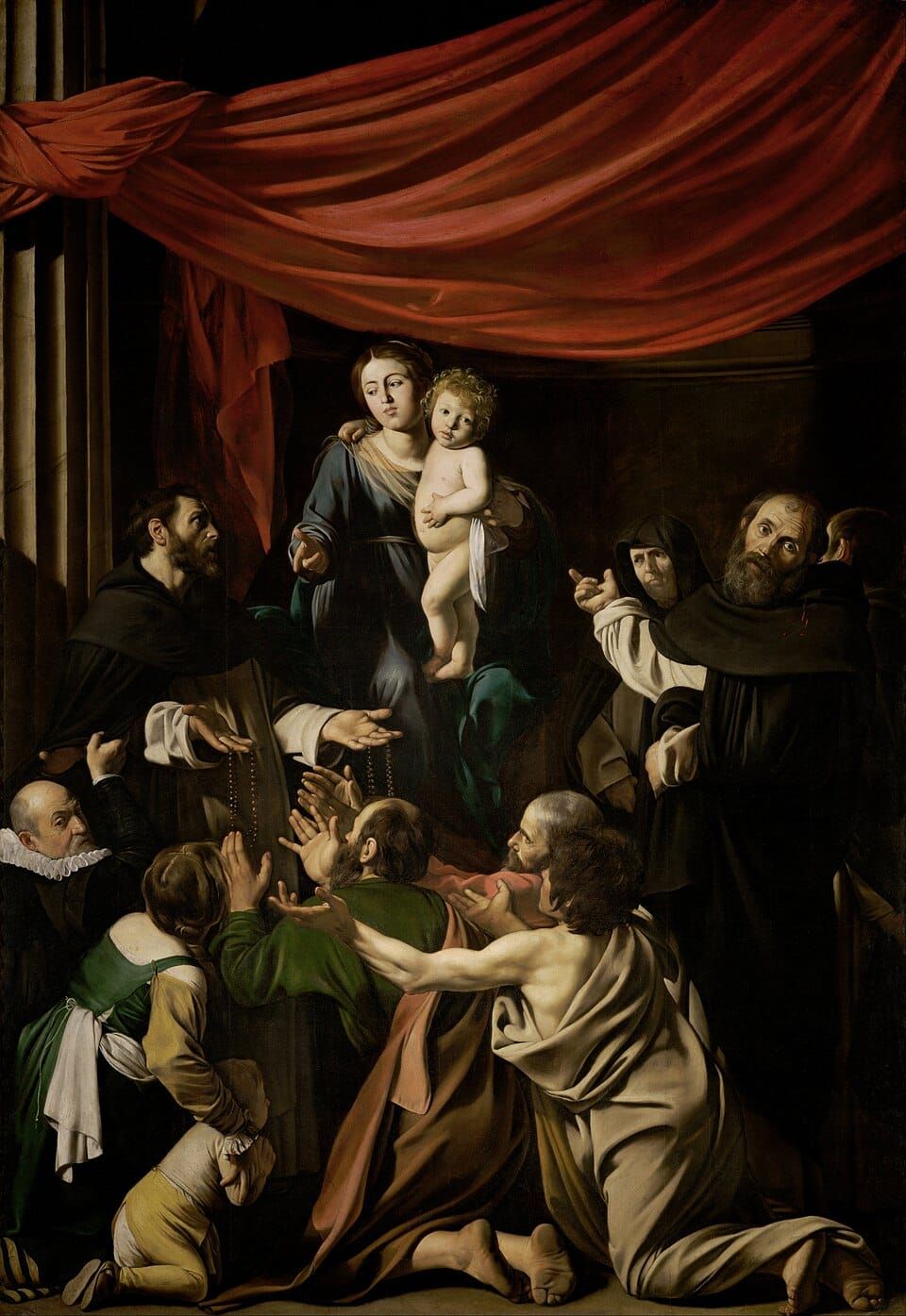
On this memorial the Church places the Rosary in the soul's hands, and every decade of it begins with the prayer heard in today's Gospel. The Virgin who teaches that prayer was herself told not to be afraid, for she had found grace; and Saint John Paul II, drawing out that word, said that fear is precisely what a vocation must overcome: do not be afraid of life, do not be afraid of your motherhood… for you have found Grace. The fear that made Peter draw back is not stronger than the grace that made Mary consent. The Psalm of the day gives the last ground of confidence: steadfast is the kindness of the Lord, and his fidelity endures forever. He does not draw back.
Father, teach me to speak your name without fear, and to say the word “our” without reserve. Where I have drawn back from one of my brethren, give me the courage to return; where I have withheld forgiveness, let your mercy find an open heart within me. Keep me in the line of the truth of your Gospel, and make me faithful as you are faithful. Through Christ our Lord. Amen.
Sources & References
- "he began to draw back and separated himself" — Galatians 2:12
- "not on the right road in line with the truth of the Gospel" — Galatians 2:14
- "steadfast is his kindness toward us, and the fidelity of the LORD endures forever" — Psalm 117:2
- "You have received a spirit of adoption as sons through which we cry: Abba! Father!" — Alleluia verse, Romans 8:15
- "Lord, teach us to pray" — Luke 11:1
- "Father, hallowed be your name, your Kingdom come" — Luke 11:2
- "forgive us our sins for we ourselves forgive everyone in debt to us" — Luke 11:4
- "is truly the summary of the whole gospel" — Catechism of the Catholic Church, 2761, quoting Tertullian, De oratione 1, 6
- "run through all the words of the holy prayers … contained and included in the Lord’s Prayer" — Catechism of the Catholic Church, 2762, quoting Saint Augustine, Epistula 130, 12, 22
- "this outpouring of mercy cannot penetrate our hearts as long as we have not forgiven those who have trespassed against us" — Catechism of the Catholic Church, 2840
- "Do not be afraid of life, do not be afraid of your motherhood, do not be afraid of your marriage, do not be afraid of your priesthood, for you have found Grace" — Saint John Paul II, Address to the Pontifical Roman Major Seminary, 25 March 1982; quoted in Vatican News, "Word of the Day," 7 October 2026
- Readings — USCCB Daily Readings, 7 October 2026
Para que el alma no se retraiga
📖 Sagrada Escritura Diaria
Miércoles 7 de octubre de 2026 — Memoria de la Bienaventurada Virgen María del Rosario
Lecturas: Gálatas 2, 1-2. 7-14 • Salmo 116, 1-2 • Lucas 11, 1-4
El relato que san Pablo hace de su trato con los apóstoles es, en su mayor parte, una memoria de concordia. Expuso en Jerusalén, ante las columnas de la Iglesia, el Evangelio que predicaba entre las naciones; se reconoció que la gracia que obraba en él era la misma que obraba en Pedro. Entonces el relato se vuelve, y se nos pone delante una escena en Antioquía en la que Pedro, que había comido libremente con los creyentes gentiles, comenzó a retirarse y a separarse de ellos. La falta no es una herejía; no se niega ningún artículo de la fe. Lo que ocurre es más pequeño y más penetrante: un hombre se aparta de una mesa.
La razón que se da es el miedo. Pedro se retiró porque temía el juicio de quienes lo observaban, y al temerlo dio a entender que los hermanos que estaban a su lado no eran del todo sus hermanos. He aquí la cobardía propia a la que el alma devota queda expuesta: no la negación abierta, que al menos tiene la dignidad de la franqueza, sino el retiro silencioso — un afecto enfriado porque se ha vuelto inconveniente, una cordialidad mostrada en privado y negada en público. Pablo lo llama por su nombre, un no andar en la línea de la verdad del Evangelio, porque un Evangelio confesado con los labios y contradicho en la mesa queda contradicho.
Sobre este fondo coloca el Evangelio de hoy la petición del discípulo: Señor, enséñanos a orar. La respuesta que recibe no es un método, sino una palabra, y la palabra es Padre. En esta breve oración se recoge la revelación entera, pues la oración del Señor o dominical es, en verdad, el resumen de todo el Evangelio. El alma no se acerca como un siervo que calcula su mérito, sino como un hijo que ha recibido el Espíritu de adopción y puede por ello clamar: Abbá.
Pero la oración no deja al alma en libertad en lo que sigue. Perdona nuestras ofensas, dice, puesto que también nosotros perdonamos a todo aquel que nos ofende — y esa pequeña palabra que une es el gozne sobre el que todo gira. El Catecismo lo plantea sin suavizarlo: lo temible es que este desbordamiento de misericordia no puede penetrar en nuestro corazón mientras no hayamos perdonado a los que nos han ofendido. La misericordia no la retiene Dios; la dejamos fuera nosotros. Pedro no había negado el perdón a nadie, y sin embargo había puesto distancia donde el Señor había puesto una mesa común.
San Agustín, después de buscar en las Escrituras toda forma de súplica, concluyó que se pueden recorrer todas las oraciones que hay en las Escrituras sin encontrar algo que no esté incluido en la oración dominical. El examen de conciencia es, por tanto, más sencillo de lo que el alma querría: basta preguntarse si el Padrenuestro puede decirse todavía entero — si hay algún rostro que se alce en la palabra nuestro y la vuelva difícil.
La lección, entonces, no es una abstracción, sino un inventario. Considere el alma los retiros de esta semana: el mensaje dejado sin respuesta porque responder habría resultado incómodo; el compañero de trabajo de quien se ha aprendido a guardar un cuidadoso medio paso de distancia. Cada cosa es un pequeño movimiento de la silla, y cada una se deshace no con un sentimiento, sino con un acto —una palabra dicha, un asiento ocupado, una deuda perdonada— y el acto puede realizarse hoy.
En esta memoria la Iglesia pone el Rosario en las manos del alma, y cada misterio comienza con la oración que se escucha en el Evangelio de hoy. La Virgen que enseña esa oración oyó ella misma que no temiera, porque había hallado gracia; y san Juan Pablo II, desplegando esa palabra, dijo que el miedo es precisamente lo que una vocación ha de vencer: no temáis a la vida, no temáis a vuestra maternidad… porque habéis hallado la Gracia. El miedo que hizo retirarse a Pedro no es más fuerte que la gracia que hizo consentir a María. El Salmo del día da al alma su último fundamento de confianza: firme es el amor del Señor, y su fidelidad dura por siempre. Él no se retira.
Padre, enséñame a pronunciar tu nombre sin miedo y a decir la palabra «nuestro» sin reservas. Donde me he apartado de alguno de mis hermanos, dame el valor de volver; donde he negado el perdón, que tu misericordia encuentre dentro de mí un corazón abierto. Guárdame en la línea de la verdad de tu Evangelio y hazme fiel como tú eres fiel. Por Jesucristo nuestro Señor. Amén.
Fuentes y referencias
- «comenzó a retirarse y a separarse» — Gálatas 2, 12
- «no andaban en la línea de la verdad del Evangelio» — Gálatas 2, 14
- «firme es su amor por nosotros, su fidelidad dura por siempre» — Salmo 116, 2
- «Hemos recibido un espíritu de hijos, que nos hace exclamar: ¡Padre!» — Aclamación antes del Evangelio, Romanos 8, 15
- «Señor, enséñanos a orar» — Lucas 11, 1
- «Padre, santificado sea tu nombre, venga tu Reino» — Lucas 11, 2
- «perdona nuestras ofensas, puesto que también nosotros perdonamos a todo aquel que nos ofende» — Lucas 11, 4
- «La oración del Señor o dominical es, en verdad, el resumen de todo el Evangelio» — Catecismo de la Iglesia Católica, 2761, citando a Tertuliano, De oratione 1, 6
- «Recorred todas las oraciones que hay en las Escrituras, y no creo que podáis encontrar algo que no esté incluido en la oración dominical» — Catecismo de la Iglesia Católica, 2762, citando a san Agustín, Epistula 130, 12, 22
- «este desbordamiento de misericordia no puede penetrar en nuestro corazón mientras no hayamos perdonado a los que nos han ofendido» — Catecismo de la Iglesia Católica, 2840
- «No temáis a la vida, no temáis a vuestra maternidad, no temáis a vuestro matrimonio, no temáis a vuestro sacerdocio, porque habéis hallado la Gracia» — san Juan Pablo II, Discurso al Pontificio Seminario Romano Mayor, 25 de marzo de 1982; citado en Vatican News, «Palabra del día», 7 de octubre de 2026
- Lecturas — USCCB, Lecturas del día, 7 de octubre de 2026