
📖 Daily Scripture
Friday, August 14, 2026 — Memorial of Saint Maximilian Kolbe, Priest and Martyr
Readings: Ezekiel 16:1-15, 60, 63 • Isaiah 12:2-3, 4bcd, 5-6 • Matthew 19:3-12
The prophet Ezekiel dares to tell the soul its own story, and he tells it without flattery. Jerusalem was a foundling, cast out on the open field on the day of her birth, unwashed and unpitied; and God passed by, and said to her the one word that makes all the difference: Live. He passed by again in her youth and spread the corner of His cloak over her, swore an oath, entered into a covenant, clothed her in embroidered gown and silk, and set a diadem upon her head. Nothing in her drew this love down; everything in her was the effect of it. "You were renowned among the nations for your beauty... because of my splendor which I had bestowed on you." The soul that would understand itself must begin here: whatever is lovely in it was first a gift, and the Giver bound Himself by oath before the soul had done one thing to deserve Him.
And when the bride squandered that beauty on every passer-by, the divine answer was not the tearing up of the bond but its deepening: "Yet I will remember the covenant I made with you... and I will set up an everlasting covenant with you... when I pardon you for all you have done." God's love keeps its word even to the unfaithful; His pardon is not the covenant's end but its renewal. So the responsorial canticle can sing, "God indeed is my savior; I am confident and unafraid."
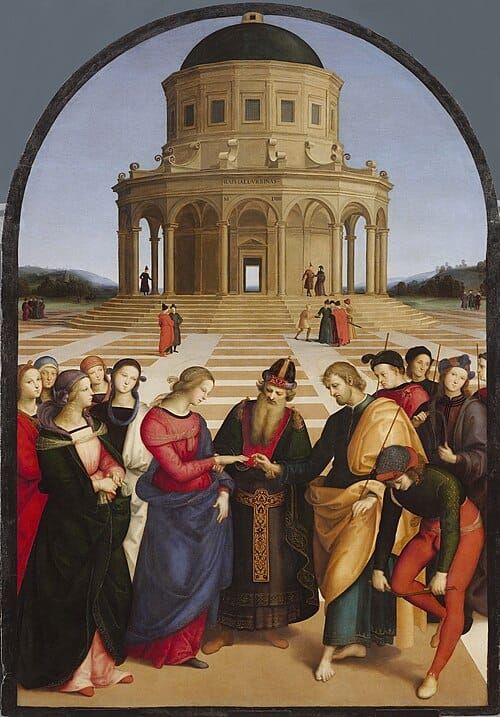
Against this burning fidelity the question of the Pharisees in the Gospel sounds small and cold: "Is it lawful for a man to divorce his wife for any cause whatever?" It is the voice of love conceived as a contract, kept while convenient and dissolved when costly. The Lord answers by going back past Moses to the beginning: the Creator made them male and female, and the two become one flesh; "what God has joined together, man must not separate." Divorce was permitted, He says, for the hardness of hearts — and hardness of heart is precisely what the whole history of Ezekiel's Jerusalem describes. The Catechism traces the design to its root: "God who created man out of love also calls him to love," and the mutual love of man and woman "becomes an image of the absolute and unfailing love with which God loves man." Marriage is indissoluble, finally, because the love it images never takes itself back.
How that image is to be lived, St. John Chrysostom put into the mouth of every young husband: "I have taken you in my arms, and I love you, and I prefer you to my life itself." To prefer another to one's very life — this is not the language of contract but of covenant, and it is learned from God, for as the Catechism says, "Fidelity expresses constancy in keeping one's given word. God is faithful."
And some, the Lord adds, renounce marriage "for the sake of the Kingdom of heaven" — not because they love less, but that they may love with the same totality in another form. The Church sets before us today the proof. On this very day in 1941, in the starvation bunker of Auschwitz, the priest Maximilian Kolbe finished the offering he had begun two weeks before, when he stepped out of line to die in the place of a father of a family. "Martyrdom is the supreme witness given to the truth of the faith," the Catechism teaches; and the ancient martyr Ignatius had written, "Let me become the food of the beasts, through whom it will be given me to reach God." At his canonization, Pope John Paul II said simply that Maximilian did not die but "gave his life... for his brother."
Bride, husband, virgin, martyr — it is all one love, the love that keeps its word. The soul that fears its own past may read Ezekiel again: the covenant is remembered from God's side even when broken from ours, and the pardon that silences every excuse is already prepared. He who spread His cloak over the foundling, who joined what no man may separate, who accepted the offering of the starvation bunker, will not be less faithful to the soul that turns to Him today. In His fidelity is its confidence, and in His love, its everlasting home.
Lord, You bound Yourself to me by covenant before I could deserve You, and my unfaithfulness has never unmade Your word. Teach me to love as You love — to keep my word when it costs, to prefer others to my very life, and to trust Your pardon more than I fear my past. Make my whole life, like Your servant Maximilian's, an offering acceptable to You. Through Christ our Lord. Amen.
Sources & References
- "You were renowned among the nations for your beauty... because of my splendor which I had bestowed on you" / "Yet I will remember the covenant... when I pardon you for all you have done" — Ezekiel 16:14, 60, 63 (First Reading, Lectionary 417, USCCB)
- "God indeed is my savior; I am confident and unafraid" — Isaiah 12:2 (Responsorial Psalm)
- "Is it lawful for a man to divorce his wife for any cause whatever?" / "What God has joined together, man must not separate" / renouncing marriage "for the sake of the Kingdom of heaven" — Matthew 19:3-12 (Gospel)
- "God who created man out of love also calls him to love" / "becomes an image of the absolute and unfailing love with which God loves man" — Catechism of the Catholic Church, 1604
- "Fidelity expresses constancy in keeping one's given word. God is faithful." and the St. John Chrysostom counsel "I have taken you in my arms, and I love you, and I prefer you to my life itself" — Catechism of the Catholic Church, 2365, quoting St. John Chrysostom, Homily 20 on Ephesians
- "Martyrdom is the supreme witness given to the truth of the faith" — Catechism of the Catholic Church, 2473, which also quotes St. Ignatius of Antioch, Letter to the Romans 4,1: "Let me become the food of the beasts, through whom it will be given me to reach God"
- Maximilian did not die but "gave his life... for his brother" — Pope St. John Paul II, Homily for the Canonization of St. Maximilian Kolbe, 10 October 1982; today's Vatican News "Word of the Day" was not yet published at time of writing
- Daily readings: USCCB, bible.usccb.org, August 14, 2026
El amor que cumple su palabra
📖 Sagrada Escritura Diaria
Viernes 14 de agosto de 2026 — Memoria de San Maximiliano María Kolbe, presbítero y mártir
Lecturas: Ezequiel 16, 1-15. 60. 63 • Isaías 12, 2-3. 4bcd. 5-6 • Mateo 19, 3-12
El profeta Ezequiel se atreve a contarle al alma su propia historia, y la cuenta sin halagos. Jerusalén fue una niña expósita, tirada en pleno campo el día de su nacimiento, sin lavar y sin compasión; y Dios pasó a su lado y le dijo la única palabra que lo cambia todo: Vive. Volvió a pasar en su juventud y extendió su manto sobre ella, juró un juramento, hizo con ella una alianza, la vistió de bordados y de seda, y puso una diadema en su cabeza. Nada en ella atrajo ese amor; todo en ella fue efecto de él. "La fama de tu belleza se extendió entre las naciones, porque yo, dice el Señor, te llené de encantos." El alma que quiera comprenderse debe comenzar aquí: cuanto hay de hermoso en ella fue primero un don, y el Dador se obligó por juramento antes de que el alma hubiera hecho nada para merecerlo.
Y cuando la esposa malgastó aquella belleza con todo el que pasaba, la respuesta divina no fue romper el vínculo sino ahondarlo: "Pero yo tendré presente la alianza que hice contigo... y haré contigo una alianza eterna... cuando yo te perdone todo lo que hiciste." El amor de Dios cumple su palabra aun con la infiel; su perdón no es el fin de la alianza sino su renovación. Por eso el cántico responsorial puede cantar: "El Señor es mi Dios y salvador: con él estoy seguro y nada temo."
Frente a esta fidelidad ardiente, la pregunta de los fariseos en el Evangelio suena pequeña y fría: "¿Le está permitido al hombre divorciarse de su esposa por cualquier motivo?" Es la voz del amor concebido como contrato, guardado mientras conviene y disuelto cuando cuesta. El Señor responde remontándose más allá de Moisés, hasta el principio: el Creador los hizo hombre y mujer, y los dos serán una sola cosa; "lo que Dios ha unido, que no lo separe el hombre". El divorcio se permitió, dice, por la dureza del corazón — y la dureza de corazón es precisamente lo que describe toda la historia de la Jerusalén de Ezequiel. El Catecismo remonta el designio a su raíz: "Dios que ha creado al hombre por amor, lo ha llamado también al amor", y el amor mutuo del hombre y la mujer "se convierte en imagen del amor absoluto e indefectible con que Dios ama al hombre". El matrimonio es indisoluble, en definitiva, porque el amor del que es imagen jamás se retracta.
Cómo ha de vivirse esa imagen, san Juan Crisóstomo lo puso en labios de todo joven esposo: "Te he tomado en mis brazos, te amo y te prefiero a mi vida." Preferir a otro a la propia vida — éste no es lenguaje de contrato sino de alianza, y se aprende de Dios, pues como dice el Catecismo, "la fidelidad expresa la constancia en el mantenimiento de la palabra dada. Dios es fiel."
Y algunos, añade el Señor, renuncian al matrimonio "por el Reino de los cielos" — no porque amen menos, sino para amar con la misma totalidad en otra forma. La Iglesia nos pone hoy delante la prueba. En este mismo día de 1941, en el búnker del hambre de Auschwitz, el sacerdote Maximiliano Kolbe consumó la ofrenda que había comenzado dos semanas antes, cuando salió de la fila para morir en lugar de un padre de familia. "El martirio es el supremo testimonio de la verdad de la fe", enseña el Catecismo; y el antiguo mártir Ignacio había escrito: "Dejadme ser pasto de las fieras. Por ellas me será dado llegar a Dios." En su canonización, el Papa san Juan Pablo II dijo sencillamente que Maximiliano no murió: "dio la vida... por el hermano".
Esposa, esposo, virgen, mártir — todo es un solo amor, el amor que cumple su palabra. El alma que teme su propio pasado puede releer a Ezequiel: la alianza es recordada del lado de Dios aun cuando se rompe del nuestro, y el perdón que silencia toda excusa ya está preparado. El que extendió su manto sobre la niña abandonada, el que unió lo que ningún hombre puede separar, el que aceptó la ofrenda del búnker del hambre, no será menos fiel con el alma que hoy se vuelve a Él. En su fidelidad está su seguridad, y en su amor, su hogar eterno.
Señor, te uniste a mí por alianza antes de que pudiera merecerte, y mi infidelidad nunca ha deshecho tu palabra. Enséñame a amar como Tú amas: a cumplir mi palabra cuando cuesta, a preferir a los demás a mi propia vida, y a confiar en tu perdón más de lo que temo mi pasado. Haz de toda mi vida, como la de tu siervo Maximiliano, una ofrenda agradable a ti. Por Jesucristo nuestro Señor. Amén.
Fuentes y referencias
- "La fama de tu belleza se extendió entre las naciones, porque yo, dice el Señor, te llené de encantos" / "Pero yo tendré presente la alianza... cuando yo te perdone todo lo que hiciste" — Ezequiel 16, 14. 60. 63 (Primera lectura, Leccionario 417, USCCB en español)
- "El Señor es mi Dios y salvador: con él estoy seguro y nada temo" — Isaías 12, 2 (Salmo responsorial, Leccionario de México)
- "¿Le está permitido al hombre divorciarse de su esposa por cualquier motivo?" / "Lo que Dios ha unido, que no lo separe el hombre" / renunciar al matrimonio "por el Reino de los cielos" — Mateo 19, 3-12 (Evangelio)
- "Dios que ha creado al hombre por amor, lo ha llamado también al amor" / "se convierte en imagen del amor absoluto e indefectible con que Dios ama al hombre" — Catecismo de la Iglesia Católica, 1604
- "La fidelidad expresa la constancia en el mantenimiento de la palabra dada. Dios es fiel." y el consejo de san Juan Crisóstomo "Te he tomado en mis brazos, te amo y te prefiero a mi vida" — Catecismo de la Iglesia Católica, 2365, citando a san Juan Crisóstomo, Homilía 20 sobre la carta a los Efesios
- "El martirio es el supremo testimonio de la verdad de la fe" — Catecismo de la Iglesia Católica, 2473, que cita también a san Ignacio de Antioquía, Carta a los Romanos 4, 1: "Dejadme ser pasto de las fieras. Por ellas me será dado llegar a Dios"
- Maximiliano no murió: "dio la vida... por el hermano" — Papa san Juan Pablo II, Homilía en la canonización de san Maximiliano Kolbe, 10 de octubre de 1982; la "Palabra del día" de Vatican News de hoy aún no estaba publicada al momento de escribir
- Lecturas diarias: USCCB, bible.usccb.org/es, 14 de agosto de 2026