
📖 Daily Scripture
Saturday, July 4, 2026 — Saturday of the Thirteenth Week in Ordinary Time
Readings: Amos 9:11-15 • Psalm 85:9-10, 11-12, 13-14 • Matthew 9:14-17
The prophet Amos, whose voice through eight chapters had been all thunder, ends upon a note so tender that it seems almost another voice: “On that day I will raise up the fallen hut of David; I will wall up its breaches, raise up its ruins, and rebuild it as in the days of old.” The God who permits the ruin is the God who promises the rebuilding; and He promises it not grudgingly, but with a magnificence beyond the first estate — “the juice of grapes shall drip down the mountains, and all the hills shall run with it.” The soul that has surveyed its own ruins — the broken resolutions, the wasted seasons, the walls long fallen — is apt to conclude that God has finished with it. Amos teaches otherwise. Heaven does not abandon what it has planted: “never again shall they be plucked from the land I have given them,” says the Lord.
The Psalm carries the promise further: “Kindness and truth shall meet; justice and peace shall kiss. Truth shall spring out of the earth, and justice shall look down from heaven.” Augustine beheld in these words the whole mystery of the Incarnation: “Truth has sprung from the earth: Christ, who said, ‘I am the Truth,’ was born of a Virgin.” What the prophet foresaw as vineyards and rebuilt cities, God accomplished in the flesh of His Son. And the peace there promised is no mere quiet, no truce of exhaustion; the Church teaches that peace “is not merely the absence of war,” but “the tranquillity of order,” “the work of justice and the effect of charity.” It is a peace fittingly pondered on a day when a nation asks that glory may dwell in its land.
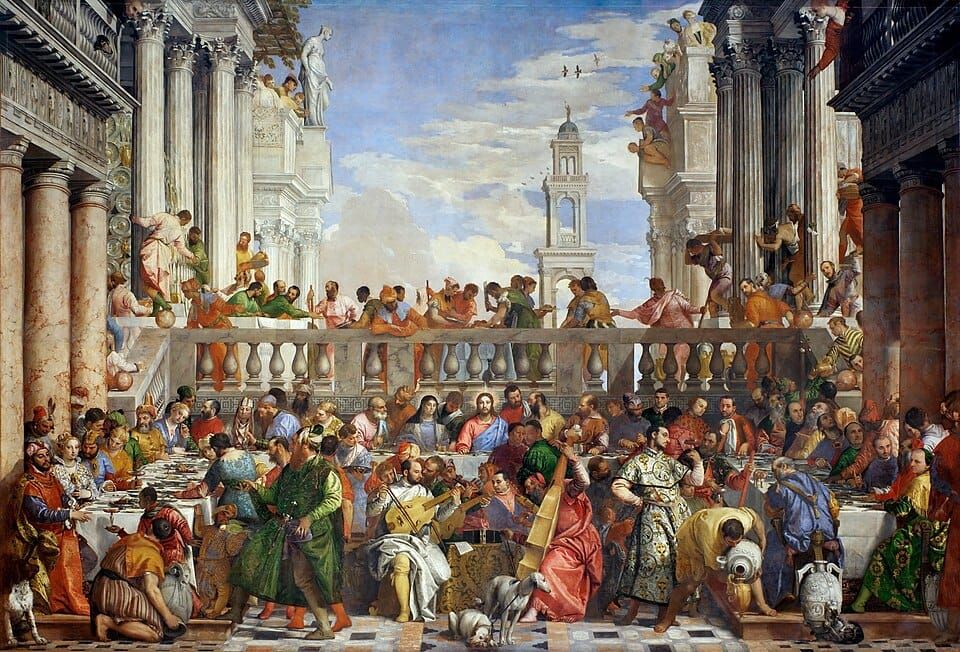
Then the Gospel: the disciples of John, earnest men and disciplined, come to Jesus with a question that has the sound of a complaint: “Why do we and the Pharisees fast much, but your disciples do not fast?” And the Lord answers by naming Himself: “Can the wedding guests mourn as long as the bridegroom is with them?” He is the Bridegroom; His coming is a wedding, not a wake. The Catechism observes that “the unity of Christ and the Church, head and members of one Body, also implies the distinction of the two within a personal relationship,” an aspect “often expressed by the image of bridegroom and bride.” Religion, then, is at bottom a nuptial thing — a covenant of love — and every practice within it, fasting included, is a servant of that love and not its master.
Here lies the concrete lesson. There is a piety that has soured in its own vessel: prayers said with the lips while the heart keeps accounts; disciplines maintained with secret resentment; observance grown rigid, brittle, and joyless — old wineskins, which cannot receive the new wine without bursting. Chrysostom pressed the point without mercy: “Do you fast? Give me proof of it by your works. If you see a poor man, take pity on him.” A fast that does not soften the heart toward the neighbor has merely emptied the stomach. The examination the Gospel invites is searching but simple: whether the soul’s practices are supple with humility and ordered to charity, or whether they have hardened into a form kept for its own sake. God does not ask for the patching of the old garment; He asks leave to make the garment new.
And He is able. “Hope is the theological virtue by which we desire the kingdom of heaven and eternal life as our happiness, placing our trust in Christ’s promises and relying not on our own strength, but on the help of the grace of the Holy Spirit.” The One who rebuilt the fallen hut of David will not decline to rebuild a soul that offers Him its ruins. Pope Francis, preaching on this very Gospel, said that “the Christian is fundamentally joyful,” and asked of God the grace of “faithfulness to the only bridegroom, who is the Lord.” Joy, then, is not the reward of the perfect but the temper of the espoused; the days of fasting come, and have their sweetness too, but they are kept within the wedding, never outside it. The last word of Amos, of the Psalm, and of the Gospel is one word: God restores, God weds, God makes new — and the love that does so has no intention of letting go.
Lord Jesus, Bridegroom of the soul, teach me to keep every discipline as a servant of love and not its substitute. Make new within me whatever has grown old, rigid, or joyless, that I may receive the new wine of Your grace without loss. Rebuild what is fallen in me as You rebuilt the hut of David, and let Your joy be the temper of my days. Through Christ our Lord. Amen.
Sources & References
- “On that day I will raise up the fallen hut of David…” — Amos 9:11-15, First Reading (USCCB Daily Readings, July 4, 2026, Lectionary 382)
- “Kindness and truth shall meet; justice and peace shall kiss…” — Psalm 85:9-10, 11-12, 13-14, Responsorial Psalm (USCCB)
- “Can the wedding guests mourn as long as the bridegroom is with them?” — Matthew 9:14-17, Gospel (USCCB)
- “Truth has sprung from the earth: Christ… born of a Virgin” — St. Augustine, Sermon 185 (On the Nativity of the Lord)
- “Do you fast? Give me proof of it by your works…” — St. John Chrysostom, Homilies on the Statues, 3
- “The unity of Christ and the Church… bridegroom and bride” — Catechism of the Catholic Church, 796
- “Not merely the absence of war… the tranquillity of order… work of justice and effect of charity” — Catechism of the Catholic Church, 2304 (citing St. Augustine, De civitate Dei 19, 13)
- “Hope is the theological virtue…” — Catechism of the Catholic Church, 1817
- “The Christian is fundamentally joyful… faithfulness to the only bridegroom, who is the Lord” — Pope Francis, homily at Casa Santa Marta, September 6, 2013 (Vatican News, Word of the Day, July 4, 2026)
Vino nuevo para un alma renovada
📖 Sagrada Escritura Diaria
Sábado 4 de julio de 2026 — Sábado de la XIII semana del Tiempo ordinario
Lecturas: Amós 9, 11-15 • Salmo 84, 9. 11-12. 13-14 • Mateo 9, 14-17
El profeta Amós, cuya voz a lo largo de ocho capítulos fue todo trueno, termina con una nota tan tierna que parece casi otra voz: “Aquel día renovaré la casa de David convertida en ruinas, taparé sus brechas, levantaré sus muros y la reconstruiré como era en otros tiempos”. El Dios que permite la ruina es el Dios que promete la reconstrucción; y la promete no con mezquindad, sino con una magnificencia que supera el primer estado: “de los montes brotará vino y correrá por las colinas”. El alma que ha contemplado sus propias ruinas —las resoluciones rotas, las temporadas perdidas, los muros hace tiempo caídos— tiende a concluir que Dios ha terminado con ella. Amós enseña lo contrario. El cielo no abandona lo que ha plantado: “Los plantaré en su suelo y ya no serán arrancados de la tierra que yo les di”, dice el Señor.
El Salmo lleva la promesa más lejos: “La misericordia y la verdad se encontraron, la justicia y la paz se besaron, la fidelidad brotó en la tierra y la justicia vino del cielo”. San Agustín contempló en estas palabras todo el misterio de la Encarnación: “La verdad brotó de la tierra: Cristo, que dijo ‘Yo soy la verdad’, nació de la Virgen”. Lo que el profeta previó como viñas y ciudades reconstruidas, Dios lo cumplió en la carne de su Hijo. Y la paz allí prometida no es mera quietud ni tregua de cansancio; la Iglesia enseña que “la paz no es sólo ausencia de guerra”, sino “la tranquilidad del orden”, “obra de la justicia y efecto de la caridad”. Es una paz que conviene meditar en un día en que una nación pide que la gloria habite en su tierra.
Luego el Evangelio: los discípulos de Juan, hombres serios y disciplinados, se acercan a Jesús con una pregunta que suena a queja: “¿Por qué tus discípulos no ayunan, mientras nosotros y los fariseos sí ayunamos?”. Y el Señor responde nombrándose a sí mismo: “¿Cómo pueden llevar luto los amigos del esposo, mientras él está con ellos?”. Él es el Esposo; su venida es una boda, no un duelo. El Catecismo observa que “la unidad de Cristo y de la Iglesia, Cabeza y miembros del Cuerpo, implica también la distinción de ambos en una relación personal”, aspecto “expresado con frecuencia mediante la imagen del esposo y de la esposa”. La religión, entonces, es en el fondo una realidad nupcial —una alianza de amor—, y toda práctica dentro de ella, incluido el ayuno, es sierva de ese amor y no su dueña.
Aquí está la lección concreta. Hay una piedad que se ha agriado en su propio recipiente: oraciones dichas con los labios mientras el corazón lleva cuentas; disciplinas mantenidas con secreto resentimiento; una observancia vuelta rígida, quebradiza y sin alegría: odres viejos, que no pueden recibir el vino nuevo sin romperse. San Juan Crisóstomo lo dijo sin piedad: “¿Ayunas? Muéstramelo con tus obras. Si ves a un pobre, ten compasión de él”. Un ayuno que no ablanda el corazón hacia el prójimo no ha hecho más que vaciar el estómago. El examen que el Evangelio invita a hacer es penetrante pero sencillo: si las prácticas del alma son dóciles por la humildad y ordenadas a la caridad, o si se han endurecido en una forma guardada por sí misma. Dios no pide el remiendo del vestido viejo; pide permiso para hacer nuevo el vestido.
Y Él puede hacerlo. “La esperanza es la virtud teologal por la que aspiramos al Reino de los cielos y a la vida eterna como felicidad nuestra, poniendo nuestra confianza en las promesas de Cristo y apoyándonos no en nuestras fuerzas, sino en los auxilios de la gracia del Espíritu Santo”. Aquel que reconstruyó la casa de David en ruinas no rehusará reconstruir un alma que le ofrece sus escombros. El Papa Francisco, predicando sobre este mismo Evangelio, dijo que “el cristiano es fundamentalmente alegre”, y pidió a Dios la gracia de la “fidelidad al único esposo, que es el Señor”. La alegría, pues, no es el premio de los perfectos sino el temple de los desposados; los días de ayuno llegan, y tienen también su dulzura, pero se guardan dentro de la boda, nunca fuera de ella. La última palabra de Amós, del Salmo y del Evangelio es una sola: Dios restaura, Dios desposa, Dios hace nuevo — y el amor que así obra no tiene intención de soltar.
Señor Jesús, Esposo del alma, enséñame a guardar toda disciplina como sierva del amor y no como su sustituto. Haz nuevo dentro de mí cuanto se ha vuelto viejo, rígido o sin alegría, para que reciba sin pérdida el vino nuevo de tu gracia. Reconstruye lo caído en mí como reconstruiste la casa de David, y que tu alegría sea el temple de mis días. Por Jesucristo nuestro Señor. Amén.
Fuentes y referencias
- “Aquel día renovaré la casa de David convertida en ruinas…” — Amós 9, 11-15, Primera lectura (USCCB, Lecturas diarias en español, 4 de julio de 2026, Leccionario 382)
- “La misericordia y la verdad se encontraron, la justicia y la paz se besaron…” — Salmo 84, 9. 11-12. 13-14, Salmo responsorial (USCCB; numeración del Leccionario de México)
- “¿Cómo pueden llevar luto los amigos del esposo, mientras él está con ellos?” — Mateo 9, 14-17, Evangelio (USCCB)
- “La verdad brotó de la tierra: Cristo… nació de la Virgen” — San Agustín, Sermón 185 (sobre la Natividad del Señor)
- “¿Ayunas? Muéstramelo con tus obras…” — San Juan Crisóstomo, Homilías sobre las estatuas, 3
- “La unidad de Cristo y de la Iglesia… la imagen del esposo y de la esposa” — Catecismo de la Iglesia Católica, 796
- “La paz no es sólo ausencia de guerra… la tranquilidad del orden… obra de la justicia y efecto de la caridad” — Catecismo de la Iglesia Católica, 2304 (citando a San Agustín, De civitate Dei 19, 13)
- “La esperanza es la virtud teologal…” — Catecismo de la Iglesia Católica, 1817
- “El cristiano es fundamentalmente alegre… fidelidad al único esposo, que es el Señor” — Papa Francisco, homilía en la Casa Santa Marta, 6 de septiembre de 2013 (Vatican News, Palabra del día, 4 de julio de 2026)