
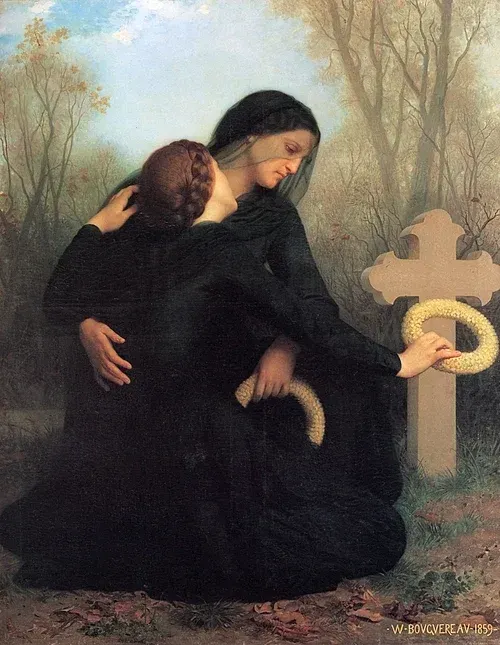
📖 Daily Scripture
Monday, November 2, 2026 — The Commemoration of All the Faithful Departed (All Souls)
Readings: Wisdom 3:1-9 • Psalm 23:1-3a, 3b-4, 5, 6 • Romans 5:5-11 • John 6:37-40
There is a kind of forgetting which the world calls healing, and which the soul, if it is honest, must recognize as a quiet desertion. The names of those we have loved are spoken less often; their places at table are filled; their graves, once visited weekly, are visited yearly, and then not at all. Against this slow erosion of memory the Church sets, each November, a single day, and on that day she speaks to the soul in the serene language of the Book of Wisdom: "The souls of the just are in the hand of God, and no torment shall touch them." They seemed, to the foolish, to be utterly destroyed; but they are in peace, and the hand that holds them is the same hand that fashioned them.
Yet the sacred writer does not pretend that this peace is reached without cost. "As gold in the furnace, he proved them," he says, and the image is not one of punishment for its own sake, but of refining, of a love that will not rest until what it loves is wholly pure. Here the Church's teaching lends its sober clarity to the poet's figure: "All who die in God's grace and friendship, but still imperfectly purified, are indeed assured of their eternal salvation." They are assured; they are not abandoned; but they are not yet finished, and the work of their finishing is one in which the living are invited to take part.
This is the lesson which the day presses upon the conscience, and it is a practical one. Charity does not end at the grave, and a love that ceases to act once its object has passed from sight was perhaps more attached to the sight than to the beloved. The Church has never been content with sentiment alone; she has always offered for her dead the most precious thing she possesses, the Sacrifice of the altar, together with prayer, almsgiving, and penance. St. John Chrysostom, reasoning from the patriarch Job who offered sacrifice for his children, asked plainly why we would doubt "that our offerings for the dead bring them some consolation." And St. Monica, dying far from home at Ostia, wanted no costly monument and asked for nothing but this: "This only I ask, that you will remember me at the Lord's altar, wherever you be."
The soul that takes this to heart will find that its own life is quietly reordered. To have a Mass offered for a departed parent, to pray the name of a forgotten friend, to remember especially those whom no one now remembers, is to accept that one belongs to a communion larger than oneself, in which nothing given in love is wasted. "Our prayer for them," the Catechism teaches, "is capable not only of helping them, but also of making their intercession for us effective." The bond runs both ways; the dead whom we assist become, in God's time, those who assist us. And the same reflection turns the soul upon itself: the furnace which purifies the faithful departed is not wholly unlike the trials of this present life, and the patience with which these are borne now is a kind of purification accepted freely, in advance, out of love.
Beneath all of this lies the Gospel's simple and immense assurance. Christ came down from heaven, He says, to do the will of the Father, and that will is "that I should not lose anything of what he gave me, but that I should raise it on the last day." Pope Leo XIV, reflecting on these very words, observed that before death "each person is an entire world," and that the concern of God is that no one should perish forever. Nothing is too small to be kept, and no one too obscure to be raised. This is why St. Paul could write, with a confidence no grief can unsettle, that "hope does not disappoint, because the love of God has been poured out into our hearts." The dark valley is real, but the Shepherd walks it at our side; and the soul that prays faithfully for its dead is, in truth, rehearsing its own hope, learning to trust that the hand which holds them will hold it also, and will not let it go.
Lord Jesus, who lose nothing that the Father has given You, teach me to remember my dead with a love that acts, and not with sorrow only. Make me faithful in offering for them the prayer and sacrifice they can no longer offer for themselves, and purify within me, by the patient bearing of every trial, whatever is not yet wholly Yours. Through Christ our Lord. Amen.
Sources & References
- "The souls of the just are in the hand of God, and no torment shall touch them"; "As gold in the furnace, he proved them" — Wisdom 3:1, 3:6 (USCCB Lectionary, Commemoration of All the Faithful Departed, November 2, 2026)
- "The dark valley … the Shepherd walks it at our side" (allusion) — Psalm 23:4
- "Hope does not disappoint, because the love of God has been poured out into our hearts" — Romans 5:5
- "That I should not lose anything of what he gave me, but that I should raise it on the last day" — John 6:39
- "All who die in God's grace and friendship, but still imperfectly purified, are indeed assured of their eternal salvation" — Catechism of the Catholic Church, 1030
- "Our prayer for them is capable not only of helping them, but also of making their intercession for us effective" — Catechism of the Catholic Church, 958
- "Why would we doubt that our offerings for the dead bring them some consolation?" — St. John Chrysostom, Homilies on First Corinthians 41, 5 (as quoted in Catechism of the Catholic Church, 1032; cf. Job 1:5)
- "This only I ask, that you will remember me at the Lord's altar, wherever you be" — St. Augustine, Confessions IX, 11, 27 (words of St. Monica)
- "Each person is an entire world"; God's concern "that no one should perish forever" — Pope Leo XIV, Angelus, November 2, 2025 (Commemoration of All the Faithful Departed), reflecting on John 6:39. Vatican News "Word of the Day" for November 2, 2026 was not yet published at the time of writing.
Recordados ante el altar: las almas en la mano de Dios
📖 Sagrada Escritura Diaria
Lunes, 2 de noviembre de 2026 — Conmemoración de Todos los Fieles Difuntos
Lecturas: Sabiduría 3, 1-9 • Salmo 22, 1-3. 4. 5. 6 • Romanos 5, 5-11 • Juan 6, 37-40
Hay una clase de olvido que el mundo llama curación, y que el alma, si es sincera, ha de reconocer como un callado abandono. Los nombres de quienes hemos amado se pronuncian cada vez menos; sus lugares en la mesa se ocupan; sus sepulcros, visitados al principio cada semana, se visitan luego una vez al año, y después ya nunca. Frente a esta lenta erosión de la memoria, la Iglesia establece cada noviembre un día singular, y en ese día habla al alma con el sereno lenguaje del Libro de la Sabiduría: «Las almas de los justos están en las manos de Dios y no los alcanzará ningún tormento». A los insensatos les parecieron completamente destruidos; pero están en paz, y la mano que los sostiene es la misma mano que los formó.
Con todo, el escritor sagrado no finge que esa paz se alcance sin precio. «Los probó como oro en el crisol», dice, y la imagen no es la de un castigo por sí mismo, sino la de una purificación, la de un amor que no descansa hasta que lo amado sea enteramente puro. Aquí la enseñanza de la Iglesia presta su sobria claridad a la figura del poeta: «Los que mueren en la gracia y en la amistad de Dios, pero imperfectamente purificados, aunque están seguros de su eterna salvación, sufren después de su muerte una purificación». Están seguros; no están abandonados; pero aún no están acabados, y en la obra de su perfeccionamiento los vivos son invitados a tomar parte.
Esta es la lección que el día imprime en la conciencia, y es una lección práctica. La caridad no termina en el sepulcro, y un amor que deja de obrar en cuanto su objeto desaparece de la vista quizá estaba más apegado a la vista que al amado. La Iglesia nunca se ha contentado con el mero sentimiento; siempre ha ofrecido por sus difuntos lo más precioso que posee, el Sacrificio del altar, junto con la oración, la limosna y la penitencia. San Juan Crisóstomo, razonando a partir del patriarca Job, que ofrecía sacrificios por sus hijos, preguntaba con sencillez: «¿por qué habríamos de dudar de que nuestras ofrendas por los muertos les lleven un cierto consuelo?». Y santa Mónica, muriendo lejos de su tierra, en Ostia, no quiso ningún monumento costoso y no pidió sino esto: «solamente os ruego que os acordéis de mí ante el altar del Señor doquiera que os hallareis».
El alma que toma esto en serio descubrirá que su propia vida se reordena en silencio. Hacer celebrar una Misa por un padre difunto, pronunciar en la oración el nombre de un amigo olvidado, recordar especialmente a aquellos a quienes ya nadie recuerda, es aceptar que se pertenece a una comunión más grande que uno mismo, en la que nada de lo que se da por amor se pierde. «Nuestra oración por ellos», enseña el Catecismo, «puede no solamente ayudarles, sino también hacer eficaz su intercesión en nuestro favor». El vínculo corre en ambos sentidos; los difuntos a quienes socorremos llegan a ser, en el tiempo de Dios, quienes nos socorren. Y la misma reflexión vuelve el alma sobre sí misma: el crisol que purifica a los fieles difuntos no es del todo distinto de las pruebas de esta vida presente, y la paciencia con que ahora se sobrellevan es una especie de purificación aceptada libremente, de antemano, por amor.
Bajo todo esto yace la sencilla e inmensa certeza del Evangelio. Cristo bajó del cielo, dice Él, para hacer la voluntad del Padre, y esa voluntad es «que yo no pierda nada de lo que él me ha dado, sino que lo resucite en el último día». El Papa León XIV, meditando estas mismas palabras, observó que ante la muerte «cada persona es un mundo entero», y que el núcleo de la preocupación de Dios es que nadie se pierda para siempre. Nada es demasiado pequeño para ser guardado, y nadie demasiado oscuro para ser resucitado. Por eso san Pablo pudo escribir, con una confianza que ningún dolor puede quebrantar, que «la esperanza no defrauda porque Dios ha infundido su amor en nuestros corazones». La cañada oscura es real, pero el Pastor la recorre a nuestro lado; y el alma que ora fielmente por sus difuntos está, en verdad, ensayando su propia esperanza, aprendiendo a confiar en que la mano que los sostiene a ellos la sostendrá también a ella, y no la soltará.
Señor Jesús, que no pierdes nada de lo que el Padre te ha dado, enséñame a recordar a mis difuntos con un amor que obra, y no solo con tristeza. Hazme fiel en ofrecer por ellos la oración y el sacrificio que ya no pueden ofrecer por sí mismos, y purifica dentro de mí, por la paciencia en cada prueba, todo lo que aún no es enteramente tuyo. Por Jesucristo nuestro Señor. Amén.
Fuentes y referencias
- «Las almas de los justos están en las manos de Dios y no los alcanzará ningún tormento»; «Los probó como oro en el crisol» — Sabiduría 3, 1. 6 (Leccionario, USCCB en español, Conmemoración de Todos los Fieles Difuntos, 2 de noviembre de 2026)
- «La cañada oscura … el Pastor la recorre a nuestro lado» (alusión) — Salmo 22, 4
- «La esperanza no defrauda porque Dios ha infundido su amor en nuestros corazones» — Romanos 5, 5
- «Que yo no pierda nada de lo que él me ha dado, sino que lo resucite en el último día» — Juan 6, 39
- «Los que mueren en la gracia y en la amistad de Dios, pero imperfectamente purificados, aunque están seguros de su eterna salvación, sufren después de su muerte una purificación» — Catecismo de la Iglesia Católica, 1030
- «Nuestra oración por ellos puede no solamente ayudarles, sino también hacer eficaz su intercesión en nuestro favor» — Catecismo de la Iglesia Católica, 958
- «¿Por qué habríamos de dudar de que nuestras ofrendas por los muertos les lleven un cierto consuelo?» — San Juan Crisóstomo, Homilías sobre la Primera Carta a los Corintios 41, 5 (citado en el Catecismo de la Iglesia Católica, 1032; cf. Job 1, 5)
- «Solamente os ruego que os acordéis de mí ante el altar del Señor doquiera que os hallareis» — San Agustín, Confesiones IX, 11, 27 (palabras de santa Mónica)
- «Cada persona es un mundo entero»; la preocupación de Dios «que nadie se pierda para siempre» — Papa León XIV, Ángelus, 2 de noviembre de 2025 (Conmemoración de todos los fieles difuntos), sobre Juan 6, 39. La «Palabra del día» de Vatican News para el 2 de noviembre de 2026 aún no estaba publicada al momento de redactar.