
📖 Daily Scripture
Friday, November 6, 2026 — Friday of the Thirty-first Week in Ordinary Time
Readings: Philippians 3:17—4:1 • Psalm 122:1-2, 3-4ab, 4cd-5 • Luke 16:1-8
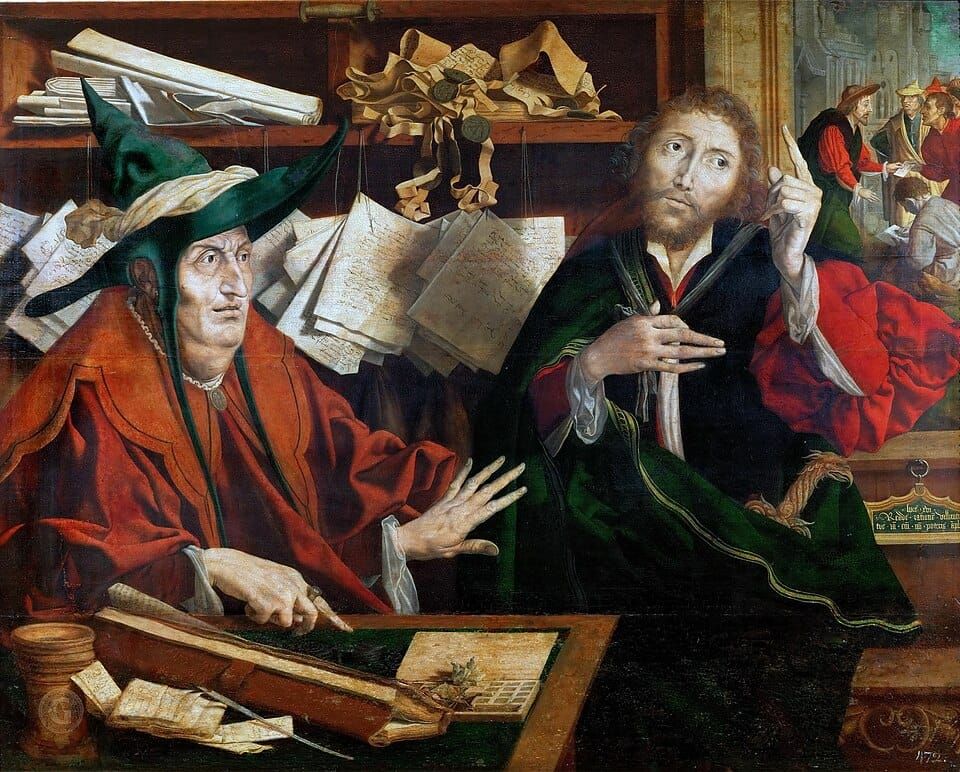
There is a moment, in the life of every soul, when the voice of the Master is heard asking for an account. The steward in today’s Gospel hears it suddenly, and not as a gentle invitation but as a summons: “Prepare a full account of your stewardship.” And when the summons comes, it falls upon him with a strange clarity, for in a single hour he sees what years of easy carelessness had concealed: that nothing he held was truly his, and that the time in which he might use it well was already drawing to a close.
It is a hard parable, for the master commends a man plainly dishonest. Yet our Lord does not praise the steward’s fraud; He praises his foresight. The man, faced with ruin, asks himself the one question that matters — “What shall I do?” — and answers it with energy, resolution, and an eye fixed upon his future. “The children of this world,” says Christ, “are more prudent in dealing with their own generation than the children of light.” The reproach is gentle but searching. How often does the soul bring to its earthly affairs a vigilance, an ingenuity, a readiness to labor and to plan, which it never thinks to bring to the affairs of eternity? The Church teaches that true prudence “is not to be confused with timidity or fear, nor with duplicity or dissimulation”; it is rather the clear sight by which the soul discerns its true good and chooses the right means to reach it. The steward had the cleverness of prudence without its holiness; the Christian is asked to have both.
Saint Paul, writing in tears, describes those whose “minds are occupied with earthly things,” whose god is their appetite and whose glory is their shame. Against them he sets a single, luminous truth: “our citizenship is in heaven.” Here lies the hidden key to the parable. If the soul is a citizen of heaven, then every good it holds on earth — its wealth, its time, its talents, its very body — is held in trust, as by a steward in a foreign land who must one day render his account and go home. The Catechism teaches that ownership makes its holder “a steward of Providence, with the task of making it fruitful and communicating its benefits to others.” And Saint John Chrysostom, with the boldness of a pastor who had seen the poor of Antioch, puts it more sharply still: “the goods we possess are not ours, but theirs.” The steward of the parable used his master’s goods to win friends who would receive him into their homes; the steward of Christ uses his Master’s goods to befriend the poor, who will one day bear witness for him at the gates of the eternal city.
This, then, is the lesson the soul must take to heart: to live each day as one who has already heard the summons, not with dread but with a holy earnestness. What is held loosely can be given freely; what is known to be borrowed can be returned with increase. A soul that has grasped that it is a steward and not an owner is set free from the anxious grasping that makes the heart small, and is made capable of generosity, of restitution, and of mercy. Pope Francis, reflecting on this very Gospel, offered a word of great consolation: in facing our failures, “we are always in time to put right with good the harm done.” No account is so tangled that grace cannot set it straight, if only the soul begins today.
And so the Psalmist’s joy may become the soul’s own: “I rejoiced because they said to me, ‘We will go up to the house of the LORD.’” The faithful steward does not fear the day of reckoning, for it is also the day of homecoming. Saint Augustine confessed that God has made us for Himself, “and our heart is restless until it rests in you.” Every good wisely spent, every debt of love paid to the poor, is a step taken upward toward that city built with compact unity, where the Master who once asked for an account will receive His steward, in the tenderness of an infinite love, as one who has come home at last.
Lord Jesus, Master of all that I have and all that I am, teach me to hold Your gifts as a steward and not as an owner. Kindle within me a holy prudence, that I may spend my days and my goods for Your Kingdom and for the poor, and so be ready, with a glad heart, to render my account and come home. Through Christ our Lord. Amen.
Sources & References
- “Prepare a full account of your stewardship”; “What shall I do?”; “The children of this world are more prudent…” — Luke 16:2, 16:3, 16:8 (USCCB, NABRE Lectionary, Lectionary 489)
- “minds are occupied with earthly things”; “our citizenship is in heaven” — Philippians 3:19, 3:20
- “I rejoiced because they said to me, ‘We will go up to the house of the LORD’” — Psalm 122:1; the image of the city “built as a city with compact unity” — Psalm 122:3
- “is not to be confused with timidity or fear, nor with duplicity or dissimulation” — Catechism of the Catholic Church, 1806
- “a steward of Providence, with the task of making it fruitful and communicating its benefits to others” — Catechism of the Catholic Church, 2404
- “the goods we possess are not ours, but theirs” — St. John Chrysostom, Homilies on Lazarus, Homily 2, as quoted in Catechism of the Catholic Church, 2446
- “and our heart is restless until it rests in you” — St. Augustine, Confessions, Book I, 1, as quoted in Catechism of the Catholic Church, 30
- “we are always in time to put right with good the harm done” — Pope Francis, Angelus, 22 September 2019 (featured in Vatican News “Word of the Day” for Luke 16:1-8; today’s 6 November 2026 entry was not yet published)
Administradores de una fortuna prestada
📖 Sagrada Escritura Diaria
Viernes 6 de noviembre de 2026 — Viernes de la XXXI Semana del Tiempo ordinario
Lecturas: Filipenses 3, 17–4, 1 • Salmo 121 • Lucas 16, 1-8
Hay un momento, en la vida de toda alma, en que se oye la voz del Señor que pide cuentas. El administrador del Evangelio de hoy la escucha de improviso, y no como una invitación amable, sino como una citación: «Dame cuenta de tu trabajo». Y cuando llega la citación, cae sobre él con una extraña claridad, pues en una sola hora ve lo que años de fácil descuido le habían ocultado: que nada de lo que tenía era verdaderamente suyo, y que el tiempo en que podía usarlo bien tocaba ya a su fin.
Es una parábola dura, pues el amo alaba a un hombre claramente deshonesto. Pero nuestro Señor no alaba el fraude del administrador; alaba su previsión. El hombre, ante la ruina, se hace la única pregunta que importa —«¿Qué voy a hacer?»— y le responde con energía, con resolución y con la mirada fija en su porvenir. «Los que pertenecen a este mundo», dice Cristo, «son más hábiles en sus negocios que los que pertenecen a la luz». El reproche es suave, pero penetrante. ¡Cuántas veces pone el alma en sus asuntos terrenos una vigilancia, un ingenio, una disposición a trabajar y a prever, que jamás piensa poner en los asuntos de la eternidad! La Iglesia enseña que la verdadera prudencia «no se confunde ni con la timidez o el temor, ni con la doblez o la disimulación»; es, más bien, la mirada clara con que el alma discierne su verdadero bien y elige los medios rectos para alcanzarlo. El administrador tenía la astucia de la prudencia sin su santidad; al cristiano se le pide tener ambas.
San Pablo, escribiendo entre lágrimas, describe a aquellos que «sólo piensan en cosas de la tierra», cuyo dios es el vientre y que se enorgullecen de lo que deberían avergonzarse. Frente a ellos pone una sola verdad luminosa: «Nosotros, en cambio, somos ciudadanos del cielo». Aquí está la llave escondida de la parábola. Si el alma es ciudadana del cielo, todo bien que posee en la tierra —su riqueza, su tiempo, sus talentos, su mismo cuerpo— lo tiene en depósito, como un administrador en tierra extranjera que un día habrá de rendir cuentas y volver a casa. El Catecismo enseña que la propiedad de un bien hace de su dueño «un administrador de la providencia para hacerlo fructificar y comunicar sus beneficios a otros». Y san Juan Crisóstomo, con la audacia de un pastor que había visto a los pobres de Antioquía, lo dice con mayor viveza todavía: «lo que poseemos no son bienes nuestros, sino los suyos». El administrador de la parábola se valió de los bienes de su amo para ganarse amigos que lo recibieran en sus casas; el administrador de Cristo se vale de los bienes de su Señor para hacerse amigo de los pobres, que un día darán testimonio en su favor a las puertas de la ciudad eterna.
Esta es, pues, la lección que el alma debe grabar en su corazón: vivir cada día como quien ya ha oído la citación, no con temor, sino con una santa diligencia. Lo que se sostiene con mano ligera puede darse con libertad; lo que se sabe prestado puede devolverse con creces. El alma que ha comprendido que es administradora y no dueña queda libre del afán ansioso que empequeñece el corazón, y se hace capaz de generosidad, de restitución y de misericordia. El papa Francisco, meditando este mismo Evangelio, ofreció una palabra de gran consuelo: frente a nuestras carencias y fracasos, «siempre estamos a tiempo para sanar el mal hecho con el bien». Ninguna cuenta está tan enredada que la gracia no pueda ponerla en orden, con tal de que el alma comience hoy.
Y así la alegría del salmista puede hacerse la del alma: «¡Qué alegría sentí, cuando me dijeron: “Vayamos a la casa del Señor”!». El administrador fiel no teme el día del ajuste de cuentas, porque es también el día del regreso a casa. San Agustín confesó ante Dios: «nos has hecho para ti y nuestro corazón está inquieto mientras no descansa en ti». Cada bien sabiamente empleado, cada deuda de amor pagada a los pobres, es un paso más en la subida hacia la Jerusalén del cielo, donde el Señor que un día pidió cuentas recibirá a su administrador, con la ternura de un amor infinito, como a quien por fin ha vuelto a casa.
Señor Jesús, Dueño de todo lo que tengo y de todo lo que soy, enséñame a custodiar tus dones como administrador y no como propietario. Enciende dentro de mí una santa prudencia, para que emplee mis días y mis bienes en favor de tu Reino y de los pobres, y así esté preparado, con el corazón alegre, para rendir mis cuentas y volver a casa. Por Jesucristo nuestro Señor. Amén.
Fuentes y referencias
- «Dame cuenta de tu trabajo»; «¿Qué voy a hacer…?»; «Los que pertenecen a este mundo son más hábiles…» — Lucas 16, 2; 16, 3; 16, 8 (USCCB en español, Leccionario de la Conferencia del Episcopado Mexicano)
- «sólo piensan en cosas de la tierra»; «Nosotros, en cambio, somos ciudadanos del cielo» — Filipenses 3, 19; 3, 20
- «¡Qué alegría sentí, cuando me dijeron: “Vayamos a la casa del Señor”!» — Salmo 121, 1 (numeración litúrgica; Salmo 122 en la numeración hebrea)
- «no se confunde ni con la timidez o el temor, ni con la doblez o la disimulación» — Catecismo de la Iglesia Católica, 1806
- «un administrador de la providencia para hacerlo fructificar y comunicar sus beneficios a otros» — Catecismo de la Iglesia Católica, 2404
- «lo que poseemos no son bienes nuestros, sino los suyos» — San Juan Crisóstomo, Sermones sobre Lázaro, sermón 2, citado en el Catecismo de la Iglesia Católica, 2446
- «nos has hecho para ti y nuestro corazón está inquieto mientras no descansa en ti» — San Agustín, Confesiones, libro I, 1, citado en el Catecismo de la Iglesia Católica, 30
- «siempre estamos a tiempo para sanar el mal hecho con el bien» — Papa Francisco, Ángelus, 22 de septiembre de 2019 (destacado por Vatican News en la «Palabra del día» para Lucas 16, 1-8; la entrada del 6 de noviembre de 2026 aún no estaba publicada)