
📖 Daily Scripture
September 23, 2026 — Memorial of Saint Pius of Pietrelcina, Priest
Readings: Proverbs 30:5-9 • Psalm 119:29, 72, 89, 101, 104, 163 • Luke 9:1-6
There is a prayer in the Book of Proverbs which the soul, if it is honest, has never quite dared to pray. It asks for very little and it asks for it very exactly: not poverty, not riches, but only the food I need. It is a petition framed by fear — fear of what abundance does to a man, and fear of what want does to him — and it is therefore one of the few prayers in Scripture which confesses, before God, that the one praying does not entirely trust himself. This is not weakness. It is the beginning of that self-knowledge without which no interior life is possible, and it is offered by a man who has first laid down the ground of all his confidence: every word of God is tested; he is a shield to those who take refuge in him.
Notice how the two halves of this prayer belong to one another. The petitioner asks to be kept from falsehood and lying, and in the same breath asks to be kept from the extremes of fortune. He has understood something that we are slow to learn: that untruth and possession grow from a single root. The man who is full denies God and asks, who is the Lord; the man in want steals and profanes God's name. In either case the lie has come first, quietly, before the deed — the small internal adjustment by which the soul persuades itself that the rule does not apply here, that this once the circumstances excuse it. Truth as uprightness in human action and speech is called truthfulness, sincerity, or candor. It is a virtue, which is to say it must be practiced, and it is practiced most severely not in the courtroom but in the interior monologue, where one is both the speaker and the only listener.
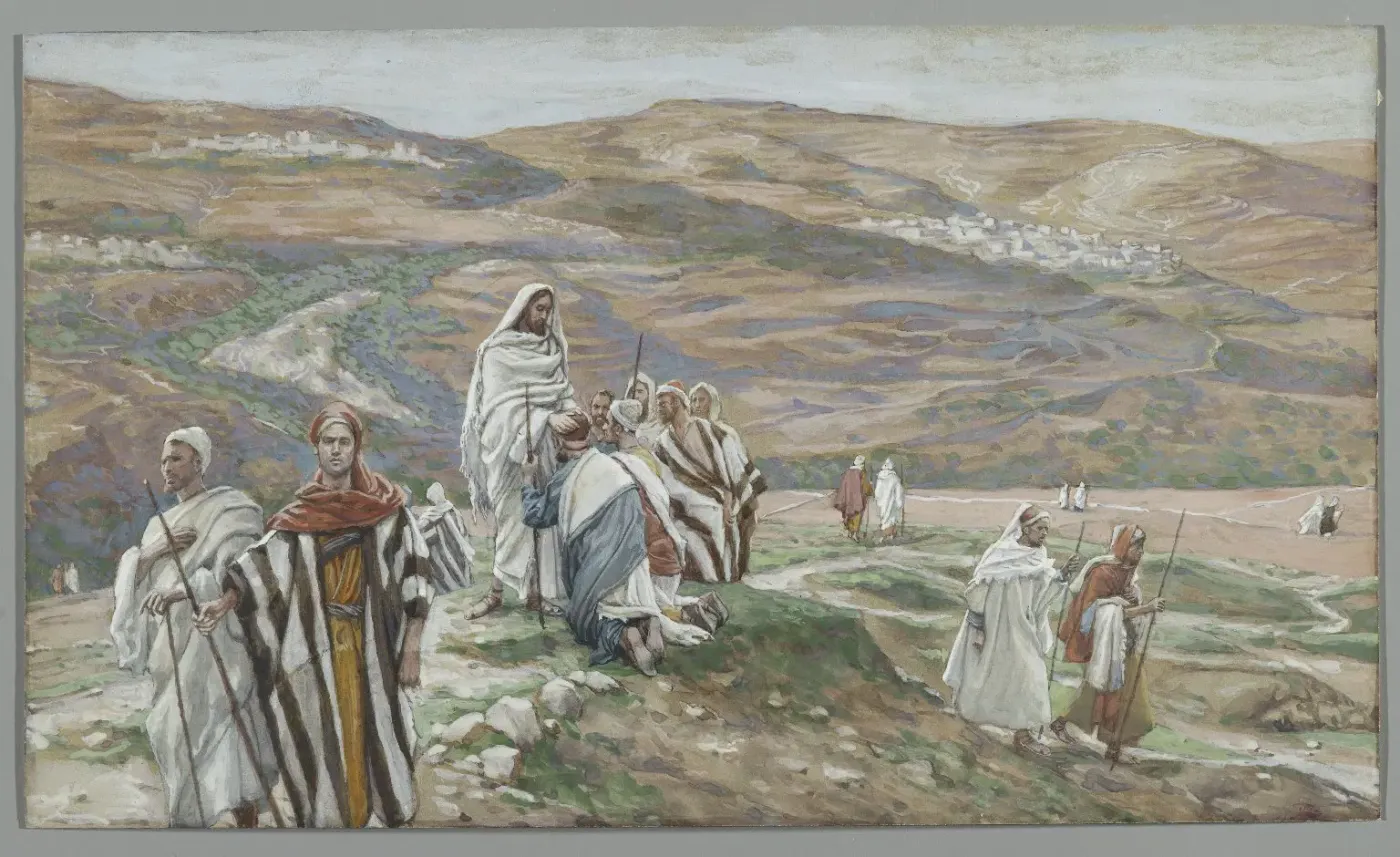
The Gospel places this same lesson in the hands of the Twelve, and it does so by taking things away. Take nothing for the journey, neither walking stick, nor sack, nor food, nor money, and let no one take a second tunic. The Lord is not romanticizing destitution. He is removing from the apostles every object which might, at some later hour, become the reason for a small betrayal — every provision which could be defended, hoarded, or lied about. A man carrying nothing has nothing to protect, and a man with nothing to protect can afford to be entirely honest. The precept of detachment from riches is obligatory for entrance into the Kingdom of heaven, and here we see why: not because things are evil, but because the soul that clings to them will eventually shade the truth to keep them.
Saint Cyprian, meditating on the petition for daily bread, saw the same thing. He who has begun to be Christ's disciple, renouncing all things according to the word of his Master, ought to ask for his daily food, and not to extend the desires of his petition to a long period. The measure is the day. Beyond it lies the anxiety that makes liars of us. And Saint Augustine set the contrast in a single line: let the proud seek and love earthly kingdoms, but blessed are the poor in spirit, for theirs is the Kingdom of heaven.
What, then, is the soul to carry? The psalm answers: your word, O Lord, is a lamp for my feet. Such is the force and power of the Word of God that it can serve the Church as her support and vigour, and the children of the Church as strength for their faith, food for the soul, and a pure and lasting fount of spiritual life. This is the one provision which cannot be hoarded, because it is only possessed by being obeyed, and cannot be lied about, because it is itself the truth. The apostles went out from village to village with empty hands and full hearts, and the sick were healed. Saint Pius of Pietrelcina, whose memorial the Church keeps today, held almost nothing in this world and gave away, for fifty years, what he could not lose. The freedom that follows upon such emptiness is not austerity but joy — the joy of a soul that has nothing left to defend and so, at last, has God.
Lord, teach me to ask for today and no further. Strip from me the small possessions I defend with small untruths, and set your word within me as a lamp for my feet. Let me carry nothing but you, and so carry everything. Through Christ our Lord. Amen.
Sources & References
- "Every word of God is tested; he is a shield to those who take refuge in him" — Proverbs 30:5
- "give me neither poverty nor riches; provide me only with the food I need" — Proverbs 30:8
- "Your word, O Lord, is a lamp for my feet" — Psalm 119:105 (responsorial refrain)
- "Take nothing for the journey, neither walking stick, nor sack, nor food, nor money" — Luke 9:3
- "Truth as uprightness in human action and speech is called truthfulness, sincerity, or candor" — Catechism of the Catholic Church, 2468
- "The precept of detachment from riches is obligatory for entrance into the Kingdom of heaven" — Catechism of the Catholic Church, 2544
- "Such is the force and power of the Word of God…" — Catechism of the Catholic Church, 131, citing Dei Verbum 21
- "He who has begun to be Christ's disciple… ought to ask for his daily food" — St. Cyprian of Carthage, On the Lord's Prayer, 19
- "Let the proud seek and love earthly kingdoms, but blessed are the poor in spirit…" — St. Augustine, De sermone Domini in monte 1, 1, 3, cited in Catechism of the Catholic Church, 2547
- Papal teaching: Pope Francis, Evangelii Gaudium (24 November 2013), 49 — "I prefer a Church which is bruised, hurting and dirty because it has been out on the streets, rather than a Church which is unhealthy from being confined and from clinging to its own security."
- Readings: USCCB, Daily Readings for 23 September 2026
No lleven nada para el camino
📖 Sagrada Escritura Diaria
23 de septiembre de 2026 — Memoria de San Pío de Pietrelcina, presbítero
Lecturas: Proverbios 30, 5-9 • Salmo 118, 29. 43. 79. 80. 95. 102 • Lucas 9, 1-6
Hay en el libro de los Proverbios una oración que el alma, si es sincera, nunca se ha atrevido del todo a rezar. Pide muy poco y lo pide con mucha exactitud: ni pobreza ni riqueza, sino tan sólo lo necesario para vivir. Es una petición enmarcada por el temor —temor de lo que la abundancia hace a un hombre, y temor de lo que le hace la indigencia— y es por ello una de las pocas oraciones de la Escritura que confiesa, delante de Dios, que quien ora no se fía enteramente de sí mismo. Esto no es debilidad. Es el comienzo de aquel conocimiento propio sin el cual ninguna vida interior es posible, y lo ofrece un hombre que antes ha asentado el fundamento de toda su confianza: toda palabra de Dios es verdadera; el Señor es un escudo para cuantos en él confían.
Adviértase cómo las dos mitades de esta oración se pertenecen mutuamente. El orante pide ser librado de la falsedad y la mentira, y en el mismo aliento pide ser librado de los extremos de la fortuna. Ha comprendido algo que nosotros aprendemos con lentitud: que la mentira y la posesión brotan de una sola raíz. El que está saciado se aparta de Dios y lo olvida; el que padece necesidad roba y ofende el nombre de Dios. En uno y otro caso la mentira ha llegado primero, calladamente, antes que la obra —ese pequeño ajuste interior por el cual el alma se persuade de que aquí la norma no se aplica, de que esta vez las circunstancias la excusan. La verdad como rectitud de la acción y de la palabra humana tiene por nombre veracidad, sinceridad o franqueza. Es una virtud, lo cual quiere decir que ha de practicarse, y se practica con mayor severidad no en el tribunal sino en el monólogo interior, donde uno es a la vez el que habla y el único que escucha.
El Evangelio pone esta misma lección en manos de los Doce, y lo hace quitándoles cosas. No lleven nada para el camino: ni bastón, ni morral, ni comida, ni dinero, ni dos túnicas. El Señor no está idealizando la miseria. Está retirando de los apóstoles todo objeto que pudiera, en alguna hora posterior, convertirse en el motivo de una pequeña traición —toda provisión que pudiera ser defendida, acaparada o encubierta con una mentira. El hombre que nada lleva nada tiene que proteger, y el hombre que nada tiene que proteger puede permitirse ser enteramente sincero. El precepto del desprendimiento de las riquezas es obligatorio para entrar en el Reino de los cielos, y aquí vemos por qué: no porque las cosas sean malas, sino porque el alma que se aferra a ellas acabará por sombrear la verdad con tal de conservarlas.
San Cipriano, meditando la petición del pan de cada día, vio lo mismo. El que ha comenzado a ser discípulo de Cristo, renunciando a todo según la palabra de su Maestro, debe pedir el alimento de cada día y no extender los deseos de su petición a un largo plazo. La medida es el día. Más allá está la inquietud que nos hace mentirosos. Y san Agustín trazó el contraste en una sola línea: el orgulloso busca el poder terreno, mientras el pobre en espíritu busca el Reino de los cielos.
¿Qué ha de llevar, entonces, el alma? El salmo responde: para mis pies antorcha es tu palabra. Es tan grande el poder y la fuerza de la Palabra de Dios, que constituye sustento y vigor para la Iglesia, firmeza de fe para sus hijos, alimento del alma, fuente límpida y perenne de vida espiritual. Ésta es la única provisión que no puede acapararse, porque sólo se posee obedeciéndola, y sobre la cual no cabe mentir, porque ella misma es la verdad. Los apóstoles salieron de pueblo en pueblo con las manos vacías y el corazón lleno, y los enfermos fueron curados. San Pío de Pietrelcina, cuya memoria celebra hoy la Iglesia, no poseyó casi nada en este mundo y dio, durante cincuenta años, aquello que no podía perder. La libertad que sigue a semejante vaciamiento no es austeridad sino gozo —el gozo de un alma que ya no tiene nada que defender y que, por fin, tiene a Dios.
Señor, enséñame a pedir el hoy y nada más. Despójame de las pequeñas posesiones que defiendo con pequeñas mentiras, y pon tu palabra dentro de mí como antorcha para mis pies. Que no lleve nada sino a ti, y lleve así todas las cosas. Por Jesucristo nuestro Señor. Amén.
Fuentes y referencias
- «Toda palabra de Dios es verdadera. El Señor es un escudo para cuantos en él confían» — Proverbios 30, 5
- «no me des pobreza ni riqueza, dame tan sólo lo necesario para vivir» — Proverbios 30, 8
- «Para mis pies antorcha es tu palabra» — Salmo 118 (119), 105
- «No lleven nada para el camino: ni bastón, ni morral, ni comida, ni dinero, ni dos túnicas» — Lucas 9, 3
- «La verdad como rectitud de la acción y de la palabra humana, tiene por nombre veracidad, sinceridad o franqueza» — Catecismo de la Iglesia Católica, 2468
- «El precepto del desprendimiento de las riquezas es obligatorio para entrar en el Reino de los cielos» — Catecismo de la Iglesia Católica, 2544
- «Es tan grande el poder y la fuerza de la Palabra de Dios…» — Catecismo de la Iglesia Católica, 131, citando Dei Verbum 21
- «El que ha comenzado a ser discípulo de Cristo… debe pedir el alimento de cada día» — San Cipriano de Cartago, Sobre la Oración del Señor, 19
- «El orgulloso busca el poder terreno, mientras el pobre en espíritu busca el Reino de los cielos» — San Agustín, De sermone Domini in monte 1, 1, 3, citado en el Catecismo de la Iglesia Católica, 2547
- Enseñanza pontificia: Papa Francisco, Evangelii Gaudium (24 de noviembre de 2013), 49 — «Prefiero una Iglesia accidentada, herida y manchada por salir a la calle, antes que una Iglesia enferma por el encierro y la comodidad de aferrarse a las propias seguridades.»
- Lecturas: USCCB, Lecturas del 23 de septiembre de 2026