
📖 Daily Scripture
Monday, October 19, 2026 — Memorial of Saints John de Brébeuf and Isaac Jogues, Priests, and Companions, Martyrs
Readings: Ephesians 2:1-10 • Psalm 100:1b-2, 3, 4ab, 4c-5 • Luke 12:13-21
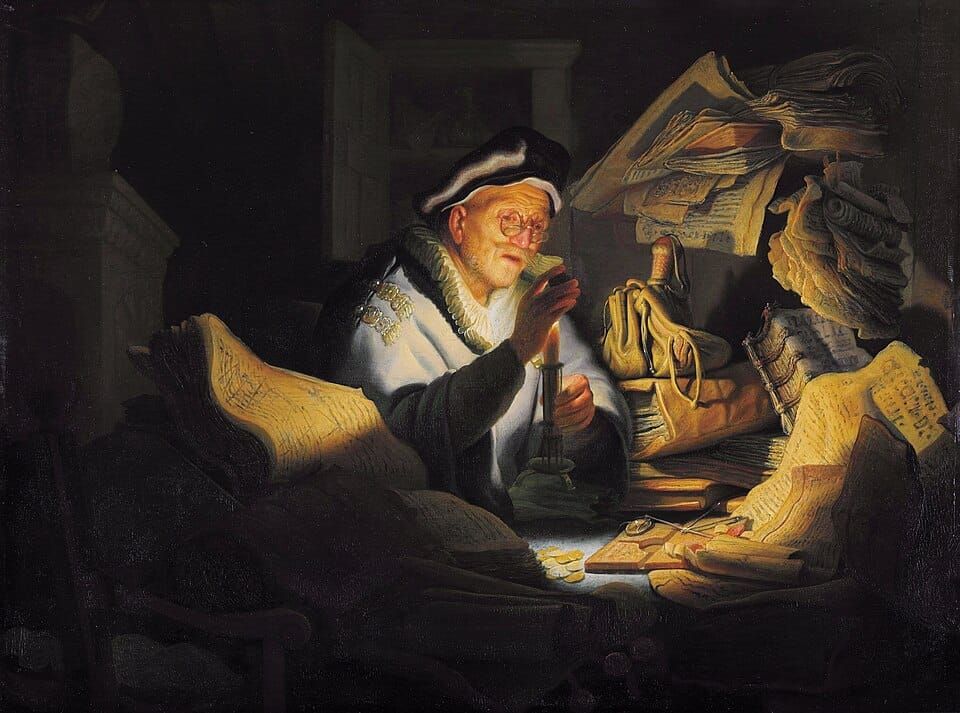
There is a quiet hour, known to every soul, when the labors of the day are gathered in and the heart surveys what it has acquired. The man in the Gospel knew such an hour. His land had yielded abundantly, and he reasoned with himself, as prudent men often do, that he must tear down his barns and build larger ones, and then bid his soul rest, eat, drink, and be merry. Nothing in his reckoning was criminal; it was only that God was absent from it. And into that silence came the word which no granary can keep out: “You fool, this night your life will be demanded of you.”
It is a hard word, yet it is spoken in mercy, for it awakens the soul before the night has come. Our Lord had already given the principle in plain terms: “one’s life does not consist of possessions.” The danger He names is not wealth as such, but the subtle conviction that security can be stored, that the future can be purchased, that the self can be made safe by accumulation. The Church, reading the tenth commandment with the same eyes, teaches that it “forbids greed and the desire to amass earthly goods without limit.” Greed is less a vice of the hands than of the imagination; it pictures a life sealed off from need, and therefore sealed off from God and from one’s neighbor.
St. Paul, writing to the Ephesians, uncovers the deeper truth which the rich man forgot. The soul did not begin in possession but in poverty; dead in its transgressions, it was raised to life by a God who is “rich in mercy.” “For by grace you have been saved through faith,” the Apostle writes, and this is not of our own doing but the gift of God. Whatever we hold, then, we hold as those who have received. We are not the architects of our own barns so much as “his handiwork, created in Christ Jesus for good works.” The Psalm gives the same confession its simplest form: “The Lord made us, we belong to him.” The soul that remembers it is owned cannot easily persuade itself that it owns.
Here lies the concrete lesson. To be “rich in what matters to God” is to let goods pass through the hands rather than settle in them, to measure abundance not by what is retained but by what is given. St. John Chrysostom put it with a severity the comfortable soul would rather not hear: “Not to enable the poor to share in our goods is to steal from them and deprive them of life.” Surplus, in the Christian reckoning, is never merely surplus; it is a summons. The question each evening is not how much has been gathered, but to whom it has been entrusted, and whether the barn has quietly become a wall.
Pope Leo XIV, reflecting upon this very parable, reminded the young that “the fullness of our existence does not depend on what we store up.” The martyrs whom the Church remembers today, John de Brébeuf, Isaac Jogues, and their companions, proved it in the forests of North America, where they laid down comfort, health, and at last life itself, holding nothing back from the God who had first held nothing back from them. They were poor in the granaries of the world and immeasurably rich toward God.
Thus the restlessness that drives a soul to build ever larger barns is, at its root, a hunger misdirected. St. Augustine confessed it on behalf of every heart: “you have made us for yourself, and our heart is restless until it rests in you.” No harvest can quiet that hunger, but grace can. The night will come for every soul; yet for the one who has learned to belong to God, it comes not as a demand but as a homecoming, into the house of a Father whose mercy is the one treasure that can never be taken away.
Lord Jesus, who became poor for my sake, loosen my grip on all that I would hoard, and teach me to hold every gift as Yours. Make my heart restless for You alone, and generous toward all whom You place in my path, that I may be rich in what matters to God. Through Christ our Lord. Amen.
Sources & References
- “You fool, this night your life will be demanded of you”; “one’s life does not consist of possessions”; “rich in what matters to God” — Luke 12:20, 12:15, 12:21 (NABRE, USCCB daily readings, October 19, 2026)
- “rich in mercy”; “For by grace you have been saved through faith”; “his handiwork, created in Christ Jesus for good works” — Ephesians 2:4, 2:8, 2:10 (NABRE)
- “The Lord made us, we belong to him.” — Psalm 100:3b, Responsorial Psalm refrain (Lectionary 473)
- “forbids greed and the desire to amass earthly goods without limit” — Catechism of the Catholic Church, no. 2536
- “Not to enable the poor to share in our goods is to steal from them and deprive them of life.” — St. John Chrysostom, Homilies on Lazarus 2, 5, as quoted in Catechism of the Catholic Church, no. 2446
- “you have made us for yourself, and our heart is restless until it rests in you” — St. Augustine, Confessions 1, 1, as quoted in Catechism of the Catholic Church, no. 30
- “the fullness of our existence does not depend on what we store up” — Pope Leo XIV, Homily at the Mass for the Jubilee of Young People, Tor Vergata, August 3, 2025 (featured in Vatican News “Word of the Day,” October 19, 2026)
Los graneros del alma
📖 Sagrada Escritura Diaria
Lunes 19 de octubre de 2026 — Memoria de los santos Juan de Brébeuf e Isaac Jogues, presbíteros, y compañeros, mártires
Lecturas: Efesios 2, 1-10 • Salmo 99, 2. 3. 4. 5 • Lucas 12, 13-21
Hay una hora silenciosa, conocida por toda alma, en que se recogen las labores del día y el corazón contempla lo que ha adquirido. El hombre del Evangelio conoció esa hora. Su tierra había producido en abundancia, y razonó consigo mismo, como suelen hacerlo los hombres prudentes, que debía derribar sus graneros y construir otros más grandes, y luego invitar a su alma a descansar, comer, beber y darse buena vida. Nada en sus cálculos era criminal; solo que Dios estaba ausente de ellos. Y en ese silencio irrumpió la palabra que ningún granero puede contener: “¡Insensato! Esta misma noche vas a morir.”
Es una palabra dura, y sin embargo se pronuncia con misericordia, porque despierta al alma antes de que llegue la noche. Nuestro Señor ya había enunciado el principio con toda claridad: “la vida del hombre no depende de la abundancia de los bienes que posea.” El peligro que Él señala no es la riqueza en sí, sino la sutil convicción de que la seguridad puede almacenarse, de que el porvenir puede comprarse, de que el yo puede ponerse a salvo mediante la acumulación. La Iglesia, leyendo el décimo mandamiento con esa misma mirada, enseña que este “prohíbe la avaricia y el deseo de una apropiación inmoderada de los bienes terrenos.” La avaricia es menos un vicio de las manos que de la imaginación; se figura una vida sellada contra toda necesidad, y por eso mismo sellada contra Dios y contra el prójimo.
San Pablo, escribiendo a los efesios, descubre la verdad más honda que el rico había olvidado. El alma no comenzó en la posesión sino en la pobreza; muerta por sus pecados, fue devuelta a la vida por un Dios cuya misericordia y amor “son muy grandes.” “Ustedes han sido salvados por la gracia, mediante la fe,” escribe el Apóstol, y esto no es obra nuestra sino don de Dios. Todo cuanto tenemos, pues, lo tenemos como quienes lo han recibido. No somos los arquitectos de nuestros propios graneros, sino “hechura de Dios, creados por medio de Cristo Jesús para hacer el bien.” El salmo da a esta misma confesión su forma más sencilla: “El Señor es nuestro dueño.” El alma que recuerda que tiene dueño difícilmente puede persuadirse de que es dueña.
Aquí está la lección concreta. Hacerse rico “de lo que vale ante Dios” es dejar que los bienes pasen por las manos en lugar de asentarse en ellas, medir la abundancia no por lo que se retiene sino por lo que se da. San Juan Crisóstomo lo expresó con una severidad que el alma acomodada preferiría no escuchar: “No hacer participar a los pobres de los propios bienes es robarles y quitarles la vida.” En la cuenta cristiana, lo que sobra nunca es simplemente sobrante; es un llamado. La pregunta de cada noche no es cuánto se ha reunido, sino a quién se ha confiado, y si el granero se ha convertido silenciosamente en un muro.
El Papa León XIV, meditando sobre esta misma parábola, recordó a los jóvenes que “la plenitud de nuestra existencia no depende de lo que acumulamos ni de lo que poseemos.” Los mártires que la Iglesia recuerda hoy, Juan de Brébeuf, Isaac Jogues y sus compañeros, lo demostraron en los bosques de América del Norte, donde entregaron la comodidad, la salud y, al final, la vida misma, sin reservarse nada ante el Dios que primero nada se había reservado para ellos. Fueron pobres en los graneros del mundo e inmensamente ricos ante Dios.
Así, la inquietud que impulsa al alma a construir graneros cada vez más grandes es, en su raíz, un hambre mal orientada. San Agustín la confesó en nombre de todo corazón: “nos has hecho para ti y nuestro corazón está inquieto mientras no descansa en ti.” Ninguna cosecha puede saciar esa hambre, pero la gracia sí. La noche llegará para toda alma; pero para quien ha aprendido a pertenecer a Dios, no llega como una exigencia sino como un regreso a casa, a la casa de un Padre cuya misericordia es el único tesoro que jamás podrá ser arrebatado.
Señor Jesús, que te hiciste pobre por mí, afloja mi apego a todo lo que quisiera acaparar, y enséñame a tener cada don como tuyo. Haz que mi corazón esté inquieto solo por ti, y que sea generoso con todos los que pones en mi camino, para que me haga rico de lo que vale ante Dios. Por Jesucristo nuestro Señor. Amén.
Fuentes y referencias
- “¡Insensato! Esta misma noche vas a morir”; “la vida del hombre no depende de la abundancia de los bienes que posea”; “de lo que vale ante Dios” — Lucas 12, 20; 12, 15; 12, 21 (USCCB, lecturas del 19 de octubre de 2026)
- “son muy grandes”; “Ustedes han sido salvados por la gracia, mediante la fe”; “hechura de Dios, creados por medio de Cristo Jesús para hacer el bien” — Efesios 2, 4; 2, 8; 2, 10
- “El Señor es nuestro dueño.” — Salmo 99, 3b, estribillo del salmo responsorial (Leccionario 473)
- “prohíbe la avaricia y el deseo de una apropiación inmoderada de los bienes terrenos” — Catecismo de la Iglesia Católica, n. 2536
- “No hacer participar a los pobres de los propios bienes es robarles y quitarles la vida” — San Juan Crisóstomo, Homilías sobre Lázaro 2, 6, citado en el Catecismo de la Iglesia Católica, n. 2446
- “nos has hecho para ti y nuestro corazón está inquieto mientras no descansa en ti” — San Agustín, Confesiones 1, 1, citado en el Catecismo de la Iglesia Católica, n. 30
- “la plenitud de nuestra existencia no depende de lo que acumulamos ni de lo que poseemos” — Papa León XIV, Homilía en la Misa del Jubileo de los Jóvenes, Tor Vergata, 3 de agosto de 2025