
📖 Daily Scripture
Sunday, August 2, 2026 — Eighteenth Sunday in Ordinary Time
Readings: Isaiah 55:1-3 • Psalm 145:8-9, 15-16, 17-18 • Romans 8:35, 37-39 • Matthew 14:13-21
There is a strange market described by the prophet, in which the one commodity worth having is the only thing that cannot be bought; the buyers arrive with empty purses and are told to come anyway, to take grain and wine and milk without price. It is a rebuke framed as an invitation. Why, the prophet asks, spend money for what is not bread, and wages for what fails to satisfy? The question is not addressed to a nation only but to the individual soul, which knows very well what it has spent itself upon, and knows too that the accounting has never once come out even.
That hunger is not an accident of temperament, nor a fault to be scolded away. The desire for God is written in the human heart, because man is created by God and for God; and God never ceases to draw man to himself. Only in God will he find the truth and happiness he never stops searching for. The restlessness the soul feels is therefore evidence not of its failure, but of its origin.
The Gospel sets that hunger in a deserted place at nightfall. Jesus has just learned of the death of John, and He withdraws to be alone; the crowd, indifferent to His grief, follows Him on foot from their towns. What He does then is the first lesson of the day. His heart is moved with pity, and He cures their sick. He does not wait until sorrow has passed in order to be merciful. Charity that postpones itself until the heart is unburdened is charity that will never be exercised at all, for in this life the heart is never quite unburdened.
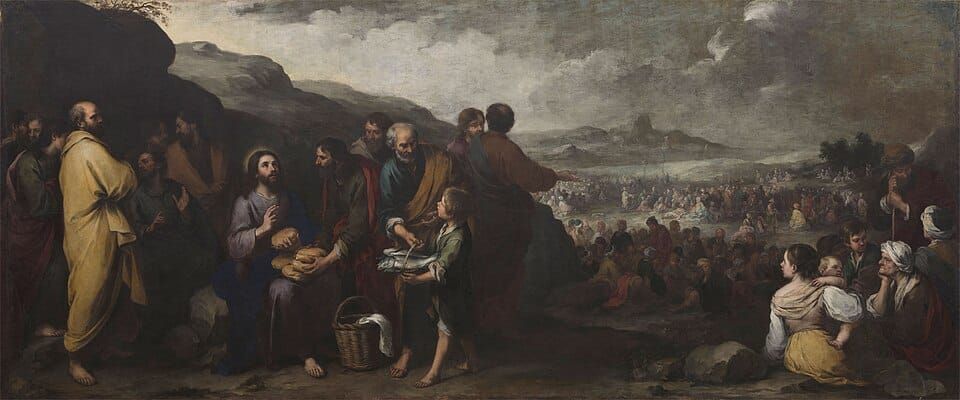
The second lesson belongs to the disciples, and it is the more uncomfortable of the two, because their reasoning is so sensible. Dismiss the crowds; the hour is late; the place is empty. And when the Lord will not permit the easy dismissal, they produce the inventory: five loaves and two fish are all we have here. The word that betrays them is all. It is the arithmetic of a soul that has measured the need, measured its own resources, and concluded that the distance between the two is a reason to withhold rather than a reason to give. Yet the miracle does not begin until the little is surrendered. Bring them here to me is the whole moral teaching of this Gospel compressed into five words.
What is placed in His hands is not merely stretched; it is transfigured. The miracles of the multiplication of the loaves, when the Lord says the blessing, breaks and distributes the loaves through his disciples to feed the multitude, prefigure the superabundance of this unique bread of his Eucharist. Christ is, as Augustine writes, bread that restores and does not run short; bread that can be eaten but not exhausted. The economy of the Kingdom is not thrift but overflow: twelve wicker baskets of fragments remain from what would not have fed a single household.
And the fragments are the last lesson. Superabundance is given for distribution, never for storage. The Eucharist commits us to the poor; to receive in truth the Body and Blood of Christ given up for us, we must recognize Christ in the poorest, his brethren. The warning that follows is severe: you have tasted the Blood of the Lord, yet you do not recognize your brother; God freed you from all your sins and invited you here, but you have not become more merciful. The Lord's own example remains the measure of every action and every service: we are called to share our bread, to multiply hope and to proclaim the coming of God's Kingdom. A soul may be fed at the Lord's table every week of its life and remain hungry, if it eats and does not share.
Yet the day ends where the Apostle ends, in the certainty that nothing — not anguish, not the sword, not death, nor any other creature — will be able to separate the soul from the love of God in Christ Jesus. Whatever the soul carries to Him tonight, however small and however late, He asks only that it be brought.
Lord, teach me not to count what little I have before I give it. Take the small and insufficient thing I hold back, bless it, break it, and let it feed someone I have not yet noticed. Satisfy within me the hunger You Yourself placed there, and never let me rise from Your table without becoming more merciful. Through Christ our Lord. Amen.
Sources & References
- "All you who are thirsty, come to the water!" and "Why spend your money for what is not bread; your wages for what fails to satisfy?" — Isaiah 55:1-3, First Reading (Lectionary 112).
- "The hand of the Lord feeds us; he answers all our needs." — Responsorial Psalm 145:8-9, 15-16, 17-18.
- "Neither death, nor life… will be able to separate us from the love of God in Christ Jesus our Lord." — Romans 8:35, 37-39, Second Reading.
- "Five loaves and two fish are all we have here," "Bring them here to me," and "twelve wicker baskets full" — Matthew 14:13-21, Gospel.
- "The desire for God is written in the human heart, because man is created by God and for God; and God never ceases to draw man to himself. Only in God will he find the truth and happiness he never stops searching for." — Catechism of the Catholic Church, 27.
- "The miracles of the multiplication of the loaves… prefigure the superabundance of this unique bread of his Eucharist." — Catechism of the Catholic Church, 1335.
- "The Eucharist commits us to the poor. To receive in truth the Body and Blood of Christ given up for us, we must recognize Christ in the poorest, his brethren." — Catechism of the Catholic Church, 1397.
- "You have tasted the Blood of the Lord, yet you do not recognize your brother… God freed you from all your sins and invited you here, but you have not become more merciful." — St. John Chrysostom, Homily on 1 Corinthians 27, 4, quoted in Catechism of the Catholic Church, 1397.
- "Bread that restores and does not run short; bread that can be eaten but not exhausted" (panis qui reficit, et non deficit; panis qui sumi potest, consumi non potest) — St. Augustine, Sermo 130, 2.
- "We are called to share our bread, to multiply hope and to proclaim the coming of God's Kingdom." — Pope Leo XIV, Homily, Solemnity of the Most Holy Body and Blood of Christ, 22 June 2025; featured as the papal commentary in Vatican News, Word of the Day, 2 August 2026.
El pan que nunca se agota
📖 Sagrada Escritura Diaria
Domingo 2 de agosto de 2026 — XVIII Domingo del Tiempo Ordinario
Lecturas: Isaías 55, 1-3 • Salmo 144, 8-9. 15-16. 17-18 • Romanos 8, 35. 37-39 • Mateo 14, 13-21
Hay un mercado extraño en el relato del profeta, en el que lo único que vale la pena tener es precisamente lo único que no puede comprarse; los compradores llegan con las manos vacías y se les dice que vengan de todos modos, que tomen trigo y vino y leche sin pagar. Es un reproche formulado como invitación. ¿Por qué gastar el dinero en lo que no es pan y el salario en lo que no alimenta? La pregunta no se dirige solamente a un pueblo, sino al alma concreta, que sabe muy bien en qué se ha gastado a sí misma, y sabe también que las cuentas jamás le han salido.
Esa hambre no es un accidente del temperamento ni una falta que se corrija con reprimendas. El deseo de Dios está inscrito en el corazón del hombre, porque el hombre ha sido creado por Dios y para Dios; y Dios no cesa de atraer al hombre hacia sí, y sólo en Dios encontrará el hombre la verdad y la dicha que no cesa de buscar. La inquietud que el alma siente es, por tanto, prueba no de su fracaso, sino de su origen.
El Evangelio sitúa esa hambre en un lugar despoblado, al caer la tarde. Jesús acaba de enterarse de la muerte de Juan y se retira para estar solo; la gente, ajena a su dolor, lo sigue por tierra desde los pueblos. Lo que Él hace entonces es la primera lección del día: se compadece de la multitud y cura a los enfermos. No espera a que pase la tristeza para ser misericordioso. La caridad que se aplaza hasta que el corazón esté descargado es una caridad que nunca llegará a ejercerse, porque en esta vida el corazón nunca está del todo descargado.
La segunda lección pertenece a los discípulos, y es la más incómoda de las dos, porque su razonamiento resulta muy sensato. Despide a la gente; se hace tarde; el lugar está desierto. Y cuando el Señor no consiente ese despido cómodo, ellos presentan el inventario: no tenemos aquí más que cinco panes y dos pescados. Lo que los delata es ese «no tenemos más que». Es la aritmética de un alma que ha medido la necesidad, ha medido sus propios recursos y ha concluido que la distancia entre ambos es motivo para retener en vez de motivo para dar. Sin embargo, el milagro no comienza hasta que lo poco se entrega. «Tráiganmelos» es toda la enseñanza moral de este Evangelio comprimida en una sola palabra.
Lo que se pone en sus manos no se estira solamente: queda transfigurado. Los milagros de la multiplicación de los panes, cuando el Señor dijo la bendición, partió y distribuyó los panes por medio de sus discípulos para alimentar la multitud, prefiguran la sobreabundancia de este único pan de su Eucaristía. Cristo es, como escribe san Agustín, un pan que nutre y nunca falta; un pan que se puede comer pero que nunca se agota. La economía del Reino no es el ahorro, sino el desbordamiento: quedan doce canastos de sobras de lo que no habría bastado para una sola casa.
Y las sobras son la última lección. La sobreabundancia se da para repartirse, nunca para almacenarse. La Eucaristía entraña un compromiso en favor de los pobres: para recibir en la verdad el Cuerpo y la Sangre de Cristo entregados por nosotros debemos reconocer a Cristo en los más pobres, sus hermanos. La advertencia que sigue es severa: has gustado la sangre del Señor y no reconoces a tu hermano; Dios te ha liberado de todos los pecados y te ha invitado a su mesa, y tú, aun así, no te has hecho más misericordioso. El ejemplo del Señor sigue siendo un criterio urgente de acción y servicio: compartir el pan, para multiplicar la esperanza, proclama la venida del Reino de Dios. Un alma puede alimentarse en la mesa del Señor todas las semanas de su vida y seguir hambrienta, si come y no comparte.
Y sin embargo el día termina donde termina el Apóstol: en la certeza de que nada —ni la angustia, ni la espada, ni la muerte, ni creatura alguna— podrá apartar al alma del amor que Dios nos ha manifestado en Cristo Jesús. Sea lo que sea lo que el alma le lleve esta noche, por pequeño y por tardío que sea, Él sólo pide que se lo lleven.
Señor, enséñame a no contar lo poco que tengo antes de darlo. Toma esa cosa pequeña e insuficiente que retengo, bendícela, pártela y deja que alimente a alguien en quien todavía no me he fijado. Sacia dentro de mí el hambre que Tú mismo pusiste allí, y no permitas que me levante jamás de tu mesa sin haberme hecho más misericordioso. Por Jesucristo nuestro Señor. Amén.
Fuentes y referencias
- «Todos ustedes, los que tienen sed, vengan por agua» y «¿Por qué gastar el dinero en lo que no es pan y el salario, en lo que no alimenta?» — Isaías 55, 1-3, primera lectura (Leccionario 112).
- «Abres, Señor, tu mano y nos sacias de favores.» — Salmo responsorial 144, 8-9. 15-16. 17-18 (numeración de la Vulgata, según el Leccionario en español de la USCCB).
- «Ni la muerte ni la vida… podrá apartarnos del amor que nos ha manifestado Dios en Cristo Jesús.» — Romanos 8, 35. 37-39, segunda lectura.
- «No tenemos aquí más que cinco panes y dos pescados», «Tráiganmelos» y «se llenaron doce canastos» — Mateo 14, 13-21, Evangelio.
- «El deseo de Dios está inscrito en el corazón del hombre, porque el hombre ha sido creado por Dios y para Dios; y Dios no cesa de atraer al hombre hacia sí, y sólo en Dios encontrará el hombre la verdad y la dicha que no cesa de buscar.» — Catecismo de la Iglesia Católica, 27.
- «Los milagros de la multiplicación de los panes… prefiguran la sobreabundancia de este único pan de su Eucaristía.» — Catecismo de la Iglesia Católica, 1335.
- «La Eucaristía entraña un compromiso en favor de los pobres: para recibir en la verdad el Cuerpo y la Sangre de Cristo entregados por nosotros debemos reconocer a Cristo en los más pobres, sus hermanos.» — Catecismo de la Iglesia Católica, 1397.
- «Has gustado la sangre del Señor y no reconoces a tu hermano… Dios te ha liberado de todos los pecados y te ha invitado a ella. Y tú, aún así, no te has hecho más misericordioso.» — San Juan Crisóstomo, Homilía sobre 1 Corintios 27, 4, citado en el Catecismo de la Iglesia Católica, 1397.
- «Un pan que nutre y nunca falta; un pan que se puede comer pero que nunca se agota» (panis qui reficit, et non deficit; panis qui sumi potest, consumi non potest) — San Agustín, Sermo 130, 2.
- «Compartir el pan, para multiplicar la esperanza, proclama la venida del Reino de Dios.» — Papa León XIV, Homilía, Solemnidad del Santísimo Cuerpo y Sangre de Cristo, 22 de junio de 2025; recogida como comentario papal en Vatican News, Palabra del día, 2 de agosto de 2026.