
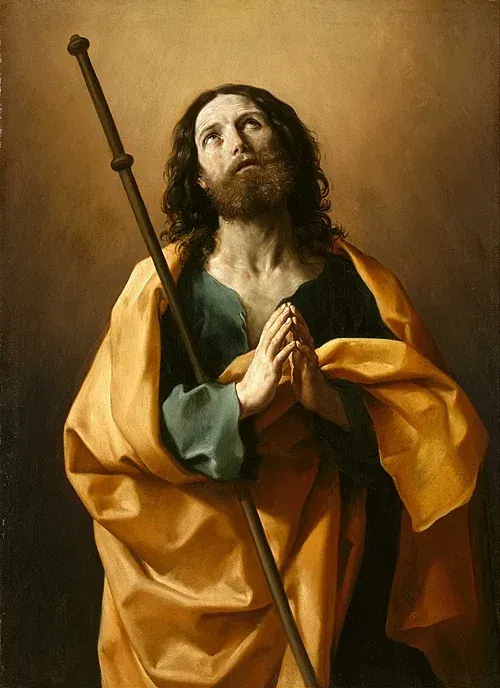
📖 Daily Scripture
Saturday, July 25, 2026 — Feast of Saint James, Apostle
Readings: 2 Corinthians 4:7-15 • Psalm 126:1bc-2ab, 2cd-3, 4-5, 6 • Matthew 20:20-28
There is a moment in every soul's history when it must choose between two ways of ascending. The one climbs; the other descends. The one seeks the higher place at the table, the seat of honor, the recognition that flatters and the influence that commands; the other, remembering how its Lord went down into the waters and down into death, learns that the only ladder to heaven is the one whose rungs are laid in humility. Today the Church sets before the reader two brothers who asked, through their mother, for the thrones at Christ's right and left, and a Lord who answered not with rebuke but with a question: "Can you drink the chalice that I am going to drink?" It is a question addressed to every heart that has ever wished to be great.
For the desire to be first is not, in itself, the sin; the sin lies in mistaking what greatness is. James and John were not condemned for wanting glory but for not knowing what glory costs, nor of what it is made. The Lord does not extinguish their ambition; He purifies it. He takes the restless craving to rise and turns it downward, into the humble labor of service, teaching that whoever wishes to be great must be a servant. The world measures height by how many stand below; the Kingdom measures it by how many one has stooped to lift. And the Catechism gathers this into a single luminous sentence: Christ, King and Lord of the universe, made himself the servant of all, for he came not to be served but to serve, and to give his life as a ransom for many. Here is the whole reversal of the Gospel — that to reign is to serve.
Yet service in its fullness is costly, and the chalice is no mere figure of speech. The saint whose feast is kept today, James, the son of Zebedee, did in the end drink it; he was the first of the Apostles to be slain for the Name, and his blood watered the young Church as rain waters a furrow. Tertullian saw this and left the words that have never grown old: the blood of the martyrs is the seed of the Church. The soul need not seek out persecution to share in this mystery; it has only to carry, in the ordinary afflictions of its days, what Saint Paul calls the treasure held in earthen vessels — the life of Jesus borne about in a mortal body, afflicted in every way but not constrained, perplexed but not driven to despair. Every hidden endurance offered in love is a drop from the same chalice, and no drop is wasted.
This is why the Psalm of the day does not promise that the sowing will be painless, but that the reaping will be joyful: those who go forth weeping, carrying the seed, shall come back rejoicing, carrying their sheaves. The cross is never the last word; it is the necessary door. As the Catechism teaches, Christ calls his disciples to take up their cross and follow him, not to leave them upon the cross but to lead them through it to the resurrection. And Chrysostom, gazing on these same two brothers, drew out the paradox with the sharpness of a surgeon: if it be your will to become great, seek not to become great, and then you will be great. The soul that stops grasping at the high place discovers that it was being carried toward it all along.
Let the reader, then, cease from the exhausting labor of self-exaltation. There is a rest in serving that ambition never gives. For the glory of God, as one shepherd of the Church has said, is love that becomes service, not power that seeks to dominate. To pour oneself out is not to be emptied but to be filled; to go down is the surest way of being raised; and the chalice accepted in love becomes, in the end, the very cup of gladness.
Lord Jesus, You who did not grasp at glory but poured out Your life for me, teach me to find my greatness in service and my rest in humility. Take from me the secret hunger to be first, and place within me the willingness to be last, that carrying my small cross in love I may drink of Your chalice and share at last in Your joy. Through Christ our Lord. Amen.
Sources & References
- "afflicted in every way but not constrained, perplexed but not driven to despair" — 2 Corinthians 4:8 (First Reading, 2 Cor 4:7-15)
- "those who go forth weeping... shall come back rejoicing, carrying their sheaves" — Psalm 126:5-6 (Responsorial Psalm)
- "I chose you from the world, to go and bear fruit that will last" — cf. John 15:16 (Alleluia)
- "Can you drink the chalice...?"; "whoever wishes to be great among you shall be your servant"; "not to be served but to serve, and to give his life as a ransom for many" — Matthew 20:20-28 (Gospel)
- "made himself the servant of all... to reign is to serve him" — Catechism of the Catholic Church, 786
- "take up [their] cross and follow [him]" — Catechism of the Catholic Church, 618
- "The blood of the martyrs is the seed of the Church" — Tertullian, Apologeticus 50 (standard rendering; literally "the blood of Christians is seed")
- "if it be your will to become great, seek not to become great, and then you will be great" — St. John Chrysostom, Homily 65 on the Gospel of Matthew
- "love that becomes service, not power that seeks to dominate" — Pope Francis, Angelus, 17 October 2021 (on the parallel Gospel, Mark 10:35-45)
El Cáliz y la Corona
📖 Sagrada Escritura Diaria
Sábado, 25 de julio de 2026 — Fiesta de Santiago, Apóstol
Lecturas: 2 Corintios 4, 7-15 • Salmo 125, 1-2ab. 2cd-3. 4-5. 6 • Mateo 20, 20-28
Hay un momento en la historia de cada alma en que debe elegir entre dos maneras de ascender. Una sube; la otra desciende. Una busca el lugar más alto en la mesa, el asiento de honor, el reconocimiento que halaga y la influencia que manda; la otra, recordando cómo su Señor bajó a las aguas y bajó a la muerte, aprende que la única escalera al cielo es aquella cuyos peldaños están hechos de humildad. Hoy la Iglesia pone ante el lector a dos hermanos que pidieron, por medio de su madre, los tronos a la derecha y a la izquierda de Cristo, y a un Señor que no respondió con un reproche, sino con una pregunta: «¿Podrán beber el cáliz que yo he de beber?». Es una pregunta dirigida a todo corazón que alguna vez ha deseado ser grande.
Porque el deseo de ser el primero no es, en sí mismo, el pecado; el pecado está en confundir qué es la grandeza. Santiago y Juan no fueron condenados por querer la gloria, sino por no saber lo que la gloria cuesta ni de qué está hecha. El Señor no apaga su ambición; la purifica. Toma el anhelo inquieto de subir y lo vuelve hacia abajo, hacia el trabajo humilde del servicio, enseñando que quien quiera ser grande ha de hacerse servidor. El mundo mide la altura por cuántos quedan debajo; el Reino la mide por cuántos uno se ha inclinado a levantar. Y el Catecismo recoge todo esto en una sola frase luminosa: Cristo, Rey y Señor del universo, se hizo el servidor de todos, pues no ha venido a ser servido, sino a servir y a dar la vida por la redención de todos. Aquí está toda la inversión del Evangelio: que reinar es servir.
Pero el servicio en su plenitud es costoso, y el cáliz no es una mera figura. El santo cuya fiesta se celebra hoy, Santiago, el hijo de Zebedeo, al final lo bebió; fue el primero de los Apóstoles en ser inmolado por el Nombre, y su sangre regó la Iglesia naciente como la lluvia riega el surco. Tertuliano lo vio y dejó unas palabras que nunca han envejecido: la sangre de los mártires es semilla de cristianos. No hace falta que el alma busque la persecución para participar de este misterio; le basta con llevar, en las aflicciones ordinarias de sus días, lo que san Pablo llama el tesoro guardado en vasijas de barro: la vida de Jesús llevada en un cuerpo mortal, sufriendo toda clase de pruebas pero sin angustiarse, abrumada por las preocupaciones pero sin desesperar. Cada padecimiento oculto ofrecido con amor es una gota del mismo cáliz, y ninguna gota se pierde.
Por eso el Salmo del día no promete que la siembra será sin dolor, sino que la cosecha será gozosa: los que van llorando, cargando la semilla, al regresar vendrán cantando con sus gavillas. La cruz nunca es la última palabra; es la puerta necesaria. Como enseña el Catecismo, Cristo llama a sus discípulos a tomar su cruz y a seguirle, no para dejarlos en la cruz, sino para conducirlos a través de ella hasta la resurrección. Y Crisóstomo, contemplando a estos mismos dos hermanos, sacó la paradoja con la agudeza de un cirujano: si quieres llegar a ser grande, no busques serlo, y entonces lo serás. El alma que deja de aferrarse al lugar alto descubre que hacia él era llevada desde el principio.
Que el lector, pues, cese del trabajo agotador de exaltarse a sí mismo. Hay un descanso en el servir que la ambición nunca da. Porque la gloria de Dios, como ha dicho un pastor de la Iglesia, es amor que se hace servicio, no poder que aspira a la dominación. Derramarse no es vaciarse, sino llenarse; bajar es el modo más seguro de ser levantado; y el cáliz aceptado con amor se convierte, al fin, en la copa misma de la alegría.
Señor Jesús, que no te aferraste a la gloria, sino que derramaste tu vida por mí, enséñame a encontrar mi grandeza en el servicio y mi descanso en la humildad. Quita de mí el hambre secreta de ser el primero, y pon en mí la voluntad de ser el último, para que, llevando con amor mi pequeña cruz, beba de tu cáliz y participe al fin de tu gozo. Por Jesucristo nuestro Señor. Amén.
Fuentes y referencias
- «sufriendo toda clase de pruebas pero sin angustiarse, abrumada por las preocupaciones pero sin desesperar» — 2 Corintios 4, 8 (Primera lectura, 2 Cor 4, 7-15)
- «los que van llorando, cargando la semilla... vendrán cantando con sus gavillas» — Salmo 125, 6 (Salmo responsorial)
- «Yo los he elegido del mundo... para que vayan y den fruto» — cf. Juan 15, 16 (Aclamación)
- «¿Podrán beber el cáliz...?»; «el que quiera ser grande entre ustedes, que sea el que los sirva»; «no ha venido a ser servido, sino a servir y a dar la vida por la redención de todos» — Mateo 20, 20-28 (Evangelio)
- «se hizo el servidor de todos... reinar es servir» — Catecismo de la Iglesia Católica, 786
- «tomar su cruz y seguirle» — Catecismo de la Iglesia Católica, 618
- «La sangre de los mártires es semilla de cristianos» — Tertuliano, Apologético 50 (traducción habitual; literal: «la sangre de los cristianos es semilla»)
- «si quieres llegar a ser grande, no busques serlo, y entonces lo serás» — San Juan Crisóstomo, Homilía 65 sobre el Evangelio de san Mateo
- «es amor que se hace servicio, no poder que aspira a la dominación» — Papa Francisco, Ángelus, 17 de octubre de 2021 (sobre el Evangelio paralelo, Mc 10, 35-45)