
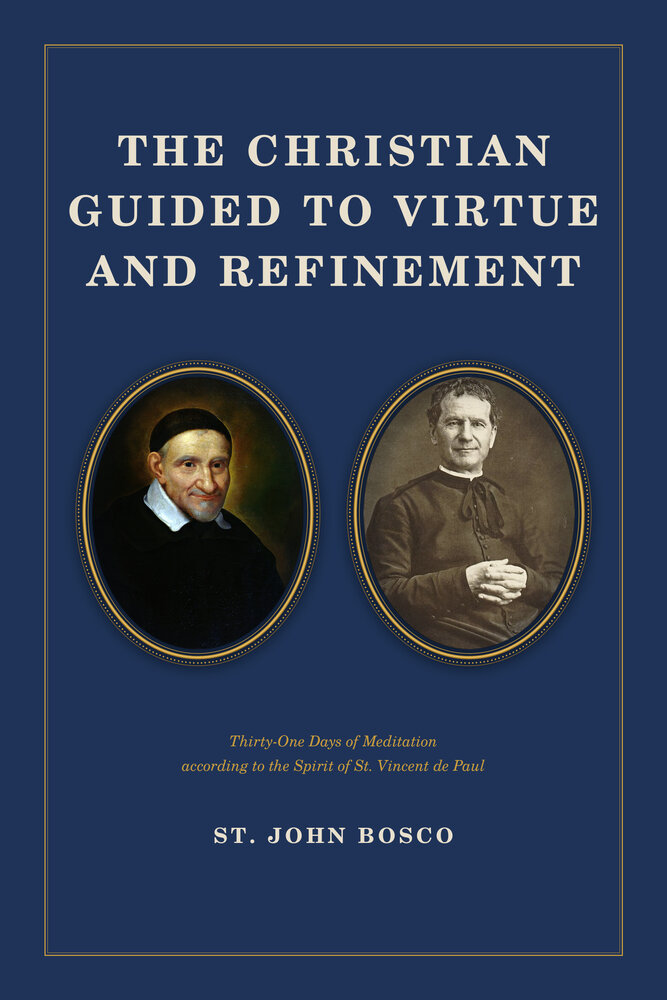
 | Thirty-One Day Devotional · Christ Bearer Press $10.99 Kindle · $14.99 Paperback Buy on Amazon →Also in Spanish: El cristiano guiado a la virtud y a las buenas maneras |
Thirty-one days with the saint who made charity practical
In 1848, while Turin filled with barricades and the war with Austria went badly, a thirty-three-year-old priest named St. John Bosco was running a gathering place for working boys in a converted shed. He wrote this book for them, and for anyone else who wanted to be better than they were.
His model was St. Vincent de Paul, who had passed through nearly every condition of life: peasant boy minding herds, student, priest, galley slave in Barbary, tutor in a great house, chaplain to the fleet, adviser to a queen. He founded the Congregation of the Mission and, with Louise de Marillac, the Daughters of Charity. He had been poor himself, worked among prisoners and foundlings and the destitute of a great city, and moved between the bottom and the top of society without being altered by either.
One short chapter for each day of the month. Each takes up a single virtue or a single field of St. Vincent de Paul's work, sets out what he did and said, and closes with a Fruit: one concrete thing to do that day. Give an alms. Speak well of your neighbor or say nothing. Make an act of contrition for wasted time.
It is not a book of litanies. It is a portrait put to work, written by a saint about a saint, in language plain enough for the boys it was meant for. Most of them had left school early or never gone at all. They were apprentices and bricklayers' helpers and chimney sweeps, and they were tired by evening. So St. John Bosco kept the chapters short, told stories instead of mounting arguments, and never used a word a working boy would have to stop at. That plainness has worn well. Nearly two centuries on, nothing stands between the reader and the thing being asked.
And it does ask. Holiness in these pages is not a feeling to be worked up, nor a height to be admired from the bottom of the hill. It is made out of small things done again and again: a coin given away, a temper held, a sharp remark swallowed, a person noticed who is usually walked past. Every chapter names one of them and asks for it before the day is out. Do that for a month and you will not have read about a virtue. You will have practiced thirty-one of them.
That is how St. Vincent de Paul became what he was, and St. John Bosco was convinced it lay open to anyone. He was writing, after all, for boys with no money, no family, and no prospects, and he expected them to become saints.
In this edition
- A fresh English translation made directly from the Italian first edition of 1848
- St. John Bosco's own preface and his life of St. Vincent de Paul, both translated in full
- An appendix giving the chapter St. Bosco added in 1876, on devotion to the Pope, with an account of how the two editions differ
- Notes at the foot of the page identifying every Latin tag and Scripture citation
- An index of Scripture gathering all one hundred and twenty-nine citations and echoes, live-linked in the Kindle edition
For readers who
want a month of short daily readings rather than a book to be finished; belong to a parish group, a Vincentian conference, or a Salesian house; care about the works of mercy and want them made concrete; or have heard of St. Bosco and never read a word he wrote.
Book details
Author: St. John Bosco · Publisher: Christ Bearer Press · Paperback: 215 pages · ISBN 979-8-1933-6736-9 · Language: English (Spanish edition available)
El cristiano guiado a la virtud y a las buenas maneras
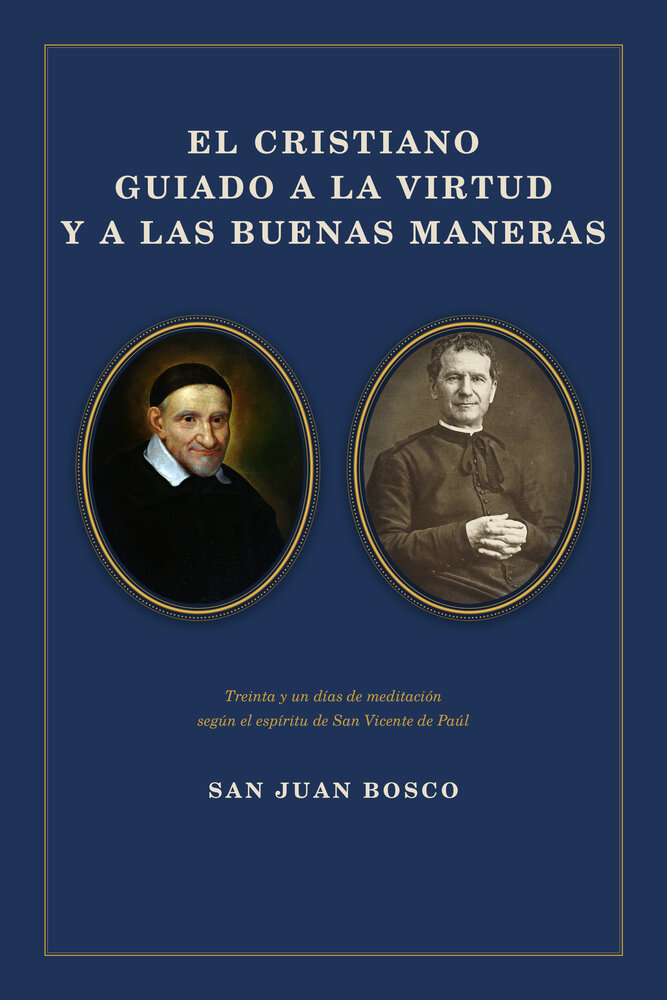 | Devocionario de treinta y un días · Christ Bearer Press US$10.99 Kindle · US$14.99 edición impresa Comprar en Amazon →También en inglés: The Christian Guided to Virtue and Refinement |
Treinta y un días con el santo que hizo práctica la caridad
En 1848, mientras Turín se llenaba de barricadas y la guerra con Austria iba mal, un sacerdote de treinta y tres años llamado San Juan Bosco llevaba un lugar de reunión para muchachos trabajadores en un cobertizo. Escribió este libro para ellos, y para cualquier otro que quisiera ser mejor de lo que era.
Su modelo fue San Vicente de Paúl, que había pasado por casi toda condición de vida: pastorcillo campesino, estudiante, sacerdote, esclavo de galeras en Berbería, preceptor en una casa grande, capellán de la flota, consejero de una reina. Fundó la Congregación de la Misión y, con Luisa de Marillac, las Hijas de la Caridad. Había sido pobre él mismo, trabajó entre presos y expósitos y entre los desvalidos de una gran ciudad, y se movió entre lo más bajo y lo más alto de la sociedad sin dejarse alterar por ninguno de los dos.
Un capítulo breve para cada día del mes. Cada uno toma una sola virtud o un solo campo de la obra de San Vicente de Paúl, expone lo que hizo y lo que dijo, y se cierra con un Fruto: una cosa concreta que hacer aquel día. Dar una limosna. Hablar bien del prójimo o callar. Hacer un acto de contrición por el tiempo perdido.
No es un libro de letanías. Es un retrato puesto a trabajar, escrito por un santo sobre un santo, en un lenguaje bastante llano para los muchachos a quienes iba destinado. Los más de ellos habían dejado la escuela temprano o no habían ido nunca. Eran aprendices y peones de albañil y deshollinadores, y para la tarde estaban cansados. Por eso San Juan Bosco hizo los capítulos cortos, contó historias en vez de levantar argumentos, y no usó jamás una palabra en la que un muchacho trabajador tuviera que detenerse. Esa llaneza ha resistido bien. Casi dos siglos después, nada se interpone entre el lector y lo que se le pide.
Y algo pide. La santidad en estas páginas no es un sentimiento que haya que provocar, ni una altura que se admire desde el pie del cerro. Está hecha de cosas pequeñas repetidas una y otra vez: una moneda que se da, un enojo que se contiene, una respuesta filosa que se traga, una persona a la que se mira y junto a la cual normalmente se pasa de largo. Cada capítulo nombra una de ellas y la pide antes de que acabe el día. Haga eso durante un mes y no habrá leído acerca de una virtud. Habrá practicado treinta y una.
Así llegó a ser lo que fue San Vicente de Paúl, y San Juan Bosco estaba convencido de que quedaba abierto a cualquiera. Escribía, al fin y al cabo, para muchachos sin dinero, sin familia y sin porvenir, y esperaba que llegaran a santos.
En esta edición
- Traducción al español hecha de la edición inglesa de Christ Bearer Press, cotejada con la primera edición italiana de 1848
- El prefacio del propio San Juan Bosco y su vida de San Vicente de Paúl, ambos traducidos íntegros
- Un apéndice con el capítulo que San Bosco añadió en 1876, sobre la devoción al Papa, con cuenta de en qué difieren las dos ediciones
- Notas al pie de página que identifican cada expresión latina y cada cita de la Escritura
- Un índice de Escritura que reúne las ciento veintinueve citas y ecos, con enlaces vivos en la edición Kindle
Para lectores que
quieren un mes de lecturas breves diarias más que un libro que haya que terminar; pertenecen a una parroquia, a una conferencia vicentina o a una casa salesiana; se interesan por las obras de misericordia y quieren verlas hechas concretas; o han oído hablar de San Juan Bosco y nunca han leído una palabra suya.
Detalles del libro
Editorial: Christ Bearer Press · Tapa blanda: 213 páginas · ISBN 979-8-1942-9973-7 · Idioma: español (edición en inglés disponible)
Forma parte de Devocionarios especializados. Ver todos nuestros libros →