
📖 Daily Scripture
September 11, 2026 — Friday of the Twenty-third Week in Ordinary Time
Readings: 1 Corinthians 9:16-19, 22b-27 • Psalm 84:3, 4, 5-6, 12 • Luke 6:39-42
The Apostle, who had given the whole of his life to the preaching of the Gospel, confesses this morning a fear that ought to arrest the soul: that after having preached to others, he himself should be disqualified. It is a startling admission from a man so spent in labour, and it teaches what we are slow to learn — that zeal for the salvation of others is no substitute for the salvation of oneself, and that the very work which saves many may, if the heart is left unwatched, leave the worker untouched.
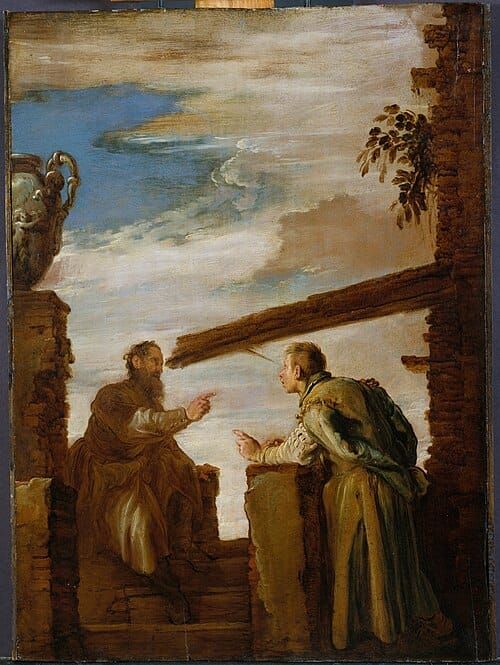
The Gospel presses the same warning by an image no one forgets. Can a blind person guide a blind person? Will not both fall into a pit? Our Lord does not forbid the office of guiding; he forbids the pretence of it. A guide cannot be blind, as a recent Successor of Peter observed, for he must see clearly if he is not to bring harm upon those entrusted to his care. The sorrow of the parable is not that the blind man leads, but that he does not know he cannot see.
And how does the eye grow dark? Rarely by great crimes, which announce themselves; more often by the slow, unnoticed habit of looking always outward. The soul that is forever measuring its neighbour has no leisure left to measure itself, and a fault well hidden from oneself is a fault that grows. It is against this that the Church warns when she names the sin of rash judgment, by which a man, even tacitly, "assumes as true, without sufficient foundation, the moral fault of a neighbor." Her remedy is not silence but generosity: "To avoid rash judgment, everyone should be careful to interpret insofar as possible his neighbor's thoughts, words, and deeds in a favorable way."
Yet such generosity is impossible to a soul that does not know itself. "It is important for every person to be sufficiently present to himself in order to hear and follow the voice of his conscience" — and this interiority is the more necessary because life so continually distracts us from reflection and self-examination. Augustine says it in fewer words: "Return to your conscience, question it." The beam is not removed by being denied; it is removed by being looked at steadily, in the light of God, and carried to the mercy that alone can lift it away.
Nor is it removed so that the soul may at last enjoy the pleasure of judging. Chrysostom is careful on this point: our Lord "forbids not judging, but commands to cast out first the beam from your eye." When the hour comes to speak to a brother of his fault — and it does come, for charity is not indifference — the manner is everything. "Correct him, but not as a foe, nor as an adversary exacting a penalty, but as a physician providing medicines." The splinter is small; the hand that reaches toward it must be gentle, and must first be clean.
This is the whole discipline the Apostle has in view when he speaks of the athlete who trains for an imperishable crown, who does not run aimlessly nor fight as if shadowboxing. The Church teaches plainly that "the way of perfection passes by way of the Cross. There is no holiness without renunciation and spiritual battle." The self-denial asked of us today is not a punishment laid upon the soul; it is a clearing, the patient removal of whatever stands between the eye and the light.
And the end of that clearing is not severity but home. How lovely is your dwelling place, Lord, mighty God. The soul that has been emptied of its pretensions discovers at once how greatly it has been yearning, how its whole being has cried out for the living God, and how even the sparrow has been given a place near the altars of the Lord of hosts. To such a soul the Lord is sun and shield, bestowing grace and glory, and he withholds no good thing from those who walk in sincerity. The eye made clear is at last free to see what it was created to see.
O God, who searches the heart, teach me to look first within, and give me the courage to bear what I find there. Take from my eye whatever darkens it, and let the light you restore be spent in gentleness toward those who walk beside me. Set my heart upon your courts, and let me be a disciple before I presume to be a guide. Through Christ our Lord. Amen.
Sources & References
- "for fear that, after having preached to others, I myself should be disqualified" — 1 Corinthians 9:27 (First Reading, Lectionary 441)
- "Can a blind person guide a blind person? Will not both fall into a pit?" — Luke 6:39 (Gospel)
- "Remove the wooden beam from your eye first" — Luke 6:42 (Gospel)
- "How lovely is your dwelling place, Lord, mighty God!" — Psalm 84:2 (Responsorial refrain); "The LORD withholds no good thing from those who walk in sincerity" — Psalm 84:12
- "assumes as true, without sufficient foundation, the moral fault of a neighbor" — Catechism of the Catholic Church, 2477
- "To avoid rash judgment, everyone should be careful to interpret insofar as possible his neighbor's thoughts, words, and deeds in a favorable way" — Catechism of the Catholic Church, 2478
- "It is important for every person to be sufficiently present to himself in order to hear and follow the voice of his conscience" — Catechism of the Catholic Church, 1779
- "Return to your conscience, question it" — St. Augustine, Tractates on the First Letter of John 8, 9 (cited in CCC 1779)
- "The way of perfection passes by way of the Cross. There is no holiness without renunciation and spiritual battle." — Catechism of the Catholic Church, 2015
- "forbids not judging, but commands to cast out first the beam from your eye" and "Correct him, but not as a foe, nor as an adversary exacting a penalty, but as a physician providing medicines" — St. John Chrysostom, Homily 23 on the Gospel of Matthew
- "A guide cannot be blind; he must see clearly, if he is not to risk causing harm to those entrusted to his care" — Pope St. John Paul II, homily of 1 March 1992, in Vatican News, "Word of the Day," 11 September 2026
La purificación de la mirada
📖 Sagrada Escritura Diaria
11 de septiembre de 2026 — Viernes de la XXIII Semana del Tiempo Ordinario
Lecturas: 1 Corintios 9, 16-19. 22-27 • Salmo 83, 3. 4. 5-6. 12 • Lucas 6, 39-42
El Apóstol, que había entregado su vida entera a la predicación del Evangelio, confiesa esta mañana un temor que debería detener al alma: que, después de predicar a los demás, quede él mismo descalificado. Es una admisión sorprendente en un hombre tan gastado en el trabajo, y enseña lo que tardamos en aprender: que el celo por la salvación de los demás no sustituye a la salvación propia, y que la misma obra que salva a muchos puede, si no se vigila el corazón, dejar intacto al que la realiza.
El Evangelio insiste en la misma advertencia con una imagen que nadie olvida. ¿Puede acaso un ciego guiar a otro ciego? ¿No caerán los dos en un hoyo? Nuestro Señor no prohíbe el oficio de guiar; prohíbe su fingimiento. El guía no puede ser ciego, como observó un reciente Sucesor de Pedro, pues debe ver con claridad si no ha de causar daño a quienes le han sido confiados. La tristeza de la parábola no está en que el ciego conduzca, sino en que no sabe que no ve.
¿Y cómo se oscurece el ojo? Rara vez por grandes crímenes, que se anuncian a sí mismos; con mucha más frecuencia por el hábito lento e inadvertido de mirar siempre hacia afuera. El alma que vive midiendo a su prójimo ya no tiene sosiego para medirse a sí misma, y la falta bien escondida de uno mismo es la falta que crece. Contra esto advierte la Iglesia cuando nombra el pecado de juicio temerario, en el que uno, "incluso tácitamente, admite como verdadero, sin tener para ello fundamento suficiente, un defecto moral en el prójimo". Su remedio no es el silencio, sino la generosidad: "Para evitar el juicio temerario, cada uno debe interpretar, en cuanto sea posible, en un sentido favorable los pensamientos, palabras y acciones de su prójimo".
Pero tal generosidad es imposible para un alma que no se conoce. "Es preciso que cada uno preste mucha atención a sí mismo para oír y seguir la voz de su conciencia", y esta exigencia de interioridad es tanto más necesaria cuanto que la vida nos impulsa sin cesar a prescindir de toda reflexión y de todo examen. San Agustín lo dice con menos palabras: "Retorna a tu conciencia, interrógala". La viga no se quita negándola; se quita mirándola con firmeza, a la luz de Dios, y llevándola a la misericordia que es la única capaz de retirarla.
Tampoco se quita para que el alma goce por fin del placer de juzgar. San Juan Crisóstomo es cuidadoso en este punto: nuestro Señor "no prohíbe juzgar, sino que manda sacar primero la viga del propio ojo". Cuando llegue la hora de hablar a un hermano de su falta —y llega, porque la caridad no es indiferencia—, el modo lo es todo. "Corrígelo, pero no como enemigo ni como adversario que exige un castigo, sino como un médico que ofrece medicinas". La paja es pequeña; la mano que se tiende hacia ella debe ser suave, y antes debe estar limpia.
Ésta es toda la disciplina que el Apóstol tiene ante los ojos cuando habla del atleta que se entrena por un premio que dura para siempre, del que no corre a ciegas ni lucha dando golpes al aire. La Iglesia enseña con sencillez que "el camino de la perfección pasa por la cruz. No hay santidad sin renuncia y sin combate espiritual". La renuncia que hoy se nos pide no es un castigo impuesto al alma; es un despeje, la retirada paciente de todo lo que se interpone entre el ojo y la luz.
Y el término de ese despeje no es la severidad, sino el hogar. Qué agradable, Señor, es tu morada. El alma vaciada de sus pretensiones descubre de golpe cuánto anhelaba, cómo todo su ser se estremecía de gozo por el Dios vivo, y cómo hasta el gorrión ha recibido un lugar cerca de los altares del Señor de los ejércitos. Para tal alma el Señor es sol y escudo, concede favor y gloria, y no niega sus bienes a los de conducta intachable. El ojo purificado queda al fin libre para ver aquello para lo cual fue creado.
Oh Dios, que escudriñas el corazón, enséñame a mirar primero hacia dentro, y dame el valor de sostener lo que allí encuentre. Quita de mi ojo todo lo que lo oscurece, y que la luz que me devuelvas se gaste en mansedumbre hacia quienes caminan a mi lado. Pon mi corazón en tus atrios, y hazme discípulo antes de que pretenda ser guía. Por Jesucristo nuestro Señor. Amén.
Fuentes y referencias
- "no sea que, después de predicar a los demás, quede yo descalificado" — 1 Corintios 9, 27 (Primera lectura, Leccionario 441)
- "¿Puede acaso un ciego guiar a otro ciego? ¿No caerán los dos en un hoyo?" — Lucas 6, 39 (Evangelio)
- "Saca primero la viga que llevas en tu ojo" — Lucas 6, 42 (Evangelio)
- "Qué agradable, Señor, es tu morada" — Salmo 83, 2 (respuesta del salmo responsorial); "El Señor no niega sus bienes a los de conducta intachable" — Salmo 83, 12
- "incluso tácitamente, admite como verdadero, sin tener para ello fundamento suficiente, un defecto moral en el prójimo" — Catecismo de la Iglesia Católica, 2477
- "Para evitar el juicio temerario, cada uno debe interpretar, en cuanto sea posible, en un sentido favorable los pensamientos, palabras y acciones de su prójimo" — Catecismo de la Iglesia Católica, 2478
- "Es preciso que cada uno preste mucha atención a sí mismo para oír y seguir la voz de su conciencia" — Catecismo de la Iglesia Católica, 1779
- "Retorna a tu conciencia, interrógala" — San Agustín, In epistulam Ioannis ad Parthos tractatus 8, 9 (citado en CIC 1779)
- "El camino de la perfección pasa por la cruz. No hay santidad sin renuncia y sin combate espiritual" — Catecismo de la Iglesia Católica, 2015
- "no prohíbe juzgar, sino que manda sacar primero la viga del propio ojo" y "Corrígelo, pero no como enemigo ni como adversario que exige un castigo, sino como un médico que ofrece medicinas" — San Juan Crisóstomo, Homilía 23 sobre el Evangelio de San Mateo
- "El guía no puede ser ciego; debe ver con claridad, para no causar daño a quienes le han sido confiados" — San Juan Pablo II, homilía del 1 de marzo de 1992, en Vatican News, "Palabra del día", 11 de septiembre de 2026