
📖 Daily Scripture
Saturday, July 11, 2026 — Memorial of Saint Benedict, Abbot
Readings: Isaiah 6:1-8 • Psalm 93:1ab, 1cd-2, 5 • Matthew 10:24-33
Scripture opens today upon a throne room. In the year King Uzziah died — a year in which an earthly crown fell and the confidence of a nation fell with it — the prophet was permitted to see the King who does not die: seated high and lofty, the train of his garment filling the temple, the seraphim veiling their faces before a glory they could not bear to look upon. The doorframes shook. The house filled with smoke. And the soul that had come seeking a word from God discovered instead that it had been seen.
What the vision produced in Isaiah was not elation but dread. "Woe is me, I am doomed! For I am a man of unclean lips." It is a strange fruit of grace, this sudden knowledge of one's own poverty, and yet it is the ordinary first effect of God's nearness. Faced with God's fascinating and mysterious presence, man discovers his own insignificance. The soul does not learn its true condition by looking inward, for the eye that examines is itself clouded; it learns it by standing in the light. Isaiah did not become a sinner in that moment. He became a sinner who knew.
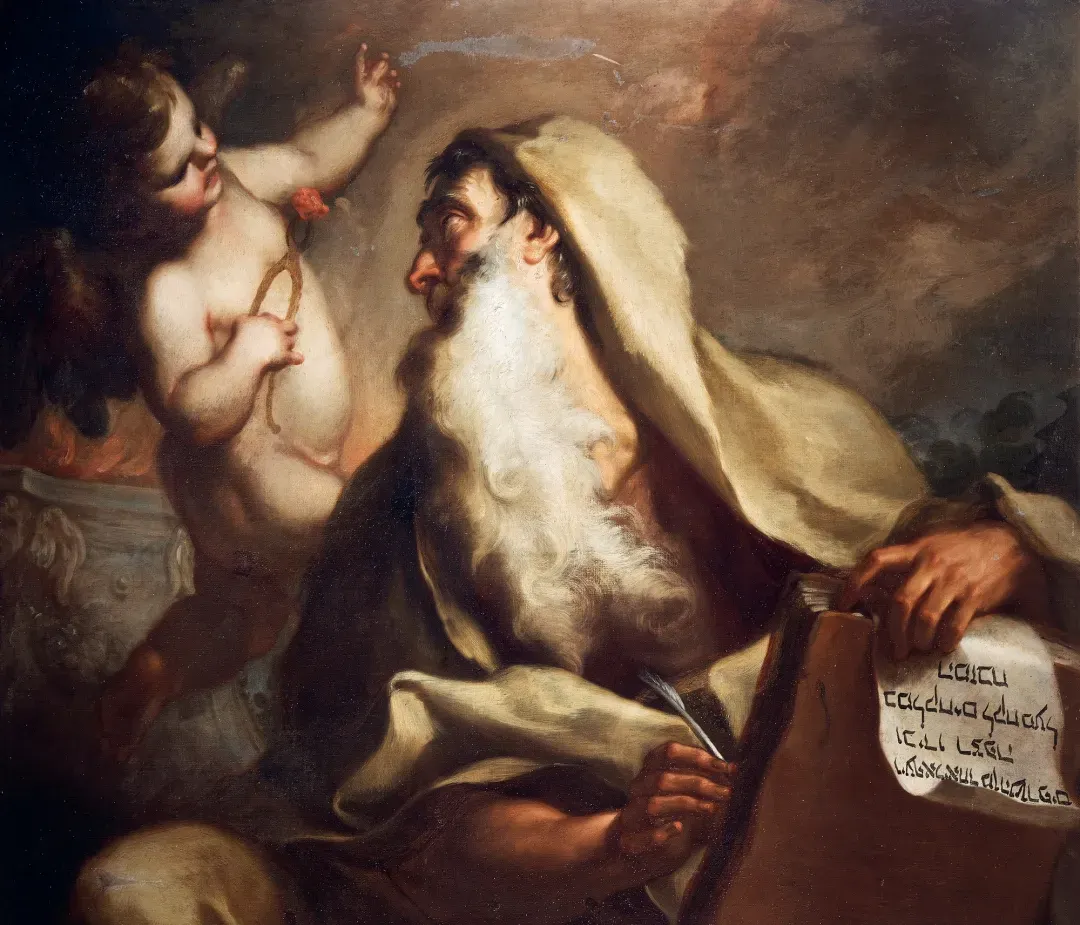
Notice what follows, for it is the whole architecture of mercy. He is not commanded to cleanse himself, nor is he dismissed from the temple as unfit for it. A seraph flies to him with an ember taken from the altar — from the place of sacrifice — and touches it to the very member that had offended: "See, now that this has touched your lips, your wickedness is removed, your sin purged." God does not repair us at a distance. He burns, and the burning is healing. Only when the lips have been cleansed does the question come, "Whom shall I send?" And only a man who knows what his lips have cost him can answer, "Here I am; send me."
Here the soul must be careful, for the lips that God has purified he does not give back for silence. In the Gospel the Lord says plainly what the cleansed mouth is for: "What I say to you in the darkness, speak in the light; what you hear whispered, proclaim on the housetops." The disciple of Christ must not only keep the faith and live on it, but also profess it, confidently bear witness to it, and spread it. Few of us in this hour are asked to die for the Name. Nearly all of us are asked to say it. And the denial that threatens most Christians is not the dramatic apostasy of the arena but the quiet omission of ordinary rooms: the coarse remark we let stand, the truth we soften until it means nothing at all, the name of Christ withheld from a conversation because the company has grown cold. No one calls that a betrayal. The Lord, who hears what is whispered, is not deceived by the courtesy of our silence.
Three times in a few short verses he anticipates the excuse, and the excuse is always fear. Do not be afraid of them. Do not be afraid of those who kill the body but cannot kill the soul. Do not be afraid; you are worth more than many sparrows. He does not abolish fear; he reorders it. The soul that trembles rightly before the holiness of God has nothing left over to spend upon the opinions of men. And the Providence that numbers the hairs of the head and attends the falling of a sparrow will not overlook the servant who stands up and speaks. Jesus asks for childlike abandonment to the providence of our heavenly Father who takes care of his children's smallest needs.
Tertullian, watching the Church multiply beneath the sword, wrote that the blood of the martyrs is the seed of the Church. Not every sowing is bloody. Some seed is buried at the cost of a friendship, a promotion, a reputation, an easy evening — small deaths, but real ones, and the harvest is not less certain for being hidden. Augustine, who spent his youth purchasing the good opinion of others at ruinous prices, tells us both why the cowardice comes so naturally and where its cure lies: "You have made us for yourself, O Lord, and our heart is restless until it rests in you." The soul that seeks its rest in the approval of men will fear men, and must fear them; it can no more help it than a debtor can help fearing his creditor. Only the soul at rest in God is free to speak.
It is fitting that the Church sets this reading within the memorial of Saint Benedict. He withdrew from the noise of Rome not because he despised men but because he could not hear God through them, and the Rule he left begins with a single word: Listen. He confessed Christ with no housetop but a hillside, and out of that hidden obedience a continent was rebuilt. What God asked of him he asks of every soul in its own small province: first the ember, then the sending.
The altar has not gone cold. Its fire is offered still — in the confessional, where the wickedness is taken away, and upon the paten, where the Holy One who filled the temple with smoke gives himself into unclean hands and does not recoil. The soul that comes to him afraid will not be rebuked for its fear. It will be touched, and cleansed, and, in a mercy far past deserving, it will be sent.
Lord, you have seen my lips and you have not turned away. Touch me with the fire of your altar, and burn out of me the fear of men that has kept me silent so long. Teach me to dread nothing but the loss of you, and to speak your name gladly in the small rooms where I am known. Here I am; send me. Through Christ our Lord. Amen.
Sources & References
- "Woe is me, I am doomed! For I am a man of unclean lips" — Isaiah 6:5 (First Reading, Isaiah 6:1-8)
- "See, now that this has touched your lips, your wickedness is removed, your sin purged" — Isaiah 6:7
- "Whom shall I send?" / "Here I am; send me!" — Isaiah 6:8
- "The Lord is king; he is robed in majesty" — Responsorial Psalm 93:1ab, 1cd-2, 5
- "What I say to you in the darkness, speak in the light; what you hear whispered, proclaim on the housetops" — Matthew 10:27 (Gospel, Matthew 10:24-33)
- "Do not be afraid of those who kill the body but cannot kill the soul" — Matthew 10:28
- "You are worth more than many sparrows" — Matthew 10:31
- "Faced with God's fascinating and mysterious presence, man discovers his own insignificance" — Catechism of the Catholic Church, 208
- "The disciple of Christ must not only keep the faith and live on it, but also profess it, confidently bear witness to it, and spread it" — Catechism of the Catholic Church, 1816
- "Jesus asks for childlike abandonment to the providence of our heavenly Father who takes care of his children's smallest needs" — Catechism of the Catholic Church, 305
- "The blood of the martyrs is the seed of the Church" — Tertullian, Apologeticus 50
- "You have made us for yourself, O Lord, and our heart is restless until it rests in you" — Saint Augustine, Confessions I, 1
- "Listen" — Rule of Saint Benedict, Prologue 1
- Papal insight — Pope Leo XIV, Meeting with young people and families, Bata Stadium, Equatorial Guinea, 22 April 2026, cited in Vatican News, Word of the Day, 11 July 2026
- Readings — USCCB, Memorial of Saint Benedict, Abbot, 11 July 2026
La brasa que consume el temor
📖 Sagrada Escritura Diaria
Sábado 11 de julio de 2026 — Memoria de San Benito, abad
Lecturas: Isaías 6, 1-8 • Salmo 92, 1ab. 1c-2. 5 • Mateo 10, 24-33
La Escritura se abre hoy sobre una sala del trono. El año de la muerte del rey Ozías —un año en que cayó una corona terrena y con ella la confianza de todo un pueblo— se le concedió al profeta contemplar al Rey que no muere: sentado sobre un trono muy alto y magnífico, con la orla de su manto llenando el templo, y los serafines cubriéndose el rostro ante una gloria que no podían soportar. Temblaban las puertas. El templo se llenaba de humo. Y el alma que había venido a buscar una palabra de Dios descubrió, en cambio, que había sido vista.
Lo que aquella visión produjo en Isaías no fue júbilo, sino espanto: "¡Ay de mí!, estoy perdido, porque soy un hombre de labios impuros." Es un fruto extraño de la gracia, este conocimiento repentino de la propia pobreza, y sin embargo es el primer efecto ordinario de la cercanía de Dios. Ante la presencia atrayente y misteriosa de Dios, el hombre descubre su pequeñez. El alma no aprende su verdadera condición mirándose a sí misma, pues el ojo que examina está él mismo empañado; la aprende poniéndose de pie en la luz. Isaías no se hizo pecador en aquel instante: se hizo un pecador que lo sabía.
Repárese en lo que sigue, porque en ello está toda la arquitectura de la misericordia. No se le manda purificarse a sí mismo, ni se le despide del templo por indigno de él. Un serafín vuela hacia él con una brasa tomada del altar —del lugar del sacrificio— y la aplica precisamente al miembro que había ofendido: "Mira: Esto ha tocado tus labios. Tu iniquidad ha sido quitada y tus pecados están perdonados." Dios no nos repara a distancia. Quema, y el quemar es sanar. Sólo cuando los labios han sido purificados llega la pregunta: "¿A quién enviaré? ¿Quién irá de parte mía?" Y sólo quien sabe lo que le han costado sus labios puede responder: "Aquí estoy, Señor, envíame."
Aquí ha de andar el alma con cuidado, porque los labios que Dios ha purificado no los devuelve para el silencio. En el Evangelio el Señor dice con toda claridad para qué sirve la boca limpia: "Lo que les digo de noche, repítanlo en pleno día y lo que les digo al oído, pregónenlo desde las azoteas." El discípulo de Cristo no debe sólo guardar la fe y vivir de ella, sino también profesarla, testimoniarla con firmeza y difundirla. A pocos se nos pide en esta hora morir por el Nombre; a casi todos se nos pide pronunciarlo. Y la negación que amenaza a la mayoría de los cristianos no es la apostasía dramática del circo, sino la omisión callada de las salas corrientes: la palabra grosera que dejamos pasar, la verdad que suavizamos hasta que ya no significa nada, el nombre de Cristo retirado de una conversación porque el ambiente se ha enfriado. Nadie llama a eso una traición. El Señor, que oye lo que se dice al oído, no se deja engañar por la cortesía de nuestro silencio.
Tres veces, en unos pocos versículos, se adelanta a nuestra excusa, y la excusa es siempre el miedo. No teman a los hombres. No tengan miedo a los que matan el cuerpo, pero no pueden matar el alma. No tengan miedo, porque ustedes valen mucho más que todos los pájaros del mundo. Él no suprime el temor: lo pone en su lugar. El alma que tiembla rectamente ante la santidad de Dios ya no tiene nada que gastar en la opinión de los hombres. Y la Providencia que cuenta los cabellos de la cabeza y atiende a la caída de un pajarillo no pasará por alto al siervo que se levanta y habla. Jesús pide un abandono filial en la providencia del Padre celestial que cuida de las más pequeñas necesidades de sus hijos.
Tertuliano, viendo multiplicarse a la Iglesia bajo la espada, escribió que la sangre de los mártires es semilla de cristianos. No toda siembra es sangrienta. Hay semilla que se entierra al precio de una amistad, de un ascenso, de una reputación, de una velada tranquila: muertes pequeñas, pero reales, y la cosecha no es menos cierta por ser escondida. San Agustín, que gastó su juventud comprando a precio ruinoso la buena opinión ajena, nos dice a la vez por qué la cobardía nos brota con tanta facilidad y dónde está su remedio: "Nos hiciste, Señor, para ti, y nuestro corazón está inquieto hasta que descanse en ti." El alma que busca su descanso en la aprobación de los hombres temerá a los hombres, y no puede menos de temerlos, como no puede el deudor dejar de temer a su acreedor. Sólo el alma que descansa en Dios queda libre para hablar.
Es muy propio que la Iglesia coloque esta lectura dentro de la memoria de San Benito. Se retiró del ruido de Roma no porque despreciara a los hombres, sino porque a través de ellos no lograba oír a Dios; y la Regla que dejó comienza con una sola palabra: Escucha. Confesó a Cristo sin más azotea que una ladera, y de aquella obediencia escondida se reconstruyó un continente. Lo que Dios le pidió a él se lo pide a cada alma en su propia provincia pequeña: primero la brasa, después el envío.
El altar no se ha enfriado. Su fuego sigue ofreciéndose: en el confesionario, donde la iniquidad es quitada, y sobre la patena, donde el Santo que llenó el templo de humo se entrega en manos impuras y no retrocede. El alma que se acerca a Él con miedo no será reprendida por su miedo. Será tocada, y purificada, y —misericordia muy por encima de todo merecimiento— será enviada.
Señor, tú has visto mis labios y no has apartado de mí tu rostro. Tócame con el fuego de tu altar y quema en mí el miedo a los hombres que tanto tiempo me ha tenido callado. Enséñame a no temer sino la pérdida de ti, y a pronunciar tu nombre con alegría en las pequeñas salas donde se me conoce. Aquí estoy, Señor, envíame. Por Jesucristo nuestro Señor. Amén.
Fuentes y referencias
- "¡Ay de mí!, estoy perdido, porque soy un hombre de labios impuros" — Isaías 6, 5 (Primera lectura, Isaías 6, 1-8)
- "Mira: Esto ha tocado tus labios. Tu iniquidad ha sido quitada y tus pecados están perdonados" — Isaías 6, 7
- "¿A quién enviaré? ¿Quién irá de parte mía?" / "Aquí estoy, Señor, envíame" — Isaías 6, 8
- "Señor, tú eres nuestro rey" — Salmo responsorial 92, 1ab. 1c-2. 5 (numeración de la Vulgata, según el Leccionario en español de la USCCB)
- "Lo que les digo de noche, repítanlo en pleno día y lo que les digo al oído, pregónenlo desde las azoteas" — Mateo 10, 27 (Evangelio, Mateo 10, 24-33)
- "No tengan miedo a los que matan el cuerpo, pero no pueden matar el alma" — Mateo 10, 28
- "Ustedes valen mucho más que todos los pájaros del mundo" — Mateo 10, 31
- "Ante la presencia atrayente y misteriosa de Dios, el hombre descubre su pequeñez" — Catecismo de la Iglesia Católica, 208
- "El discípulo de Cristo no debe sólo guardar la fe y vivir de ella sino también profesarla, testimoniarla con firmeza y difundirla" — Catecismo de la Iglesia Católica, 1816
- "Jesús pide un abandono filial en la providencia del Padre celestial que cuida de las más pequeñas necesidades de sus hijos" — Catecismo de la Iglesia Católica, 305
- "La sangre de los mártires es semilla de cristianos" — Tertuliano, Apologético 50
- "Nos hiciste, Señor, para ti, y nuestro corazón está inquieto hasta que descanse en ti" — San Agustín, Confesiones I, 1
- "Escucha" — Regla de San Benito, Prólogo 1
- Enseñanza papal — Papa León XIV, Encuentro con jóvenes y familias, Estadio de Bata, Guinea Ecuatorial, 22 de abril de 2026, citado en Vatican News, Palabra del día, 11 de julio de 2026
- Lecturas — USCCB, Memoria de San Benito, abad, 11 de julio de 2026