
📖 Daily Scripture
Monday, August 17, 2026 — Monday of the Twentieth Week in Ordinary Time
Readings: Ezekiel 24:15-23 • Deuteronomy 32:18-19, 20, 21 • Matthew 19:16-22
There is in every soul some one thing upon which the eye rests with a peculiar sweetness, and which the heart has quietly determined never to lose. Ezekiel is told that this very thing will be taken from him by a sudden blow, and that he must not weep for it; and the next morning, obedient and silent, he does as he has been commanded. It is among the harshest passages the Church gives us to hear. Yet the prophet's bereavement is not left as private sorrow: it is made into a sign, and what it signifies is the sanctuary itself, which the Lord names with a terrible precision as the stronghold of their pride, the delight of their eyes, the desire of their soul.
We ought to feel the strangeness of that phrase before we hurry past it. The temple was no idol. It was the house of God's own choosing, the place He had appointed for His name. And yet a good thing, held too tightly, hardens into something other than itself; the gift is loved in place of the Giver, and the affection that was meant to travel through it toward God stops and settles and takes possession. The Psalm names the exchange without mercy: they were unmindful of the Rock that begot them, they forgot the God who gave them birth. Forgetting of this kind is almost never a decision. It is a slow drift of the attention, a gradual reordering of what we think about first when we wake.
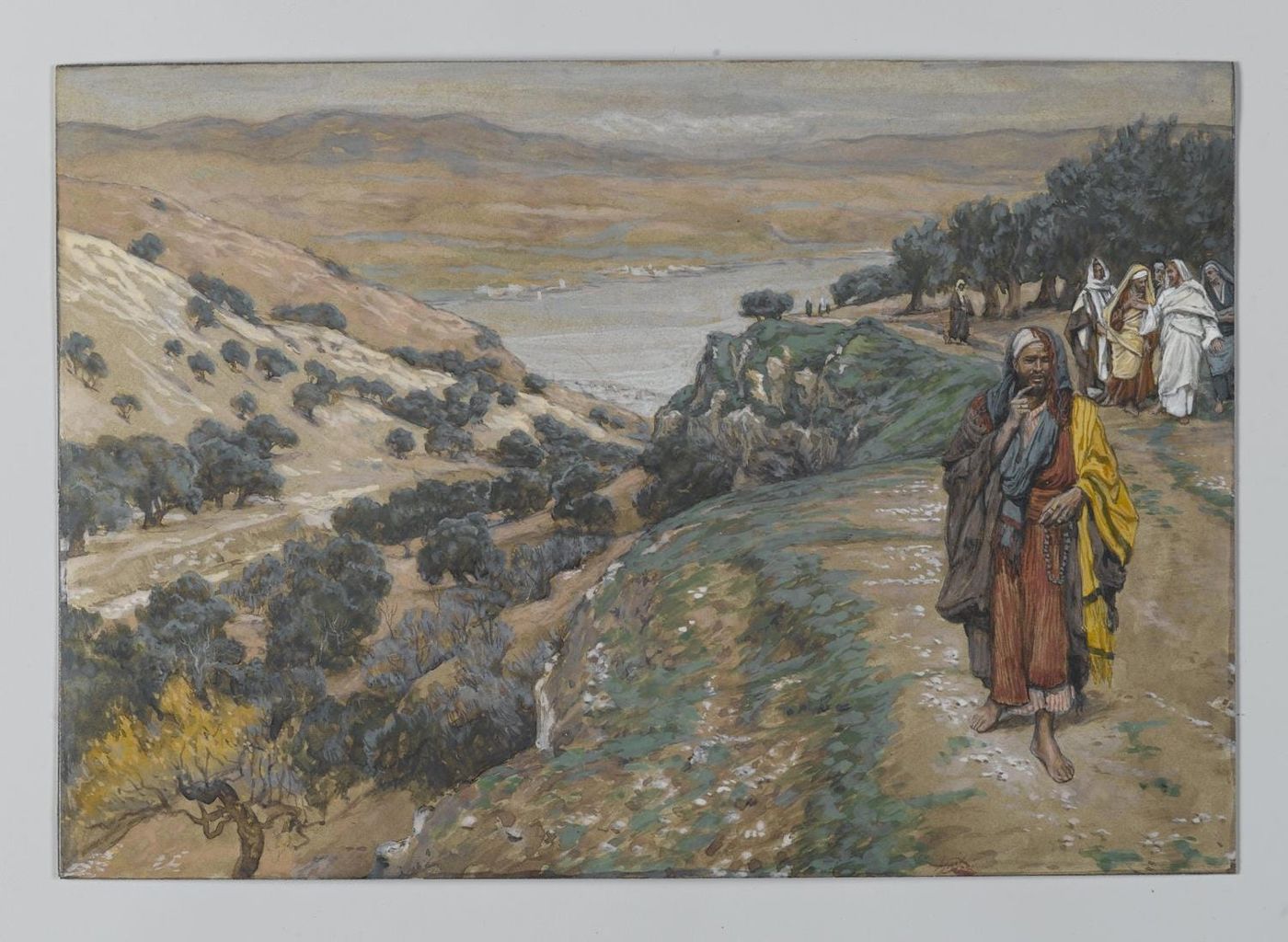
Into that long history walks the young man of the Gospel, and he comes with an honest question and an open face. He has kept the commandments from his youth, and he is not content; he asks what he still lacks. It is a generous question, the question of a soul that senses there is more and wants it. And the answer he receives strips him bare: sell what you have, give to the poor, and come, follow me. He went away sad. Not defiant, not scoffing — sad. He is not condemned in this scene. He is disclosed.
What was disclosed in him was not wickedness but weight. The commandments he had faithfully kept were the floor of the house and not its roof, and when he was invited to climb he found that he could not carry what he was holding. The Church states the matter without softening it: the precept of detachment from riches is obligatory for entrance into the Kingdom of heaven. This is a hard saying only until we understand that detachment is not contempt for what we have. It is the loosening of the hand, so that what we hold we hold as a gift, ready to be returned.
Let the lesson be made concrete, for it will do nothing while it remains general. Name the thing. Ask what in your life could not be asked of you — and whatever answers first, before reason has time to arrange its defenses, that is the delight of your eyes. It may be money, or reputation, or a plan for the future carefully built, or a person quietly turned into a possession, or simply the good opinion of others. It is precisely there that God asks entrance, not to rob you but to be preferred. And the loosening is not accomplished in a single heroic stroke; it is done in small deliberate acts, in the gift given where it costs something, in the grudge released before it is fully savored, in the hour surrendered to prayer, in the account examined honestly rather than defended.
The Fathers understood that this poverty is not a deprivation but a posture. The proud, Augustine says, seek and love earthly kingdoms, but blessed are the poor in spirit, for theirs is the Kingdom of heaven. And Gregory of Nyssa, reaching for the reason such poverty is blessed at all, finds it in God Himself: the Word speaks of voluntary humility as poverty in spirit, and the Apostle gives an example of God's poverty when he says, for your sakes he became poor.
This is what redeems the severity of Ezekiel and turns it toward hope. God does not take the delight of our eyes because He is jealous of our happiness, but because He intends a happiness we have not yet imagined and cannot hold with full hands. The young man went away sad; but he went away having been looked at and loved, for Mark tells us that Jesus, looking at him, loved him. That look followed him down the road, and it follows every soul that turns away with something still clutched. Nothing surrendered to such love is lost. It is only carried ahead of us, to a place where thieves do not break in.
Lord, You know what my eye rests upon and what my hand will not open. Teach me to receive Your gifts as gifts, and to prefer You to every one of them. Loosen my grip gently, and give me courage for the small surrenders I have long postponed. Through Christ our Lord. Amen.
Sources & References
- "the delight of your eyes"; "the stronghold of your pride, the delight of your eyes, the desire of your soul" — Ezekiel 24:15-23, First Reading, Monday of the Twentieth Week in Ordinary Time (Lectionary 419), USCCB.
- "unmindful of the Rock that begot you"; "You forgot the God who gave you birth" — Deuteronomy 32:18-19, 20, 21, Responsorial Psalm.
- "All these I have observed. What do I still lack?"; "If you wish to be perfect, go, sell what you have and give to the poor… Then come, follow me"; "he went away sad, for he had many possessions" — Matthew 19:16-22, Gospel.
- "Jesus, looking at him, loved him" — Mark 10:21.
- "The precept of detachment from riches is obligatory for entrance into the Kingdom of heaven" — Catechism of the Catholic Church, 2544.
- "The Word speaks of voluntary humility as 'poverty in spirit'; the Apostle gives an example of God's poverty when he says: 'For your sakes he became poor'" — St. Gregory of Nyssa, De beatitudinibus, oratio 1, quoted in Catechism of the Catholic Church, 2546.
- "Let the proud seek and love earthly kingdoms, but blessed are the poor in spirit for theirs is the Kingdom of heaven" — St. Augustine, De sermone Domini in monte, 1, 1, 3, quoted in Catechism of the Catholic Church, 2547.
- Papal insight for this day: Pope Leo XIV, Angelus, 13 July 2025, as presented in Vatican News, "Word of the Day," 17 August 2026.
El encanto de tus ojos
📖 Sagrada Escritura Diaria
Lunes, 17 de agosto de 2026 — Lunes de la XX semana del Tiempo ordinario
Lecturas: Ezequiel 24, 15-24 • Deuteronomio 32, 18-19. 20. 21 • Mateo 19, 16-22
Hay en toda alma alguna cosa sobre la cual la mirada se posa con una dulzura particular, y que el corazón ha decidido en silencio no perder jamás. A Ezequiel se le anuncia que precisamente eso le será arrebatado repentinamente, y que no ha de llorar por ello; y a la mañana siguiente, obediente y callado, hace lo que se le ha mandado. Es de las páginas más duras que la Iglesia nos da a escuchar. Y sin embargo, el duelo del profeta no queda como dolor privado: se convierte en señal, y lo que significa es el santuario mismo, que el Señor nombra con terrible precisión como la causa de su orgullo, el encanto de sus ojos y el amor de su corazón.
Conviene sentir la extrañeza de esa frase antes de pasar de prisa junto a ella. El templo no era un ídolo. Era la casa que Dios mismo había escogido, el lugar que había señalado para su nombre. Y con todo, una cosa buena, retenida con demasiada fuerza, se endurece hasta volverse otra cosa: el don es amado en lugar del que lo da, y el afecto que debía atravesarlo para llegar hasta Dios se detiene, se instala y toma posesión. El salmo nombra el intercambio sin ninguna piedad: abandonaron a Dios, que los creó, y olvidaron al Señor, que les dio la vida. Un olvido así casi nunca es una decisión. Es una lenta deriva de la atención, una reordenación gradual de aquello en lo que pensamos primero al despertar.
En esa larga historia entra el joven del Evangelio, y viene con una pregunta honrada y el rostro abierto. Ha cumplido los mandamientos desde su niñez, y no está satisfecho; pregunta qué más le falta. Es una pregunta generosa, la pregunta de un alma que presiente que hay algo más y lo desea. Y la respuesta que recibe lo deja desnudo: vende todo lo que tienes, dalo a los pobres, y ven y sígueme. Se fue entristecido. No desafiante, no burlón: triste. En esta escena no se le condena. Se le revela.
Lo que quedó al descubierto en él no fue maldad, sino peso. Los mandamientos que había guardado fielmente eran el suelo de la casa y no su techo, y cuando se le invitó a subir descubrió que no podía cargar con lo que tenía entre las manos. La Iglesia lo dice sin suavizarlo: el precepto del desprendimiento de las riquezas es obligatorio para entrar en el Reino de los cielos. Es una palabra dura solamente hasta que comprendemos que el desprendimiento no es desprecio de lo que poseemos. Es el aflojar de la mano, para que lo que tenemos lo tengamos como don, dispuesto a ser devuelto.
Que la lección se haga concreta, porque nada obrará mientras siga siendo general. Pon nombre a la cosa. Pregunta qué, en tu vida, no podría serte pedido; y lo que responda primero, antes de que la razón alcance a ordenar sus defensas, ése es el encanto de tus ojos. Puede ser el dinero, o la buena fama, o un plan de futuro cuidadosamente construido, o una persona convertida en silencio en posesión, o sencillamente la buena opinión de los demás. Es justamente allí donde Dios pide entrada, no para robarte, sino para ser preferido. Y ese aflojar no se logra de un solo golpe heroico; se hace en pequeños actos deliberados: en la limosna que cuesta algo, en el rencor soltado antes de haberlo saboreado del todo, en la hora entregada a la oración, en la cuenta examinada con honradez en vez de ser defendida.
Los Padres entendieron que esta pobreza no es una privación, sino una postura. El orgulloso, dice Agustín, busca el poder terreno, mientras el pobre en espíritu busca el Reino de los cielos. Y Gregorio de Nisa, buscando la razón por la cual tal pobreza es bienaventurada, la encuentra en Dios mismo: el Verbo llama pobreza en el Espíritu a la humildad voluntaria de un espíritu humano y su renuncia, y el apóstol nos da como ejemplo la pobreza de Dios cuando dice que se hizo pobre por nosotros.
Esto es lo que rescata la severidad de Ezequiel y la vuelve hacia la esperanza. Dios no toma el encanto de nuestros ojos porque tenga celos de nuestra felicidad, sino porque nos destina una felicidad que aún no hemos imaginado y que no se puede recibir con las manos llenas. El joven se fue entristecido; pero se fue habiendo sido mirado y amado, porque san Marcos nos dice que Jesús lo miró con amor. Aquella mirada lo siguió por el camino, y sigue a toda alma que se aleja con algo todavía apretado en el puño. Nada de lo entregado a semejante amor se pierde. Solamente va delante de nosotros, hacia un lugar donde los ladrones no entran a robar.
Señor, tú sabes en qué se detiene mi mirada y qué es lo que mi mano no quiere abrir. Enséñame a recibir tus dones como dones, y a preferirte a ti por encima de todos ellos. Afloja mi puño con suavidad, y dame valor para las pequeñas entregas que llevo tanto tiempo aplazando. Por Jesucristo nuestro Señor. Amén.
Fuentes y referencias
- "el encanto de tus ojos"; "la causa del orgullo de ustedes, el encanto de sus ojos y el amor de su corazón" — Ezequiel 24, 15-24, Primera lectura, Lunes de la XX semana del Tiempo ordinario (Leccionario 419), USCCB.
- "Abandonaron a Dios, que los creó y olvidaron al Señor, que les dio la vida" — Deuteronomio 32, 18-19. 20. 21, Salmo responsorial.
- "Todo eso lo he cumplido desde mi niñez, ¿qué más me falta?"; "Si quieres ser perfecto, ve a vender todo lo que tienes, dales el dinero a los pobres… luego ven y sígueme"; "el joven se fue entristecido, porque era muy rico" — Mateo 19, 16-22, Evangelio.
- "Jesús lo miró con amor" — Marcos 10, 21.
- "El precepto del desprendimiento de las riquezas es obligatorio para entrar en el Reino de los cielos" — Catecismo de la Iglesia Católica, 2544.
- "El Verbo llama 'pobreza en el Espíritu' a la humildad voluntaria de un espíritu humano y su renuncia; el apóstol nos da como ejemplo la pobreza de Dios cuando dice: 'Se hizo pobre por nosotros'" — San Gregorio de Nisa, De beatitudinibus, oratio 1, citado en el Catecismo de la Iglesia Católica, 2546.
- "El orgulloso busca el poder terreno, mientras el pobre en espíritu busca el Reino de los cielos" — San Agustín, De sermone Domini in monte, 1, 1, 3, citado en el Catecismo de la Iglesia Católica, 2547.
- Enseñanza pontificia para este día: Papa León XIV, Ángelus, 13 de julio de 2025, según Vatican News, "Palabra del día," 17 de agosto de 2026.