
📖 Daily Scripture
Thursday, October 8, 2026 — Thursday of the Twenty-seventh Week in Ordinary Time
Readings: Galatians 3:1-5 • Luke 1:69-70, 71-72, 73-75 • Luke 11:5-13
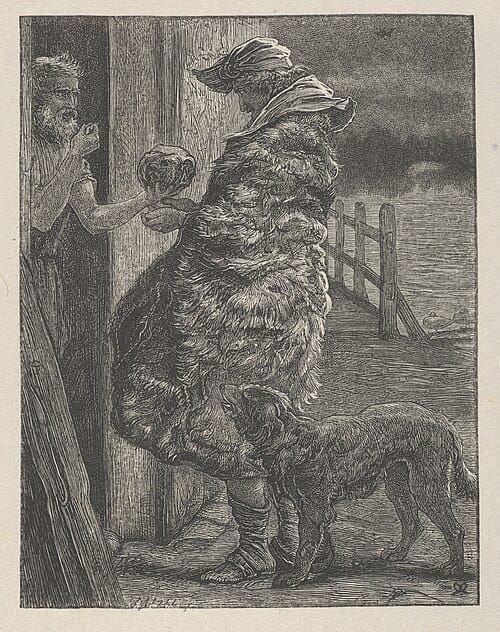
The scene our Lord sets before the soul this day is one of darkness and inconvenience. It is midnight; the door is barred; the household lies asleep; and a man stands in the road outside with nothing in his hands, asking for three loaves of bread. He does not ask for himself. A traveller has come to him out of the night, and it is the emptiness of his own cupboard that drives him to a door which will not open. The detail is easily passed over, yet it governs all that follows: what first sends the soul knocking is not its own hunger but its charity.
St Paul, writing to the Galatians, puts to them a question which every praying soul must one day put to itself: “did you receive the Spirit from works of the law, or from faith in what you heard?” There is a manner of praying which is in truth a form of accounting, in which the soul lays out its observances as a creditor lays out a bill, and waits, with a certain injured dignity, for the settlement of the account. Such prayer goes unanswered, and it is a mercy that it does; for it asks to be paid, and God desires to give.
Nor does our Lord anywhere suggest that the Father is reluctant. He says only: “ask and you will receive; seek and you will find; knock and the door will be opened to you.” The three words ascend in order, the open hand, the searching eye, the fist upon the wood; and if the door is not opened at the first syllable, it is not because the Father sleeps, but because the soul is still too narrow for what He intends to place within it. Augustine saw this plainly, and wrote that God wills that our desire should be exercised in prayer, that we may be able to receive what he is prepared to give. Perseverance works no change in God; it works a change in us.
And what is the gift? Here the parable turns upward. The man at the door wanted bread; but the soul asking at the door of heaven for its small and necessary loaves is answered beyond its asking: “how much more will the Father in heaven give the Holy Spirit to those who ask him?” The Catechism teaches that this parable invites us to urgent prayer, and that to the one who prays so the heavenly Father will give whatever he needs, and above all the Holy Spirit who contains all gifts. To ask, our Holy Father has said, is to recognise through poverty that everything is a gift from the Lord, and to give thanks for it.
From this a plain duty follows. In most lives there is some petition quietly abandoned — for a son who has gone away from the faith, for a marriage grown cold, for a fault conquered a hundred times and a hundred times resumed. It was laid down not because it was answered but because the silence became wearisome. Let it be taken up again tonight, and taken up for the other’s sake rather than for the relief of one’s own anxiety; and let it be enlarged, so that beneath the particular thing asked for lies the greater asking, which is for the Giver Himself. Chrysostom did not exaggerate: nothing is equal to prayer, for what is impossible it makes possible, what is difficult, easy. The Lord teaches the soul a filial boldness, and children do not calculate before they ask.
Zachary, in the canticle the Church sets beside this Gospel, blesses God not for what is still to come but for what has been remembered: a covenant kept, an oath sworn to Abraham and not forgotten, a mighty saviour raised up in the house of David. The soul knocks, then, at the door of One who has never broken faith, and who has promised that we shall be free to worship him without fear, holy and righteous in his sight all the days of our life. The hour is late and the house is dark, but the door, when it opens, will open upon the Father.
Father, teach me to ask without calculating, and to keep asking when the silence is long. Enlarge within me the desire you intend to satisfy, and let what I beg for be sought first for others and then for myself. Give me, beyond every lesser gift, your Holy Spirit, who contains them all. Through Christ our Lord. Amen.
Sources & References
- “did you receive the Spirit from works of the law, or from faith in what you heard?” — Galatians 3:5 (First Reading, Galatians 3:1-5)
- “ask and you will receive; seek and you will find; knock and the door will be opened to you” — Luke 11:9 (Gospel, Luke 11:5-13)
- “how much more will the Father in heaven give the Holy Spirit to those who ask him?” — Luke 11:13
- “free to worship him without fear, holy and righteous in his sight all the days of our life” — Luke 1:74-75 (Responsorial Psalm, the Canticle of Zechariah, Luke 1:69-70, 71-72, 73-75)
- “a mighty savior, born of the house of his servant David” and “to remember his holy covenant” — Luke 1:69, 72
- “invites us to urgent prayer… the heavenly Father will ‘give whatever he needs,’ and above all the Holy Spirit who contains all gifts” — Catechism of the Catholic Church, 2613
- “he teaches us filial boldness” — Catechism of the Catholic Church, 2610
- “God wills that our desire should be exercised in prayer, that we may be able to receive what he is prepared to give” — St. Augustine, Letter 130, 8, 17 (PL 33, 500), quoted in Catechism of the Catholic Church, 2737
- “Nothing is equal to prayer; for what is impossible it makes possible, what is difficult, easy” — St. John Chrysostom, De Anna 4, 5 (PG 54, 666), quoted in Catechism of the Catholic Church, 2744
- “To ask, in fact, is to recognize, through poverty, that everything is a gift from the Lord and to give thanks for it” — Pope Leo XIV, Homily, 9 October 2025, as published in Vatican News, Word of the Day, 8 October 2026
- Readings and liturgical day: USCCB, Daily Readings, 8 October 2026 (Lectionary 464)
La puerta a medianoche
📖 Sagrada Escritura Diaria
Jueves 8 de octubre de 2026 — Jueves de la XXVII semana del Tiempo ordinario
Lecturas: Gálatas 3, 1-5 • Lucas 1, 69-70. 71-72. 73-75 • Lucas 11, 5-13
La escena que el Señor pone hoy ante el alma es de oscuridad e inoportunidad. Es medianoche; la puerta está cerrada; la casa duerme; y un hombre está fuera, en el camino, sin nada en las manos, pidiendo tres panes. No pide para sí. Un viajero ha llegado hasta él en plena noche, y es la pobreza de su propia despensa la que lo lleva a una puerta que no se abre. El detalle se pasa fácilmente por alto, y sin embargo rige todo lo que sigue: lo que primero lleva al alma a llamar no es su propia hambre, sino su caridad.
San Pablo, escribiendo a los gálatas, les plantea una pregunta que toda alma que ora debe plantearse alguna vez: “¿Han recibido el Espíritu Santo por haber hecho lo que manda la ley de Moisés o por haber creído en el Evangelio?” Hay un modo de orar que es en realidad una forma de contabilidad, en el cual el alma presenta sus observancias como un acreedor presenta una factura, y espera, con cierta dignidad ofendida, el pago de la cuenta. Tal oración queda sin respuesta, y es misericordia que así sea; porque pide que se le pague, y Dios desea dar.
Tampoco sugiere el Señor en ninguna parte que el Padre sea reticente. Sólo dice: “Pidan y se les dará, busquen y encontrarán, toquen y se les abrirá.” Las tres palabras ascienden en orden, la mano abierta, el ojo que busca, el puño sobre la madera; y si la puerta no se abre a la primera sílaba, no es porque el Padre duerma, sino porque el alma es todavía demasiado estrecha para lo que Él quiere depositar en ella. San Agustín lo vio con claridad, y escribió que Dios quiere que nuestro deseo sea probado en la oración, y que así nos dispone para recibir lo que Él está dispuesto a darnos. La perseverancia no obra ningún cambio en Dios; obra un cambio en nosotros.
¿Y cuál es el don? Aquí la parábola gira hacia lo alto. El hombre de la puerta quería pan; pero el alma que pide a la puerta del cielo sus panes pequeños y necesarios recibe más de lo que pide: “¿Cuánto más el Padre celestial les dará el Espíritu Santo a quienes se lo pidan?” Enseña el Catecismo que esta parábola invita a una oración insistente, y que al que ora así el Padre del cielo le dará todo lo que necesite, y sobre todo el Espíritu Santo que contiene todos los dones. Pedir, ha dicho nuestro Santo Padre, es reconocer, en la pobreza, que todo es don del Señor y dar gracias por todo.
De aquí se sigue un deber muy sencillo. En casi toda vida hay alguna petición abandonada en silencio: por un hijo que se ha alejado de la fe, por un matrimonio que se ha enfriado, por una falta vencida cien veces y cien veces vuelta a empezar. Se dejó caer no porque fuera concedida, sino porque el silencio se volvió fatigoso. Que sea retomada esta misma noche, y retomada por el bien del otro antes que por el alivio de la propia inquietud; y que sea ensanchada, de modo que bajo la cosa concreta que se pide esté la petición mayor, que es el Dador mismo. No exageraba San Juan Crisóstomo: nada vale como la oración, hace posible lo que es imposible, fácil lo que es difícil. El Señor enseña al alma una audacia filial, y los hijos no calculan antes de pedir.
Zacarías, en el cántico que la Iglesia pone junto a este Evangelio, bendice a Dios no por lo que aún ha de venir, sino por lo que ha sido recordado: una alianza guardada, un juramento hecho a Abraham y no olvidado, un poderoso salvador suscitado en la casa de David. El alma llama, entonces, a la puerta de Aquel que nunca ha faltado a su palabra, y que ha prometido que, libres ya de nuestros enemigos, le serviremos sin temor, en santidad y justicia, todos los días de nuestra vida. La hora es tardía y la casa está oscura, pero la puerta, cuando se abra, se abrirá sobre el Padre.
Padre, enséñame a pedir sin calcular, y a seguir pidiendo cuando el silencio se alarga. Ensancha dentro de mí el deseo que tú quieres saciar, y haz que lo que suplico lo busque primero para los demás y después para mí. Dame, por encima de todo don menor, tu Espíritu Santo, que los contiene todos. Por Jesucristo nuestro Señor. Amén.
Fuentes y referencias
- “¿Han recibido el Espíritu Santo por haber hecho lo que manda la ley de Moisés o por haber creído en el Evangelio?” — Gálatas 3, 5 (Primera lectura, Gálatas 3, 1-5)
- “Pidan y se les dará, busquen y encontrarán, toquen y se les abrirá” — Lucas 11, 9 (Evangelio, Lucas 11, 5-13)
- “¿Cuánto más el Padre celestial les dará el Espíritu Santo a quienes se lo pidan?” — Lucas 11, 13
- “libres ya de nuestros enemigos, le sirvamos sin temor, en santidad y justicia, delante de él, todos los días de nuestra vida” — Lucas 1, 74-75 (Salmo responsorial, Cántico de Zacarías, Lucas 1, 69-70. 71-72. 73-75)
- “un poderoso salvador en la casa de David su siervo” y “acordarse de su santa alianza” — Lucas 1, 69. 72
- “invita a una oración insistente… Al que ora así, el Padre del cielo ‘le dará todo lo que necesite’, y sobre todo el Espíritu Santo que contiene todos los dones” — Catecismo de la Iglesia Católica, 2613
- “nos enseña esta audacia filial” — Catecismo de la Iglesia Católica, 2610
- “que nuestro deseo sea probado en la oración. Así nos dispone para recibir lo que él está dispuesto a darnos” — San Agustín, Carta 130, 8, 17 (PL 33, 500), citado en el Catecismo de la Iglesia Católica, 2737
- “Nada vale como la oración: hace posible lo que es imposible, fácil lo que es difícil” — San Juan Crisóstomo, De Anna, sermón 4, 5 (PG 54, 666), citado en el Catecismo de la Iglesia Católica, 2744
- “‘Pedir’, de hecho, es reconocer, en la pobreza, que todo es don del Señor y dar gracias por todo” — Papa León XIV, Homilía, 9 de octubre de 2025 (Vatican News, edición en español)
- Lecturas y día litúrgico: USCCB, Lecturas de Hoy, 8 de octubre de 2026 (Leccionario 464)