
📖 Daily Scripture
Tuesday, November 3, 2026 — Tuesday of the Thirty-first Week in Ordinary Time
Readings: Philippians 2:5-11 • Psalm 22:26b-27, 28-30ab, 30e, 31-32 • Luke 14:15-24
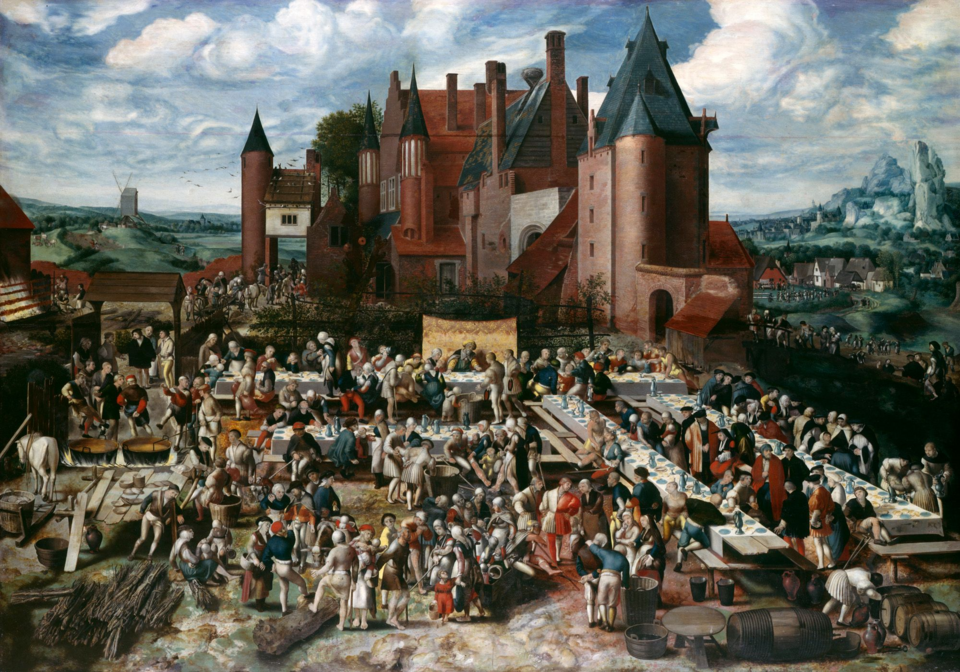
There is a moment in the Gospel when a guest at table, warmed perhaps by the company and by the generosity of his host, lifts his voice in a pious sentiment: "Blessed is the one who will dine in the Kingdom of God." It is a true saying, and yet our Lord answers it not with agreement but with a story, as though to warn the soul that it is one thing to praise the banquet from afar and quite another to rise and go when the servant knocks and says, "Come, everything is now ready." The kingdom is not an ideal to be admired at a distance; it is an invitation to be answered, and the answer is given not once, in some solemn hour, but daily, in those ordinary hours in which our true preferences are quietly disclosed.
What is most searching in the parable is that none of the excuses is wicked. "I have purchased a field and must go to examine it." "I have purchased five yoke of oxen." "I have just married a woman." Land, labour, and love are each good gifts of God, and it is precisely their goodness that makes them perilous; for the soul seldom refuses God for the sake of something it knows to be evil, but refuses Him, more often and more softly, for the sake of something it believes to be reasonable. The lesson is plain and grave: a good thing preferred to the Giver of every good becomes a closed door. Pope Francis, reflecting on this very passage, observed that "Faced with that openness, that universality of the celebration, there is that attitude that closes the heart." The heart is not closed with a crash but by degrees, through a thousand courteous declinings: the prayer deferred until the work is finished, the Mass postponed to a more convenient week, the poor neighbour left for someone who has more leisure.
How, then, is a heart so crowded with its own affairs to be made ready? The Apostle answers with the mystery of the Son, who, though He was in the form of God, "emptied himself, taking the form of a slave," and "humbled himself, becoming obedient to death." Here the whole remedy is set before the soul. The guests who would not come were full; the Lord who came to call them made Himself empty. He had every claim on which to stand, and He laid them all aside, that there might be room in Him for us. St. Augustine, writing of the way that leads to the truth, would name but one thing, and name it thrice: "the first part is humility; the second, humility; the third, humility." Humility is not contempt for good things but their right ordering, the gentle loosening of a hand that would otherwise grasp the field and the oxen so tightly that it could no longer receive the bread of the kingdom.
It is no accident, then, that the master's house is filled at last by those who had nothing to examine and nothing to test. "Bring in here the poor and the crippled, the blind and the lame." The Catechism teaches that "The kingdom belongs to the poor and lowly, which means those who have accepted it with humble hearts." Their very poverty left them free to answer. The Church honours today one such soul in St. Martin de Porres, who swept the cloister and tended the sick of Lima and kept nothing for himself, and so was always at leisure for God.
The concrete examination, therefore, is this: to ask, before the day is spent, which good thing I have made into a reason for refusing the Lord's call, and to set it down, if only for an hour, at His feet. For He does not invite the soul in order to burden it. "Through his parables he invites people to the feast of the kingdom," and the voice that calls is the same that says, "Come to me, all you who labor and are burdened, and I will give you rest." The soul that answers discovers what Augustine confessed, that "you have made us for yourself, and our heart is restless until it rests in you." The table is still spread; the servant still goes out to the highways and hedgerows, that the house may be filled. And there is room yet, for the love of God is wider than all our refusals.
Lord God, whose Son emptied Himself that I might be filled, loosen within me every grasp on lesser goods that keeps me from Your table. Teach me to hear Your invitation in the ordinary hours of this day, and to answer it with a humble and ready heart. Through Christ our Lord. Amen.
Sources & References
- "Blessed is the one who will dine in the Kingdom of God"; "Come, everything is now ready"; "I have purchased a field and must go to examine it"; "I have purchased five yoke of oxen"; "I have just married a woman"; "Bring in here the poor and the crippled, the blind and the lame"; the highways and hedgerows — Luke 14:15-24 (NABRE, USCCB daily readings)
- "emptied himself, taking the form of a slave"; "humbled himself, becoming obedient to death" — Philippians 2:7-8 (First Reading, Philippians 2:5-11)
- "Come to me, all you who labor and are burdened, and I will give you rest" — Matthew 11:28 (Alleluia verse)
- Responsorial Psalm — Psalm 22:26b-27, 28-30ab, 30e, 31-32 ("I will praise you, Lord, in the assembly of your people")
- "Faced with that openness, that universality of the celebration, there is that attitude that closes the heart" — Pope Francis, Homily at Mass, Casa Santa Marta, 5 November 2019 (Vatican News, Word of the Day, 3 November 2026)
- "the first part is humility; the second, humility; the third, humility" — St. Augustine, Letter 118 (to Dioscorus), 22
- "The kingdom belongs to the poor and lowly, which means those who have accepted it with humble hearts" — Catechism of the Catholic Church, 544
- "Through his parables he invites people to the feast of the kingdom" — Catechism of the Catholic Church, 546
- "you have made us for yourself, and our heart is restless until it rests in you" — Catechism of the Catholic Church, 30, quoting St. Augustine, Confessions 1, 1, 1
- St. Martin de Porres, Religious — Optional Memorial, November 3
El corazón vaciado y la mesa preparada
📖 Sagrada Escritura Diaria
Martes, 3 de noviembre de 2026 — Martes de la XXXI semana del Tiempo ordinario
Lecturas: Filipenses 2, 5-11 • Salmo 21, 26b-27. 28-30ab. 30c. 31-32 • Lucas 14, 15-24
Hay un momento en el Evangelio en que uno de los comensales, animado quizá por la compañía y por la generosidad de su anfitrión, alza la voz con un sentimiento piadoso: «Dichoso aquel que participe en el banquete del Reino de Dios». Es una sentencia verdadera, y sin embargo nuestro Señor no responde con un asentimiento, sino con una historia, como para advertir al alma que una cosa es alabar el banquete desde lejos y otra muy distinta levantarse y acudir cuando el criado llama a la puerta, porque «ya todo estaba listo». El Reino no es un ideal para admirar a distancia; es una invitación que pide respuesta, y esa respuesta no se da una sola vez, en alguna hora solemne, sino cada día, en esas horas ordinarias en que nuestras verdaderas preferencias se revelan en silencio.
Lo que más escudriña el corazón en esta parábola es que ninguna de las excusas es perversa. «Compré un terreno y necesito ir a verlo». «Compré cinco yuntas de bueyes y voy a probarlas». «Acabo de casarme y por eso no puedo ir». La tierra, el trabajo y el amor son, cada uno, dones buenos de Dios, y es precisamente su bondad la que los vuelve peligrosos; porque el alma rara vez rechaza a Dios por algo que sabe malo, sino que lo rechaza, con más frecuencia y más suavemente, por algo que cree razonable. La lección es clara y grave: un bien preferido al Dador de todo bien se convierte en una puerta cerrada. El papa Francisco, meditando este mismo pasaje, observó que «frente a esa apertura, a esa universalidad de la fiesta, está esa actitud que cierra el corazón». El corazón no se cierra de golpe, sino poco a poco, mediante mil corteses negativas: la oración aplazada hasta terminar el trabajo, la Misa pospuesta para una semana más conveniente, el prójimo pobre dejado para alguien que tenga más tiempo.
¿Cómo, pues, ha de prepararse un corazón tan lleno de sus propios asuntos? El Apóstol responde con el misterio del Hijo, que, siendo de condición divina, «se anonadó a sí mismo, tomando la condición de siervo», y «se humilló a sí mismo y por obediencia aceptó incluso la muerte». Aquí se pone ante el alma el remedio entero. Los invitados que no quisieron venir estaban llenos; el Señor que vino a llamarlos se hizo vacío. Tenía todo derecho en que apoyarse, y a todo renunció, para que hubiera en Él lugar para nosotros. San Agustín, escribiendo sobre el camino que conduce a la verdad, no quiso nombrar sino una sola cosa, y la nombró tres veces: «lo primero la humildad, lo segundo la humildad y lo tercero la humildad». La humildad no es desprecio de las cosas buenas, sino su recto orden: el suave aflojarse de una mano que, de otro modo, apretaría el terreno y los bueyes con tanta fuerza que ya no podría recibir el pan del Reino.
No es casualidad, entonces, que la casa del señor se llene al fin con quienes nada tenían que ir a ver ni nada que probar: «trae a mi casa a los pobres, a los lisiados, a los ciegos y a los cojos». El Catecismo enseña que «el Reino pertenece a los pobres y a los pequeños, es decir, a los que lo acogen con un corazón humilde». Su misma pobreza los dejó libres para responder. La Iglesia honra hoy a una de esas almas en san Martín de Porres, que barría el claustro y cuidaba a los enfermos de Lima sin guardar nada para sí, y por eso estaba siempre disponible para Dios.
El examen concreto, por tanto, es este: preguntarme, antes de que acabe el día, qué cosa buena he convertido en motivo para rechazar la llamada del Señor, y depositarla, aunque sea por una hora, a sus pies. Porque Él no invita al alma para agobiarla. Hablando de las parábolas del Señor, el Catecismo dice que «por medio de ellas invita al banquete del Reino», y la voz que llama es la misma que dice: «Vengan a mí, todos los que están fatigados», y promete el descanso. El alma que responde descubre lo que confesó san Agustín: «nos has hecho para ti y nuestro corazón está inquieto mientras no descansa en ti». La mesa sigue servida; el criado sigue saliendo a los caminos y a las veredas para que se llene la casa. Y todavía hay lugar, porque el amor de Dios es más ancho que todas nuestras negativas.
Señor Dios, cuyo Hijo se anonadó para que yo fuera colmado, afloja dentro de mí todo apego a los bienes menores que me aparta de tu mesa. Enséñame a escuchar tu invitación en las horas ordinarias de este día y a responderla con un corazón humilde y dispuesto. Por Jesucristo nuestro Señor. Amén.
Fuentes y referencias
- «Dichoso aquel que participe en el banquete del Reino de Dios»; «ya todo estaba listo»; «Compré un terreno y necesito ir a verlo»; «Compré cinco yuntas de bueyes y voy a probarlas»; «Acabo de casarme y por eso no puedo ir»; «trae a mi casa a los pobres, a los lisiados, a los ciegos y a los cojos»; los caminos y las veredas — Lucas 14, 15-24 (Leccionario, USCCB en español)
- «se anonadó a sí mismo, tomando la condición de siervo»; «se humilló a sí mismo y por obediencia aceptó incluso la muerte» — Filipenses 2, 7-8 (Primera lectura, Filipenses 2, 5-11)
- «Vengan a mí, todos los que están fatigados» — Mateo 11, 28 (Aclamación antes del Evangelio)
- Salmo responsorial — Salmo 21, 26b-27. 28-30ab. 30c. 31-32 («Alabemos juntos al Señor»)
- «Frente a esa apertura, a esa universalidad de la fiesta, está esa actitud que cierra el corazón» — Papa Francisco, Homilía en la Misa de Casa Santa Marta, 5 de noviembre de 2019 (Vatican News, Palabra del día, 3 de noviembre de 2026; traducción propia del inglés)
- «lo primero la humildad, lo segundo la humildad y lo tercero la humildad» — San Agustín, Carta 118 (a Dióscoro), 22
- «el Reino pertenece a los pobres y a los pequeños, es decir, a los que lo acogen con un corazón humilde» — Catecismo de la Iglesia Católica, 544
- «por medio de ellas invita al banquete del Reino» — Catecismo de la Iglesia Católica, 546
- «nos has hecho para ti y nuestro corazón está inquieto mientras no descansa en ti» — Catecismo de la Iglesia Católica, 30, citando a San Agustín, Confesiones 1, 1, 1
- San Martín de Porres, religioso — Memoria libre, 3 de noviembre