
📖 Daily Scripture
Friday, November 27, 2026 — Friday of the Thirty-fourth Week in Ordinary Time
Readings: Revelation 20:1-4, 11—21:2 • Psalm 84:3, 4, 5-6a, 8a • Luke 21:29-33
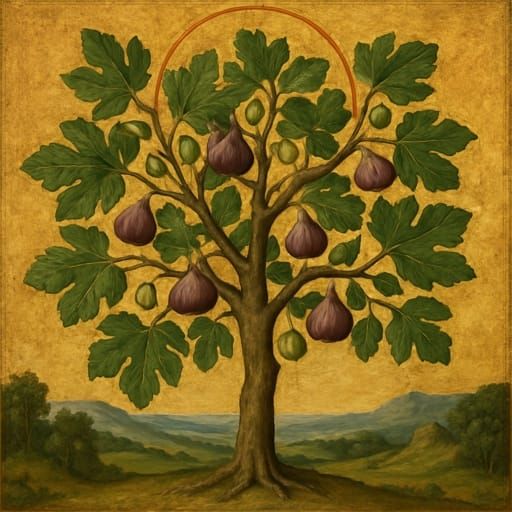
On the last Friday of the Church's year, with Advent already upon the threshold, the soul is led by the Lord to a very homely sight: a fig tree putting forth its first buds. "Consider the fig tree and all the other trees," He says, and the instruction is gentler than the visions that surround it. Saint John, in the reading from Revelation, sees a great white throne, the books opened, and at last a new heaven and a new earth, the holy city coming down from God "prepared as a bride adorned for her husband." Between that vast vision and the small green bud there is no contradiction; the one is the harvest of which the other is the sign. And the Lord binds them together in a single sentence which the soul may carry through every season: "Heaven and earth will pass away, but my words will not pass away."
Here lies the lesson, and it is a searching one. Most of what fills a single day belongs to the order of things that pass. On this very day, when the shops are thronged and the world gives itself with unusual zeal to the getting of things, the Gospel quietly asks the soul upon what it is building. The fault lies not in possessing what is needful, but in granting to perishable goods the weight that belongs only to what endures. Pope Francis, reflecting upon this very Gospel, observed that the trials and losses of life, painful as they are, teach us "to accord everything its due weight," and he added a sentence of deep consolation: "For while everything passes away, Christ remains."
To give each thing its due weight is the practical wisdom the fig tree teaches. The tree does not cling to the winter, nor does it mistake its buds for the summer itself; it simply answers the season that God sends. So too the soul is meant to read the signs of its own life, the passing of years, the loss of those it has loved, the restlessness that no possession can quiet, not as a cause for dread but as a summons. "The desire for God is written in the human heart," the Church teaches, and the Psalmist gives that desire its truest voice: "My soul yearns and pines for the courts of the LORD." What the world names emptiness is often nothing other than this holy hunger, waiting to be recognized.
Yet the readings do not permit the soul to rest in longing alone. "The dead were judged according to their deeds," Saint John writes, and the Catechism declares the gravity of that hour: "In the presence of Christ, who is Truth itself, the truth of each man's relationship with God will be laid bare." This is not written to terrify but to awaken, for the same teaching adds that the message of the Last Judgment "calls men to conversion while God is still giving them 'the acceptable time, . . . the day of salvation.'" The acceptable time is today: the patient word offered where anger would be easier, the hour surrendered to prayer, the alms given without notice, the reconciliation no longer postponed. These are the deeds written in the books, and they alone accompany the soul beyond the passing of the world.
Saint Cyprian of Carthage, writing to Christians who had watched a plague carry away their neighbors, reminded them that they were "living here as guests and strangers," and he lifted their eyes toward their true home: "We regard paradise as our country." A guest does not despise the house that shelters him, but neither does he mistake it for his inheritance; he receives its hospitality with thanks and keeps his heart turned homeward. Such is the freedom the Gospel offers, to love the world rightly precisely because one does not belong to it entirely.
And so the soul, standing at the close of the year, may look upon the fig tree without fear. Its buds announce not an ending but a summer, and the passing of heaven and earth makes room for the city adorned as a bride. All else will fade, but the word of Christ will not fade, and that word is a promise of love: that God is preparing, for those who are His, a dwelling where He will live among His people for ever.
Heavenly Father, whose Son has spoken words that will never pass away, teach me to give each thing its due weight and to set my heart upon what endures. Awaken within me a holy longing for Your courts, and let me spend this acceptable time in charity and repentance, until I come home to the city You have prepared. Through Christ our Lord. Amen.
Sources & References
- "Consider the fig tree and all the other trees" — Luke 21:29 (NABRE Lectionary, USCCB)
- "Heaven and earth will pass away, but my words will not pass away" — Luke 21:33
- "prepared as a bride adorned for her husband" — Revelation 21:2
- "The dead were judged according to their deeds" — Revelation 20:12
- "My soul yearns and pines for the courts of the LORD" — Psalm 84:3
- "The desire for God is written in the human heart" — Catechism of the Catholic Church, 27
- "In the presence of Christ, who is Truth itself, the truth of each man's relationship with God will be laid bare" — Catechism of the Catholic Church, 1039
- "calls men to conversion while God is still giving them 'the acceptable time, . . . the day of salvation'" — Catechism of the Catholic Church, 1041 (citing 2 Corinthians 6:2)
- "living here as guests and strangers"; "We regard paradise as our country" — St. Cyprian of Carthage, On the Mortality (De mortalitate), 26 (Ante-Nicene Fathers, vol. 5)
- "to accord everything its due weight"; "For while everything passes away, Christ remains" — Pope Francis, Angelus, 17 November 2024, as presented in Vatican News "Word of the Day," 27 November 2026
La higuera y las palabras que permanecen
📖 Sagrada Escritura Diaria
Viernes, 27 de noviembre de 2026 — Viernes de la XXXIV semana del Tiempo ordinario
Lecturas: Apocalipsis 20, 1-4. 11–21, 2 • Salmo 83, 3. 4. 5-6a y 8a • Lucas 21, 29-33
En el último viernes del año de la Iglesia, con el Adviento ya en el umbral, el Señor conduce al alma hacia una imagen muy sencilla: una higuera que empieza a brotar. «Fíjense en la higuera y en los demás árboles», dice, y la enseñanza es más suave que las visiones que la rodean. San Juan, en la lectura del Apocalipsis, ve un trono brillante y magnífico, los libros abiertos, y por fin un cielo nuevo y una tierra nueva, la ciudad santa que desciende de Dios «engalanada como una novia que va a desposarse con su prometido». Entre aquella visión inmensa y el pequeño brote verde no hay contradicción; la una es la cosecha de la que el otro es la señal. Y el Señor las une en una sola frase que el alma puede llevar consigo en cada estación: «Podrán dejar de existir el cielo y la tierra, pero mis palabras no dejarán de cumplirse».
Aquí reside la lección, y es una lección que escudriña el corazón. Casi todo lo que llena un solo día pertenece al orden de las cosas que pasan. En este mismo día, cuando las tiendas se llenan de gente y el mundo se entrega con un afán inusual a adquirir cosas, el Evangelio pregunta en silencio al alma sobre qué está edificando. La falta no está en poseer lo necesario, sino en conceder a los bienes perecederos el peso que solo corresponde a lo que permanece. El papa Francisco, meditando este mismo Evangelio, observó que las pruebas y las pérdidas de la vida, aunque dolorosas, nos enseñan «a dar a cada cosa su justo peso», y añadió una frase de profundo consuelo: «Porque mientras todo pasa, Cristo permanece».
Dar a cada cosa su justo peso es la sabiduría práctica que enseña la higuera. El árbol no se aferra al invierno, ni confunde sus brotes con el verano mismo; sencillamente responde a la estación que Dios le envía. Así también el alma está llamada a leer las señales de su propia vida, el paso de los años, la pérdida de quienes ha amado, la inquietud que ninguna posesión logra calmar, no como motivo de temor, sino como un llamado. «El deseo de Dios está inscrito en el corazón del hombre», enseña la Iglesia, y el salmista da a ese deseo su voz más verdadera: «Anhelando los atrios del Señor se consume mi alma». Lo que el mundo llama vacío no es, a menudo, otra cosa que esta hambre santa, que espera ser reconocida.
Sin embargo, las lecturas no permiten que el alma descanse solo en el anhelo. «Los muertos fueron juzgados conforme a sus obras», escribe san Juan, y el Catecismo declara la gravedad de aquella hora: «Frente a Cristo, que es la Verdad, será puesta al desnudo definitivamente la verdad de la relación de cada hombre con Dios». Esto no se escribe para aterrar, sino para despertar, pues la misma enseñanza añade que el mensaje del Juicio final «llama a la conversión mientras Dios da a los hombres todavía "el tiempo favorable, el tiempo de salvación"». El tiempo favorable es hoy: la palabra paciente ofrecida allí donde la ira sería más fácil, la hora entregada a la oración, la limosna dada sin que nadie lo note, la reconciliación que ya no se aplaza. Estas son las obras escritas en los libros, y solo ellas acompañan al alma más allá del paso del mundo.
San Cipriano de Cartago, escribiendo a cristianos que habían visto cómo una peste se llevaba a sus vecinos, les recordó que «vivimos aquí durante la vida como huéspedes y viajeros», y elevó sus ojos hacia su verdadero hogar: «Nosotros tenemos por patria el paraíso». El huésped no desprecia la casa que lo acoge, pero tampoco la confunde con su herencia; recibe su hospitalidad con gratitud y mantiene el corazón vuelto hacia su hogar. Tal es la libertad que ofrece el Evangelio: amar rectamente al mundo precisamente porque no se le pertenece por entero.
Y así el alma, de pie al término del año, puede contemplar la higuera sin temor. Sus brotes no anuncian un final, sino un verano, y el paso del cielo y de la tierra abre lugar a la ciudad engalanada como una novia. Todo lo demás se desvanecerá, pero la palabra de Cristo no se desvanecerá, y esa palabra es una promesa de amor: que Dios prepara, para los que son suyos, una morada donde habitará con su pueblo para siempre.
Padre celestial, cuyo Hijo ha pronunciado palabras que nunca pasarán, enséñame a dar a cada cosa su justo peso y a poner mi corazón en lo que permanece. Despierta dentro de mí un santo anhelo de tus atrios, y concédeme emplear este tiempo favorable en la caridad y la penitencia, hasta que llegue a la ciudad que has preparado. Por Jesucristo nuestro Señor. Amén.
Fuentes y referencias
- «Fíjense en la higuera y en los demás árboles» — Lucas 21, 29 (Leccionario, USCCB en español)
- «Podrán dejar de existir el cielo y la tierra, pero mis palabras no dejarán de cumplirse» — Lucas 21, 33
- «engalanada como una novia que va a desposarse con su prometido» — Apocalipsis 21, 2
- «Los muertos fueron juzgados conforme a sus obras» — Apocalipsis 20, 12
- «Anhelando los atrios del Señor se consume mi alma» — Salmo 83, 3 (84, 3 en la numeración hebrea)
- «El deseo de Dios está inscrito en el corazón del hombre» — Catecismo de la Iglesia Católica, 27
- «Frente a Cristo, que es la Verdad, será puesta al desnudo definitivamente la verdad de la relación de cada hombre con Dios» — Catecismo de la Iglesia Católica, 1039
- «llama a la conversión mientras Dios da a los hombres todavía "el tiempo favorable, el tiempo de salvación"» — Catecismo de la Iglesia Católica, 1041 (cita 2 Corintios 6, 2)
- «vivimos aquí durante la vida como huéspedes y viajeros»; «Nosotros tenemos por patria el paraíso» — San Cipriano de Cartago, Sobre la mortalidad (De mortalitate), 26 (traducción española publicada)
- «a dar a cada cosa su justo peso»; «Porque mientras todo pasa, Cristo permanece» — Papa Francisco, Ángelus, 17 de noviembre de 2024, según Vatican News, «Evangelio y palabra del día», 27 de noviembre de 2026