
📖 Daily Scripture
Sunday, August 30, 2026 — Twenty-second Sunday in Ordinary Time
Readings: Jeremiah 20:7-9 • Psalm 63:2, 3-4, 5-6, 8-9 • Romans 12:1-2 • Matthew 16:21-27
There is a kind of complaint that only a friend of God can make. Jeremiah, worn thin by years of speaking a message no one wished to hear, turns to the Lord with words that would be blasphemy on any other lips: You duped me, O LORD, and I let myself be duped; you were too strong for me, and you triumphed. He does not charge God with cruelty. He charges Him with something more intimate and far more disarming — with having won. And having lost that argument, the prophet resolves upon the only escape still open to him: I will not mention him, I will speak in his name no more. The resolution does not outlive the breath that formed it. But then it becomes like fire burning in my heart, imprisoned in my bones; I grow weary holding it in, I cannot endure it.
Every soul that has once been truly touched by God knows something of that imprisonment. There is a point beyond which retreat is no longer possible — not because a door has been locked from outside, but because the heart has been altered from within, and can no longer be satisfied by the things that satisfied it before. Thus have I gazed toward you in the sanctuary, sings the psalmist, for your kindness is a greater good than life. Having once tasted that kindness, the soul finds every substitute strangely thin.
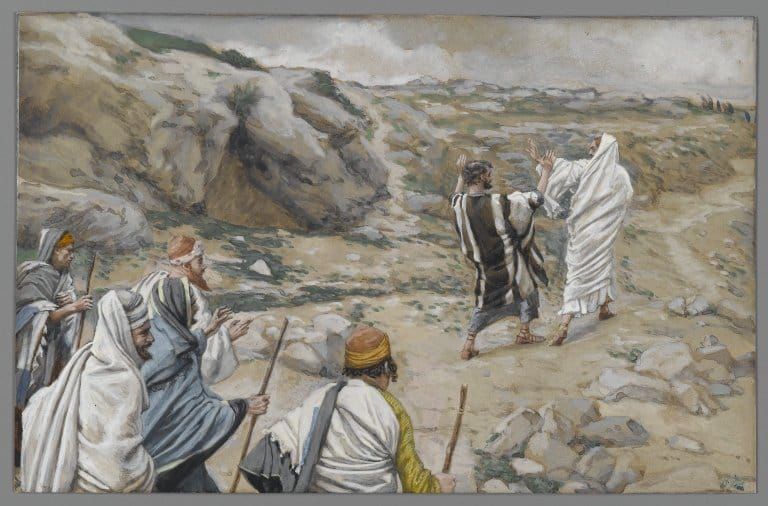
And yet to be altered is not the same as to be finished. The Gospel sets beside Jeremiah a man who loved Christ truly and still stood in His way. Peter, who only days before had been called the rock, hears that his Master must suffer and be killed, and takes Him aside to correct Him: God forbid, Lord! No such thing shall ever happen to you. One is tempted to judge him gently, for the protest was made of affection. The reply is severe: Get behind me, Satan! You are an obstacle to me. You are thinking not as God does, but as human beings do. The fault lay not in Peter's heart, which loved, but in his measure, which he had borrowed from the world without ever noticing that he had borrowed it.
Here the lesson comes down from the mountain into the ordinary day, and it is more searching than it first appears. The soul is seldom tempted to deny the Cross outright; it is constantly tempted to counsel God away from it, and to call that counsel prudence. The reconciliation postponed because the first word would cost too much pride. The truth left unsaid in a room where saying it would invite ridicule. The resentment kept warm because to release it would feel indistinguishable from defeat. Each of these is a small and courteous God forbid, Lord — a preference, quietly registered, for a Christ who asks nothing that hurts.
Against this the second reading sets a remedy neither dramatic nor easy: offer your bodies as a living sacrifice, holy and pleasing to God, your spiritual worship. Not the soul only, but the body — which is to say the hours, the labour, the fatigue, the patience required by people one did not choose. The Church has understood this with great tenderness, teaching that all their works, prayers and apostolic undertakings, family and married life, daily work, relaxation of mind and body, if they are accomplished in the Spirit — indeed even the hardships of life if patiently borne — all these become spiritual sacrifices acceptable to God through Jesus Christ. Nothing is too small to be offered, and nothing offered is small.
This is why He calls his disciples to take up their cross and follow him, and why it must be said plainly that the way of perfection passes by way of the Cross, and that there is no holiness without renunciation and spiritual battle. His way is the way of love, and there is no true love without self-sacrifice. The paradox at the centre of the Gospel is therefore not a riddle but a law: whoever wishes to save his life will lose it, but whoever loses his life for my sake will find it. What is surrendered for His sake is not destroyed; it is planted. The blood of Christians is seed.
The soul is not asked, then, to love suffering, which would be a sickness, but to stop insisting upon a love that costs nothing, which is an illusion. Do not conform yourselves to this age but be transformed by the renewal of your mind. That renewal is slow and often unfelt, and it ends not in loss but in glory, for the Son of Man will come with his angels in his Father's glory. Until that morning the restlessness itself is a mercy — you have made us for yourself, and our heart is restless until it rests in you — and every unsatisfied longing is the pledge of a satisfaction already being prepared. My soul is thirsting for you, O Lord my God.
Lord, You have set a fire within me that I cannot put out, and I thank You for it. Where I have quietly counselled You away from the Cross, teach me to be silent and to follow. Take the small offerings of this day — my work, my patience, my disappointments — and make them worthy of You. Through Christ our Lord. Amen.
Sources & References
- "You duped me, O LORD, and I let myself be duped; you were too strong for me, and you triumphed" — Jeremiah 20:7
- "I will not mention him, I will speak in his name no more" — Jeremiah 20:9
- "like fire burning in my heart, imprisoned in my bones; I grow weary holding it in, I cannot endure it" — Jeremiah 20:9
- "Thus have I gazed toward you in the sanctuary… for your kindness is a greater good than life" — Psalm 63:3-4
- "My soul is thirsting for you, O Lord my God" — Psalm 63:2b (Responsorial refrain)
- "offer your bodies as a living sacrifice, holy and pleasing to God, your spiritual worship" — Romans 12:1
- "Do not conform yourselves to this age but be transformed by the renewal of your mind" — Romans 12:2
- "God forbid, Lord! No such thing shall ever happen to you" — Matthew 16:22
- "Get behind me, Satan! You are an obstacle to me. You are thinking not as God does, but as human beings do" — Matthew 16:23
- "whoever wishes to save his life will lose it, but whoever loses his life for my sake will find it" — Matthew 16:25
- "the Son of Man will come with his angels in his Father's glory" — Matthew 16:27
- "He calls his disciples to 'take up [their] cross and follow [him]'" — Catechism of the Catholic Church, 618
- "The way of perfection passes by way of the Cross. There is no holiness without renunciation and spiritual battle" — Catechism of the Catholic Church, 2015
- "all their works, prayers and apostolic undertakings… all these become spiritual sacrifices acceptable to God through Jesus Christ" — Catechism of the Catholic Church, 901, citing Lumen Gentium 34
- "you have made us for yourself, and our heart is restless until it rests in you" — St. Augustine, Confessions 1, 1, 1 (quoted in CCC 30)
- "The blood of Christians is seed" — Tertullian, Apologeticum 50
- "his way is the way of love, and there is no true love without self sacrifice" — Pope Francis, Angelus, 3 September 2017 (Vatican News, Word of the Day, 30 August 2026)
- Readings: USCCB, Daily Readings, 30 August 2026
El fuego encerrado en los huesos
📖 Sagrada Escritura Diaria
Domingo, 30 de agosto de 2026 — XXII Domingo Ordinario
Lecturas: Jeremías 20, 7-9 • Salmo 62, 2. 3-4. 5-6. 8-9 • Romanos 12, 1-2 • Mateo 16, 21-27
Hay una clase de queja que sólo puede pronunciar un amigo de Dios. Jeremías, desgastado por años de anunciar un mensaje que nadie deseaba escuchar, se vuelve al Señor con palabras que en cualquier otro labio serían blasfemia: Me sedujiste, Señor, y me dejé seducir; fuiste más fuerte que yo y me venciste. No acusa a Dios de crueldad. Le acusa de algo más íntimo y mucho más desarmante: de haber vencido. Y habiendo perdido esa discusión, el profeta se resuelve por la única salida que aún le queda: Ya no me acordaré del Señor ni hablaré más en su nombre. La resolución no sobrevive al aliento que la formó. Pero había en mí como un fuego ardiente, encerrado en mis huesos; yo me esforzaba por contenerlo y no podía.
Toda alma que alguna vez ha sido verdaderamente tocada por Dios conoce algo de ese encierro. Hay un punto más allá del cual la retirada ya no es posible; no porque alguien haya cerrado la puerta desde fuera, sino porque el corazón ha sido cambiado por dentro y ya no puede saciarse con aquello que antes lo saciaba. Para admirar tu gloria y tu poder, con este afán te busco en tu santuario, canta el salmista, pues mejor es tu amor que la existencia. Habiendo probado una vez ese amor, el alma encuentra extrañamente pobre todo sustituto.
Y sin embargo, haber sido cambiado no es lo mismo que estar acabado. El Evangelio coloca junto a Jeremías a un hombre que amaba de veras a Cristo y aun así se interpuso en su camino. Pedro, a quien pocos días antes se había llamado piedra, oye que su Maestro ha de padecer y ser condenado a muerte, y se lo lleva aparte para corregirlo: No lo permita Dios, Señor; eso no te puede suceder a ti. Uno se siente inclinado a juzgarlo con benignidad, pues la protesta estaba hecha de afecto. La respuesta es severa: ¡Apártate de mí, Satanás, y no intentes hacerme tropezar en mi camino, porque tu modo de pensar no es el de Dios, sino el de los hombres! La falta no estaba en el corazón de Pedro, que amaba, sino en su medida, que había tomado prestada del mundo sin advertir siquiera que la había tomado prestada.
Aquí la lección desciende del monte al día ordinario, y resulta más penetrante de lo que a primera vista parece. El alma rara vez se ve tentada a negar la Cruz abiertamente; se ve tentada continuamente a aconsejar a Dios que se aparte de ella, y a llamar prudencia a ese consejo. La reconciliación aplazada porque la primera palabra costaría demasiado orgullo. La verdad callada en una sala donde decirla provocaría burla. El rencor conservado tibio porque soltarlo se sentiría indistinguible de una derrota. Cada una de estas cosas es un pequeño y cortés no lo permita Dios, Señor: una preferencia, silenciosamente registrada, por un Cristo que no pida nada que duela.
Frente a esto, la segunda lectura propone un remedio que no es dramático ni fácil: se ofrezcan ustedes mismos como una ofrenda viva, santa y agradable a Dios, porque en esto consiste el verdadero culto. No sólo el alma, sino el cuerpo; es decir, las horas, el trabajo, el cansancio, la paciencia que exigen las personas que uno no eligió. La Iglesia lo ha entendido con gran ternura al enseñar que todas sus obras, oraciones, tareas apostólicas, la vida conyugal y familiar, el trabajo diario, el descanso espiritual y corporal, si se realizan en el Espíritu, incluso las molestias de la vida, si se llevan con paciencia, todo ello se convierte en sacrificios espirituales agradables a Dios por Jesucristo. Nada es demasiado pequeño para ser ofrecido, y nada de lo ofrecido es pequeño.
Por eso Él llama a sus discípulos a tomar su cruz y a seguirle, y por eso ha de decirse con claridad que el camino de la perfección pasa por la cruz, y que no hay santidad sin renuncia y sin combate espiritual. Su vía es la vía del amor, y no existe el verdadero amor sin sacrificio de sí mismo. La paradoja que está en el centro del Evangelio no es, por tanto, un acertijo, sino una ley: el que quiera salvar su vida, la perderá; pero el que pierda su vida por mí, la encontrará. Lo que se entrega por Él no queda destruido; queda sembrado. La sangre de los cristianos es semilla.
No se le pide, pues, al alma que ame el sufrimiento, lo cual sería una enfermedad, sino que deje de exigir un amor que nada cueste, lo cual es una ilusión. No se dejen transformar por los criterios de este mundo; sino dejen que una nueva manera de pensar los transforme internamente. Esa renovación es lenta y con frecuencia imperceptible, y no termina en pérdida sino en gloria, porque el Hijo del hombre ha de venir rodeado de la gloria de su Padre, en compañía de sus ángeles. Hasta esa mañana, la misma inquietud es una misericordia — nos has hecho para ti y nuestro corazón está inquieto mientras no descansa en ti — y todo anhelo insatisfecho es la prenda de una satisfacción que ya se está preparando. Señor, mi alma tiene sed de ti.
Señor, has encendido dentro de mí un fuego que no puedo apagar, y te doy gracias por él. Allí donde te he aconsejado calladamente que te apartes de la Cruz, enséñame a callar y a seguirte. Toma las pequeñas ofrendas de este día — mi trabajo, mi paciencia, mis desilusiones — y hazlas dignas de ti. Por Jesucristo nuestro Señor. Amén.
Fuentes y referencias
- "Me sedujiste, Señor, y me dejé seducir; fuiste más fuerte que yo y me venciste" — Jeremías 20, 7
- "Ya no me acordaré del Señor ni hablaré más en su nombre" — Jeremías 20, 9
- "Pero había en mí como un fuego ardiente, encerrado en mis huesos; yo me esforzaba por contenerlo y no podía" — Jeremías 20, 9
- "Para admirar tu gloria y tu poder, con este afán te busco en tu santuario… pues mejor es tu amor que la existencia" — Salmo 62, 3-4
- "Señor, mi alma tiene sed de ti" — Salmo 62, 2b (antífona responsorial)
- "se ofrezcan ustedes mismos como una ofrenda viva, santa y agradable a Dios, porque en esto consiste el verdadero culto" — Romanos 12, 1
- "No se dejen transformar por los criterios de este mundo; sino dejen que una nueva manera de pensar los transforme internamente" — Romanos 12, 2
- "No lo permita Dios, Señor; eso no te puede suceder a ti" — Mateo 16, 22
- "¡Apártate de mí, Satanás, y no intentes hacerme tropezar en mi camino, porque tu modo de pensar no es el de Dios, sino el de los hombres!" — Mateo 16, 23
- "el que quiera salvar su vida, la perderá; pero el que pierda su vida por mí, la encontrará" — Mateo 16, 25
- "el Hijo del hombre ha de venir rodeado de la gloria de su Padre, en compañía de sus ángeles" — Mateo 16, 27
- "Él llama a sus discípulos a 'tomar su cruz y a seguirle'" — Catecismo de la Iglesia Católica, 618
- "El camino de la perfección pasa por la cruz. No hay santidad sin renuncia y sin combate espiritual" — Catecismo de la Iglesia Católica, 2015
- "todas sus obras, oraciones, tareas apostólicas… todo ello se convierte en sacrificios espirituales agradables a Dios por Jesucristo" — Catecismo de la Iglesia Católica, 901, citando Lumen Gentium 34
- "nos has hecho para ti y nuestro corazón está inquieto mientras no descansa en ti" — San Agustín, Confessiones 1, 1, 1 (citado en CIC 30)
- "La sangre de los cristianos es semilla" — Tertuliano, Apologeticum 50
- "su vía es la vía del amor, y no existe el verdadero amor sin sacrificio de sí mismo" — Papa Francisco, Ángelus, 3 de septiembre de 2017
- Lecturas: USCCB, Lecturas de Hoy, 30 de agosto de 2026