
📖 Daily Scripture
Thursday, July 23, 2026 — Thursday of the Sixteenth Week in Ordinary Time
Readings: Jeremiah 2:1-3, 7-8, 12-13 • Psalm 36:6-7, 8-9, 10-11 • Matthew 13:10-17
There is a grief in the words the prophet is sent to cry aloud, a grief that belongs not to God's poverty but to His wounded love; for He remembers the devotion of a people's youth, the ardour of a bride who once followed Him through an unsown land, and He measures against that early tenderness the coldness into which they have since fallen. The soul that reads these lines slowly will find that they are not addressed to an ancient nation only, but to itself, since every one of us has known some springtime of the heart, some hour when God seemed near and the following of Him was sweet, and every one of us has felt how quietly that first fervour can drain away. The tragedy the Lord names is not a single great apostasy but a gradual exchange: the forsaking of a living spring for cisterns of our own laborious making, cisterns that crack in the digging and cannot hold the very water we hoped to store in them.
Here is the whole anatomy of sin laid bare, that it is less often a bold turning against God than a slow substitution, a preference for what is near and manageable over what is infinite and free. The heart was made with a thirst it did not give itself, for the desire for God is written in the human heart, and that thirst will be answered by God or it will torment us; but the will, grown restless and proud, would rather quarry its own broken vessels — its comforts, its ambitions, its little idols of security — than kneel at the one fountain that asks nothing but that we come. And so we labour to fill what only He can fill, and rise from the work thirstier than before. It is the ancient confession of the saint who cried that God has made us for Himself, and that our heart is restless until it rests in Him; the restlessness is itself a mercy, a proof that the cisterns will never satisfy and that the fountain is still flowing.
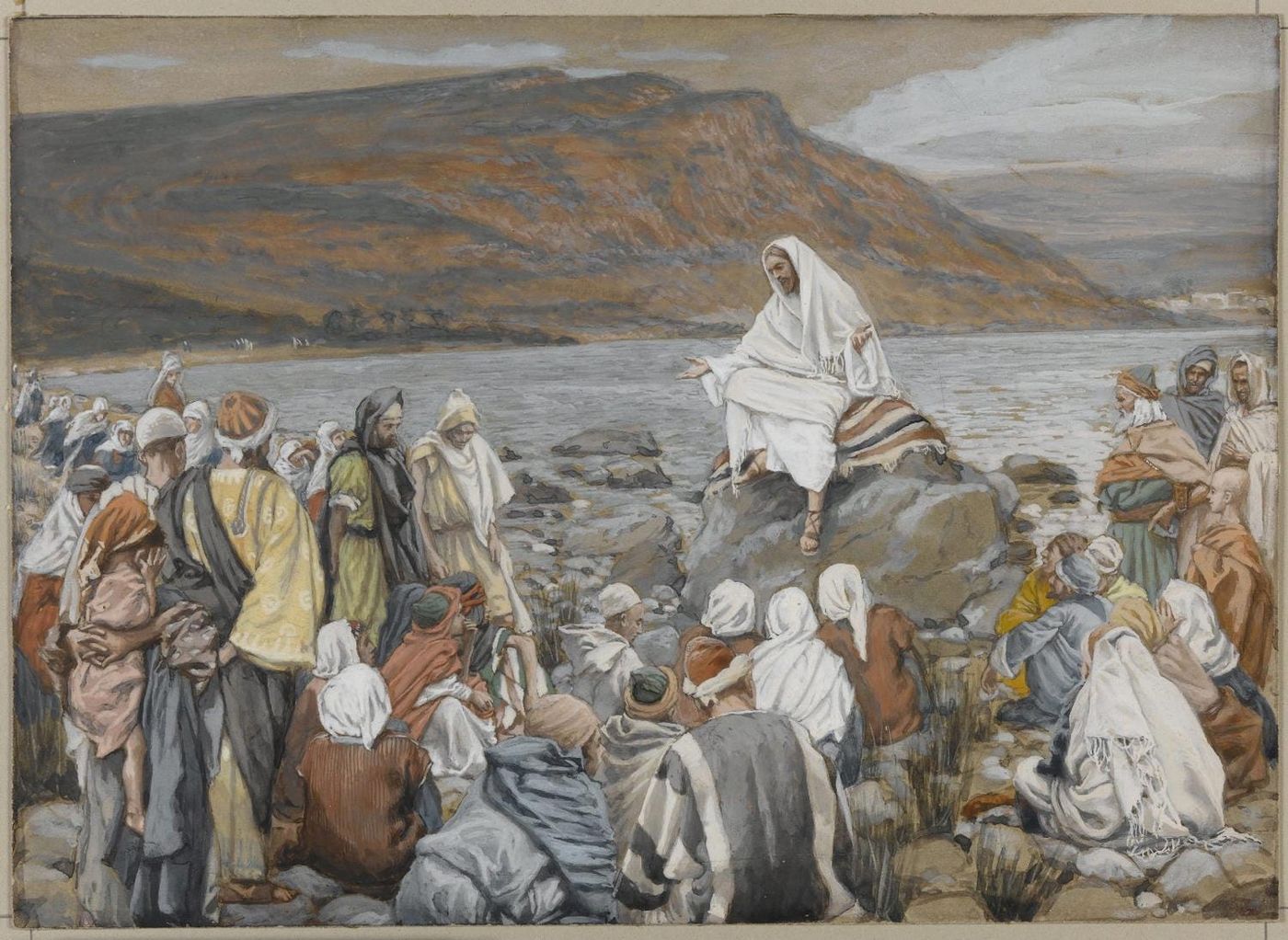
Yet the Gospel adds a graver warning still, for it shows that the long refusal of grace does not leave the soul unchanged. Those who look but do not see, who hear but do not listen, have not been robbed of sight by God; they have closed their own eyes, lest seeing they be converted and healed. This is the terrible liberty of the human heart, that it can grow so accustomed to the light that it no longer perceives it, so practised in turning away that the turning becomes its nature. The mysteries of the Kingdom are not hidden by a jealous hand; they are veiled only to those who will not enter, for those who stay outside everything remains enigmatic, while to the little ones who draw near, the same words open like a door. Blessedness, then, is promised not to the clever but to the receptive, to the eyes willing to see and the ears willing to hear.
What this asks of the soul is plain and searching: to guard against the hardening that comes not through one great betrayal but through a thousand small evasions, and to return, daily and deliberately, to the Fountain we are forever tempted to forsake. For God thirsts that we may thirst for Him, and the whole labour of this life is to restore to health the eye of the heart, whereby God may be seen. Let the soul, then, abandon its broken cisterns without regret, and come again to the water that never fails; for the same Lord who grieved over a bride grown cold waits still, with a tenderness undiminished, to be found by all who will only turn and drink.
Lord, You are the fountain of living water, and I have too often dug for myself cisterns that hold nothing. Teach me to know my thirst, and to bring it only to You. Open the eyes of my heart that I may see, and soften whatever in me has grown hard, that I may hear Your word and be healed. Through Christ our Lord. Amen.
Sources & References
- "I remember the devotion of your youth… they have forsaken me, the source of living waters; they have dug themselves cisterns, broken cisterns, that hold no water" — Jeremiah 2:1-3, 7-8, 12-13 (First Reading).
- "With you is the fountain of life, O Lord" — Psalm 36:6-11 (Responsorial Psalm).
- "They look but do not see and hear but do not listen or understand… blessed are your eyes, because they see" — Matthew 13:10-17 (Gospel).
- "The desire for God is written in the human heart" — Catechism of the Catholic Church, 27.
- "God thirsts that we may thirst for him" — Catechism of the Catholic Church, 2560.
- "For those who stay 'outside,' everything remains enigmatic" — Catechism of the Catholic Church, 546.
- "You have made us for yourself, O Lord, and our heart is restless until it rests in you" — St. Augustine, Confessions I.1.
- "Our whole business in this life is to restore to health the eye of the heart, whereby God may be seen" — St. Augustine, On the Sermon on the Mount II.
- Papal meditation of the day: Vatican News, "Gospel and Word of the Day," 23 July 2026 (audio meditation); the theme of faith as hearing and seeing draws on Pope Francis, Lumen Fidei (2013).
La fuente y la cisterna agrietada
📖 Sagrada Escritura Diaria
jueves, 23 de julio de 2026 — Jueves de la XVI Semana del Tiempo Ordinario
Lecturas: Jeremías 2, 1-3. 7-8. 12-13 • Salmo 35 • Mateo 13, 10-17
Hay un dolor en las palabras que el profeta es enviado a gritar, un dolor que no nace de pobreza alguna en Dios, sino de su amor herido; porque Él recuerda todavía el cariño de la juventud de un pueblo, el ardor de la novia que un día lo siguió por una tierra sin cultivo, y mide contra aquella ternura primera la frialdad en que después ha caído. El alma que lea despacio estas líneas descubrirá que no se dirigen solamente a una nación antigua, sino a ella misma, pues cada uno de nosotros ha conocido alguna primavera del corazón, alguna hora en que Dios parecía cercano y seguirlo era dulce, y cada uno ha sentido con cuánta quietud puede irse secando aquel primer fervor. La tragedia que el Señor nombra no es una sola gran apostasía, sino un cambio gradual: abandonar el manantial de aguas vivas por cisternas labradas por nuestras propias manos, cisternas que se agrietan al cavarlas y no retienen el agua que en ellas esperábamos guardar.
Aquí queda al desnudo toda la anatomía del pecado: que rara vez es un audaz volverse contra Dios, y más a menudo una lenta sustitución, la preferencia por lo cercano y manejable sobre lo infinito y gratuito. El corazón fue hecho con una sed que él no se dio a sí mismo, porque el deseo de Dios está inscrito en el corazón del hombre, y esa sed será saciada por Dios o nos atormentará; pero la voluntad, vuelta inquieta y soberbia, prefiere cavar sus propias vasijas rotas — sus comodidades, sus ambiciones, sus pequeños ídolos de seguridad — antes que arrodillarse junto a la única fuente que nada pide sino que vengamos. Y así nos afanamos por llenar lo que solo Él puede llenar, y nos levantamos de la tarea con más sed que antes. Es la antigua confesión del santo que clamó que Dios nos hizo para sí, y que nuestro corazón está inquieto hasta que descanse en Él; la inquietud misma es una misericordia, prueba de que las cisternas nunca saciarán y de que la fuente sigue manando.
Y todavía el Evangelio añade una advertencia más grave, pues muestra que el largo rechazo de la gracia no deja al alma sin cambio. Quienes viendo no ven, y oyendo no oyen, no han sido privados de la vista por Dios; han cerrado sus propios ojos, para no convertirse ni ser sanados. Esta es la libertad terrible del corazón humano: que puede acostumbrarse de tal modo a la luz que ya no la percibe, ejercitarse de tal modo en apartarse que el apartarse llega a ser su naturaleza. Los misterios del Reino no los oculta una mano celosa; se velan solo para quienes no quieren entrar, porque para los que se quedan fuera todo permanece enigmático, mientras que a los sencillos que se acercan, las mismas palabras se les abren como una puerta. La bienaventuranza, pues, no se promete a los hábiles, sino a los dóciles, a los ojos dispuestos a ver y a los oídos dispuestos a oír.
Lo que esto pide al alma es claro y penetrante: guardarse del endurecimiento que no llega por una gran traición, sino por mil pequeñas evasivas, y volver, cada día y con deliberación, a la Fuente que siempre estamos tentados de abandonar. Porque Dios tiene sed de que nosotros tengamos sed de Él, y toda la tarea de esta vida es sanar el ojo del corazón, con el que se ve a Dios. Que el alma, entonces, abandone sin pesar sus cisternas agrietadas, y vuelva de nuevo al agua que jamás falta; porque el mismo Señor que se dolió por una novia enfriada aguarda todavía, con ternura no disminuida, a ser hallado por todos los que quieran solo volverse y beber.
Señor, tú eres la fuente de aguas vivas, y yo he cavado con demasiada frecuencia cisternas que nada retienen. Enséñame a conocer mi sed y a llevarla solo a ti. Abre los ojos de mi corazón para que vea, y ablanda cuanto en mí se ha endurecido, para que oiga tu palabra y sea sanado. Por Jesucristo nuestro Señor. Amén.
Fuentes y referencias
- «Me abandonaron a mí, manantial de aguas vivas, y se hicieron cisternas agrietadas, que no retienen el agua» — Jeremías 2, 1-3. 7-8. 12-13 (Primera lectura).
- «Tú eres, Señor, la fuente de la vida» — Salmo 35 (Salmo responsorial).
- «Viendo no ven y oyendo no oyen ni entienden… dichosos ustedes, porque sus ojos ven y sus oídos oyen» — Mateo 13, 10-17 (Evangelio).
- «El deseo de Dios está inscrito en el corazón del hombre» — Catecismo de la Iglesia Católica, 27.
- «Dios tiene sed de que nosotros tengamos sed de Él» — Catecismo de la Iglesia Católica, 2560.
- «Para los que se quedan "fuera", todo permanece enigmático» — Catecismo de la Iglesia Católica, 546.
- «Nos hiciste, Señor, para ti, y nuestro corazón está inquieto hasta que descanse en ti» — San Agustín, Confesiones I, 1.
- «Toda nuestra tarea en esta vida consiste en sanar el ojo del corazón, con el que se ve a Dios» — San Agustín, El Sermón de la Montaña II.
- Meditación papal del día: Vatican News, «Evangelio y Palabra del día», 23 de julio de 2026 (meditación en audio); el tema de la fe como escucha y visión, cf. Papa Francisco, Lumen Fidei (2013).