
📖 Daily Scripture
Saturday, November 7, 2026 — Saturday of the Thirty-first Week in Ordinary Time
Readings: Philippians 4:10-19 • Psalm 112:1b-2, 5-6, 8a, 9 • Luke 16:9-15
There is a peculiar quiet in the voice of Saint Paul as he writes to the Philippians from his chains. He thanks them for their gift, and yet he is careful to say that he does not write out of want; he has known both abundance and hunger, and has found in each the same sufficiency, because his sufficiency was never in the thing itself. “I have the strength for everything through him who empowers me.” It is not the boast of a strong man but the confession of a soul that has ceased to lean its whole weight upon anything which can be taken away.
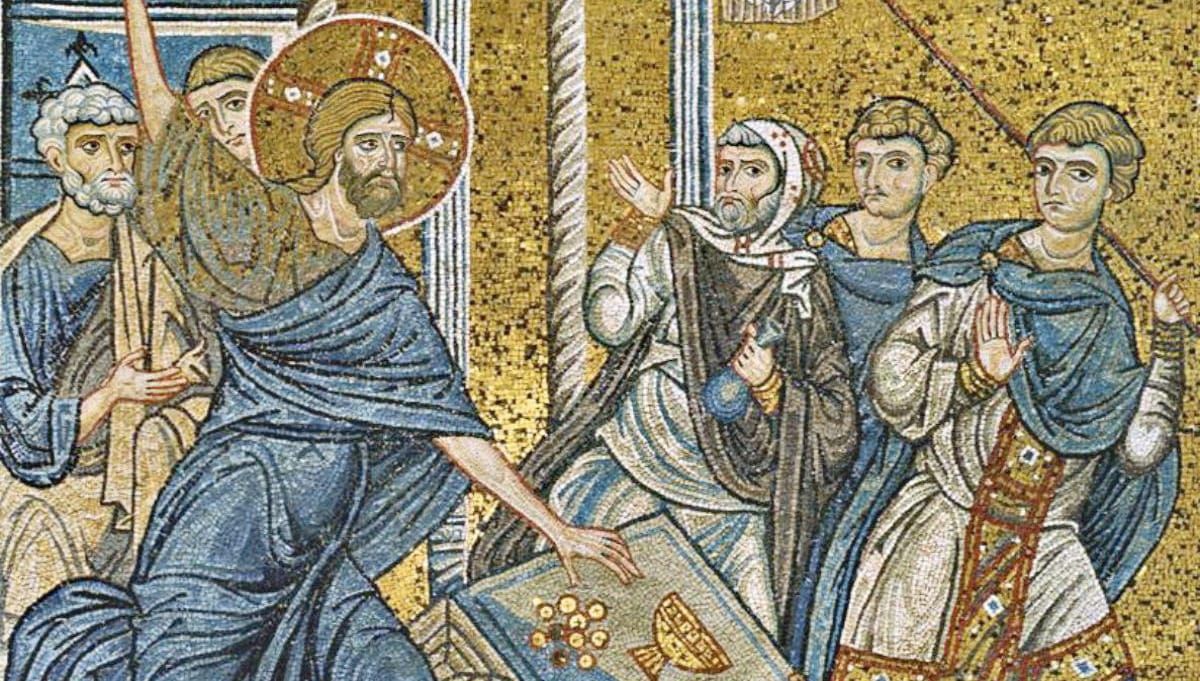
Our Lord, in the Gospel, speaks the same truth in a sterner key. “You cannot serve God and mammon.” He does not say that it is difficult, or unwise, or perilous to attempt it; He says it cannot be done. The heart is not built to have two masters, and when it tries, it does not divide itself evenly between them, but quietly gives itself to the one and keeps for the other only a courteous remembrance. The Pharisees who heard Him sneered, and the Evangelist tells us plainly why: they loved money.
The Church has never pretended that this temptation belongs only to the wealthy. The Catechism, speaking of idolatry, warns that it is not confined to the worship of carved images, for man commits idolatry whenever he honours and reveres a creature in place of God, and among such creatures it names, without embarrassment, “power, pleasure, race, ancestors, the state, money.” Money is placed there not because it is wicked in itself, but because it so readily offers itself as a substitute for Providence. It promises security, and the soul that trusts it slowly forgets how to trust anything else.
The concrete lesson, then, is not first a lesson about how much one possesses but about where one rests. A man may be poor and yet serve mammon in his anxieties; he may be prosperous and yet hold all he has with an open hand. The test is simple and searching: when I lose something, do I lose my peace? When I give something, do I give as one surrendering what is mine, or as one returning what was lent? Our Lord speaks of fidelity in very small matters as the proving ground of fidelity in great ones, and it is precisely in the small daily dealings of the purse, the generous impulse obeyed or stifled, that the heart discloses whom it serves.
Saint John Chrysostom, preaching on Lazarus at the rich man’s gate, pressed this home with a severity that still unsettles: “Not to enable the poor to share in our goods is to steal from them and deprive them of life. The goods we possess are not ours, but theirs.” He does not abolish ownership; he reveals its purpose. What I hold, I hold as a steward, and the stewardship is measured by how readily the goods pass through my hands into the hands of those who need them.
Pope Leo XIV, reflecting upon this same Gospel, has put the matter with lovely clarity: “Those who serve God become free from wealth, but those who serve wealth remain its slave!” Here is the hidden mercy in our Lord’s hard saying. He is not asking the soul to exchange comfort for misery, but chains for freedom. The undivided heart is not an impoverished heart; it is the only heart that can at last be at rest. Saint Augustine knew this from long and painful experience: “You have made us for yourself, O Lord, and our heart is restless until it rests in you.” Every attempt to rest in mammon is only a postponement of that rest.
So the soul may take courage. The God who asks for the whole heart is the same God of whom Paul writes that He will fully supply every need according to His glorious riches in Christ Jesus. To give Him the heart undivided is not to lose the world, but to receive it back as a gift, held lightly, shared freely, and loved rightly at last.
Lord Jesus, You who became poor to make me rich, loosen within me every secret attachment that divides my heart. Teach me to hold what I have as a steward and to rest in You alone, content in plenty and in want. Through Christ our Lord. Amen.
Sources & References
- “I have the strength for everything through him who empowers me” — Philippians 4:13
- “You cannot serve God and mammon” — Luke 16:13
- The Pharisees who loved money; fidelity in very small matters (alluded to) — Luke 16:10-14
- “power, pleasure, race, ancestors, the state, money” — Catechism of the Catholic Church 2113
- “Not to enable the poor to share in our goods is to steal from them and deprive them of life. The goods we possess are not ours, but theirs” — St. John Chrysostom, Hom. in Lazaro 2, 5, quoted in CCC 2446
- “Those who serve God become free from wealth, but those who serve wealth remain its slave!” — Pope Leo XIV, Homily, 21 September 2025 (Vatican News, Word of the Day, 7 November 2026)
- “You have made us for yourself, O Lord, and our heart is restless until it rests in you” — St. Augustine, Confessions I.1
- God will fully supply every need in Christ Jesus (alluded to) — Philippians 4:19
La libertad de un corazón indiviso
📖 Sagrada Escritura Diaria
sábado, 7 de noviembre de 2026 — Sábado de la XXXI semana del Tiempo ordinario
Lecturas: Filipenses 4, 10-19 • Salmo 111, 1-2. 5-6. 8a y 9 • Lucas 16, 9-15
Hay una quietud singular en la voz de san Pablo cuando escribe a los filipenses desde sus cadenas. Les agradece su ayuda, y sin embargo cuida de decir que no escribe por necesidad, porque ha aprendido a conformarse con lo que tiene; ha conocido la abundancia y el hambre, y en ambas ha hallado la misma suficiencia, pues su suficiencia nunca estuvo en las cosas mismas. “Todo lo puedo unido a aquel que me da fuerza.” No es la jactancia de un hombre fuerte, sino la confesión de un alma que ha dejado de apoyar todo su peso en aquello que puede serle arrebatado.
Nuestro Señor, en el Evangelio, dice la misma verdad en un tono más severo: “No pueden ustedes servir a Dios y al dinero.” No dice que sea difícil, ni imprudente, ni arriesgado intentarlo; dice que no puede hacerse. El corazón no está hecho para tener dos amos, y cuando lo intenta, no se reparte por igual entre ambos, sino que se entrega calladamente a uno y guarda para el otro apenas un recuerdo cortés. Los fariseos que lo oían se burlaban de Él, y el Evangelista nos dice con sencillez por qué: eran amantes del dinero.
La Iglesia nunca ha fingido que esta tentación pertenezca sólo a los ricos. El Catecismo, al hablar de la idolatría, advierte que no se limita al culto de imágenes talladas, pues el hombre comete idolatría siempre que honra y reverencia a una criatura en lugar de Dios, y entre esas criaturas nombra sin rodeos las “de poder, de placer, de la raza, de los antepasados, del Estado, del dinero”. El dinero aparece ahí no porque sea malo en sí mismo, sino porque se ofrece con tanta facilidad como sustituto de la Providencia. Promete seguridad, y el alma que confía en él olvida poco a poco cómo confiar en ninguna otra cosa.
La lección concreta, pues, no trata primero de cuánto se posee, sino de dónde se descansa. Un hombre puede ser pobre y, sin embargo, servir al dinero en sus angustias; puede ser próspero y, sin embargo, tener todo cuanto posee con la mano abierta. La prueba es sencilla y penetrante: cuando pierdo algo, ¿pierdo mi paz? Cuando doy algo, ¿lo doy como quien entrega lo que es suyo, o como quien devuelve lo que le fue prestado? “El que es fiel en las cosas pequeñas, también es fiel en las grandes”, dice el Señor, y es precisamente en los pequeños asuntos diarios del bolsillo, en el impulso generoso obedecido o sofocado, donde el corazón revela a quién sirve.
San Juan Crisóstomo, predicando sobre Lázaro a la puerta del rico, insistía en esto con una severidad que todavía inquieta: “No hacer participar a los pobres de los propios bienes es robarles y quitarles la vida; lo que poseemos no son bienes nuestros, sino los suyos.” No suprime la propiedad; revela su finalidad. Lo que tengo, lo tengo como administrador, y esa administración se mide por la prontitud con que los bienes pasan de mis manos a las manos de quienes los necesitan.
El Papa León XIV, meditando este mismo Evangelio, lo ha expresado con hermosa claridad: “Quien sirve a Dios queda libre de las riquezas, pero quien sirve a las riquezas permanece esclavo de ellas.” Ahí está la misericordia escondida en la dura palabra del Señor. No pide al alma que cambie la comodidad por la miseria, sino las cadenas por la libertad. El corazón indiviso no es un corazón empobrecido; es el único corazón que al fin puede descansar. San Agustín lo sabía por larga y dolorosa experiencia: “Nos hiciste, Señor, para ti, y nuestro corazón está inquieto hasta que descanse en ti.” Todo intento de descansar en el dinero no es más que un aplazamiento de ese descanso.
Así, el alma puede cobrar ánimo. El Dios que pide el corazón entero es el mismo Dios de quien Pablo escribe que, con su infinita riqueza, remediará con esplendidez todas nuestras necesidades por medio de Cristo Jesús. Darle el corazón indiviso no es perder el mundo, sino recibirlo de nuevo como un don: tenido con ligereza, compartido con libertad y, por fin, amado rectamente.
Señor Jesús, que siendo rico te hiciste pobre para enriquecerme, desata dentro de mí todo apego secreto que divide mi corazón. Enséñame a tener lo que poseo como administrador y a descansar sólo en ti, contento en la abundancia y en la escasez. Por Jesucristo nuestro Señor. Amén.
Fuentes y referencias
- “he aprendido a conformarme con lo que tengo”; “Todo lo puedo unido a aquel que me da fuerza” — Filipenses 4, 11. 13
- “No pueden ustedes servir a Dios y al dinero” — Lucas 16, 13
- “El que es fiel en las cosas pequeñas, también es fiel en las grandes”; los fariseos “amantes del dinero” — Lucas 16, 10. 14
- “de poder, de placer, de la raza, de los antepasados, del Estado, del dinero” — Catecismo de la Iglesia Católica 2113
- “No hacer participar a los pobres de los propios bienes es robarles y quitarles la vida; lo que poseemos no son bienes nuestros, sino los suyos” — San Juan Crisóstomo, In Lazarum, concio 2, 6, citado en CIC 2446
- “Quien sirve a Dios queda libre de las riquezas, pero quien sirve a las riquezas permanece esclavo de ellas” — Papa León XIV, Homilía, 21 de septiembre de 2025 (Vatican News, Evangelio del día, 7 de noviembre de 2026)
- “Nos hiciste, Señor, para ti, y nuestro corazón está inquieto hasta que descanse en ti” — San Agustín, Confesiones I, 1
- “con su infinita riqueza, remediará con esplendidez todas sus necesidades” — Filipenses 4, 19