
📖 Daily Scripture
Thursday, August 20, 2026 — Memorial of Saint Bernard, Abbot and Doctor of the Church
Readings: Ezekiel 36:23-28 • Psalm 51:12-13, 14-15, 18-19 • Matthew 22:1-14
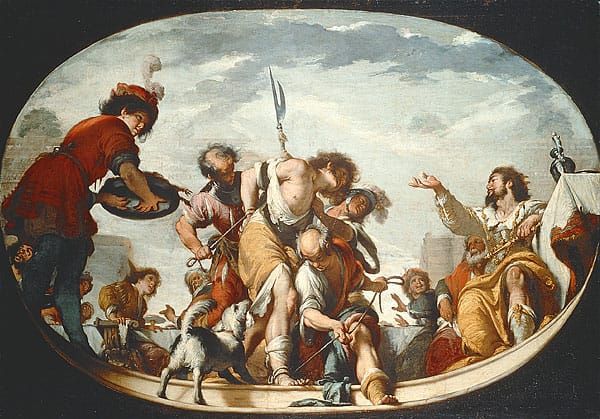
There is a moment in the parable more searching than the burning of the city or the slaughter of the servants, and it comes when the hall is already full. The king enters, walks among guests gathered indiscriminately from the streets, and stops before a single man: "My friend, how is it that you came in here without a wedding garment?" And that man, we are told, "was reduced to silence." The soul that reads this attentively will feel the question turn inward, for the man is not an outsider. He accepted. He came. He is seated at the feast.
Everything in the readings insists first upon what the soul cannot do for itself. Through Ezekiel the Lord promises, "I will sprinkle clean water upon you to cleanse you from all your impurities," and then, more astonishing still, "I will give you a new heart and place a new spirit within you, taking from your bodies your stony hearts and giving you natural hearts." The Catechism states the same truth without ornament: "The human heart is heavy and hardened. God must give man a new heart." The garment, then, is not woven by the guest. It is handed to him at the door, freely, as the whole banquet is free, for the servants gathered "bad and good alike" from the crossroads and asked no credential of any of them. It symbolizes, as Pope Francis taught, "the mercy that God freely gives us, namely, grace."
Yet the king's question stands, and it is the mercy of the parable that he asks it before he judges. Grace freely given may be freely neglected, and the neglect is seldom dramatic. Those first invited did not curse the king; most of them simply made light of the summons and went away, "one to his farm, another to his business." The farm was real. The business was real. This is precisely the difficulty: the soul is rarely lost through a single black refusal, but through a long series of reasonable preferences, each of which seems, at the hour it is made, too small to matter.
What, then, is this garment that must be worn and can be lost? Chrysostom answers with a brevity that leaves nothing to hide behind: "For the garment is life and practice." The Catechism says it in another key — "Words are not enough, deeds are required." The mercy is given; the wearing of it is the work of a lifetime. And the work is not grand. It is the forgiveness received on Saturday made visible in the tone of voice used on Monday; it is honesty kept when a small lie would cost nothing; it is patience with the person whose faults one knows too well; it is the charity performed where no one is counting. The man in the parable had every gift of the king and had let it come to nothing in his conduct, and so he had no answer to give.
The Psalm supplies the posture in which such a garment is kept clean, and it is a posture of asking rather than of asserting: "A clean heart create for me, O God." The soul that keeps its garment is not the soul that never soils it, but the soul that returns quickly, without excuse and without delay, knowing that "My sacrifice, O God, is a contrite spirit." To this Clement of Rome adds the reason such returning is never in vain: "Let us fix our eyes on Christ's blood and understand how precious it is to his Father, for, poured out for our salvation it has brought to the whole world the grace of repentance."
"Many are invited, but few are chosen" is a hard sentence, but it is not a sentence of despair, for the fewness is nowhere traced to any narrowness in the king. He sent, and sent again, and when he was refused he threw the doors wider still. What Scripture holds out at the end of this road it can only describe in images — "life, light, peace, wedding feast, wine of the kingdom, the Father's house, the heavenly Jerusalem, paradise" — and it is toward that hall, and not away from it, that every invitation of God is aimed. The garment is already upon the soul's shoulders. It remains only to live as one dressed for such a feast.
Lord, you have clothed me in a garment I did not weave and seated me at a table I did not deserve. Create in me a clean heart, and take from me whatever in me is still of stone. Let the mercy I have received today be visible tomorrow in what I do and in how I speak. Through Christ our Lord. Amen.
Sources & References
- "I will sprinkle clean water upon you to cleanse you from all your impurities" / "I will give you a new heart and place a new spirit within you, taking from your bodies your stony hearts and giving you natural hearts" — Ezekiel 36:25-26, from the First Reading, Ezekiel 36:23-28
- "A clean heart create for me, O God" / "My sacrifice, O God, is a contrite spirit" — Psalm 51:12, 19, from the Responsorial Psalm, Psalm 51:12-13, 14-15, 18-19
- "My friend, how is it that you came in here without a wedding garment?" / "was reduced to silence" / "one to his farm, another to his business" / "bad and good alike" / "Many are invited, but few are chosen" — Matthew 22:1-14, the Gospel
- "The human heart is heavy and hardened. God must give man a new heart." — Catechism of the Catholic Church, 1432
- "Words are not enough, deeds are required." — Catechism of the Catholic Church, 546
- "life, light, peace, wedding feast, wine of the kingdom, the Father's house, the heavenly Jerusalem, paradise" — Catechism of the Catholic Church, 1027
- "For the garment is life and practice." — St. John Chrysostom, Homily 69 on the Gospel of Matthew (Nicene and Post-Nicene Fathers, First Series, Vol. 10)
- "Let us fix our eyes on Christ's blood and understand how precious it is to his Father, for, poured out for our salvation it has brought to the whole world the grace of repentance." — St. Clement of Rome, Epistle to the Corinthians 7:4, as cited in Catechism of the Catholic Church, 1432
- "the mercy that God freely gives us, namely, grace" — Pope Francis, Angelus, 11 October 2020, cited in Vatican News, "Word of the Day," 20 August 2026
- Readings and liturgical day: USCCB Daily Readings, 20 August 2026
El vestido que no tejimos
📖 Sagrada Escritura Diaria
Jueves, 20 de agosto de 2026 — Memoria de San Bernardo, abad y doctor de la Iglesia
Lecturas: Ezequiel 36, 23-28 • Salmo 50, 12-13. 14-15. 18-19 • Mateo 22, 1-14
Hay en la parábola un momento más penetrante que el incendio de la ciudad o la muerte de los criados, y llega cuando la sala ya está llena. El rey entra, recorre a los convidados reunidos sin distinción en los caminos, y se detiene ante un solo hombre: "Amigo, ¿cómo has entrado aquí sin traje de fiesta?" Y aquel hombre, se nos dice, "se quedó callado". El alma que lee esto con atención sentirá que la pregunta se vuelve hacia dentro, porque ese hombre no es un extraño. Aceptó. Vino. Está sentado al banquete.
Todo en las lecturas insiste primero en aquello que el alma no puede darse a sí misma. Por boca de Ezequiel promete el Señor: "Los rociaré con agua pura y quedarán purificados"; y luego, más admirable todavía: "Les daré un corazón nuevo y les infundiré un espíritu nuevo; arrancaré de ustedes el corazón de piedra y les daré un corazón de carne". El Catecismo dice la misma verdad sin adorno alguno: "El corazón del hombre es torpe y endurecido. Es preciso que Dios dé al hombre un corazón nuevo". El vestido, pues, no lo teje el convidado. Se le entrega a la puerta, gratuitamente, como gratuito es el banquete entero, porque los criados reunieron a "malos y buenos" en los cruces de los caminos y a ninguno le pidieron credencial. Simboliza, como enseñó el papa Francisco, "la misericordia que Dios nos da gratuitamente, es decir, la gracia".
Y sin embargo la pregunta del rey permanece, y es misericordia de la parábola que la haga antes de juzgar. La gracia dada gratuitamente puede ser gratuitamente descuidada, y ese descuido rara vez es dramático. Los primeros invitados no maldijeron al rey; la mayoría simplemente "no hicieron caso" y se marcharon: "Uno se fue a su campo, otro a su negocio". El campo era real. El negocio era real. Ahí está justamente la dificultad: el alma no suele perderse por una sola negativa rotunda, sino por una larga serie de preferencias razonables, cada una de las cuales parece, en la hora en que se hace, demasiado pequeña para importar.
¿Qué es, entonces, este vestido que hay que llevar puesto y que puede perderse? Crisóstomo responde con una brevedad que no deja dónde esconderse: "Porque el vestido es la vida y las obras". El Catecismo lo dice en otro tono: "las palabras no bastan, hacen falta obras". La misericordia se da; llevarla puesta es la tarea de toda una vida. Y esa tarea no es grandiosa. Es el perdón recibido el sábado hecho visible en el tono de voz del lunes; es la honradez mantenida cuando una pequeña mentira no costaría nada; es la paciencia con la persona cuyos defectos uno conoce demasiado bien; es la caridad hecha allí donde nadie lleva la cuenta. Aquel hombre de la parábola había recibido del rey todos los dones y los había dejado reducirse a nada en su conducta; por eso no tuvo nada que responder.
El salmo ofrece la actitud en que semejante vestido se conserva limpio, y es una actitud de súplica y no de afirmación propia: "Crea en mí, Señor, un corazón puro". El alma que conserva su vestido no es la que nunca lo mancha, sino la que vuelve pronto, sin excusas y sin demora, sabiendo que "a un corazón contrito, tú nunca lo desprecias". A esto añade san Clemente Romano la razón por la cual ese volver nunca es en vano: "Tengamos los ojos fijos en la sangre de Cristo y comprendamos cuán preciosa es a su Padre, porque, habiendo sido derramada para nuestra salvación, ha conseguido para el mundo entero la gracia del arrepentimiento".
"Muchos son los llamados y pocos los escogidos" es una frase dura, pero no es una frase de desesperación, porque esa escasez no se atribuye en ninguna parte a estrechez alguna del rey. Envió, y volvió a enviar, y cuando fue rechazado abrió las puertas más de par en par. Lo que la Escritura tiende al final de este camino sólo puede describirlo en imágenes — "vida, luz, paz, banquete de bodas, vino del reino, casa del Padre, Jerusalén celeste, paraíso" — y hacia esa sala, y no lejos de ella, apunta toda invitación de Dios. El vestido ya está sobre los hombros del alma. Sólo queda vivir como quien va vestido para semejante fiesta.
Señor, me has vestido con un traje que yo no tejí y me has sentado a una mesa que no merecía. Crea en mí un corazón puro y quita de mí cuanto todavía sea de piedra. Que la misericordia que hoy he recibido se vea mañana en lo que haga y en cómo hable. Por Jesucristo nuestro Señor. Amén.
Fuentes y referencias
- "Los rociaré con agua pura y quedarán purificados" / "Les daré un corazón nuevo y les infundiré un espíritu nuevo; arrancaré de ustedes el corazón de piedra y les daré un corazón de carne" — Ezequiel 36, 25-26, de la Primera Lectura, Ezequiel 36, 23-28
- "Crea en mí, Señor, un corazón puro" / "a un corazón contrito, tú nunca lo desprecias" — Salmo 50, 12. 19, del Salmo Responsorial, Salmo 50, 12-13. 14-15. 18-19
- "Amigo, ¿cómo has entrado aquí sin traje de fiesta?" / "se quedó callado" / "Uno se fue a su campo, otro a su negocio" / "malos y buenos" / "Muchos son los llamados y pocos los escogidos" — Mateo 22, 1-14, el Evangelio
- "El corazón del hombre es torpe y endurecido. Es preciso que Dios dé al hombre un corazón nuevo." — Catecismo de la Iglesia Católica, 1432
- "las palabras no bastan, hacen falta obras" — Catecismo de la Iglesia Católica, 546
- "vida, luz, paz, banquete de bodas, vino del reino, casa del Padre, Jerusalén celeste, paraíso" — Catecismo de la Iglesia Católica, 1027
- "Porque el vestido es la vida y las obras." — San Juan Crisóstomo, Homilía 69 sobre el Evangelio de san Mateo (Nicene and Post-Nicene Fathers, 1.ª serie, vol. 10)
- "Tengamos los ojos fijos en la sangre de Cristo y comprendamos cuán preciosa es a su Padre, porque, habiendo sido derramada para nuestra salvación, ha conseguido para el mundo entero la gracia del arrepentimiento." — San Clemente Romano, Epistula ad Corinthios 7, 4, citado en el Catecismo de la Iglesia Católica, 1432
- "la misericordia que Dios nos da gratuitamente, es decir, la gracia" — Papa Francisco, Ángelus, 11 de octubre de 2020, citado en Vatican News, "Palabra del día", 20 de agosto de 2026
- Lecturas y día litúrgico: Lecturas Diarias de la USCCB, 20 de agosto de 2026