
📖 Daily Scripture
Saturday, September 5, 2026 — Saturday of the Twenty-second Week in Ordinary Time
Readings: 1 Corinthians 4:6b-15 • Psalm 145:17-18, 19-20, 21 • Luke 6:1-5
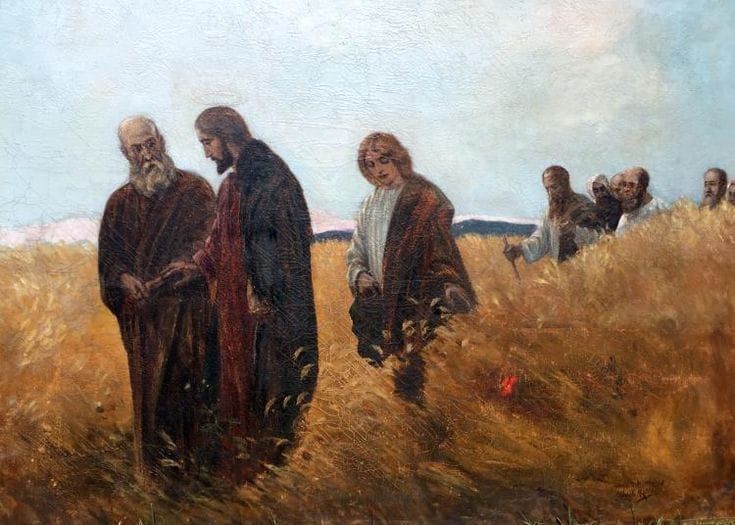
A field of ripe grain, a footpath running through it, and men walking hungry on a sabbath morning: the scene is so ordinary that it is easy to pass over the quiet violence of what happens next. The disciples pluck a few heads of grain, rub them between their palms as any traveller would, and eat. Nothing is taken that the law of Israel did not permit a passer-by to take. And yet the field becomes a courtroom, and the question is put not to a thief but to the Lord.
It would be a comfort to imagine that those who asked the question were wicked men. They were not. They were careful men, men who had made the law their whole study and their whole pride, and it is precisely there that the danger lay. A gift held long enough begins to feel like a possession, and a possession must be defended. The sabbath had been given to Israel as relief — as a halt to endless labour, as a day of protest against the servitude of work and the worship of money — and by slow degrees it had been turned into one more burden laid upon the backs of the hungry. This is how devotion sours: not by open rebellion, but by the letter quietly outliving the love that gave it.
Christ answers by remembering David, who ate the bread of offering when he and his men were hungry. The appeal is not to laxity but to a deeper reading of the same law. The sabbath was made for man, not man for the sabbath. It is the day of the Lord of mercies and a day to honor God — and these two are never in competition, for the God who is honored is merciful, and to be merciful on his day is to honor him rightly. The Son of Man is lord even of the sabbath: the law has an Author, and he has not abandoned it to those who would use it as a rod.
Saint Paul, writing to a church grown proud of its teachers, exposes the same wound from another side. Who confers distinction upon you? What do you possess that you have not received? The question cuts deeper than it first appears. If the soul's faith, its discipline, its very appetite for holiness are all received — and they are — then not one of them can honestly be held up as a title of superiority over anyone at all. The moment a man forgets that his religion was given to him, he begins to use it to measure his neighbour, and he will always find his neighbour short.
Here, then, is the plain lesson to be carried out of the grainfield. Observance that has not made the soul gentler toward the hungry has gone wrong somewhere, however exact it may be. Paul offers the test in a single line: when ridiculed, we bless; when persecuted, we endure; when slandered, we respond gently. Let the soul apply that measure to itself long before it applies any measure to another. Not — have I kept the day? — but, has the day made me kind?
For the rest that the sabbath promised was never merely an idleness of the body. Those who lived according to the old order of things have come to a new hope, no longer keeping the sabbath, but the Lord's Day, in which our life is blessed by him and by his death. In Christ's Passover, Sunday fulfills the spiritual truth of the Jewish sabbath and announces man's eternal rest in God. Every quiet Sunday is a rehearsal of that country where, as Augustine promised, there we shall rest and see, see and love, love and praise.
The grain still lies in the disciples' hands, and the Lord of the sabbath stands between them and their accusers. He stands there for the soul still.
Lord of the sabbath, teach me to receive all that I am and all that I have as your gift, and never to make of your law a wall between myself and the hungry. Soften in me whatever has hardened, and make my observance a door rather than a barrier. Grant me at the last the rest you have promised, and within me now the peace of knowing that you are near to all who call upon you. Through Christ our Lord. Amen.
Sources & References
- "Who confers distinction upon you? What do you possess that you have not received?" — 1 Corinthians 4:7
- "When ridiculed, we bless; when persecuted, we endure; when slandered, we respond gently." — 1 Corinthians 4:12-13
- "The Lord is near to all who call upon him." — Psalm 145:18 (Responsorial refrain)
- "The Son of Man is lord of the sabbath." — Luke 6:5
- "a day of protest against the servitude of work and the worship of money" — Catechism of the Catholic Church, 2172
- "The sabbath was made for man, not man for the sabbath"; "The sabbath is the day of the Lord of mercies and a day to honor God"; "The Son of Man is lord even of the sabbath." — Catechism of the Catholic Church, 2173 (citing Mark 2:27-28)
- "In Christ's Passover, Sunday fulfills the spiritual truth of the Jewish sabbath and announces man's eternal rest in God." — Catechism of the Catholic Church, 2175
- "Those who lived according to the old order of things have come to a new hope, no longer keeping the sabbath, but the Lord's Day, in which our life is blessed by him and by his death." — St. Ignatius of Antioch, Letter to the Magnesians 9:1, as cited in Catechism of the Catholic Church, 2175
- "There we shall rest and see, see and love, love and praise." — St. Augustine, The City of God, Book XXII, ch. 30
- Readings: Lectionary for Mass, no. 436 — USCCB Daily Readings, September 5, 2026
- Papal insight: Pope Francis, Homily of 31 October 2014, as published in Vatican News, "Word of the Day," 5 September 2026
El grano en sus manos
📖 Sagrada Escritura Diaria
Sábado, 5 de septiembre de 2026 — Sábado de la XXII semana del Tiempo Ordinario
Lecturas: 1 Corintios 4, 6-15 • Salmo 144, 17-18. 19-20. 21 • Lucas 6, 1-5
Un sembrado maduro, un sendero que lo atraviesa y unos hombres que caminan con hambre en una mañana de sábado: la escena es tan corriente que resulta fácil pasar por alto la silenciosa violencia de lo que sucede después. Los discípulos arrancan unas cuantas espigas, las restriegan entre las palmas como haría cualquier caminante, y comen. No toman nada que la ley de Israel no permitiera tomar a quien pasaba. Y sin embargo el sembrado se convierte en tribunal, y la pregunta no se dirige a un ladrón, sino al Señor.
Sería un consuelo imaginar que quienes hicieron aquella pregunta eran hombres malvados. No lo eran. Eran hombres escrupulosos, hombres que habían hecho de la ley todo su estudio y todo su orgullo, y precisamente allí estaba el peligro. Un don retenido durante mucho tiempo empieza a sentirse como una posesión, y toda posesión ha de defenderse. El sábado había sido dado a Israel como alivio —como interrupción del trabajo incesante, como día de protesta contra las servidumbres del trabajo y el culto al dinero— y poco a poco se había convertido en una carga más colocada sobre las espaldas de los hambrientos. Así se agría la devoción: no por rebelión abierta, sino porque la letra sobrevive calladamente al amor que la engendró.
Cristo responde recordando a David, que comió los panes sagrados cuando él y sus hombres tenían hambre. La apelación no es a la relajación, sino a una lectura más honda de la misma ley. El sábado ha sido instituido para el hombre y no el hombre para el sábado. Es el día del Señor de las misericordias y del honor de Dios, y ambas cosas nunca compiten entre sí, porque el Dios a quien se honra es misericordioso, y ser misericordioso en su día es honrarlo rectamente. El Hijo del hombre también es dueño del sábado: la ley tiene un Autor, y él no la ha abandonado en manos de quienes la usarían como vara.
San Pablo, escribiendo a una iglesia envanecida de sus maestros, descubre la misma herida por otro costado. ¿Quién te ha hecho superior a los demás? ¿Qué tienes, que no lo hayas recibido? La pregunta corta más hondo de lo que parece a primera vista. Si la fe del alma, su disciplina, su mismo apetito de santidad, todo ha sido recibido —y así es—, entonces ninguna de esas cosas puede alzarse honradamente como título de superioridad sobre nadie. En el instante en que un hombre olvida que su religión le fue dada, comienza a usarla para medir a su prójimo, y siempre hallará corto a su prójimo.
He aquí, pues, la lección sencilla que hay que llevarse del sembrado. La observancia que no ha vuelto al alma más benigna con los hambrientos se ha extraviado en algún punto, por exacta que sea. San Pablo ofrece la prueba en una sola línea: nos maldicen y nosotros les deseamos el bien; nos persiguen y los soportamos; nos calumnian y correspondemos con bondad. Que el alma se aplique esa medida a sí misma mucho antes de aplicar medida alguna a otro. No: ¿he guardado el día?, sino: ¿me ha hecho el día más bondadoso?
Porque el descanso que el sábado prometía nunca fue mera ociosidad del cuerpo. Los que vivían según el antiguo orden de cosas llegaron a una esperanza nueva, no guardando ya el sábado, sino viviendo según el domingo, en el que también nuestra vida ha sido bendecida por Él y por su muerte. En la Pascua de Cristo, el domingo realiza plenamente la verdad espiritual del sábado judío y anuncia el descanso eterno del hombre en Dios. Cada domingo callado es un ensayo de aquella patria donde, como prometió san Agustín, allí descansaremos y veremos, veremos y amaremos, amaremos y alabaremos.
El grano sigue en las manos de los discípulos, y el Señor del sábado se interpone entre ellos y sus acusadores. Allí sigue de pie por el alma.
Señor del sábado, enséñame a recibir como don tuyo todo lo que soy y todo lo que tengo, y a no hacer nunca de tu ley un muro entre los hambrientos y yo. Ablanda en mí cuanto se ha endurecido, y haz que mi observancia sea puerta y no barrera. Concédeme al fin el descanso que has prometido, y dentro de mí, desde ahora, la paz de saber que estás cerca de quien te invoca. Por Jesucristo nuestro Señor. Amén.
Fuentes y referencias
- "¿Quién te ha hecho superior a los demás? ¿Qué tienes, que no lo hayas recibido?" — 1 Corintios 4, 7
- "Nos maldicen y nosotros les deseamos el bien; nos persiguen y los soportamos; nos calumnian y correspondemos con bondad." — 1 Corintios 4, 12-13
- "El Señor cuida de quienes lo aman." — Salmo 144, 18 (antífona responsorial)
- "El Hijo del hombre también es dueño del sábado." — Lucas 6, 5
- "un día de protesta contra las servidumbres del trabajo y el culto al dinero" — Catecismo de la Iglesia Católica, 2172
- "El sábado ha sido instituido para el hombre y no el hombre para el sábado"; "El sábado es el día del Señor de las misericordias y del honor de Dios." — Catecismo de la Iglesia Católica, 2173 (citando Mc 2, 27-28)
- "Realiza plenamente, en la Pascua de Cristo, la verdad espiritual del sábado judío y anuncia el descanso eterno del hombre en Dios." — Catecismo de la Iglesia Católica, 2175
- "no guardando ya el sábado, sino viviendo según el domingo, en el que también nuestra vida ha sido bendecida por Él y por su muerte" — San Ignacio de Antioquía, Carta a los Magnesios 9, 1, citado en el Catecismo de la Iglesia Católica, 2175
- "Allí descansaremos y veremos, veremos y amaremos, amaremos y alabaremos." — San Agustín, La Ciudad de Dios, libro XXII, cap. 30
- Lecturas: Leccionario, n. 436 — Lecturas diarias de la USCCB, 5 de septiembre de 2026
- Comentario papal: Papa Francisco, Homilía del 31 de octubre de 2014, publicada en Vatican News, "Palabra del día", 5 de septiembre de 2026