
📖 Daily Scripture
Sunday, October 4, 2026 — Twenty-seventh Sunday in Ordinary Time
Readings: Isaiah 5:1-7 • Psalm 80:9, 12, 13-14, 15-16, 19-20 • Philippians 4:6-9 • Matthew 21:33-43
There is a tenderness in the way the prophet begins, as though he could not come to his grievance except by way of a song. He sings of his friend's vineyard: the stones carried out by hand, the choice vines set in the cleared earth, the watchtower raised, the winepress hewn in the rock. Nothing is wanting; nothing is grudged. And the Gospel repeats the same careful inventory — the hedge set round about, the press dug, the tower built — before it comes at last to the one thing lacking, which is the fruit.
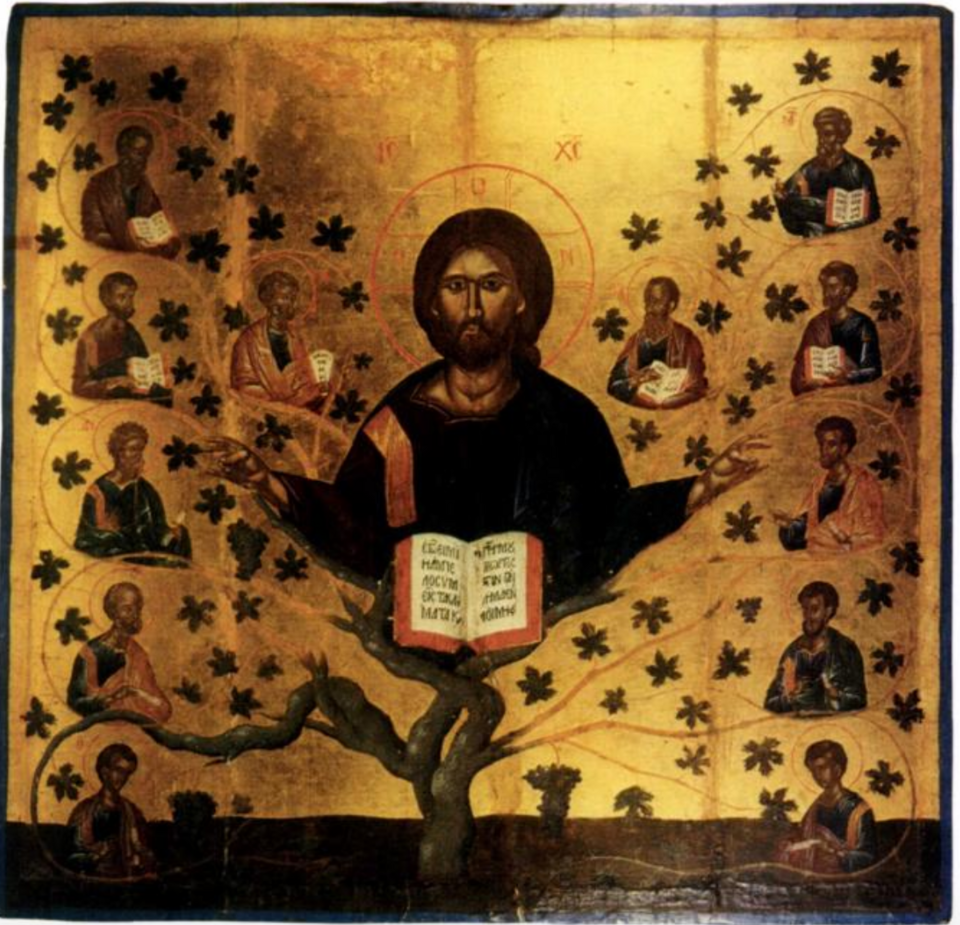
The soul does well to linger over that inventory before hurrying on to the judgment at the end, for the inventory is its own. Whatever it possesses it has received: the hours of its life, the faith it did not invent, the affections by which it loves at all. The Church has always understood herself as a choice vineyard planted by the heavenly cultivator; yet she has never confused the planting with the Planter, for "the true vine is Christ who gives life and fruitfulness to the branches, that is, to us, who through the Church remain in Christ, without whom we can do nothing."
What, then, was the sin of the tenants? Not idleness merely, for the idle may still be busy from morning to night. Their fault lay further back, in a forgetting so gradual that they could not have named the day it began — the day on which the vineyard stopped being lent and began, in their own minds, to be owned. Each servant who came for the rent carried, simply by arriving, the unwelcome news that the land was not theirs; and it is a short road from that resentment to the son lying dead in the dust of his father's own field.
Here is the lesson, and it stands nearer to the soul than any vineyard. Ingratitude is not a small coldness of temperament; it is the first step of a long violence, for one who believes he has made himself will in the end defend what he thinks he has made, and defend it against God. The Holy Father has said plainly that ingratitude generates violence and takes peace away, while a simple word of thanks can restore it. The duty laid upon the soul this day is therefore modest and searching at once: to say, deliberately and by name, what has been given to it, and to say it to Someone.
The Apostle writes to the Philippians out of a prison and bids them have no anxiety at all, but in everything, by prayer and petition, with thanksgiving, to make their requests known to God; and the promise he attaches is worth weighing: "the peace of God that surpasses all understanding will guard your hearts and minds in Christ Jesus." It is not a peace achieved, but a peace posted like a sentry over a gate the soul cannot hold alone. And since, as the Church teaches, "every event and need can become an offering of thanksgiving," no hour is too ordinary for the rent to be paid. Prayer, as the great bishop of Constantinople insisted, "is possible even while walking in public or strolling alone, or seated in your shop, while buying or selling, or even while cooking." The fruit of this vineyard is not grown in extraordinary seasons; it is grown in the common hours. Nor is the harvest God's work alone, for the Church says with Augustine that "God created us without us: but he did not will to save us without us." Grace does not dispense with the hand; it lends the hand its strength.
And the parable, which seems to end in dispossession, ends in fact in architecture. "The Lord compared himself to the stone which the builders rejected, but which was made into the corner-stone." What the tenants threw over the wall, God laid at the corner of a new house, and the kingdom passed to a people that would produce its fruit. The Owner of the vineyard has not withdrawn to count His losses; He is still sending, still standing at the gate of a soul long slow with its rent, and the last messenger He sends is His own Son. Whatever the vintage of the past has been, this morning the ground is leased again, and leased by Love.
Lord, You planted what I did not plant and fenced what I could not guard. Teach me to hold nothing of mine as mine, and to render You today, from this hour and in this place, the small fruit it is able to bear. Let gratitude take root within me where I have grown hard, and let Your peace stand sentry over my heart. Through Christ our Lord. Amen.
Sources & References
- "Let me now sing of my friend, my friend's song concerning his vineyard" — Isaiah 5:1 (First Reading, Isaiah 5:1-7)
- "He looked for judgment, but see, bloodshed!" — Isaiah 5:7
- "The vineyard of the Lord is the house of Israel" — Responsorial Psalm 80:9, 12, 13-14, 15-16, 19-20 (refrain)
- "Have no anxiety at all, but in everything, by prayer and petition, with thanksgiving, make your requests known to God" and "the peace of God that surpasses all understanding will guard your hearts and minds in Christ Jesus" — Philippians 4:6-7 (Second Reading, Philippians 4:6-9)
- "There was a landowner who planted a vineyard, put a hedge around it, dug a wine press in it, and built a tower" — Matthew 21:33 (Gospel, Matthew 21:33-43)
- "The stone that the builders rejected has become the cornerstone" and "the kingdom of God will be taken away from you and given to a people that will produce its fruit" — Matthew 21:42-43
- "The true vine is Christ who gives life and fruitfulness to the branches, that is, to us, who through the Church remain in Christ, without whom we can do nothing" — Catechism of the Catholic Church, 755
- "The Lord compared himself to the stone which the builders rejected, but which was made into the corner-stone. On this foundation the Church is built by the apostles" — Catechism of the Catholic Church, 756
- "As in the prayer of petition, every event and need can become an offering of thanksgiving" — Catechism of the Catholic Church, 2638
- "God created us without us: but he did not will to save us without us" — St. Augustine, Sermo 169, 11, 13 (PL 38, 923), quoted in Catechism of the Catholic Church, 1847
- "It is possible to offer fervent prayer even while walking in public or strolling alone, or seated in your shop, . . . while buying or selling, . . . or even while cooking" — St. John Chrysostom, Ecloga de oratione 2 (PG 63, 585), quoted in Catechism of the Catholic Church, 2743
- "Ungratefulness generates violence, it takes peace away" and "Jesus reminds us what happens when people deceive themselves into thinking that they are self-made, and they forget to be grateful" — Pope Francis, Angelus, 8 October 2023, carried as the Vatican News "Word of the Day" for 4 October 2026
La cerca alrededor de la viña
📖 Sagrada Escritura Diaria
Domingo 4 de octubre de 2026 — XXVII Domingo ordinario
Lecturas: Isaías 5, 1-7 • Salmo 79, 9 y 12. 13-14. 15-16. 19-20 • Filipenses 4, 6-9 • Mateo 21, 33-43
Hay una ternura en el modo en que comienza el profeta, como si no pudiera llegar a su queja sino por el camino de un canto. Canta la viña de su amado: las piedras retiradas a mano, las cepas selectas plantadas en la tierra limpia, la torre levantada, el lagar excavado en la roca. Nada falta; nada se escatima. Y el Evangelio repite el mismo inventario cuidadoso — la cerca puesta alrededor, el lagar cavado, la torre construida — antes de llegar por fin a lo único que falta, que es el fruto.
Bien hace el alma en detenerse en ese inventario antes de correr al juicio del final, porque el inventario es el suyo propio. Todo lo que posee lo ha recibido: las horas de su vida, la fe que no inventó, los afectos por los cuales ama siquiera. La Iglesia se ha comprendido siempre así, pues "el labrador del cielo la plantó como viña selecta"; y sin embargo nunca ha confundido la plantación con el que planta, porque "la verdadera vid es Cristo, que da vida y fecundidad a los sarmientos, es decir, a nosotros, que permanecemos en él por medio de la Iglesia y que sin él no podemos hacer nada".
¿Cuál fue, entonces, el pecado de los viñadores? No la simple pereza, pues los ociosos pueden estar ocupados de la mañana a la noche. Su falta estaba más atrás, en un olvido tan gradual que no habrían podido señalar el día en que empezó: el día en que la viña dejó de estar prestada y comenzó, en su propia mente, a ser poseída. Cada siervo que venía por la renta traía, por el solo hecho de llegar, la noticia inoportuna de que la tierra no era suya; y es corto el camino que va de ese resentimiento al hijo tendido muerto en el polvo del campo de su propio padre.
Aquí está la lección, y se halla más cerca del alma que cualquier viña. La ingratitud no es una pequeña frialdad de temperamento; es el primer paso de una larga violencia, pues quien cree haberse hecho a sí mismo defenderá al final lo que piensa haber hecho, y lo defenderá contra Dios. El Santo Padre lo ha dicho sin rodeos: "¡La ingratitud genera violencia, nos roba la paz!", mientras que un simple "gracias" puede restablecerla. Por eso el deber que se impone al alma en este día es a la vez modesto y penetrante: decir, deliberadamente y por su nombre, lo que le ha sido dado, y decírselo a Alguien.
El Apóstol escribe a los filipenses desde una prisión y les dice que no se inquieten por nada, sino que presenten en toda ocasión sus peticiones a Dios en la oración y la súplica, llenos de gratitud; y vale la pena pesar la promesa que añade: "la paz de Dios, que sobrepasa toda inteligencia, custodie sus corazones y sus pensamientos en Cristo Jesús". No es una paz conquistada, sino una paz apostada como centinela ante una puerta que el alma no puede guardar sola. Y puesto que, como enseña la Iglesia, "todo acontecimiento y toda necesidad pueden convertirse en ofrenda de acción de gracias", no hay hora demasiado ordinaria para pagar la renta. La oración, como insistió el gran obispo de Constantinopla, es siempre posible: "Conviene que el hombre ore atentamente, bien estando en la plaza o mientras da un paseo: igualmente el que está sentado ante su mesa de trabajo o el que dedica su tiempo a otras labores, que levante su alma a Dios". El fruto de esta viña no se cría en estaciones extraordinarias; se cría en las horas comunes. Ni es la cosecha obra de Dios solamente, pues la Iglesia dice con san Agustín que Dios, "que te ha creado sin ti, no te salvará sin ti". La gracia no dispensa de la mano; le presta su fuerza.
Y la parábola, que parece acabar en despojo, acaba en realidad en arquitectura. "El Señor mismo se comparó a la piedra que desecharon los constructores, pero que se convirtió en la piedra angular." Lo que los viñadores arrojaron por encima del muro, Dios lo puso en el ángulo de una casa nueva, y el Reino pasó a un pueblo que produjera sus frutos. El Dueño de la viña no se ha retirado a contar sus pérdidas; sigue enviando, sigue de pie ante la puerta de un alma atrasada por años en su renta, y el último mensajero que envía es su propio Hijo. Cualquiera que haya sido la vendimia del pasado, esta mañana la tierra se arrienda de nuevo, y se arrienda por Amor.
Señor, Tú plantaste lo que yo no planté y cercaste lo que yo no podía guardar. Enséñame a no tener por mío nada de lo mío, y a rendirte hoy, desde esta hora y en este lugar, el pequeño fruto que sea capaz de dar. Que la gratitud arraigue dentro de mí donde me he endurecido, y que tu paz quede de centinela sobre mi corazón. Por Jesucristo nuestro Señor. Amén.
Fuentes y referencias
- "Voy a cantar, en nombre de mi amado, una canción a su viña" — Isaías 5, 1 (Primera lectura, Isaías 5, 1-7)
- "Él esperaba que su viña diera buenas uvas, pero la viña dio uvas agrias" — Isaías 5, 2
- "La viña del Señor es la casa de Israel" — Salmo responsorial 79, 9 y 12. 13-14. 15-16. 19-20 (respuesta)
- "No se inquieten por nada; más bien presenten en toda ocasión sus peticiones a Dios en la oración y la súplica, llenos de gratitud" y "Y que la paz de Dios, que sobrepasa toda inteligencia, custodie sus corazones y sus pensamientos en Cristo Jesús" — Filipenses 4, 6-7 (Segunda lectura, Filipenses 4, 6-9)
- "Había una vez un propietario que plantó un viñedo, lo rodeó con una cerca" — Mateo 21, 33 (Evangelio, Mateo 21, 33-43)
- "La piedra que desecharon los constructores, es ahora la piedra angular" y "les será quitado a ustedes el Reino de Dios y se le dará a un pueblo que produzca sus frutos" — Mateo 21, 42-43
- "El labrador del cielo la plantó como viña selecta" y "La verdadera vid es Cristo, que da vida y fecundidad a los sarmientos, es decir, a nosotros, que permanecemos en él por medio de la Iglesia y que sin él no podemos hacer nada" — Catecismo de la Iglesia Católica, 755
- "El Señor mismo se comparó a la piedra que desecharon los constructores, pero que se convirtió en la piedra angular. Los Apóstoles construyen la Iglesia sobre ese fundamento, que le da solidez y cohesión" — Catecismo de la Iglesia Católica, 756
- "Al igual que en la oración de petición, todo acontecimiento y toda necesidad pueden convertirse en ofrenda de acción de gracias" — Catecismo de la Iglesia Católica, 2638
- "Que te ha creado sin ti, no te salvará sin ti" — San Agustín, Sermo 169, 11, 13, citado en el Catecismo de la Iglesia Católica, 1847
- "Conviene que el hombre ore atentamente, bien estando en la plaza o mientras da un paseo: igualmente el que está sentado ante su mesa de trabajo o el que dedica su tiempo a otras labores, que levante su alma a Dios" — San Juan Crisóstomo, De Anna, sermón 4, 6, citado en el Catecismo de la Iglesia Católica, 2743
- "¡La ingratitud genera violencia, nos roba la paz, nos hace hablar gritando, sin paz, mientras que un simple 'gracias' puede restablecer la paz!" y "Jesús nos recuerda lo que sucede cuando el hombre se cree que se hace a sí mismo y olvida la gratitud" — Papa Francisco, Ángelus, 8 de octubre de 2023, recogido en la "Palabra del día" de Vatican News del 4 de octubre de 2026