
📖 Daily Scripture
Thursday, August 6, 2026 — Feast of the Transfiguration of the Lord
Readings: Daniel 7:9-10, 13-14 • Psalm 97:1-2, 5-6, 9 • 2 Peter 1:16-19 • Matthew 17:1-9
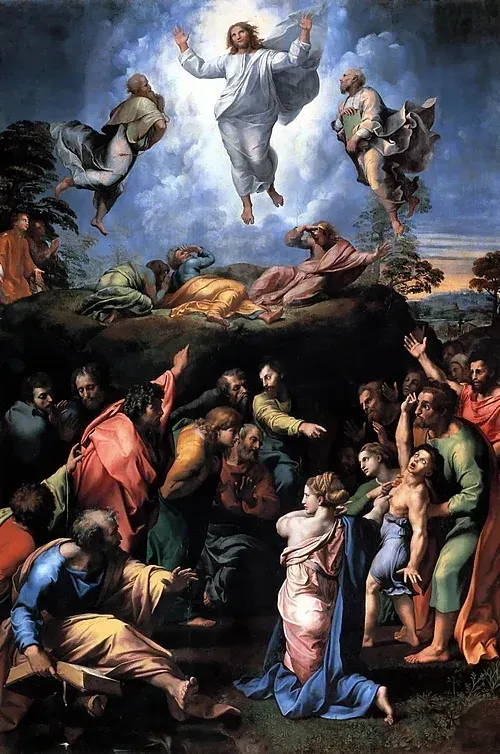
The Church sets before the soul today a vision that is deliberately brief. Three men are led up a high mountain, apart from the rest, and for the space of a few moments the veil is drawn back from a face they had looked upon every day without astonishment. The prophet had glimpsed something of it centuries before — thrones set up, the Ancient One taking his throne, a surging stream of fire flowing out from where he sat — and now that everlasting dominion, which shall not be taken away, stands before three fishermen in the person of a man whose clothes have become white as light. What is most instructive, however, is not the splendour itself but the shortness of it; and the soul that wishes to be taught by this feast must attend to the shortness as carefully as to the light.
For it is worth observing where in the Gospel this vision is set. It comes not at the opening of the Lord's ministry but at its turning, immediately after He has told His disciples plainly that He must go to Jerusalem, and suffer, and be killed, and on the third day be raised. On the threshold of the public life: the baptism; on the threshold of the Passover: the Transfiguration. The glory is granted precisely to those who have just been told of the cross, and it is granted for their sake, since Christ's Transfiguration aims at strengthening the apostles' faith in anticipation of his Passion: the ascent on to the "high mountain" prepares for the ascent to Calvary. A great pope and pastor of the early Church saw the matter with perfect clarity when he wrote that in this Transfiguration the foremost object was to remove the offense of the cross from the disciple's heart.
Here, then, is a lesson that reaches into the most ordinary week of an ordinary life. Consolation in prayer, the sudden sweetness that visits the soul at Mass or in the quiet of a long-neglected chapel, the unexpected certainty that God is real and near — these are not rewards for merit, and still less are they places to settle. For a moment Jesus discloses his divine glory, confirming Peter's confession. For a moment, and no longer. Peter's instinct was generous; he wished to build, to fix the hour in canvas and pole, to make permanent what had been given as passage. And to that proposal the Lord returned no answer at all. It was not wicked; it was simply out of order. The soul that measures its faith by the sweetness it feels will find its faith failing on the first grey morning, for the light was never given to be lived in. It was given to be walked by, afterward, in the dark.
An African bishop, preaching on this very scene, refused to soften the point, and the soul does well not to soften it either. Peter did not yet understand this when he wanted to remain with Christ on the mountain. It has been reserved for you, Peter, but for after death. For now, Jesus says: "Go down to toil on earth, to serve on earth, to be scorned and crucified on earth. Life goes down to be killed; Bread goes down to suffer hunger; the Way goes down to be exhausted on his journey; the Spring goes down to suffer thirst; and you refuse to suffer?" The mountain, then, is no refuge from the valley. It is the valley's preparation.
And notice what the voice from the cloud actually commands. It does not say gaze, nor remain, nor build. It says: This is my beloved Son, with whom I am well pleased; listen to him. One word, and that word an ordinary one — the sort of obedience available to anyone, on any day, without any vision whatever. What is seen on the mountain is meant to be obeyed in the kitchen, the office, the sickroom, and the long patience of a difficult marriage. There is the concrete work this feast asks: to let what was received in prayer be spent in duty, and to keep faith with a God who has withdrawn the consolation but never the command.
Nor is anything lost in the descending. The Transfiguration gives us a foretaste of Christ's glorious coming, when he will change our lowly body to be like his glorious body. What shone for an instant on that mountain is the pledge of what the soul itself is destined to become, and every act of hidden service between now and then is a step of that same ascent. The disciples fell on their faces and were very much afraid; but He came and touched them, and said, Rise, and do not be afraid. He says it still, to a soul weary of the plain, and He does not say it from a distance.
Lord, You gave Your light to Peter and took it away again, and he loved You still. Teach me to receive what You give without clutching at it, and to go down from the mountain when You send me. When the consolation is withdrawn, let obedience remain within me, and let Your voice be enough. Through Christ our Lord. Amen.
Sources & References
- "Thrones were set up and the Ancient One took his throne… his dominion is an everlasting dominion that shall not be taken away" — Daniel 7:9-10, 13-14 (First Reading, Feast of the Transfiguration)
- "The Lord is king, the Most High over all the earth" — Psalm 97:1-2, 5-6, 9 (Responsorial Psalm)
- "We did not follow cleverly devised myths… we had been eyewitnesses of his majesty" — 2 Peter 1:16-19 (Second Reading)
- "His face shone like the sun and his clothes became white as light"; "This is my beloved Son, with whom I am well pleased; listen to him"; "Rise, and do not be afraid" — Matthew 17:1-9 (Gospel)
- "On the threshold of the public life: the baptism; on the threshold of the Passover: the Transfiguration" — Catechism of the Catholic Church, 556
- "For a moment Jesus discloses his divine glory, confirming Peter's confession" — Catechism of the Catholic Church, 555
- "Christ's Transfiguration aims at strengthening the apostles' faith in anticipation of his Passion: the ascent on to the 'high mountain' prepares for the ascent to Calvary" — Catechism of the Catholic Church, 568
- "The Transfiguration gives us a foretaste of Christ's glorious coming, when he 'will change our lowly body to be like his glorious body'" — Catechism of the Catholic Church, 556 (citing Philippians 3:21)
- "In this Transfiguration the foremost object was to remove the offense of the cross from the disciple's heart" — St. Leo the Great, Sermon 51, III (trans. C. L. Feltoe, Nicene and Post-Nicene Fathers, Series II, Vol. 12)
- "Peter did not yet understand this when he wanted to remain with Christ on the mountain… Go down to toil on earth, to serve on earth, to be scorned and crucified on earth…" — St. Augustine, Sermo 78, 6 (PL 38, 492-493), as quoted in Catechism of the Catholic Church, 556
- Papal insight for this feast: "Peter, James and John contemplate a humble glory, which is not displayed as a spectacle for the crowds to see, but in solemn intimacy." — Pope Leo XIV, Angelus, 1 March 2026, as published in Vatican News, Word of the Day, 6 August 2026
La luz que desciende del monte
📖 Sagrada Escritura Diaria
Jueves 6 de agosto de 2026 — Fiesta de la Transfiguración del Señor
Lecturas: Daniel 7, 9-10. 13-14 • Salmo 96, 1-2. 5-6. 9 • 2 Pedro 1, 16-19 • Mateo 17, 1-9
La Iglesia pone hoy ante el alma una visión deliberadamente breve. Tres hombres son llevados a solas a un monte elevado, y por el espacio de unos pocos instantes se descorre el velo de un rostro que habían contemplado cada día sin asombro. El profeta había entrevisto algo de esto siglos antes — unos tronos colocados, un anciano sentado, un río de fuego que brotaba delante de él — y ahora aquella soberanía eterna, aquel poder que nunca se acabará, está de pie ante tres pescadores en la persona de un hombre cuyas vestiduras se han vuelto blancas como la nieve. Sin embargo, lo más instructivo no es el esplendor mismo, sino su brevedad; y el alma que desea ser enseñada por esta fiesta debe atender a la brevedad con el mismo cuidado con que atiende a la luz.
Conviene, en efecto, observar dónde se sitúa esta visión dentro del Evangelio. No viene al comienzo del ministerio del Señor, sino en su viraje, inmediatamente después de haber dicho Él a sus discípulos con toda claridad que debía ir a Jerusalén, y padecer, y ser condenado a muerte, y resucitar al tercer día. En el umbral de la vida pública se sitúa el Bautismo; en el de la Pascua, la Transfiguración. La gloria se concede precisamente a quienes acaban de oír hablar de la cruz, y se les concede por su bien, pues la Transfiguración de Cristo tiene por finalidad fortalecer la fe de los apóstoles ante la proximidad de la Pasión: la subida a un monte alto prepara la subida al Calvario. Un gran papa y pastor de la Iglesia antigua vio el asunto con perfecta claridad al escribir que en su transfiguración se trataba, sobre todo, de alejar de los corazones de sus discípulos el escándalo de la cruz.
He aquí, pues, una lección que alcanza la semana más ordinaria de una vida ordinaria. El consuelo en la oración, la dulzura repentina que visita al alma en la Misa o en el silencio de una capilla largo tiempo olvidada, la certeza inesperada de que Dios es real y está cerca: nada de esto es premio del mérito, y menos aún es lugar donde asentarse. Por un instante, Jesús muestra su gloria divina, confirmando así la confesión de Pedro. Por un instante, y no más. El impulso de Pedro era generoso: quería edificar, fijar la hora con lonas y varas, hacer permanente lo que había sido dado como paso. Y a aquella propuesta el Señor no respondió nada. No era mala; sencillamente estaba fuera de orden. El alma que mide su fe por la dulzura que siente verá desfallecer esa fe en la primera mañana gris, porque la luz nunca fue dada para habitar en ella. Fue dada para caminar después, a oscuras, por lo que en ella se vio.
Un obispo africano, predicando sobre esta misma escena, se negó a suavizar el punto, y el alma hará bien en no suavizarlo tampoco. Pedro no había comprendido eso cuando deseaba vivir con Cristo en la montaña. Te ha reservado eso, oh Pedro, para después de la muerte. Pero ahora, él mismo dice: Desciende para penar en la tierra, para servir en la tierra, para ser despreciado y crucificado en la tierra. La Vida desciende para hacerse matar; el Pan desciende para tener hambre; el Camino desciende para fatigarse andando; la Fuente desciende para sentir la sed; y tú, ¿vas a negarte a sufrir? El monte, por tanto, no es refugio frente al valle. Es la preparación del valle.
Y adviértase lo que la voz de la nube manda realmente. No dice contempla, ni permanece, ni edifica. Dice: Éste es mi Hijo muy amado, en quien tengo puestas mis complacencias; escúchenlo. Una sola palabra, y esa palabra la más ordinaria de todas — la clase de obediencia al alcance de cualquiera, cualquier día, sin visión alguna. Lo que se ve en el monte está destinado a obedecerse en la cocina, en la oficina, en el cuarto del enfermo y en la larga paciencia de un matrimonio difícil. Ésa es la obra concreta que esta fiesta pide: dejar que lo recibido en la oración se gaste en el deber, y guardar fidelidad a un Dios que ha retirado el consuelo, pero jamás el mandato.
Y nada se pierde al descender. La Transfiguración nos concede una visión anticipada de la gloriosa venida de Cristo, el cual transfigurará este miserable cuerpo nuestro en un cuerpo glorioso como el suyo. Lo que resplandeció un instante en aquel monte es la prenda de lo que el alma misma está destinada a llegar a ser, y cada acto de servicio escondido de aquí hasta entonces es un paso de esa misma subida. Los discípulos cayeron rostro en tierra, llenos de un gran temor; pero Él se acercó, los tocó y les dijo: Levántense y no teman. Sigue diciéndolo, al alma cansada de la llanura, y no lo dice desde lejos.
Señor, diste tu luz a Pedro y se la retiraste, y él siguió amándote. Enséñame a recibir lo que das sin aferrarme a ello, y a bajar del monte cuando Tú me envíes. Cuando se retire el consuelo, permanezca en mí la obediencia, y bástame tu voz. Por Jesucristo nuestro Señor. Amén.
Fuentes y referencias
- "Vi que colocaban unos tronos y un anciano se sentó… Su poder nunca se acabará, porque es un poder eterno" — Daniel 7, 9-10. 13-14 (Primera lectura, Fiesta de la Transfiguración)
- "Reina el Señor, alégrese la tierra" — Salmo 96, 1-2. 5-6. 9 (Salmo responsorial; numeración de la Vulgata, según el Leccionario que publica la USCCB en español)
- "No lo hicimos fundados en fábulas hechas con astucia, sino por haberlo visto con nuestros propios ojos en toda su grandeza" — 2 Pedro 1, 16-19 (Segunda lectura)
- "Su rostro se puso resplandeciente como el sol y sus vestiduras se volvieron blancas como la nieve"; "Éste es mi Hijo muy amado, en quien tengo puestas mis complacencias; escúchenlo"; "Levántense y no teman" — Mateo 17, 1-9 (Evangelio)
- "En el umbral de la vida pública se sitúa el Bautismo; en el de la Pascua, la Transfiguración" — Catecismo de la Iglesia Católica, 556
- "Por un instante, Jesús muestra su gloria divina, confirmando así la confesión de Pedro" — Catecismo de la Iglesia Católica, 555
- "La Transfiguración de Cristo tiene por finalidad fortalecer la fe de los apóstoles ante la proximidad de la Pasión: la subida a un «monte alto» prepara la subida al Calvario" — Catecismo de la Iglesia Católica, 568
- "La Transfiguración nos concede una visión anticipada de la gloriosa venida de Cristo «el cual transfigurará este miserable cuerpo nuestro en un cuerpo glorioso como el suyo»" — Catecismo de la Iglesia Católica, 556 (cf. Filipenses 3, 21)
- "En su transfiguración se trataba, sobre todo, de alejar de los corazones de sus discípulos el escándalo de la cruz" — San León Magno, Sermón 51, 3 (PL 54, 310C), citado por el Catecismo de la Iglesia Católica, 568
- "Pedro no había comprendido eso cuando deseaba vivir con Cristo en la montaña… Desciende para penar en la tierra, para servir en la tierra, para ser despreciado y crucificado en la tierra…" — San Agustín, Sermo 78, 6 (PL 38, 492-493), citado por el Catecismo de la Iglesia Católica, 556
- Comentario papal para esta fiesta: "Pedro, Santiago y Juan contemplan una gloria humilde, que no se exhibe como un espectáculo para las multitudes, sino como una confidencia solemne." — León XIV, Ángelus, 1 de marzo de 2026, publicado en Vatican News, Palabra del día, 6 de agosto de 2026