
📖 Daily Scripture
Tuesday, November 17, 2026 — Memorial of Saint Elizabeth of Hungary, Religious
Readings: Revelation 3:1-6, 14-22 • Psalm 15:2-3a, 3bc-4ab, 5 • Luke 19:1-10
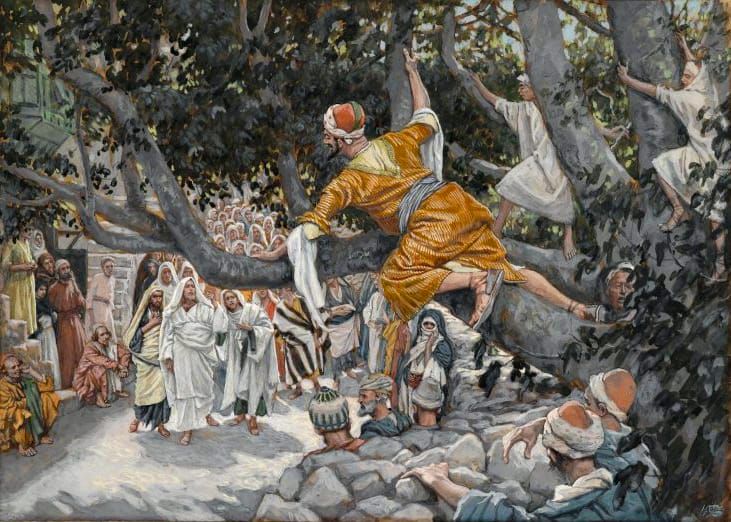
Two rich men are set before the soul today, and the contrast between them is the whole of the lesson. The first is not a man at all but a Church, the community at Laodicea, which looks upon its own condition with quiet complacency and says, “I am rich and affluent and have no need of anything.” The second is Zacchaeus, chief tax collector of Jericho, whose wealth had been gathered at the expense of his neighbors, and who nevertheless, knowing himself small in more than stature, ran ahead of the crowd and climbed a tree to see who Jesus was. The one possessed everything and wanted nothing; the other possessed much and wanted the one thing necessary. It is a sobering reflection that the first stood nearer to being cast out, and the second nearer to salvation.
The Lord’s complaint against Laodicea is not that it has fallen into open crime, but that it has grown tepid: “I know that you are neither cold nor hot.” The Catechism names this condition with a precision that leaves the soul little room for excuse, for “lukewarmness is hesitation or negligence in responding to divine love.” It is not hatred of God, nor even forgetfulness of Him, but a settled reluctance to let His love cost anything; a faith kept carefully at room temperature, admitted to the hours of worship and excluded from the ledger, the table, and the tongue. Sardis, too, had “the reputation of being alive,” and was dead. The danger of such a state lies precisely in its comfort, for the soul that feels no need will never climb a tree.
Yet the voice that rebukes is the voice that loves. “Those whom I love, I reprove and chastise,” says the faithful and true Witness, and almost in the same breath He offers the tenderest image in all the Apocalypse: “I stand at the door and knock. If anyone hears my voice and opens the door, then I will enter his house and dine with him.” What is promised to Laodicea is fulfilled in Jericho. Christ halts beneath the sycamore, looks up, and calls the sinner by name: “Zacchaeus, come down quickly, for today I must stay at your house.” Pope Francis, pondering this encounter, observed that “God does not pass by without looking for those who are lost,” and that the gaze of Jesus “is not one of reproach, but of mercy.” The Lord did not wait for Zacchaeus to become worthy of such a guest; His coming was itself what made him new.
Here the moral lesson presses upon the conscience with particular force. Zacchaeus did not answer the visit of Christ with sentiment alone. He stood and made a resolution that touched his money and his past: half of his possessions to the poor, and fourfold restitution to any he had defrauded. The Church sees in this the very pattern of true repentance, which is “a radical reorientation of our whole life, a return, a conversion to God with all our heart,” and she teaches plainly that “reparation for injustice committed requires the restitution of stolen goods to their owner.” A conversion that never reaches the purse, that never repairs a wrong done to a neighbor, that never unsays a slander or returns what was unjustly kept, has not yet come down from the tree. Saint John Chrysostom put the matter with his accustomed severity: “Not to enable the poor to share in our goods is to steal from them and deprive them of life.” The cure for lukewarmness, then, is not a warmer feeling but a concrete deed: some debt paid, some wrong repaired, some portion of one’s goods placed into the hands of the poor.
Saint Elizabeth of Hungary, whose memory the Church keeps today, understood this. A king’s daughter and a landgrave’s wife, she might have lived as Laodicea lived, rich and in need of nothing; instead she spent her goods, and at last herself, upon the sick and the hungry, and died at four-and-twenty in Marburg among the poor she had served. Her life is a commentary upon today’s Gospel: the soul that opens the door to Christ discovers that He enters with the poor in His company.
Let no soul conclude, therefore, that it has waited too long. Saint Augustine, who knew well the long delays of a divided heart, could still cry out, “Late have I loved you, O Beauty ever ancient, ever new.” The knock has not ceased. The Son of Man still comes “to seek and to save what was lost,” and wherever a door is opened to Him, however late, He speaks again the word He spoke in Jericho: “Today salvation has come to this house.”
Lord Jesus, You stand at the door of my heart and knock; do not let me answer You with a lukewarm and divided love. Teach me, as You taught Zacchaeus, to come down quickly, to repair what I have wronged, and to open my hands to the poor. Make Your home within me, and let Your salvation enter this house today. Through Christ our Lord. Amen.
Sources & References
- “The reputation of being alive” — Revelation 3:1
- “I know that you are neither cold nor hot” — Revelation 3:15
- “I am rich and affluent and have no need of anything” — Revelation 3:17
- “Those whom I love, I reprove and chastise” — Revelation 3:19
- “I stand at the door and knock. If anyone hears my voice and opens the door, then I will enter his house and dine with him” — Revelation 3:20
- Responsorial Psalm — Psalm 15:2-3a, 3bc-4ab, 5 (“I will seat the victor beside me on my throne”)
- “Zacchaeus, come down quickly, for today I must stay at your house” — Luke 19:5
- Half of his possessions to the poor and fourfold restitution — Luke 19:8
- “Today salvation has come to this house” — Luke 19:9
- “To seek and to save what was lost” — Luke 19:10
- “Lukewarmness is hesitation or negligence in responding to divine love” — Catechism of the Catholic Church, 2094
- “A radical reorientation of our whole life, a return, a conversion to God with all our heart” — Catechism of the Catholic Church, 1431
- “Reparation for injustice committed requires the restitution of stolen goods to their owner” — Catechism of the Catholic Church, 2412
- “Not to enable the poor to share in our goods is to steal from them and deprive them of life” — St. John Chrysostom, Homilies on Lazarus 2, as quoted in Catechism of the Catholic Church, 2446
- “Late have I loved you, O Beauty ever ancient, ever new” — St. Augustine, Confessions, Book X, 27
- “God does not pass by without looking for those who are lost”; “Jesus’ gaze is not one of reproach, but of mercy” — Pope Francis, Catechesis prepared for the General Audience of 2 April 2025, “Zacchaeus: ‘Today I must stay at your house!’” (Jubilee cycle “Jesus Christ our Hope”)
- Scripture texts: USCCB Daily Readings, November 17, 2026 (Lectionary 498)
El corazón tibio y el sicómoro
📖 Sagrada Escritura Diaria
Martes 17 de noviembre de 2026 — Memoria de Santa Isabel de Hungría, religiosa
Lecturas: Apocalipsis 3, 1-6. 14-22 • Salmo 14, 2-3ab. 3cd-4ab. 5 • Lucas 19, 1-10
Dos hombres ricos se presentan hoy ante el alma, y el contraste entre ellos encierra toda la lección. El primero no es propiamente un hombre, sino una Iglesia, la comunidad de Laodicea, que contempla su propia condición con serena complacencia y dice que es rica, que ha acumulado riquezas y que ya no tiene necesidad de nada. El segundo es Zaqueo, jefe de publicanos de Jericó, cuya fortuna se había formado a costa de sus vecinos, y que, sin embargo, sabiéndose pequeño en algo más que en estatura, corrió delante de la gente y se subió a un árbol para conocer a Jesús. El uno lo poseía todo y nada deseaba; el otro poseía mucho y deseaba lo único necesario. Es una reflexión que hace pensar: el primero estaba más cerca de ser rechazado, y el segundo, más cerca de la salvación.
La queja del Señor contra Laodicea no es que haya caído en un crimen manifiesto, sino que se ha entibiado: “Conozco tus obras: no eres ni frío ni caliente”. El Catecismo nombra esta condición con una precisión que deja al alma poco margen para excusarse, pues “la tibieza es una vacilación o negligencia en responder al amor divino”. No es odio a Dios, ni siquiera olvido de Él, sino una resistencia asentada a dejar que su amor cueste algo; una fe guardada con cuidado a temperatura templada, admitida en las horas del culto y excluida de las cuentas, de la mesa y de la lengua. También Sardes estaba vivo “en apariencia”, pero “en realidad” estaba muerto. El peligro de tal estado reside precisamente en su comodidad, porque el alma que no siente necesidad jamás se subirá a un árbol.
Y, sin embargo, la voz que reprende es la voz que ama. “Yo reprendo y corrijo a todos los que amo”, dice el testigo fiel y veraz, y casi en el mismo aliento ofrece la imagen más tierna de todo el Apocalipsis: “Mira que estoy aquí, tocando la puerta; si alguno escucha mi voz y me abre, entraré a su casa y cenaremos juntos”. Lo prometido a Laodicea se cumple en Jericó. Cristo se detiene bajo el árbol, alza los ojos y llama al pecador por su nombre: “Zaqueo, bájate pronto, porque hoy tengo que hospedarme en tu casa”. El Papa Francisco, meditando este encuentro, observó que “Dios no puede pasar sin buscar al que está perdido”, y que “la mirada de Jesús no es una mirada de reproche, sino de misericordia”. El Señor no esperó a que Zaqueo fuese digno de semejante huésped; su misma venida fue lo que lo hizo nuevo.
Aquí la lección moral se impone a la conciencia con particular fuerza. Zaqueo no respondió a la visita de Cristo solo con sentimientos. Se puso de pie e hizo un propósito que alcanzaba su dinero y su pasado: la mitad de sus bienes para los pobres, y restituir cuatro veces más a quien hubiera defraudado. La Iglesia ve en ello el modelo mismo del verdadero arrepentimiento, que es “una reorientación radical de toda la vida, un retorno, una conversión a Dios con todo nuestro corazón”, y enseña con claridad que “la reparación de la injusticia cometida exige la restitución del bien robado a su propietario”. Una conversión que nunca llega al bolsillo, que nunca repara el daño hecho al prójimo, que nunca retira una calumnia ni devuelve lo retenido injustamente, todavía no ha bajado del árbol. San Juan Crisóstomo lo expresó con su acostumbrada severidad: “No hacer participar a los pobres de los propios bienes es robarles y quitarles la vida”. El remedio de la tibieza, entonces, no es un sentimiento más cálido, sino una obra concreta: alguna deuda saldada, algún daño reparado, alguna parte de los propios bienes puesta en manos de los pobres.
Santa Isabel de Hungría, cuya memoria celebra hoy la Iglesia, lo comprendió así. Hija de un rey y esposa de un landgrave, pudo haber vivido como vivía Laodicea, rica y sin necesidad de nada; en cambio, gastó sus bienes, y al fin a sí misma, en los enfermos y los hambrientos, y murió a los veinticuatro años en Marburgo, entre los pobres a quienes había servido. Su vida es un comentario al Evangelio de hoy: el alma que abre la puerta a Cristo descubre que Él entra acompañado de los pobres.
Que ninguna alma concluya, por tanto, que ha esperado demasiado. San Agustín, que conoció bien las largas demoras de un corazón dividido, pudo aún exclamar: “¡Tarde te amé, hermosura tan antigua y tan nueva, tarde te amé!”. La llamada a la puerta no ha cesado. El Hijo del hombre sigue viniendo “a buscar y a salvar lo que se había perdido”, y dondequiera que se le abre una puerta, por tarde que sea, vuelve a pronunciar la palabra que dijo en Jericó: “Hoy ha llegado la salvación a esta casa”.
Señor Jesús, Tú estás a la puerta de mi corazón y llamas; no permitas que te responda con un amor tibio y dividido. Enséñame, como enseñaste a Zaqueo, a bajar pronto, a reparar el mal que he hecho y a abrir mis manos a los pobres. Haz tu morada dentro de mí, y que tu salvación entre hoy en esta casa. Por Jesucristo nuestro Señor. Amén.
Fuentes y referencias
- “En apariencia estás vivo, pero en realidad estás muerto” — Apocalipsis 3, 1
- “Conozco tus obras: no eres ni frío ni caliente” — Apocalipsis 3, 15
- Rica, con riquezas acumuladas y “sin necesidad de nada” — Apocalipsis 3, 17
- “Yo reprendo y corrijo a todos los que amo” — Apocalipsis 3, 19
- “Mira que estoy aquí, tocando la puerta; si alguno escucha mi voz y me abre, entraré a su casa y cenaremos juntos” — Apocalipsis 3, 20
- Salmo responsorial — Salmo 14, 2-3ab. 3cd-4ab. 5 (“¿Quién será grato a tus ojos, Señor?”)
- “Zaqueo, bájate pronto, porque hoy tengo que hospedarme en tu casa” — Lucas 19, 5
- La mitad de sus bienes a los pobres y la restitución del cuádruple — Lucas 19, 8
- “Hoy ha llegado la salvación a esta casa” — Lucas 19, 9
- “A buscar y a salvar lo que se había perdido” — Lucas 19, 10
- “La tibieza es una vacilación o negligencia en responder al amor divino” — Catecismo de la Iglesia Católica, 2094
- “Una reorientación radical de toda la vida, un retorno, una conversión a Dios con todo nuestro corazón” — Catecismo de la Iglesia Católica, 1431
- “La reparación de la injusticia cometida exige la restitución del bien robado a su propietario” — Catecismo de la Iglesia Católica, 2412
- “No hacer participar a los pobres de los propios bienes es robarles y quitarles la vida” — San Juan Crisóstomo, Homilías sobre Lázaro 2, citado en el Catecismo de la Iglesia Católica, 2446
- “¡Tarde te amé, hermosura tan antigua y tan nueva, tarde te amé!” — San Agustín, Confesiones, libro X, 27
- “Dios no puede pasar sin buscar al que está perdido”; “La mirada de Jesús no es una mirada de reproche, sino de misericordia” — Papa Francisco, Catequesis preparada para la Audiencia general del 2 de abril de 2025, “Zaqueo. «¡Hoy tengo que alojarme en tu casa!»” (ciclo jubilar “Jesucristo, nuestra esperanza”)
- Textos bíblicos: USCCB, Lecturas diarias en español, 17 de noviembre de 2026 (Leccionario 498)