
📖 Daily Scripture
Friday, July 10, 2026 — Friday of the Fourteenth Week in Ordinary Time
Readings: Hosea 14:2-10 • Psalm 51:3-4, 8-9, 12-13, 14, 17 • Matthew 10:16-23
There is a paradox at the heart of today's readings that the world can scarcely comprehend: that strength is made perfect in gentleness, and that the surest victory belongs not to the one who arms himself against his enemies but to the one who consents to remain a lamb. The prophet Hosea opens with an invitation so tender it might be mistaken for weakness — Return, O Israel, to the Lord, your God — and yet within that summons lies the whole labor of the soul's healing. For the return of which the prophet speaks is not a change of fortune but a change of heart, a turning back of the whole person from the idols of his own making toward the God who alone can heal his defection and love him freely.
The soul that has wandered knows how heavy is the road home. It is easier to multiply excuses than to say, with the psalmist, Have mercy on me, O God; easier to varnish the conscience than to ask that a clean heart be created within us. Yet it is precisely here, in the naked admission of guilt, that grace finds its opening. The Church teaches that interior repentance is a radical reorientation of our whole life, a return, a conversion to God with all our heart, an end of sin, a turning away from evil; and she reminds us, lest we grow proud even in our contrition, that the human heart is heavy and hardened, that God must give man a new heart, and that conversion is first of all a work of the grace of God who makes our hearts return to him. The lily does not blossom by its own striving, nor does the cedar strike root by its own resolve; it is the Lord who becomes as the dew, and under that quiet mercy the barren soul puts forth its shoots.
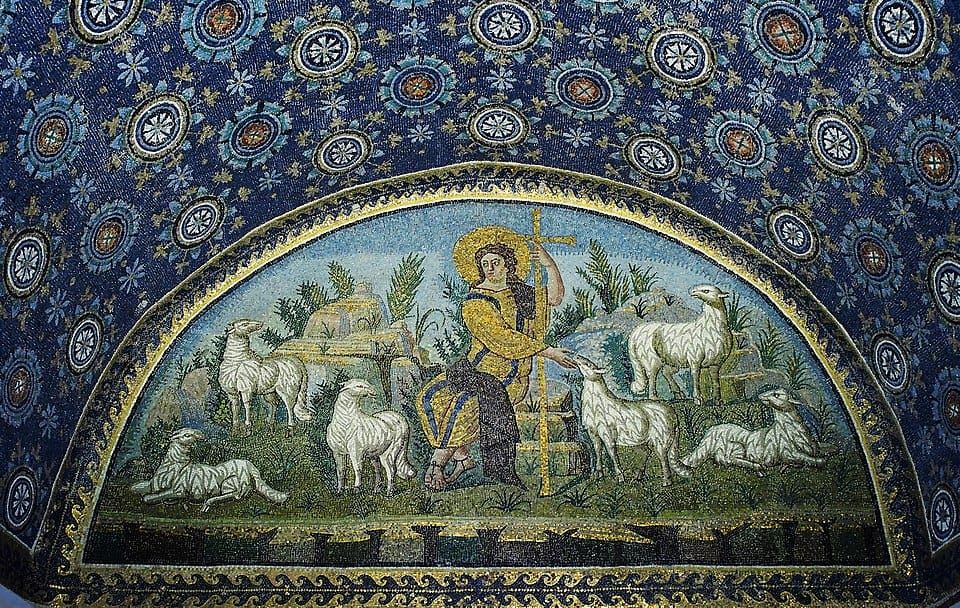
But the healed soul is not thereby spared the world's hostility — rather it is sent into the thick of it. I am sending you like sheep in the midst of wolves, the Lord tells his own, and He does not promise them the wolf's cunning to match the wolf's teeth. He bids them be shrewd as serpents and simple as doves, which is to say: keep your innocence unspotted, and let your only wariness be the care not to lose it. The temptation of every age is to believe that the Gospel will prevail if only its friends become powerful, numerous, and feared; but the disciple who trades his meekness for the weapons of the wolf has already lost the protection of the Shepherd. As long as we are lambs, wrote the golden-mouthed doctor, we conquer; though surrounded by countless wolves, we overcome them; but if we become wolves, we are worsted, for the help of the Shepherd departs from us; for He feeds not wolves, but sheep.
Here, then, is the concrete lesson the soul must carry into the day: not to defend itself by becoming what it opposes, not to answer harshness with harshness nor fear with calculation, but to endure. Do not worry about how you are to speak, the Lord says, for it will not be you who speak but the Spirit of your Father speaking through you — and whoever endures to the end will be saved. The martyrs learned this endurance and made of it a testimony that no argument could equal; and the Church honors their patience as the supreme witness given to the truth of the faith, bearing witness even unto death to Christ who died and rose. An ancient African teacher, watching his people slain, saw further than their killers and declared that the blood of the martyrs is the seed of the Church. What the wolf devours, God multiplies.
Let the soul, then, be neither hardened by its own guilt nor hardened against its enemies, but kept soft under the dew of divine mercy — meek, innocent, enduring — assured that the Shepherd who calls it home will not fail to defend it on the road.
Create in me a clean heart, O Lord, and keep it gentle amid the world's hardness. Teach me to be a lamb where I am tempted to be a wolf, and let your Spirit speak in me when my own words fail. Sustain me to the end, that my mouth may declare your praise. Through Christ our Lord. Amen.
Sources & References
- "Return, O Israel, to the LORD, your God" — Hosea 14:2
- "he shall blossom like the lily … strike root like the Lebanon cedar" — Hosea 14:6
- "Have mercy on me, O God" / "A clean heart create for me, O God" — Psalm 51:3, 12
- "I am sending you like sheep in the midst of wolves … be shrewd as serpents and simple as doves" — Matthew 10:16
- "Do not worry about how you are to speak … the Spirit of your Father speaking through you" — Matthew 10:19-20
- "Whoever endures to the end will be saved" — Matthew 10:22
- "Interior repentance is a radical reorientation of our whole life, a return, a conversion to God with all our heart …" — Catechism of the Catholic Church, 1431
- "The human heart is heavy and hardened … conversion is first of all a work of the grace of God who makes our hearts return to him" — CCC 1432
- "The supreme witness given to the truth of the faith … bearing witness even unto death" — CCC 2473
- "As long as we are lambs, we conquer … He feeds not wolves, but sheep" — St. John Chrysostom, Homily 33 on the Gospel of Matthew
- "The blood of the martyrs is the seed of the Church" — Tertullian, Apologeticus 50
- Papal insight: Pope Francis, General Audience, 15 February 2023 (on Matthew 10:16, citing St. John Chrysostom)
La mansedumbre que vence
📖 Sagrada Escritura Diaria
Viernes 10 de julio de 2026 — Viernes de la XIV semana del Tiempo ordinario
Lecturas: Oseas 14, 2-10 • Salmo 50, 3-4. 8-9. 12-13. 14 y 17 • Mateo 10, 16-23
Hay una paradoja en el corazón de las lecturas de hoy que el mundo apenas puede comprender: que la fuerza se perfecciona en la mansedumbre, y que la victoria más segura no pertenece a quien se arma contra sus enemigos, sino a quien consiente en seguir siendo cordero. El profeta Oseas comienza con una invitación tan tierna que podría confundirse con debilidad —Israel, conviértete al Señor, Dios tuyo—, y sin embargo en esa llamada se encierra toda la labor de la sanación del alma. Porque el retorno del que habla el profeta no es un cambio de fortuna, sino un cambio de corazón, un volver de la persona entera desde los ídolos de su propia hechura hacia el Dios que es el único que puede sanar sus infidelidades y amarla aunque no lo merezca.
El alma que se ha extraviado sabe cuán pesado es el camino de regreso. Es más fácil multiplicar excusas que decir, con el salmista, apiádate de mí, Señor; más fácil barnizar la conciencia que pedir que se cree en nosotros un corazón puro. Y no obstante, es precisamente allí, en la desnuda confesión de la culpa, donde la gracia halla su entrada. La Iglesia enseña que la penitencia interior es una reorientación radical de toda la vida, un retorno, una conversión a Dios con todo nuestro corazón, una ruptura con el pecado, una aversión del mal; y nos recuerda, no sea que nos ensoberbezcamos aun en la contrición, que el corazón del hombre es rudo y endurecido, que es preciso que Dios dé al hombre un corazón nuevo, y que la conversión es primeramente una obra de la gracia de Dios que hace volver a él nuestros corazones. El lirio no florece por su propio esfuerzo, ni el cedro echa raíces por su propia resolución; es el Señor quien se hace rocío, y bajo esa misericordia callada el alma estéril propaga sus renuevos.
Pero el alma sanada no queda por ello librada de la hostilidad del mundo; más bien es enviada a lo más recio de ella. Yo los envío como ovejas entre lobos, dice el Señor a los suyos, y no les promete la astucia del lobo para igualar sus colmillos. Les manda ser precavidos como las serpientes y sencillos como las palomas, es decir: conserven su inocencia sin mancha, y sea su única cautela el cuidado de no perderla. La tentación de toda época es creer que el Evangelio prevalecerá con tal de que sus amigos se vuelvan poderosos, numerosos y temidos; pero el discípulo que cambia su mansedumbre por las armas del lobo ya ha perdido la protección del Pastor. Mientras seamos ovejas, escribió el doctor de boca de oro, venceremos; aunque estemos rodeados de innumerables lobos, los superaremos; pero si nos convertimos en lobos, seremos vencidos, porque nos faltará la ayuda del Pastor, que no apacienta lobos, sino ovejas.
He aquí, pues, la lección concreta que el alma ha de llevar consigo en la jornada: no defenderse volviéndose aquello que combate, no responder a la dureza con dureza ni al temor con el cálculo, sino perseverar. No se preocupen por lo que van a decir, dice el Señor, porque no serán ustedes los que hablen, sino el Espíritu de su Padre el que hablará por ustedes; y el que persevere hasta el fin, se salvará. Los mártires aprendieron esta perseverancia e hicieron de ella un testimonio que ningún argumento podía igualar; y la Iglesia honra su paciencia como el supremo testimonio de la verdad de la fe, que da testimonio de Cristo muerto y resucitado, con el cual está unido por la caridad. Un antiguo maestro africano, viendo morir a los suyos, vio más lejos que sus verdugos y declaró que la sangre de los mártires es semilla de cristianos. Lo que el lobo devora, Dios lo multiplica.
Que el alma, pues, no se endurezca por su propia culpa ni se endurezca contra sus enemigos, sino que se mantenga blanda bajo el rocío de la misericordia divina —mansa, inocente, perseverante—, segura de que el Pastor que la llama a casa no dejará de defenderla en el camino.
Crea en mí, Señor, un corazón puro, y consérvalo manso en medio de la dureza del mundo. Enséñame a ser cordero donde me siento tentado a ser lobo, y que tu Espíritu hable en mí cuando me falten las palabras. Sostenme hasta el fin, para que mi boca proclame tu alabanza. Por Jesucristo nuestro Señor. Amén.
Fuentes y referencias
- "Israel, conviértete al Señor, Dios tuyo" — Oseas 14, 2
- "mi pueblo florecerá como el lirio, hundirá profundamente sus raíces, como el álamo" — Oseas 14, 6
- "apiádate de mí" / "Crea en mí, Señor, un corazón puro" — Salmo 50, 3.12
- "Yo los envío como ovejas entre lobos … precavidos como las serpientes y sencillos como las palomas" — Mateo 10, 16
- "No se preocupen por lo que van a decir … el Espíritu de su Padre el que hablará por ustedes" — Mateo 10, 19-20
- "El que persevere hasta el fin, se salvará" — Mateo 10, 22
- "La penitencia interior es una reorientación radical de toda la vida, un retorno, una conversión a Dios con todo nuestro corazón …" — Catecismo de la Iglesia Católica, 1431
- "El corazón del hombre es rudo y endurecido … la conversión es primeramente una obra de la gracia de Dios que hace volver a él nuestros corazones" — CIC 1432
- "El supremo testimonio de la verdad de la fe … da testimonio de Cristo muerto y resucitado, con el cual está unido por la caridad" — CIC 2473
- "Mientras seamos ovejas, venceremos … no apacienta lobos, sino ovejas" — San Juan Crisóstomo, Homilía 33 sobre el Evangelio de san Mateo
- "La sangre de los mártires es semilla de cristianos" — Tertuliano, Apologético 50
- Comentario papal: Papa Francisco, Audiencia General, 15 de febrero de 2023 (sobre Mateo 10, 16, citando a san Juan Crisóstomo)