
📖 Daily Scripture
August 16, 2026 — Twentieth Sunday in Ordinary Time
Readings: Isaiah 56:1, 6-7 • Psalm 67:2-3, 5, 6, 8 • Romans 11:13-15, 29-32 • Matthew 15:21-28
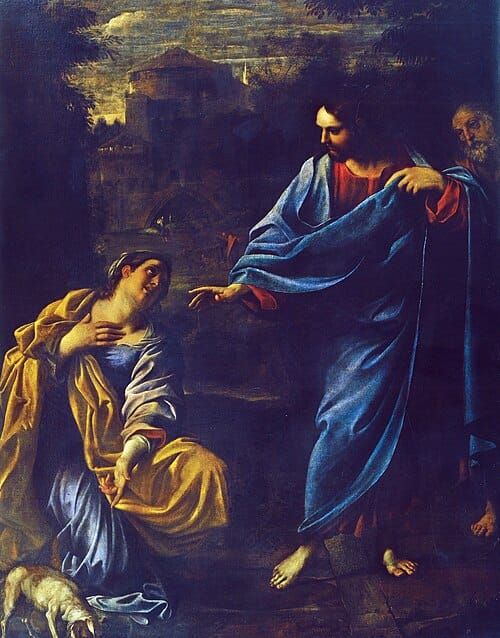
There is a silence in today's Gospel more eloquent than any speech. A woman of Canaan — a stranger by blood, by religion, and by every reckoning her neighbours would have made — comes crying after the Lord on the road near Tyre, and He answers her not a word. The disciples, wearied by the noise of her grief, ask only that she be sent away. And when at last He does speak, He speaks what sounds like the shutting of a door: the bread of the children is not to be thrown to the dogs. Yet the door does not shut. She remains; and by remaining she is crowned.
Every soul that has prayed in earnest and heard nothing will recognise that road. It is among the harder trials of the interior life to ask and to receive no sign that the asking was heard, and the temptation that follows is not usually a loud rebellion but a quiet withdrawal — a decision, half-conscious, that one had better not ask again. Saint Augustine, reading this scene, refused that conclusion outright: "Christ showed himself indifferent to her, not in order to refuse her his mercy but rather to inflame her desire for it." The silence was not a verdict. It was the widening of the vessel before the pouring.
And observe what the woman does with the hard word when it comes. She does not dispute it; she does not defend her dignity; she does not argue that she has been unjustly named. She takes the very word that wounded her and makes of it her plea — if a dog, then a dog beneath the table, and the crumbs are hers by right of the household. Here is the whole science of prayer in a single sentence. Humility is the foundation of prayer, and the Church has never taught otherwise: man is a beggar before God. The proud soul cannot pray, because it approaches the table as a creditor, and nothing there is owed to it. The humble soul asks for crumbs and is given the feast.
Saint John Chrysostom saw in the Lord's severity no coldness at all, but a deliberate art: the words were not spoken in insult, but to call her forth and to reveal the treasure laid up in her. The trial did not create her faith; it uncovered it, as a lamp is uncovered, that the whole house might see. This is worth holding fast in the hours when God appears to deal harshly. What is drawn out of a soul in such hours is very often the best thing in it, which would have lain buried had nothing pressed upon it.
From this a plain rule of life follows, and it is not a comfortable one. When prayer is not answered, the soul is not permitted to conclude that it was refused. It is permitted to conclude only that it must ask again. Persistence in prayer is no attempt to wear down a reluctant God; it is the labour by which a small heart is made large enough to hold what it has asked for. Scripture records that the Lord was struck with admiration at the great faith of the Roman centurion and the Canaanite woman — admiration, not mere approval — and that He hears the prayer of faith, whether spoken aloud or offered in silence.
There is a second edge to this day's teaching, and it cuts nearer home. The prophet had promised a temple whose name would be a house of prayer for all peoples, and the Apostle insists that God delivered all to disobedience precisely that He might have mercy upon all. The woman of Canaan is the first fruit of that promise. But a soul that has received mercy on the terms of a beggar may never afterward dispense it on the terms of an owner. It is a strange and common sin to have been forgiven much and then to keep a private list of those who do not belong at the table — the relative who is not spoken to, the neighbour whose past is remembered, the stranger whose language or manner makes him easy to overlook. Whoever has eaten crumbs has forfeited the right to guard the door.
So the day sets before the soul two labours that are in truth one: to keep asking when heaven is silent, and to keep the table open to everyone who comes hungry. Both are acts of the same faith, and both are possible only because the mercy in question was never earned. Faith grows; it grows with the desire to find the way; and in the end it is the gift of a God who does not reveal Himself as an abstraction without a face or a name, but as a Person who wishes to enter into a relationship of deep love and to take up the whole of a life. The Canaanite woman went home to a healed child. The soul that persists will find, sooner or later, that the silence it feared was only the Lord drawing it closer in order to speak.
Lord, when I ask and hear nothing, teach me not to mistake your silence for your absence. Enlarge within me the desire you are pleased to inflame, and keep me at your table as one who knows he is fed there by mercy and not by right. Let me never close against another the door you have held open for me. Through Christ our Lord. Amen.
Sources & References
- "Observe what is right, do what is just… my house shall be called a house of prayer for all peoples" — Isaiah 56:1, 6-7 (Twentieth Sunday in Ordinary Time, Lectionary 118, USCCB)
- "O God, let all the nations praise you!" — Psalm 67:2-3, 5, 6, 8
- "God delivered all to disobedience, that he might have mercy upon all" — Romans 11:13-15, 29-32
- "O woman, great is your faith! Let it be done for you as you wish" — Matthew 15:21-28
- "Christ showed himself indifferent to her, not in order to refuse her his mercy but rather to inflame her desire for it" — St. Augustine, Sermo 77, 1 (PL 38, 483), as cited by Pope Benedict XVI, Angelus, 14 August 2011
- "the words were not spoken in insult, but to call her forth and to reveal the treasure laid up in her" — St. John Chrysostom, Homily 52 on Matthew (Nicene and Post-Nicene Fathers, First Series, Vol. 10)
- "Humility is the foundation of prayer… Man is a beggar before God" — Catechism of the Catholic Church 2559 (citing St. Augustine, Sermo 56, 6, 9)
- "struck with admiration at the great faith of the Roman centurion and the Canaanite woman" — Catechism of the Catholic Church 2610
- "Jesus hears the prayer of faith, expressed in words… or in silence" — Catechism of the Catholic Church 2616
- "Faith… grows with the desire to find the way… a Person who wants to enter into a relationship of deep love with us" — Pope Benedict XVI, Angelus, Castel Gandolfo, 14 August 2011 (Vatican News, Word of the Day, 16 August 2026)
La misericordia que parece tardar
📖 Sagrada Escritura Diaria
16 de agosto de 2026 — XX Domingo Ordinario
Lecturas: Isaías 56, 1. 6-7 • Salmo 66, 2-3. 5. 6 y 8 • Romanos 11, 13-15. 29-32 • Mateo 15, 21-28
Hay en el Evangelio de hoy un silencio más elocuente que cualquier palabra. Una mujer cananea —extranjera por sangre, por religión y por todo cálculo que sus vecinos habrían hecho— sale al encuentro del Señor en el camino de Tiro y grita tras él, y él no le contesta una sola palabra. Los discípulos, fatigados por el ruido de aquel dolor, sólo piden que la despida. Y cuando por fin habla, dice algo que suena a puerta que se cierra: no está bien quitarles el pan a los hijos para echárselo a los perritos. Sin embargo, la puerta no se cierra. Ella permanece; y por permanecer es coronada.
Toda alma que haya orado de veras y no haya oído nada reconocerá ese camino. Es una de las pruebas más duras de la vida interior pedir y no recibir señal alguna de haber sido escuchada, y la tentación que sigue no suele ser una rebelión ruidosa, sino una retirada callada: la decisión, medio consciente, de no volver a pedir. San Agustín, al leer esta escena, rechazó de plano esa conclusión: «Cristo se mostraba indiferente hacia ella, no por rechazarle la misericordia, sino para inflamar su deseo». El silencio no era una sentencia. Era el ensanchamiento del vaso antes de la efusión.
Y conviene observar qué hace la mujer con la palabra dura cuando llega. No la discute; no defiende su dignidad; no alega que se la ha nombrado injustamente. Toma la misma palabra que la hirió y hace de ella su súplica: si perrito, entonces perrito bajo la mesa, y las migajas le pertenecen por derecho de casa. Aquí está toda la ciencia de la oración en una sola frase. La humildad es la base de la oración, y la Iglesia nunca ha enseñado otra cosa: el hombre es un mendigo de Dios. El alma soberbia no puede orar, porque se acerca a la mesa como acreedora, y nada se le debe allí. El alma humilde pide migajas y recibe el banquete.
San Juan Crisóstomo no vio en la severidad del Señor frialdad alguna, sino un arte deliberado: aquellas palabras no fueron dichas como injuria, sino para llamarla a comparecer y descubrir el tesoro guardado en ella. La prueba no creó su fe; la puso al descubierto, como se descubre una lámpara para que toda la casa la vea. Y esto conviene retenerlo en las horas en que Dios parece tratar con dureza. Lo que en tales horas se saca de un alma es muy a menudo lo mejor que hay en ella, que habría quedado sepultado si nada la hubiera apretado.
De aquí se sigue una regla de vida muy clara, y no cómoda. Cuando la oración no es atendida, al alma no le está permitido concluir que fue rechazada. Sólo le está permitido concluir que debe volver a pedir. La perseverancia en la oración no es un intento de vencer por cansancio a un Dios reticente; es el trabajo por el cual un corazón pequeño se hace lo bastante grande para contener lo que ha pedido. La Escritura recuerda que el Señor se admiró ante la gran fe del centurión romano y de la cananea —se admiró, no simplemente aprobó— y que escucha la oración de fe, expresada en palabras o en silencio.
Hay un segundo filo en la enseñanza de este día, y corta más cerca. El profeta había prometido un templo cuyo nombre sería casa de oración para todos los pueblos, y el Apóstol insiste en que Dios ha permitido que todos cayéramos en la rebeldía precisamente para manifestarnos a todos su misericordia. La mujer cananea es la primicia de esa promesa. Pero un alma que ha recibido misericordia en condición de mendiga no puede después repartirla en condición de dueña. Es un pecado extraño y frecuente haber sido perdonado mucho y guardar luego una lista privada de quienes no pertenecen a la mesa: el pariente con quien no se habla, el vecino cuyo pasado se recuerda, el forastero cuya lengua o cuyos modos lo hacen fácil de pasar por alto. Quien ha comido migajas ha perdido el derecho de custodiar la puerta.
Así, el día pone ante el alma dos trabajos que en realidad son uno solo: seguir pidiendo cuando el cielo calla, y mantener la mesa abierta a todo el que llega con hambre. Ambos son actos de la misma fe, y ambos son posibles únicamente porque esa misericordia jamás fue merecida. La fe crece; crece con el deseo de encontrar el camino; y en definitiva es un don de Dios, que no se revela como una cosa abstracta, sin rostro y sin nombre, sino como una Persona que quiere entrar en una relación de amor profundo y comprometer toda la vida. La cananea volvió a casa y halló sana a su hija. El alma que persevere descubrirá, tarde o temprano, que el silencio que temía era sólo el Señor atrayéndola más cerca para hablarle.
Señor, cuando pido y no oigo nada, enséñame a no confundir tu silencio con tu ausencia. Ensancha en mí el deseo que te complaces en inflamar, y guárdame en tu mesa como quien sabe que allí come por misericordia y no por derecho. Que jamás cierre a otro la puerta que tú has mantenido abierta para mí. Por Jesucristo nuestro Señor. Amén.
Fuentes y referencias
- «Velen por los derechos de los demás… mi templo será la casa de oración para todos los pueblos» — Isaías 56, 1. 6-7 (XX Domingo Ordinario, Leccionario 118, USCCB)
- «Que te alaben, Señor, todos los pueblos» — Salmo 66, 2-3. 5. 6 y 8 (numeración de la Vulgata, según el Leccionario en español de la USCCB)
- «Dios ha permitido que todos cayéramos en la rebeldía, para manifestarnos a todos su misericordia» — Romanos 11, 13-15. 29-32
- «Mujer, ¡qué grande es tu fe! Que se cumpla lo que deseas» — Mateo 15, 21-28
- «Cristo se mostraba indiferente hacia ella, no por rechazarle la misericordia, sino para inflamar su deseo» — San Agustín, Sermo 77, 1 (PL 38, 483), citado por Benedicto XVI, Ángelus, 14 de agosto de 2011
- «no fueron dichas como injuria, sino para llamarla a comparecer y descubrir el tesoro guardado en ella» — San Juan Crisóstomo, Homilía 52 sobre San Mateo (traducción castellana a partir de la edición inglesa NPNF, 1ª serie, vol. 10)
- «La humildad es la base de la oración… el hombre es un mendigo de Dios» — Catecismo de la Iglesia Católica 2559 (que cita a San Agustín, Sermo 56, 6, 9)
- «Se admira ante la "gran fe" del centurión romano y de la cananea» — Catecismo de la Iglesia Católica 2610
- «Jesús escucha la oración de fe expresada en palabras… o en silencio» — Catecismo de la Iglesia Católica 2616
- «La fe… crece con el deseo de encontrar el camino… una Persona, que quiere entrar en una relación de amor profundo con nosotros» — Benedicto XVI, Ángelus, Castelgandolfo, 14 de agosto de 2011 (Vatican News, Palabra del día, 16 de agosto de 2026)