
📖 Daily Scripture
Monday, October 5, 2026 — Monday of the Twenty-seventh Week in Ordinary Time
Readings: Galatians 1:6-12 • Psalm 111:1b-2, 7-8, 9, 10c • Luke 10:25-37
There is a manner of questioning which seeks not light but limits, and the soul knows it well, for it has used it. The scholar of the law had already answered rightly concerning the two great commandments and had been told, "do this and you will live"; yet something in him remained unsatisfied, not because the answer was obscure but because it was too wide. And so, wishing to justify himself, he asked, "And who is my neighbor?" Which is to say: where may the line be drawn, so that I may still be reckoned righteous within it. We do not deny the law of charity; we merely request its boundary.
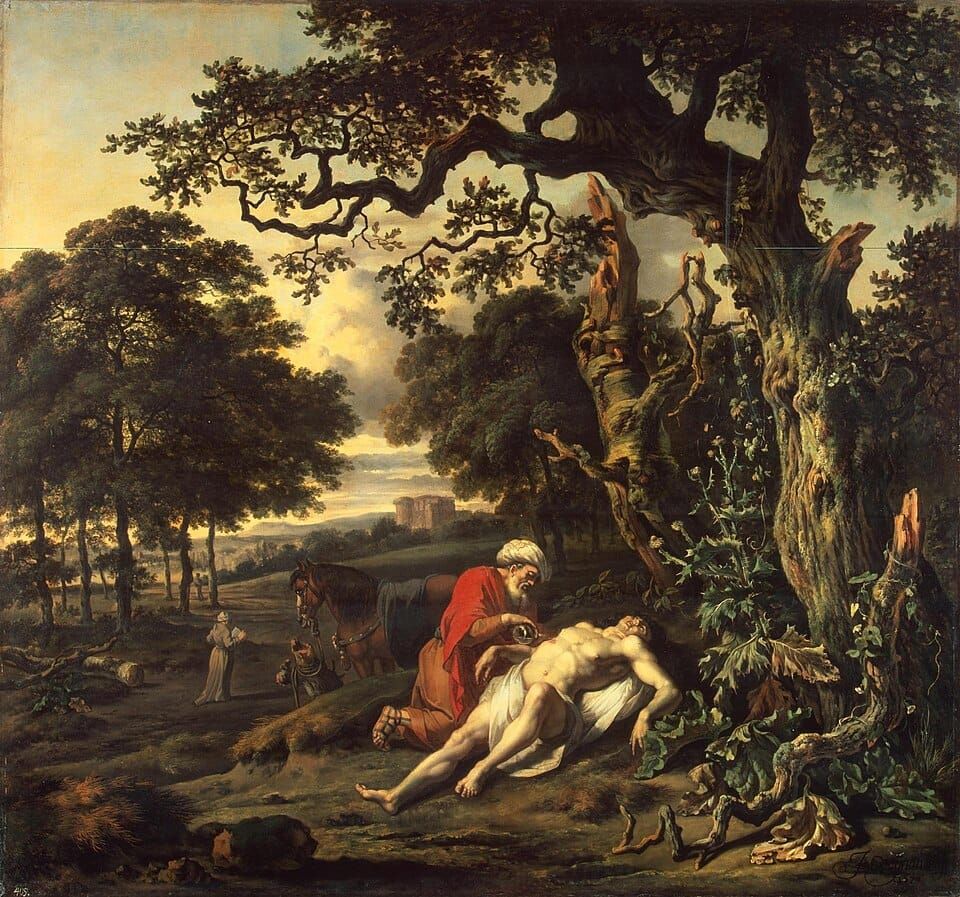
Our Lord declines the question as it was asked. He tells instead of a man who went down from Jerusalem to Jericho, stripped and beaten and left half-dead, and of three who came upon him. The priest saw him and passed by on the opposite side; the Levite did the same. They were not cruel men, but men of the Temple in haste to be home. And here is the first lesson: the practice of worship does not of itself make the heart compassionate. Before being a religious matter, compassion is a question of humanity. Before being believers, we are called to be human.
Then came a Samaritan, of a despised people, who held no claim upon the wounded man and no obligation that any court would have enforced, and he was moved with compassion at the sight. That mercy was practical and costly: he approached, poured oil and wine, bandaged the wounds, carried the man to an inn, cared for him, and paid, promising whatever more was needed. Mercy that is real does not end in feeling. Such works stay plain: feeding the hungry, sheltering the homeless, clothing the naked, visiting the sick and imprisoned, and burying the dead.
And then the question is turned: our Lord asks not which of the wounded deserved help, but which of the three was neighbor to the robbers' victim. The word has moved: it is no longer a class of persons to be identified, but a condition to be entered. Saint Augustine saw this with his usual clarity — he is our neighbor whom it is our duty to help in his need, or whom it would be our duty to help if he were in need. The soul may not survey mankind and select; it is bidden to make itself the neighbor of those farthest away.
The Apostle's indignation in the first reading now ceases to seem severe. He is amazed that the Galatians should so quickly turn to a different gospel; for the Gospel he preached is not of human origin, but came through a revelation of Jesus Christ. A gospel of human origin is precisely one we have edited to the measure of our convenience. To ask who is my neighbor, intending a shorter list, is to begin that editing; and the counterfeit is always gentler to us, for it costs nothing and saves no one.
The lesson of this day is not admiration of the Samaritan but imitation, and it begins where the soul actually stands. The neighbor is not chosen; he is given. He is whoever lies in the road the soul is already travelling: the relative whose need is inconvenient, the poor man whose claim upon our surplus is stronger than we care to think — for, as Saint John Chrysostom warned, the goods we possess are not ours, but theirs. The priest and the Levite were undone not by malice but by momentum. Most days it is enough simply to stop.
And if the soul, looking back on its road, finds that it has more often passed by than paused, let it not despair. The Samaritan has long been read as Christ himself, who came down to where we lay, bound our wounds, carried us, and paid what we could not pay. The works of his hands are faithful and just; he has ratified his covenant forever. Only the charity that finds in every man a neighbor, a brother, will make a world fraternal, and it is his charity, poured into us, that does it. He who stopped for us will teach the soul to stop.
Merciful God, you did not pass me by when I lay wounded upon the road. Take from me the haste that makes me blind, and the prudence that keeps me careful of myself. Teach me to see the one you have set in my way today, and to love him with my hands and not only with my wishes. Through Christ our Lord. Amen.
Sources & References
- "do this and you will live" / "And who is my neighbor?" / "was moved with compassion at the sight" — Luke 10:25-37, Lectionary for Mass, USCCB daily readings, 5 October 2026
- "a different gospel (not that there is another)" / "is not of human origin" / "came through a revelation of Jesus Christ" — Galatians 1:6-12, same Lectionary
- "The works of his hands are faithful and just" / "he has ratified his covenant forever" — Psalm 111:7, 9, same Lectionary
- "before being a religious matter, compassion is a question of humanity! Before being believers, we are called to be human." — Pope Leo XIV, General Audience, 28 May 2025 (carried by Vatican News, Word of the Day, 5 October 2026)
- "feeding the hungry, sheltering the homeless, clothing the naked, visiting the sick and imprisoned, and burying the dead" — Catechism of the Catholic Church, 2447
- "to make ourselves the neighbor of those farthest away" — Catechism of the Catholic Church, 1825
- "the charity that finds in every man a 'neighbor,' a brother" — Catechism of the Catholic Church, 1931
- "he is our neighbor whom it is our duty to help in his need, or whom it would be our duty to help if he were in need" — Saint Augustine, On Christian Doctrine, Book I, ch. 30, §31
- "The goods we possess are not ours, but theirs" — Saint John Chrysostom, Homily on Lazarus 2, 5, as quoted in Catechism of the Catholic Church, 2446
La misericordia que se detiene en el camino
📖 Sagrada Escritura Diaria
Lunes, 5 de octubre de 2026 — Lunes de la XXVII semana del Tiempo ordinario
Lecturas: Gálatas 1, 6-12 • Salmo 110, 1. 2. 7-8. 9 y 10c • Lucas 10, 25-37
Hay un modo de preguntar que no busca luz, sino límites, y el alma lo conoce bien, porque lo ha empleado. El doctor de la ley había respondido ya con acierto acerca de los dos grandes mandamientos y había oído: "si haces eso, vivirás"; y sin embargo algo quedaba insatisfecho en él, no porque la respuesta fuese oscura, sino porque era demasiado amplia. Y así, para justificarse, preguntó: "¿Y quién es mi prójimo?" Es decir: ¿dónde puede trazarse la línea, para que yo siga siendo tenido por justo dentro de ella? No negamos la ley de la caridad; solamente pedimos su frontera.
El Señor no responde a la pregunta tal como fue hecha. Habla, en cambio, de un hombre que bajaba por el camino de Jerusalén a Jericó, robado, herido y dejado medio muerto, y de tres que llegaron hasta él. El sacerdote lo vio y pasó de largo; el levita siguió adelante. No eran hombres crueles, sino hombres del Templo con prisa por volver a casa. Y aquí está la primera lección: la práctica del culto no lleva automáticamente a ser compasivos. Antes que una cuestión religiosa, la compasión es una cuestión de humanidad. Antes de ser creyentes, estamos llamados a ser humanos.
Vino entonces un samaritano, de un pueblo despreciado, que no tenía sobre el herido ningún derecho ni obligación alguna que un tribunal hubiera exigido, y al verlo se compadeció de él. Aquella misericordia fue práctica y costosa: se le acercó, ungió sus heridas con aceite y vino, se las vendó, lo llevó a un mesón, cuidó de él y pagó, prometiendo cuanto más fuera necesario. La misericordia verdadera no termina en el sentimiento. Tales obras siguen siendo sencillas: dar de comer al hambriento, dar techo a quien no lo tiene, vestir al desnudo, visitar a los enfermos y a los presos, enterrar a los muertos.
Y entonces la pregunta se invierte: el Señor no pregunta cuál de los heridos merecía auxilio, sino cuál de los tres se portó como prójimo del hombre asaltado. La palabra se ha desplazado: ya no es una clase de personas que haya que identificar, sino una condición en la que hay que entrar. San Agustín lo vio con su habitual claridad: nuestro prójimo es aquel con quien hemos de ejercitar la misericordia, si la necesita, o con quien debiéramos ejercitarla si la necesitara. Al alma no le está permitido pasar revista al género humano y escoger; le está mandado hacerse prójimo del más lejano.
La indignación del Apóstol en la primera lectura deja ahora de parecer severa. Le extraña mucho que los gálatas sigan tan pronto otro Evangelio; porque el Evangelio predicado por él no es un invento humano, sino que lo ha recibido por revelación de Jesucristo. Un evangelio de invención humana es precisamente uno que hemos corregido a la medida de nuestra comodidad. Preguntar quién es mi prójimo, entendiendo por ello una lista más corta, es comenzar esa corrección; y la falsificación siempre es más benigna con nosotros, pues nada cuesta y a nadie salva.
La lección de este día no es la admiración del samaritano, sino su imitación, y comienza donde el alma está realmente situada. El prójimo no se elige; se recibe. Es quienquiera que yace en el camino que el alma ya recorre: el pariente cuya necesidad resulta inoportuna, el pobre cuyo derecho sobre lo que nos sobra es más fuerte de lo que nos agrada pensar, pues, como advirtió san Juan Crisóstomo, lo que poseemos no son bienes nuestros, sino los suyos. Al sacerdote y al levita no los perdió la malicia, sino el impulso de la prisa. Casi todos los días basta simplemente con detenerse.
Y si el alma, al mirar el camino que deja atrás, descubre que ha pasado de largo más veces de las que se ha detenido, no desespere. El samaritano ha sido leído desde antiguo como Cristo mismo, que bajó hasta donde yacíamos, vendó nuestras heridas, nos llevó consigo y pagó lo que nosotros no podíamos pagar. Justas y verdaderas son sus obras; él estableció su alianza para siempre. Solamente la caridad que ve en cada hombre un prójimo, un hermano, hará fraterno el mundo, y es su caridad, derramada en nosotros, la que lo hace. Aquel que se detuvo por nosotros enseñará al alma a detenerse.
Dios misericordioso, tú no pasaste de largo cuando yo yacía herido en el camino. Quítame la prisa que me vuelve ciego y la prudencia que me mantiene cuidadoso de mí mismo. Enséñame a ver a quien has puesto hoy en mi camino, y a amarlo con mis manos y no solamente con mis deseos. Por Jesucristo nuestro Señor. Amén.
Fuentes y referencias
- "si haces eso, vivirás" / "¿Y quién es mi prójimo?" / "se compadeció de él" — Lucas 10, 25-37, Leccionario, lecturas diarias de la USCCB, 5 de octubre de 2026
- "sigan otro Evangelio" / "no es un invento humano" / "por revelación de Jesucristo" — Gálatas 1, 6-12, mismo Leccionario
- "Justas y verdaderas son sus obras" / "estableció su alianza para siempre" — Salmo 110, 7-8. 9, mismo Leccionario
- "antes que una cuestión religiosa, ¡la compasión es una cuestión de humanidad! Antes de ser creyentes, estamos llamados a ser humanos." — Papa León XIV, Audiencia General, 28 de mayo de 2025 (recogida por Vatican News, Palabra del día, 5 de octubre de 2026)
- "dar de comer al hambriento, dar techo a quien no lo tiene, vestir al desnudo, visitar a los enfermos y a los presos, enterrar a los muertos" — Catecismo de la Iglesia Católica, 2447
- "que nos hagamos prójimos del más lejano" — Catecismo de la Iglesia Católica, 1825
- "la caridad que ve en cada hombre un 'prójimo', un hermano" — Catecismo de la Iglesia Católica, 1931
- "nuestro prójimo es aquel con quien hemos de ejercitar la misericordia, si la necesita, o con quien debiéramos ejercitarla si la necesitara" — San Agustín, Sobre la doctrina cristiana, libro I, cap. 30, §31
- "lo que poseemos no son bienes nuestros, sino los suyos" — San Juan Crisóstomo, In Lazarum, concio 2, 6, citado en el Catecismo de la Iglesia Católica, 2446