
📖 Daily Scripture
September 8, 2026 — Feast of the Nativity of the Blessed Virgin Mary
Readings: Micah 5:1-4a • Psalm 13:6ab, 6c • Matthew 1:1-16, 18-23
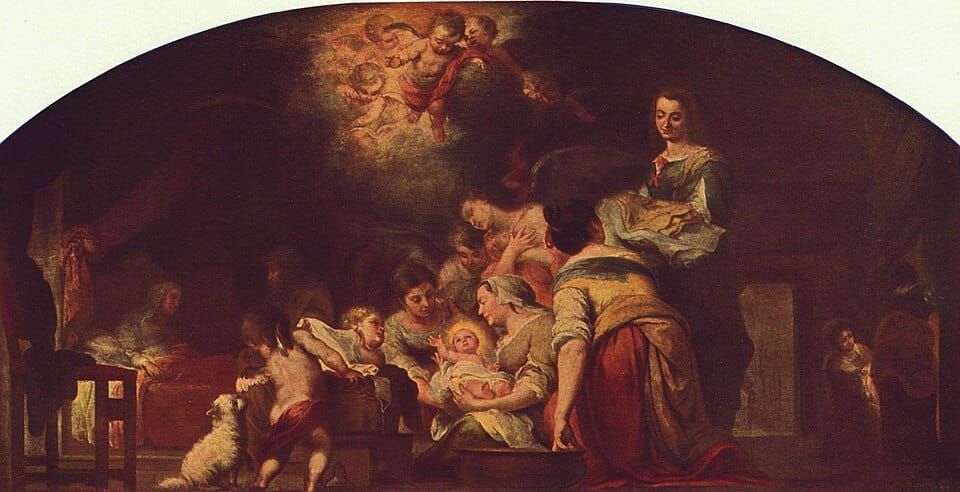
The Church keeps very few birthdays. She keeps the day of her Lord, and the day of his forerunner, and this day — and no other. It is worth pausing over the strangeness of that. Of the event itself Scripture says nothing whatever: not the hour, not the place, not a word spoken over the cradle. And so the liturgy, having no account of the birth to read, reads instead a genealogy: forty-two generations of names, most of them unpronounceable, many of them forgotten, running down the centuries like a river toward a girl of whom the world would take no notice for another fifteen years.
Consider what that list actually contains. It is not a pedigree of the pure. Judah fathered Perez by Tamar, whom he had wronged. Salmon fathered Boaz by Rahab, a foreigner and a harlot. Boaz fathered Obed by Ruth, a Moabite widow gleaning at the edge of another man's field. David fathered Solomon by the wife of Uriah, whose husband he had arranged to have killed. Four women are named in the line before Mary, and not one of them is a matriarch of Israel; they are outsiders and irregularities, the kind of names a careful family would have quietly dropped. Pope Benedict XVI, reflecting on this very passage, observed that these women seem to cloud the purity of the genealogy, and yet in them appears the mystery of grace — for it is not our works that redeem the world, but the Lord who gives us true life.
This is the first lesson of the feast, and it is a severer mercy than it first appears. God did not wait for a clean line before beginning his work. He ran his promise straight through adultery, exile, betrayal, and the long grey stretches when nothing at all seemed to be happening, and he did not lose the thread. The Catechism gathers it up: against all human expectation God chooses those who were considered powerless and weak to show forth his faithfulness to his promises. Micah says the same of the town: Bethlehem-Ephrathah, too small to be among the clans of Judah — and from you shall come forth one who is to be ruler in Israel. The soul that has concluded its own history is too compromised to be of any use to God, or its life too obscure to be a link in anything, has read the genealogy without understanding it.
Yet notice what God would not do. He would not force the ending. The Catechism is careful here: to prepare a body for his Son he wanted the free co-operation of a creature, and the Father of mercies willed that the Incarnation should be preceded by assent on the part of the predestined mother. All those generations of divine patience wait, at the last, upon one girl's yes. Saint Irenaeus drew the conclusion that the Church has never let go of: that being obedient she became the cause of salvation for herself and for the whole human race, so that the knot of Eve's disobedience was untied by Mary's obedience.
And this is why her nativity can be a feast for us and not merely a compliment paid to her. Saint Augustine, guarding against a devotion that would admire what it cannot imitate, put it exactly: Mary is more blessed because she embraces faith in Christ than because she conceives the flesh of Christ. Her motherhood is hers alone. Her faith is open to anyone. The greatness the Church celebrates today is not a greatness of achievement but of consent — the willingness to let God write his sentence through one's ordinary life without demanding to read it first.
Joseph, in the same Gospel, shows what that looks like before any angel has spoken. Learning what he could not understand, and holding a law that entitled him to expose her, he chose instead not to shame her. He was merciful while still in the dark; and it was into that darkness, and not into certainty, that the angel came. The soul is rarely given the explanation in advance. It is given, as he was, one small choice to make kindly and in faith — and that, quietly, is how the long line of God's fidelity has always continued.
Father of mercies, who wove your promise through generations of failure and obscurity without ever letting it fall, teach me not to despise the small and hidden place you have given me. Give me Mary's readiness to consent before I understand, and Joseph's readiness to be merciful while still in the dark. Let my life be one more quiet link in the chain of your faithfulness. Through Christ our Lord. Amen.
Sources & References
- "The Book of the genealogy of Jesus Christ"; Tamar, Rahab, Ruth, and the wife of Uriah; "do not be afraid to take Mary your wife into your home" — Matthew 1:1-16, 18-23 (Gospel of the day)
- "You, Bethlehem-Ephrathah, too small to be among the clans of Judah, From you shall come forth for me one who is to be ruler in Israel" — Micah 5:1-4a (First Reading; Romans 8:28-30 is offered as an alternative)
- "With delight I rejoice in the Lord" — Psalm 13:6ab, 6c (Responsorial Psalm)
- "Against all human expectation God chooses those who were considered powerless and weak to show forth his faithfulness to his promises" — Catechism of the Catholic Church, 489
- "to prepare a body for him, he wanted the free co-operation of a creature"; "The Father of mercies willed that the Incarnation should be preceded by assent on the part of the predestined mother" — Catechism of the Catholic Church, 488 (citing Lumen Gentium 56)
- "Being obedient she became the cause of salvation for herself and for the whole human race"; "The knot of Eve's disobedience was untied by Mary's obedience" — St. Irenaeus, Adversus Haereses III, 22, 4, quoted in Catechism of the Catholic Church, 494
- "Mary is more blessed because she embraces faith in Christ than because she conceives the flesh of Christ" — St. Augustine, De sancta virginitate 3, quoted in Catechism of the Catholic Church, 506
- Papal insight on the four women of the genealogy and the mystery of grace — Pope Benedict XVI, Homily, 17 December 2009, cited in Vatican News, "Word of the Day," 8 September 2026
- Readings from the USCCB Lectionary for Mass, 8 September 2026 (Lectionary 636)
Los nombres antes del Nombre
📖 Sagrada Escritura Diaria
8 de septiembre de 2026 — Fiesta de la Natividad de la Santísima Virgen María
Lecturas: Miqueas 5, 1-4 • Salmo 12, 6ab. 6cd • Mateo 1, 1-16. 18-23
La Iglesia celebra muy pocos nacimientos. Celebra el de su Señor, el de su precursor, y este de hoy — y ningún otro. Vale la pena detenerse en lo extraño de ello. Del suceso mismo la Escritura no dice absolutamente nada: ni la hora, ni el lugar, ni una palabra pronunciada sobre la cuna. Y así la liturgia, no teniendo relato del nacimiento que leer, lee en su lugar una genealogía: cuarenta y dos generaciones de nombres, impronunciables casi todos, olvidados muchos, que descienden por los siglos como un río hacia una niña de quien el mundo no habría de ocuparse hasta quince años después.
Considérese lo que esa lista contiene en realidad. No es un linaje de puros. Judá engendró a Fares de Tamar, a quien había agraviado. Salmón engendró a Booz de Rajab, extranjera y ramera. Booz engendró a Obed de Rut, viuda moabita que espigaba al borde del campo ajeno. David engendró a Salomón de la mujer de Urías, cuyo marido había hecho matar. Cuatro mujeres son nombradas en la línea antes de María, y ninguna de ellas es una matriarca de Israel; son forasteras e irregularidades, la clase de nombres que una familia cuidadosa habría suprimido en silencio. El Papa Benedicto XVI, meditando este mismo pasaje, observó que estas mujeres parecen enturbiar la pureza de la genealogía, y sin embargo en ellas aparece el misterio de la gracia — pues no son nuestras obras las que redimen el mundo, sino el Señor que nos da la vida verdadera.
Ésta es la primera lección de la fiesta, y es una misericordia más severa de lo que a primera vista parece. Dios no aguardó a que hubiera una línea limpia para comenzar su obra. Hizo pasar su promesa derechamente por el adulterio, el destierro, la traición y los largos tramos grises en que nada en absoluto parecía suceder, y no perdió el hilo. El Catecismo lo recoge: contra toda expectativa humana, Dios escoge lo que era tenido por impotente y débil para mostrar la fidelidad a su promesa. Miqueas dice lo mismo de la aldea: de ti, Belén de Efrata, pequeña entre las aldeas de Judá, saldrá el jefe de Israel. El alma que ha concluido que su propia historia está demasiado comprometida para servir a Dios, o que su vida es demasiado oscura para ser eslabón de nada, ha leído la genealogía sin entenderla.
Adviértase, con todo, lo que Dios no quiso hacer. No quiso forzar el desenlace. El Catecismo es cuidadoso aquí: para formar un cuerpo a su Hijo quiso la libre cooperación de una criatura, y el Padre de las misericordias quiso que el consentimiento de la que estaba predestinada a ser la Madre precediera a la encarnación. Todas aquellas generaciones de paciencia divina esperan, al final, el sí de una sola muchacha. San Ireneo sacó la conclusión que la Iglesia jamás ha soltado: que por su obediencia fue causa de la salvación propia y de la de todo el género humano, de suerte que el nudo de la desobediencia de Eva lo desató la obediencia de María.
Y por esto su natividad puede ser fiesta también para nosotros, y no un mero cumplido rendido a ella. San Agustín, precaviéndose de una devoción que admira lo que no puede imitar, lo expresó con exactitud: más bienaventurada es María al recibir a Cristo por la fe que al concebir en su seno la carne de Cristo. Su maternidad es sólo suya. Su fe está abierta a cualquiera. La grandeza que la Iglesia celebra hoy no es grandeza de logro, sino de consentimiento — la disposición a dejar que Dios escriba su frase a través de una vida ordinaria sin exigir leerla de antemano.
José, en ese mismo Evangelio, muestra qué aspecto tiene eso antes de que ángel alguno haya hablado. Sabiendo lo que no podía comprender, y teniendo en la mano una ley que le autorizaba a ponerla en evidencia, escogió en cambio no avergonzarla. Fue misericordioso estando todavía a oscuras; y fue a esa oscuridad, y no a la certeza, adonde vino el ángel. Al alma rara vez se le da la explicación por adelantado. Se le da, como a él, una sola decisión pequeña que tomar con bondad y con fe — y así, calladamente, ha continuado siempre la larga línea de la fidelidad de Dios.
Padre de las misericordias, que tejiste tu promesa a través de generaciones de fracaso y de oscuridad sin dejarla caer jamás, enséñame a no despreciar el lugar pequeño y escondido que me has dado. Dame la prontitud de María para consentir antes de comprender, y la prontitud de José para ser misericordioso estando aún a oscuras. Haz de mi vida un eslabón callado más en la cadena de tu fidelidad. Por Jesucristo nuestro Señor. Amén.
Fuentes y referencias
- "Genealogía de Jesucristo, hijo de David, hijo de Abraham"; Tamar, Rajab, Rut y la mujer de Urías; "no dudes en recibir en tu casa a María, tu esposa" — Mateo 1, 1-16. 18-23 (Evangelio del día)
- "De ti, Belén de Efrata, pequeña entre las aldeas de Judá, de ti saldrá el jefe de Israel" — Miqueas 5, 1-4 (Primera lectura; se ofrece Romanos 8, 28-30 como alternativa)
- "Me llenaré de alegría en el Señor" — Salmo 12, 6ab. 6cd (Salmo responsorial)
- "Contra toda expectativa humana, Dios escoge lo que era tenido por impotente y débil para mostrar la fidelidad a su promesa" — Catecismo de la Iglesia Católica, 489
- "Para formarle un cuerpo quiso la libre cooperación de una criatura"; "El Padre de las misericordias quiso que el consentimiento de la que estaba predestinada a ser la Madre precediera a la encarnación" — Catecismo de la Iglesia Católica, 488 (citando Lumen Gentium 56)
- "Por su obediencia fue causa de la salvación propia y de la de todo el género humano"; "El nudo de la desobediencia de Eva lo desató la obediencia de María" — San Ireneo, Adversus Haereses III, 22, 4, citado en el Catecismo de la Iglesia Católica, 494
- "Más bienaventurada es María al recibir a Cristo por la fe que al concebir en su seno la carne de Cristo" — San Agustín, De sancta virginitate 3, citado en el Catecismo de la Iglesia Católica, 506
- Enseñanza papal sobre las cuatro mujeres de la genealogía y el misterio de la gracia — Papa Benedicto XVI, Homilía del 17 de diciembre de 2009, citada en Vatican News, "Palabra del día", 8 de septiembre de 2026
- Lecturas tomadas del Leccionario de la USCCB (edición en español), 8 de septiembre de 2026 (Leccionario 636)