
📖 Daily Scripture
August 18, 2026 — Tuesday of the Twentieth Week in Ordinary Time
Readings: Ezekiel 28:1-10 • Deuteronomy 32:26-27ab, 27cd-28, 30, 35cd-36ab • Matthew 19:23-30
There is a strange grandeur in the words the prophet is given to speak against the prince of Tyre, and a stranger pathos. The man addressed sits, as he imagines, upon a divine throne in the heart of the sea, ringed by the traffic of the nations, his treasuries heavy with gold and silver, his mind quick enough to unriddle every secret. And to this magnificence the LORD speaks a single quiet correction: "you are a man, and not a god, however you may think yourself like a god." It is not the wealth that is arraigned first, but the sentence the wealth has whispered into the heart until the heart believed it.
This is the peculiar danger of prosperity, and it deserves the soul's attention precisely because it works so gently. Riches rarely announce themselves as rivals to God. They present themselves as evidence — evidence of competence, of foresight, of a life well managed. The prince of Tyre did not wake one morning and resolve to be a god; he simply found, over many prosperous years, that he no longer needed to ask anything of anyone, and mistook that self-sufficiency for divinity. The heart grows haughty by degrees, as a tide rises, and the man standing in it does not feel himself lifted.
The canticle appointed for today names the same illusion in fewer words. "Our own hand won the victory; the LORD had nothing to do with it." Of those who speak so, Scripture says only that they are "a people devoid of reason, having no understanding" — for the sentence is not so much wicked as absurd, the creature crediting itself with the very strength it was lent. Against it stands the older and truer word: "It is I who deal death and give life."
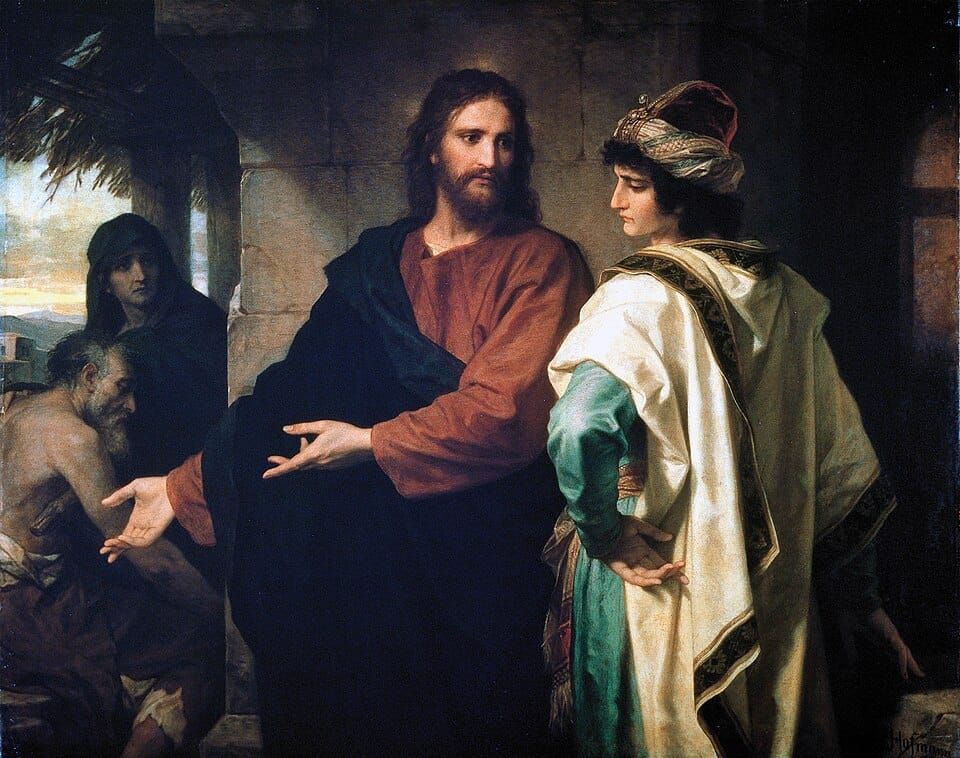
Then the Gospel, and the image that has troubled comfortable readers for twenty centuries: it is easier for a camel to pass through the eye of a needle than for one who is rich to enter the Kingdom of God. The disciples are astonished, and their astonishment is instructive; they had assumed, as most ages assume, that prosperity was a mark of divine favour rather than a weight to be carried with great care. Yet notice what our Lord does not say. He does not say that it is impossible. He says: "For men this is impossible, but for God all things are possible."
Here the moral lesson becomes concrete, and it is not a lesson of despair. The Church teaches that the precept of detachment from riches is obligatory for entrance into the Kingdom of heaven — obligatory, and therefore possible, for a command is never laid upon a creature who cannot obey it. Detachment is not the refusal of goods but the refusal to be held by them. It is the willingness to be interrupted, to be inconvenienced, to open the hand without first calculating what the opening will cost. "Let the proud seek and love earthly kingdoms, but blessed are the poor in spirit for theirs is the Kingdom of heaven."
And there is a still more searching test, which Chrysostom put with a bluntness the centuries have not softened: "Not to enable the poor to share in our goods is to steal from them and deprive them of life; the goods we possess are not ours, but theirs." The soul that hears this rightly is not crushed by it. It is set free — free of the exhausting labour of guarding what was never finally its own. What the Gospel asks of the one who has is not always renunciation; often it is simply sharing, and sharing is another name for evangelical poverty. Difficult, yes, but not impossible.
For the promise at the close of the passage is not austerity but abundance: a hundredfold, and eternal life, and the last found first. God does not begrudge the soul its happiness. He refuses only to let it settle for a smaller one. The needle's eye is narrow, but it opens upon a Kingdom.
Lord, teach me to hold lightly what You have only lent me, and to know myself a creature standing before You. Loosen within me the quiet pride that mistakes Your gifts for my own strength, and open my hands toward those who have less. Where the way is too narrow for me, carry me through. Through Christ our Lord. Amen.
Sources & References
- "you are a man, and not a god, however you may think yourself like a god" — Ezekiel 28:2, 9
- "Our own hand won the victory; the LORD had nothing to do with it" / "a people devoid of reason, having no understanding" — Deuteronomy 32:27, 32:28
- "It is I who deal death and give life" — Deuteronomy 32:39c (responsorial refrain)
- "it is easier for a camel to pass through the eye of a needle" / "For men this is impossible, but for God all things are possible" — Matthew 19:24, 19:26
- "The precept of detachment from riches is obligatory for entrance into the Kingdom of heaven" — Catechism of the Catholic Church, 2544
- "Let the proud seek and love earthly kingdoms, but blessed are the poor in spirit for theirs is the Kingdom of heaven" — St. Augustine, De sermone Domini in monte 1, 1, 3, quoted in Catechism of the Catholic Church, 2547
- "Not to enable the poor to share in our goods is to steal from them and deprive them of life; the goods we possess are not ours, but theirs" — St. John Chrysostom, Homilies on Lazarus 2, 5, quoted in Catechism of the Catholic Church, 2446
- "Difficult, yes, but not impossible" / "Sharing is another name for evangelical poverty" — Pope Francis, Address to participants in the public assembly of Confindustria, 12 September 2022, cited in Vatican News, Word of the Day, 18 August 2026
- Readings: USCCB, Tuesday of the Twentieth Week in Ordinary Time, 18 August 2026
El ojo de la aguja y el corazón indiviso
📖 Sagrada Escritura Diaria
18 de agosto de 2026 — Martes de la XX semana del Tiempo ordinario
Lecturas: Ezequiel 28, 1-10 • Deuteronomio 32, 26-27ab. 27cd-28. 30. 35cd-36ab • Mateo 19, 23-30
Hay una extraña grandeza en las palabras que el profeta recibe para dirigirlas al príncipe de Tiro, y un patetismo aún más extraño. El hombre a quien se habla está sentado, según él se imagina, sobre un trono divino en medio de los mares, rodeado por el tráfico de las naciones, con los tesoros cargados de oro y plata y una inteligencia bastante ágil para desentrañar todos los secretos. Y a esa magnificencia el Señor dirige una sola corrección serena: "eres hombre y no Dios, y te crees tan sabio como Dios". No es la riqueza lo primero que se juzga, sino la frase que la riqueza ha ido susurrando al corazón hasta que el corazón la creyó.
Este es el peligro propio de la prosperidad, y merece la atención del alma precisamente porque obra con tanta suavidad. Las riquezas rara vez se presentan como rivales de Dios. Se presentan como una prueba: prueba de competencia, de previsión, de una vida bien administrada. El príncipe de Tiro no despertó una mañana decidido a ser dios; simplemente descubrió, a lo largo de muchos años prósperos, que ya no necesitaba pedir nada a nadie, y confundió esa autosuficiencia con la divinidad. El corazón se ensoberbece por grados, como sube la marea, y quien está de pie en ella no siente que lo levantan.
El cántico señalado para hoy nombra la misma ilusión con menos palabras: el enemigo diría "que su mano había vencido y que no era el Señor el que lo había hecho". De quienes hablan así, la Escritura dice solamente que son "una nación que ha perdido el juicio", pues la frase no es tanto perversa cuanto absurda: la criatura atribuyéndose la fuerza misma que le fue prestada. Frente a ella se alza la palabra más antigua y más verdadera: "El Señor da la muerte y la vida".
Viene entonces el Evangelio, y la imagen que ha inquietado a los lectores acomodados durante veinte siglos: "es más fácil que un camello pase por el ojo de una aguja, que un rico entre en el Reino de los cielos". Los discípulos se asombran, y su asombro es instructivo; habían supuesto, como suponen casi todas las épocas, que la prosperidad era señal del favor divino y no un peso que ha de llevarse con sumo cuidado. Y sin embargo, conviene advertir lo que el Señor no dice. No dice que sea imposible. Dice: "Para los hombres eso es imposible, mas para Dios todo es posible".
Aquí la lección moral se vuelve concreta, y no es una lección de desesperanza. La Iglesia enseña que el precepto del desprendimiento de las riquezas es obligatorio para entrar en el Reino de los cielos; obligatorio, y por tanto posible, porque jamás se impone un mandato a una criatura incapaz de cumplirlo. El desprendimiento no es el rechazo de los bienes, sino la negativa a ser poseído por ellos. Es la disposición a dejarse interrumpir, a dejarse incomodar, a abrir la mano sin calcular primero cuánto costará abrirla. "El orgulloso busca el poder terreno, mientras el pobre en espíritu busca el Reino de los cielos".
Y hay una prueba todavía más penetrante, que el Crisóstomo formuló con una franqueza que los siglos no han suavizado: "No hacer participar a los pobres de los propios bienes es robarles y quitarles la vida; lo que poseemos no son bienes nuestros, sino los suyos". El alma que escucha bien estas palabras no queda aplastada por ellas. Queda liberada: libre del trabajo agotador de custodiar lo que en definitiva nunca fue suyo. Lo que el Evangelio pide a quien posee no siempre es la renuncia; con frecuencia es sencillamente compartir, y compartir es sinónimo de pobreza evangélica. Difícil, sí, pero no imposible.
Porque la promesa con que se cierra el pasaje no es austeridad, sino abundancia: cien veces más, y la vida eterna, y los últimos hallados primeros. Dios no le escatima al alma su felicidad; solamente se niega a dejarla contentarse con una más pequeña. El ojo de la aguja es estrecho, pero se abre sobre un Reino.
Señor, enséñame a sostener con manos ligeras lo que solo me has prestado, y a reconocerme criatura delante de ti. Afloja dentro de mí el orgullo callado que confunde tus dones con mi propia fuerza, y abre mis manos hacia quienes tienen menos. Donde el camino sea demasiado estrecho para mí, llévame tú. Por Jesucristo nuestro Señor. Amén.
Fuentes y referencias
- "eres hombre y no Dios, y te crees tan sabio como Dios" — Ezequiel 28, 2. 9
- "que su mano había vencido y que no era el Señor el que lo había hecho" / "una nación que ha perdido el juicio" — Deuteronomio 32, 27. 28
- "El Señor da la muerte y la vida" — Deuteronomio 32, 39c (respuesta del salmo responsorial)
- "es más fácil que un camello pase por el ojo de una aguja, que un rico entre en el Reino de los cielos" / "Para los hombres eso es imposible, mas para Dios todo es posible" — Mateo 19, 24. 26
- "El precepto del desprendimiento de las riquezas es obligatorio para entrar en el Reino de los cielos" — Catecismo de la Iglesia Católica, 2544
- "El orgulloso busca el poder terreno, mientras el pobre en espíritu busca el Reino de los cielos" — San Agustín, De sermone Domini in monte 1, 1, 3, citado en el Catecismo de la Iglesia Católica, 2547
- "No hacer participar a los pobres de los propios bienes es robarles y quitarles la vida; lo que poseemos no son bienes nuestros, sino los suyos" — San Juan Crisóstomo, In Lazarum, concio 2, 6, citado en el Catecismo de la Iglesia Católica, 2446
- "Difícil, sí, pero no imposible" / "Compartir es sinónimo de pobreza evangélica" — Papa Francisco, Discurso a los participantes en la Asamblea Pública de Confindustria, 12 de septiembre de 2022, citado en Vatican News, Palabra del día, 18 de agosto de 2026
- Lecturas: USCCB, Martes de la XX semana del Tiempo ordinario, 18 de agosto de 2026