
📖 Daily Scripture
Thursday, November 26, 2026 — Thanksgiving Day (Thursday of the Thirty-fourth Week in Ordinary Time)
Readings: Sirach 50:22-24 • Psalm 145:2-3, 4-5, 6-7, 8-9, 10-11 • 1 Corinthians 1:3-9 • Luke 17:11-19
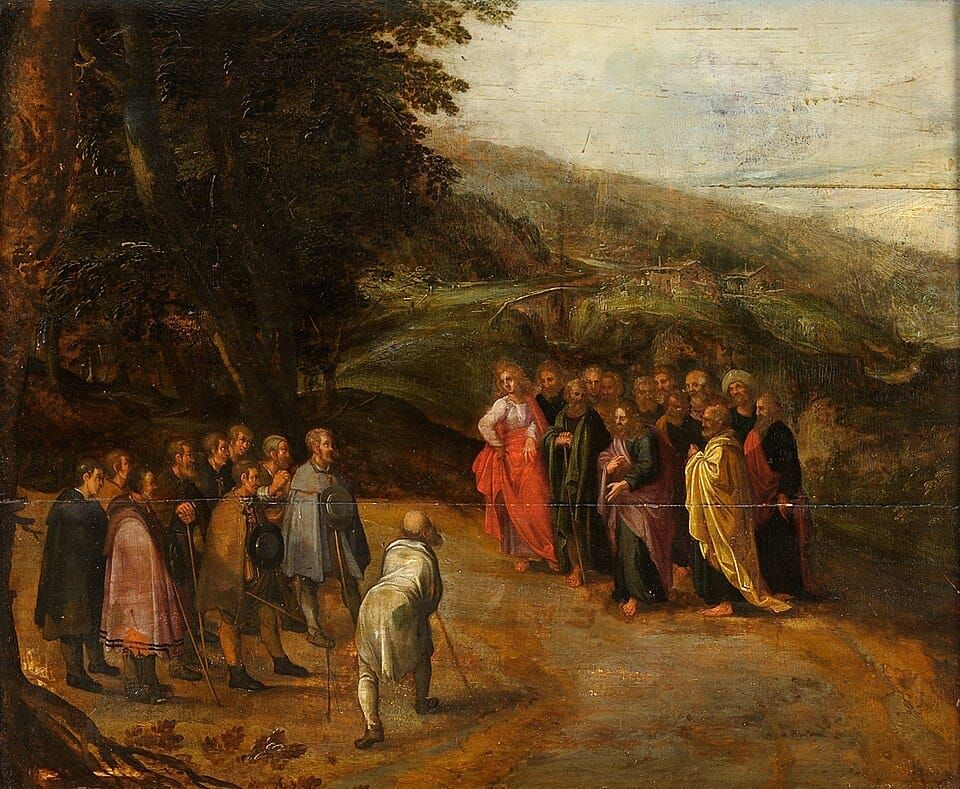
There is a quiet sorrow in the question Christ asks upon the road between Samaria and Galilee, and the soul that listens closely will hear in it not reproach so much as longing. Ten men, cut off by their disease from home and altar, cry out from a distance and are heard; ten set out in obedience toward the priests, and ten are made clean upon the way. Yet only one, realizing what had been done for him, turns back, and he a Samaritan, a stranger to the covenant, who falls at the feet of Jesus and gives thanks. “Where are the other nine?” The question hangs over every age, and it is addressed, in all honesty, to the individual heart far more often than to any crowd.
It is worth observing that the nine were not wicked. They did precisely what they were told; they went their way as the Lord commanded, and nothing in the Gospel accuses them of unbelief. Their failure was subtler and therefore more common: they received the gift and hurried on to its uses, and in the gladness of being restored to their homes they forgot the One who had restored them. Here lies the moral lesson the day sets before the soul. Ingratitude seldom wears the face of rebellion; far more often it is simple forgetfulness, the habit of taking each mercy as it comes and passing on to the next, until the Giver is lost behind His gifts. Pope Leo XIV has observed that the lepers who did not return are a reminder “that God’s grace can touch us and find no response.” A gift may be received in full and yet never answered.
The Church therefore teaches that to believe in the one God “means living in thanksgiving,” because “everything we are and have comes from him.” Sirach bids the reader “bless the God of all, who has done wondrous things on earth,” who fashions each life from the mother’s womb; and the Psalmist resolves, “Every day will I bless you.” Gratitude, in this light, is not a sentiment that visits the heart on festival days, but a truth about the soul’s condition: it has nothing it did not receive. St. John Chrysostom saw this plainly, writing that “thanksgiving itself adds nothing to Him, but causes us to be nearer to Him.” God does not need the leper’s return; the leper needs it, for only in returning does he come near enough to hear the word that completes his healing.
For the difference between the nine and the one is greater than courtesy. All ten were cleansed; to one alone was it said, “Stand up and go; your faith has saved you.” The body was mended on the road; the soul was saved at the feet of Christ. Thanksgiving is the hinge on which a benefit becomes communion, the moment when a gift received is turned back toward the Giver and so becomes a bond. This is why the Church’s highest act of worship bears the name Eucharist, and why St. Paul, writing to a divided Corinth, could begin with thanks: in Christ its people had been “enriched in every way,” and “God is faithful.”
The concrete counsel, then, is to make thanksgiving deliberate. On a day when tables are full and families gathered, the soul is tempted, like the nine, to rush gladly into the gift and leave the Giver standing on the road. Let it rather turn back first: let it name, one by one and aloud, the mercies of the year, including those that came disguised as trials, since “every event and need can become an offering of thanksgiving.” Chrysostom joins a warning to a promise: “the best preservative of any benefit is the remembrance of the benefit, and a continual thanksgiving.” What is remembered with gratitude is kept; what is taken for granted slips quietly away.
St. Augustine, rejoicing over good news from a brother bishop, could find nothing better to write than this: “Thanks be unto God! Is there anything better for us to have in our heart, or utter with our lips, or record with our pen, than this?” The soul that learns this one phrase, and returns to it daily, will find that it has learned the road back to the feet of Christ; and there it will discover what the Samaritan discovered, that the One who healed him was waiting for him, and that the love which gave the gift desired, above all, to give Himself.
Heavenly Father, through Your Son You cleansed me long before I knew how to ask, and still I hurry on to Your gifts and forget the hand that gave them. Teach me to turn back, to fall at the feet of Jesus with a grateful heart, and to remember Your mercies every day. Keep within me a spirit of continual thanksgiving, that every gift may draw me nearer to You. Through Christ our Lord. Amen.
Sources & References
- “Where are the other nine?” and “Stand up and go; your faith has saved you” — Luke 17:17, 19 (Gospel of the day, USCCB Lectionary)
- “bless the God of all, who has done wondrous things on earth” — Sirach 50:22
- “Every day will I bless you” — Psalm 145:2
- “enriched in every way” and “God is faithful” — 1 Corinthians 1:5, 9
- “that God’s grace can touch us and find no response” — Pope Leo XIV, Homily for the Jubilee of Marian Spirituality, 28th Sunday in Ordinary Time, St. Peter’s Square, 12 October 2025 (the Vatican News “Word of the Day” for 26 November 2026 was not yet published when this was prepared)
- “means living in thanksgiving” and “everything we are and have comes from him” — Catechism of the Catholic Church, 224
- “every event and need can become an offering of thanksgiving” — Catechism of the Catholic Church, 2638
- “thanksgiving itself adds nothing to Him, but causes us to be nearer to Him” and “the best preservative of any benefit is the remembrance of the benefit, and a continual thanksgiving” — St. John Chrysostom, Homilies on the Gospel of Matthew, Homily 25, no. 4 (Nicene and Post-Nicene Fathers translation)
- “Thanks be unto God! Is there anything better for us to have in our heart, or utter with our lips, or record with our pen, than this?” — St. Augustine, Letter 41, no. 1, to Aurelius (Nicene and Post-Nicene Fathers translation)
El que regresó
📖 Sagrada Escritura Diaria
Jueves 26 de noviembre de 2026 — Día de Acción de Gracias (Jueves de la XXXIV semana del Tiempo ordinario)
Lecturas: Sirácida 50, 24-26 • Salmo 144, 2-3. 4-5. 6-7. 8-9. 10-11 • 1 Corintios 1, 3-9 • Lucas 17, 11-19
Hay una tristeza serena en la pregunta que Cristo formula en el camino entre Samaria y Galilea, y el alma que escucha con atención oirá en ella no tanto un reproche como un anhelo. Diez hombres, apartados por su enfermedad del hogar y del altar, claman desde lejos y son escuchados; diez se ponen en camino, obedientes, hacia los sacerdotes, y diez quedan limpios mientras van de camino. Pero solo uno, al ver que estaba curado, regresa, y es un samaritano, un extraño a la alianza, que se postra a los pies de Jesús y le da las gracias. «¿Dónde están los otros nueve?» La pregunta resuena en todas las épocas, y se dirige, con toda honestidad, al corazón de cada uno mucho más que a ninguna multitud.
Conviene advertir que los nueve no eran malvados. Hicieron exactamente lo que se les mandó; siguieron su camino como el Señor les había indicado, y nada en el Evangelio los acusa de incredulidad. Su falta fue más sutil y, por ello, más común: recibieron el don y se apresuraron a gozar de él, y en la alegría de verse devueltos a sus casas olvidaron a Aquel que los había devuelto. Aquí está la lección moral que este día pone ante el alma. La ingratitud rara vez lleva el rostro de la rebeldía; mucho más a menudo es simple olvido, la costumbre de tomar cada misericordia según llega y pasar a la siguiente, hasta que el Dador queda oculto tras sus dones. El Papa León XIV ha observado que los leprosos que no volvieron recuerdan que «la gracia de Dios también puede alcanzarnos y no encontrar respuesta». Un don puede recibirse por entero y, sin embargo, no ser nunca correspondido.
Por eso la Iglesia enseña que creer en el Dios único «es vivir en acción de gracias», porque «todo lo que somos y todo lo que poseemos vienen de Él». El Sirácida exhorta al lector: «Bendigan al Señor, Dios de Israel, porque ha hecho maravillas en toda la tierra», a Aquel que da la vida desde el seno materno; y el salmista resuelve: «Yo te bendeciré día tras día». La gratitud, a esta luz, no es un sentimiento que visita el corazón solo en los días de fiesta, sino una verdad acerca de la condición del alma: nada tiene que no haya recibido. San Juan Crisóstomo lo vio con claridad al escribir que «la acción de gracias nada le añade a Él, sino que hace que nosotros estemos más cerca de Él». Dios no necesita el regreso del leproso; es el leproso quien lo necesita, pues solo al regresar se acerca lo bastante para oír la palabra que completa su curación.
Porque la diferencia entre los nueve y el uno es mayor que una cortesía. Los diez quedaron limpios; solo a uno se le dijo: «Levántate y vete. Tu fe te ha salvado». El cuerpo fue sanado en el camino; el alma fue salvada a los pies de Cristo. La acción de gracias es el gozne sobre el que un beneficio se convierte en comunión, el instante en que el don recibido se vuelve hacia el Dador y se hace vínculo. Por eso el acto supremo del culto de la Iglesia lleva el nombre de Eucaristía, y por eso san Pablo, al escribir a una Corinto dividida, pudo comenzar dando gracias: en Cristo aquella comunidad había sido enriquecida con abundancia, y «Dios es fiel».
El consejo concreto, entonces, es hacer de la acción de gracias algo deliberado. En un día de mesas llenas y familias reunidas, el alma se ve tentada, como los nueve, a correr gozosa hacia el don y dejar al Dador de pie en el camino. Que regrese primero: que nombre, uno por uno y en voz alta, las misericordias del año, también aquellas que llegaron disfrazadas de pruebas, pues «todo acontecimiento y toda necesidad pueden convertirse en ofrenda de acción de gracias». El Crisóstomo une una advertencia a una promesa: «la mejor salvaguarda de cualquier beneficio es el recuerdo del beneficio y una continua acción de gracias». Lo que se recuerda con gratitud se conserva; lo que se da por supuesto se escapa en silencio.
San Agustín, alegrándose por una buena noticia recibida de un hermano en el episcopado, no halló nada mejor que escribir sino esto: «¡Gracias a Dios! ¿Hay algo mejor que podamos llevar en el corazón, pronunciar con los labios o escribir con la pluma?» El alma que aprende esta sola frase, y vuelve a ella cada día, descubrirá que ha aprendido el camino de regreso a los pies de Cristo; y allí hallará lo que halló el samaritano: que Aquel que lo sanó lo estaba esperando, y que el amor que concedió el don deseaba, por encima de todo, darse a sí mismo.
Padre celestial, por medio de tu Hijo me limpiaste mucho antes de que yo supiera pedírtelo, y aun así corro hacia tus dones y olvido la mano que me los dio. Enséñame a regresar, a postrarme a los pies de Jesús con un corazón agradecido y a recordar tus misericordias cada día. Guarda dentro de mí un espíritu de continua acción de gracias, para que cada don me acerque más a ti. Por Jesucristo nuestro Señor. Amén.
Fuentes y referencias
- «¿Dónde están los otros nueve?» y «Levántate y vete. Tu fe te ha salvado» — Lucas 17, 17. 19 (Evangelio del día, Leccionario, USCCB en español)
- «Bendigan al Señor, Dios de Israel, porque ha hecho maravillas en toda la tierra» — Sirácida 50, 24
- «Yo te bendeciré día tras día» — Salmo 144, 2
- «Dios es fiel» (y la imagen de la comunidad enriquecida con abundancia) — 1 Corintios 1, 5. 9
- «la gracia de Dios también puede alcanzarnos y no encontrar respuesta» — Papa León XIV, Homilía en el Jubileo de la Espiritualidad Mariana, XXVIII domingo del Tiempo Ordinario, Plaza de San Pedro, 12 de octubre de 2025 (la «Palabra del día» de Vatican News para el 26 de noviembre de 2026 aún no estaba publicada al preparar este texto)
- «es vivir en acción de gracias» y «todo lo que somos y todo lo que poseemos vienen de Él» — Catecismo de la Iglesia Católica, 224
- «todo acontecimiento y toda necesidad pueden convertirse en ofrenda de acción de gracias» — Catecismo de la Iglesia Católica, 2638
- «la acción de gracias nada le añade a Él, sino que hace que nosotros estemos más cerca de Él» y «la mejor salvaguarda de cualquier beneficio es el recuerdo del beneficio y una continua acción de gracias» — San Juan Crisóstomo, Homilías sobre el Evangelio de san Mateo, Homilía 25, n. 4
- «¡Gracias a Dios! ¿Hay algo mejor que podamos llevar en el corazón, pronunciar con los labios o escribir con la pluma?» — San Agustín, Carta 41, n. 1, a Aurelio