
📖 Daily Scripture
September 6, 2026 — Twenty-third Sunday in Ordinary Time
Readings: Ezekiel 33:7-9 • Psalm 95:1-2, 6-7, 8-9 • Romans 13:8-10 • Matthew 18:15-20
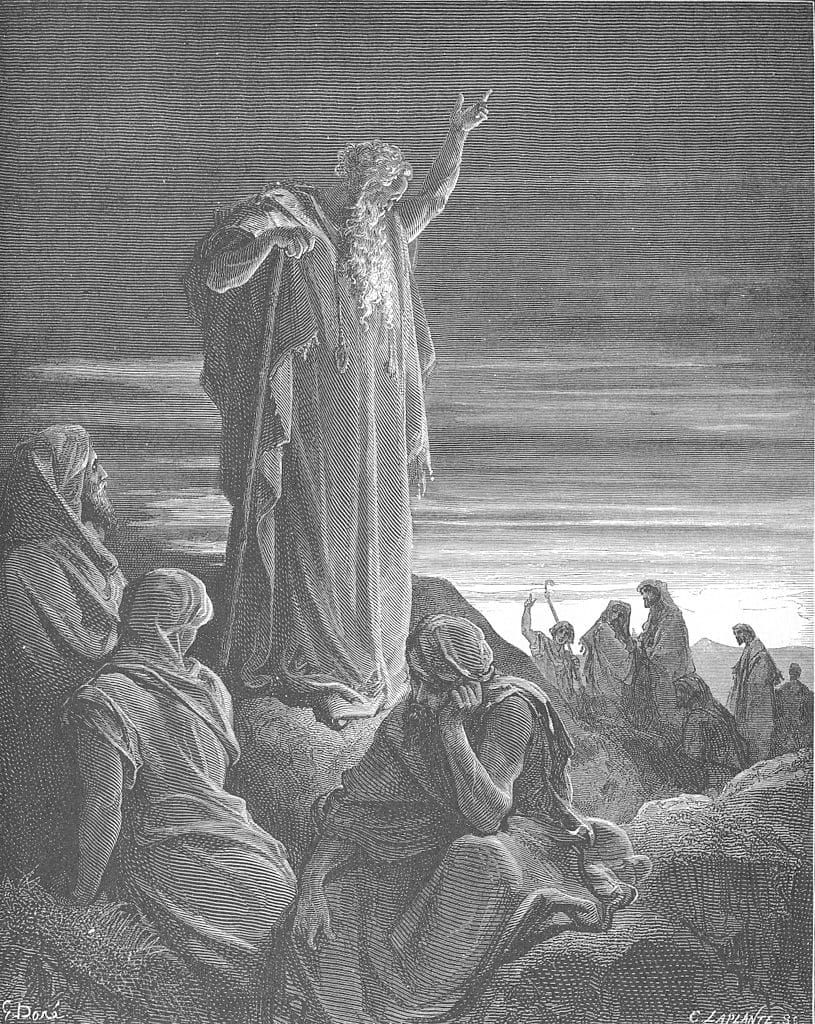
There is a silence that wears the appearance of charity and is in truth a form of cowardice. It keeps the quiet of the room at the cost of the quiet of a conscience; it declines to give a small wound, and so allows a deeper one to fester untended. Against such silence the prophet is set upon a height, and the charge laid on him is not a gentle one: "You, son of man, I have appointed watchman for the house of Israel." The sentinel is not required to be eloquent, nor even to succeed. He is required only to speak. Should he hold his peace while ruin walks toward the city, the ruin will be reckoned to his account — not because he willed it, but because he saw it coming and said nothing.
Yet the soul must not seize upon this office too eagerly, for the Apostle disarms it before it can be misused. "Owe nothing to anyone, except to love one another." Every other debt a man contracts may in time be discharged and forgotten; this one is never discharged, and grows no lighter for being paid. It is the single obligation which the Christian carries to his grave still owing, and the whole law is folded up within it. If, then, a word of correction is ever to be spoken, it can be spoken only out of that debt, and never out of injured pride. Correction that springs from any other root is not correction at all, but revenge dressed in the garments of duty.
The Church has never permitted us to think this a matter of temperament, as though the gentle were excused and the severe indulged. "The fruits of charity are joy, peace, and mercy; charity demands beneficence and fraternal correction." The word is demands. Love is not left free to be silent where silence would be ruinous, any more than it is left free to speak where speech would only wound.
And here St. Augustine gives the sentence which turns the whole question about. "Whoever has offended you, in offending you, has inflicted a serious injury upon himself; and would you not care for a brother's injury?" The offense committed against me is, of the two harms, the lesser and the more quickly healed. The graver injury is the one my brother has done to himself, and which he cannot see; and it is precisely this that I am asked to attend to, having first forgotten my own.
Observe, then, with what reluctance our Lord permits the matter to become public. First alone, between the two; then with one or two others; only at the last before the Church. Every step downward is taken unwillingly, and each is a fence set about the sinner's good name. This is not the procedure of a tribunal impatient for a verdict; it is the patience of a physician who will use the smallest instrument that can do the work. Nor is such counsel some cold administrative duty, for the Catechism numbers it among the works of mercy: "Instructing, advising, consoling, comforting are spiritual works of mercy, as are forgiving and bearing wrongs patiently." To speak the difficult word is an alms, as truly as bread given to the hungry.
But before the soul may stand as watchman it must first stand as one of the warned. "If today you hear his voice, harden not your hearts." He who cannot bear to be corrected has forfeited the right to correct; and the hardness which we so easily detect in another is commonly the hardness we have declined to detect in ourselves.
What remains is a promise, and it is very great. Where two or three are gathered in His name, He is in the midst of them. Origen bids us "practise this symphony" — the concord of hearts that no single voice can produce alone. For charity is that "theological virtue by which we love God above all things for his own sake, and our neighbor as ourselves for the love of God"; and it is this love, and not our skill, which makes the difficult word bearable, the humbled heart teachable, and the small company of the faithful a dwelling place for God.
Lord, teach me to love my brother more than I love my own comfort, and to fear his ruin more than I fear his displeasure. Soften within me whatever has grown hard, that I may receive correction before I presume to give it. Let every word I speak be weighed in the balance of charity, and let me owe to all men only the debt I can never repay. Through Christ our Lord. Amen.
Sources & References
- "You, son of man, I have appointed watchman for the house of Israel." — Ezekiel 33:7, First Reading
- "If today you hear his voice, harden not your hearts." — Psalm 95:8, Responsorial Psalm refrain
- "Owe nothing to anyone, except to love one another." — Romans 13:8, Second Reading
- "Where two or three are gathered together in my name, there am I in the midst of them." — Matthew 18:20, Gospel
- "The fruits of charity are joy, peace, and mercy; charity demands beneficence and fraternal correction." — Catechism of the Catholic Church, 1829
- "Instructing, advising, consoling, comforting are spiritual works of mercy, as are forgiving and bearing wrongs patiently." — Catechism of the Catholic Church, 2447
- "theological virtue by which we love God above all things for his own sake, and our neighbor as ourselves for the love of God" — Catechism of the Catholic Church, 1822
- "Whoever has offended you, in offending you, has inflicted a serious injury upon himself; and would you not care for a brother's injury?" — St. Augustine, Sermon 82, 7
- "we should practise this symphony" — Origen, Commentary on the Gospel according to Matthew, 14, 1
- Papal teaching for this Sunday: Pope Benedict XVI, Angelus, Castel Gandolfo, 4 September 2011 — carried as the Vatican News "Word of the Day" commentary for 6 September 2026
- Readings: USCCB, Twenty-third Sunday in Ordinary Time, Lectionary 127
La única deuda que permanece
📖 Sagrada Escritura Diaria
6 de septiembre de 2026 — XXIII Domingo Ordinario
Lecturas: Ezequiel 33, 7-9 • Salmo 94, 1-2. 6-7. 8-9 • Romanos 13, 8-10 • Mateo 18, 15-20
Hay un silencio que reviste la apariencia de la caridad y que en verdad es una forma de cobardía. Guarda la quietud de la sala a costa de la quietud de una conciencia; se niega a causar una herida pequeña y así permite que otra más honda supure sin cuidado. Contra semejante silencio es colocado el profeta sobre una altura, y el encargo que se le confía no es suave: "A ti, hijo de hombre, te he constituido centinela para la casa de Israel." Al centinela no se le pide elocuencia, ni siquiera éxito. Se le pide solamente que hable. Si callara mientras la ruina camina hacia la ciudad, esa ruina le será pedida a él en cuentas: no porque la haya querido, sino porque la vio venir y nada dijo.
Con todo, el alma no ha de apropiarse de este oficio con demasiada prisa, porque el Apóstol la desarma antes de que pueda abusar de él. "No tengan con nadie otra deuda que la del amor mutuo." Toda otra deuda que un hombre contrae puede con el tiempo saldarse y olvidarse; ésta jamás se salda, ni se aligera por haber sido pagada. Es la única obligación que el cristiano lleva a la sepultura debiéndola todavía, y en ella está plegada la ley entera. Si, pues, alguna vez ha de pronunciarse una palabra de corrección, sólo podrá pronunciarse desde esa deuda, y nunca desde el orgullo herido. La corrección que brota de cualquier otra raíz no es corrección, sino venganza vestida con el hábito del deber.
La Iglesia nunca nos ha permitido tener esto por cuestión de temperamento, como si los mansos quedaran excusados y los severos autorizados. "La caridad tiene por frutos el gozo, la paz y la misericordia. Exige la práctica del bien y la corrección fraterna." La palabra es exige. Al amor no le queda libertad para callar donde el silencio sería ruinoso, como tampoco le queda libertad para hablar donde la palabra sólo heriría.
Y aquí san Agustín pronuncia la sentencia que da vuelta a todo el asunto. "Quien te ha ofendido, ofendiéndote, ha inferido a sí mismo una grave herida, ¿y tú no te preocupas de la herida de tu hermano?" La ofensa cometida contra mí es, de los dos daños, el menor y el que antes se cura. El daño más grave es el que mi hermano se ha hecho a sí mismo y que él no alcanza a ver; y es precisamente a ése al que se me pide atender, habiendo olvidado antes el mío.
Adviértase con cuánta resistencia consiente el Señor en que el asunto se haga público. Primero a solas, entre los dos; después con una o dos personas; sólo al final ante la comunidad. Cada escalón que se desciende se desciende de mala gana, y cada uno es un cerco puesto en torno al buen nombre del pecador. No es el proceder de un tribunal impaciente por dictar sentencia; es la paciencia del médico que empleará el instrumento más pequeño capaz de hacer la obra. Ni es semejante consejo un frío deber administrativo, pues el Catecismo lo cuenta entre las obras de misericordia: "Instruir, aconsejar, consolar, confortar, son obras espirituales de misericordia, como también lo son perdonar y sufrir con paciencia." Decir la palabra difícil es una limosna, tan verdaderamente como el pan dado al hambriento.
Pero antes de que el alma pueda ponerse como centinela, ha de ponerse como uno de los advertidos. "No endurezcan su corazón, como el día de la rebelión en el desierto." Quien no soporta ser corregido ha perdido el derecho de corregir; y la dureza que con tanta facilidad descubrimos en otro suele ser la dureza que hemos rehusado descubrir en nosotros mismos.
Queda una promesa, y es grandísima. Donde dos o tres se reúnen en su nombre, allí está Él en medio de ellos. Orígenes nos manda "ejercitarnos en esta sinfonía", la concordia de los corazones que ninguna voz sola puede producir. Porque la caridad es aquella "virtud teologal por la cual amamos a Dios sobre todas las cosas por Él mismo y a nuestro prójimo como a nosotros mismos por amor de Dios"; y es este amor, y no nuestra destreza, el que hace soportable la palabra difícil, dócil el corazón humillado, y morada de Dios a la pequeña compañía de los fieles.
Señor, enséñame a amar a mi hermano más que a mi propia comodidad, y a temer su ruina más que su enojo. Ablanda en mí cuanto se ha endurecido, para que reciba la corrección antes de atreverme a darla. Que toda palabra mía sea pesada en la balanza de la caridad, y que a nadie deba yo sino la deuda que nunca podré pagar. Por Jesucristo nuestro Señor. Amén.
Fuentes y referencias
- "A ti, hijo de hombre, te he constituido centinela para la casa de Israel." — Ezequiel 33, 7, Primera lectura
- "No endurezcan su corazón, como el día de la rebelión en el desierto." — Salmo 94, 8, Salmo responsorial
- "No tengan con nadie otra deuda que la del amor mutuo." — Romanos 13, 8, Segunda lectura
- "Donde dos o tres se reúnen en mi nombre, ahí estoy yo en medio de ellos." — Mateo 18, 20, Evangelio
- "La caridad tiene por frutos el gozo, la paz y la misericordia. Exige la práctica del bien y la corrección fraterna." — Catecismo de la Iglesia Católica, 1829
- "Instruir, aconsejar, consolar, confortar, son obras espirituales de misericordia, como también lo son perdonar y sufrir con paciencia." — Catecismo de la Iglesia Católica, 2447
- "virtud teologal por la cual amamos a Dios sobre todas las cosas por Él mismo y a nuestro prójimo como a nosotros mismos por amor de Dios" — Catecismo de la Iglesia Católica, 1822
- "Quien te ha ofendido, ofendiéndote, ha inferido a sí mismo una grave herida, ¿y tú no te preocupas de la herida de tu hermano?" — San Agustín, Discursos 82, 7
- "debemos ejercitarnos en esta sinfonía" — Orígenes, Comentario al Evangelio de Mateo 14, 1
- Enseñanza papal para este domingo: Benedicto XVI, Ángelus, Castelgandolfo, 4 de septiembre de 2011
- Lecturas: USCCB, XXIII Domingo Ordinario, Leccionario 127