
📖 Daily Scripture
July 28, 2026 — Tuesday of the Seventeenth Week in Ordinary Time
Readings: Jeremiah 14:17-22 • Psalm 79:8, 9, 11, 13 • Matthew 13:36-43
The prophet Jeremiah begins the day in tears, weeping without rest over a wound he cannot heal and a destruction he cannot avert; and yet his lament does not curdle into despair, for even as he names the affliction of his people he turns and confesses their sin, appealing not to their merit but to the name and the covenant of God. There is a lesson already in this posture of the soul, which learns to look upon the ruin around it and within it without either flattering it or fleeing from it, holding grief and hope together in the same breath. For the temptation, when we survey the wreckage of the world, is to demand that the evil be struck down at once, and this is precisely the temptation the Lord addresses in the Gospel.
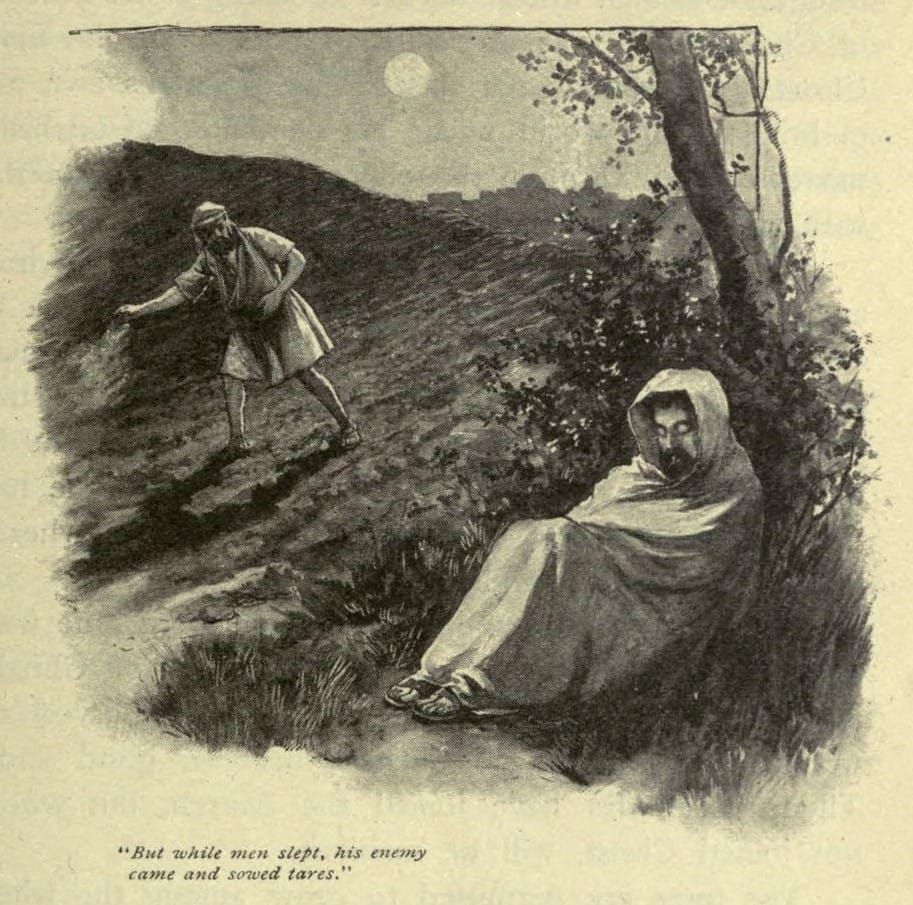
The servants in the parable are not wicked; their instinct is a good one, for they hate the weeds and would spare the field. But their master sees farther than they, and he forbids the hasty uprooting, not because he loves the weeds, but because he loves the wheat, and because the harvest is not yet. Here the patience of God is unveiled, and it is a patience that must not be mistaken for indifference. He waits, not because the difference between good and evil is small, but because the hour of mercy is not yet closed, and because the ground of a single heart may still be changed. As one ancient teacher observed, watching his own flock, those who are weeds today may be wheat tomorrow; and so the field must be spared for the sake of the harvest that grace may yet ripen.
This is a hard wisdom, for the soul would rather sort the world into the saved and the lost and be done with it. Yet the field is the world, and the field is also the Church, which the Catechism does not scruple to describe: the Church, embracing sinners in her bosom, at once holy and always in need of purification, follows constantly the path of penance and renewal. And the field, if the soul is honest, is the heart itself, where the good seed and the weeds are tangled together, and where the work of separation cannot be accomplished by violence but only by the slow labor of conversion. To judge another prematurely is to seize a harvest that belongs to God alone; to despair of oneself is to forget that the harvest is not yet.
For the Lord who withholds the sickle does not withhold it forever. The Catechism reminds the soul that God predestines no one to go to hell, that the road to ruin is one a man must choose and cling to until the end; and it teaches likewise that the message of the Last Judgment calls men to conversion while God still gives the acceptable time, the day of salvation. The delay of judgment, then, is itself an act of love, an open door held open by the patience of the sower, that as many as will may pass through it before the harvest comes.
And when it comes, the promise is radiant: the righteous will shine like the sun in the Kingdom of their Father. This is the end toward which the long patience of God is bent — not the pleasure of condemnation, but the shining of the just. Let the soul, then, cease to be a hasty servant grasping at the weeds, and become instead good wheat, ripening quietly in a mingled field, trusting that the same mercy which spares it now will one day gather it home.
Lord of the harvest, teach me the patience that is born of love, that I may neither excuse the evil within me nor despair of the good you are slowly ripening. Root out the weeds of my heart by the gentle labor of your grace, and let me trust the hour of your mercy rather than seize the judgment that is yours alone. Make of me good wheat, that I may one day shine in the Kingdom of your Father. Through Christ our Lord. Amen.
Sources & References
- "Let my eyes stream with tears… remember your covenant with us, and break it not." — Jeremiah 14:17-22 (First Reading)
- "For the glory of your name, O Lord, deliver us." — Psalm 79:8, 9, 11, 13 (Responsorial Psalm)
- "The Son of Man will send his angels… Then the righteous will shine like the sun in the Kingdom of their Father." — Matthew 13:36-43 (Gospel)
- "The Church, embracing sinners in her bosom, at once holy and always in need of purification, follows constantly the path of penance and renewal." — Catechism of the Catholic Church, 827
- "God predestines no one to go to hell." — Catechism of the Catholic Church, 1037
- "The message of the Last Judgment calls men to conversion." — Catechism of the Catholic Church, 1041
- "They who today are tares, may tomorrow be wheat." — St. Augustine, Sermon 23 on the New Testament (Sermon 73)
- Papal reflection on the master who "sees farther" and cares for the good wheat — Pope Francis, Angelus, 19 July 2020 (via Vatican News, "Word of the Day," 28 July 2026)
La paciencia de la cosecha
📖 Sagrada Escritura Diaria
28 de julio de 2026 — Martes de la XVII Semana del Tiempo ordinario
Lecturas: Jeremías 14, 17-22 • Salmo 78, 8. 9. 11 y 13 • Mateo 13, 36-43
El profeta Jeremías comienza el día entre lágrimas, llorando sin cesar por una herida que no puede sanar y por una destrucción que no puede evitar; y, sin embargo, su lamento no se vuelve desesperación, porque, al mismo tiempo que nombra la aflicción de su pueblo, se vuelve y confiesa su pecado, apelando no a su mérito, sino al nombre y a la alianza de Dios. Ya hay una enseñanza en esta actitud del alma, que aprende a mirar la ruina que la rodea y que lleva dentro sin halagarla ni huir de ella, sosteniendo en un mismo aliento el dolor y la esperanza. Porque la tentación, cuando contemplamos los escombros del mundo, es exigir que el mal sea arrancado de inmediato, y esta es precisamente la tentación que el Señor aborda en el Evangelio.
Los criados de la parábola no son malvados; su instinto es bueno, pues aborrecen la cizaña y quisieran salvar el campo. Pero su señor ve más lejos que ellos, y prohíbe arrancarla con prisa, no porque ame la cizaña, sino porque ama el trigo, y porque aún no ha llegado la cosecha. Aquí se revela la paciencia de Dios, y es una paciencia que no debe confundirse con la indiferencia. Él espera, no porque la diferencia entre el bien y el mal sea pequeña, sino porque la hora de la misericordia todavía no se ha cerrado, y porque la tierra de un solo corazón aún puede cambiar. Como observaba un antiguo maestro, contemplando su propio rebaño, los que hoy son cizaña mañana pueden ser trigo; y por eso el campo ha de ser respetado en bien de la cosecha que la gracia todavía puede madurar.
Es esta una sabiduría dura, porque el alma preferiría dividir el mundo entre los salvados y los perdidos y terminar con ello. Sin embargo, el campo es el mundo, y el campo es también la Iglesia, que el Catecismo no duda en describir: la Iglesia, abrazando en su seno a los pecadores, es a la vez santa y siempre necesitada de purificación, y busca sin cesar la conversión y la renovación. Y el campo, si el alma es sincera, es el corazón mismo, donde la buena semilla y la cizaña están entrelazadas, y donde la obra de separación no puede realizarse por la violencia, sino solo por el lento trabajo de la conversión. Juzgar a otro antes de tiempo es apoderarse de una cosecha que solo a Dios pertenece; desesperar de uno mismo es olvidar que la cosecha aún no ha llegado.
Pues el Señor que retiene la hoz no la retiene para siempre. El Catecismo recuerda al alma que Dios no predestina a nadie a ir al infierno, que el camino de la perdición es uno que el hombre ha de elegir y al que ha de aferrarse hasta el final; y enseña igualmente que el mensaje del Juicio final llama a la conversión mientras Dios da todavía a los hombres el tiempo favorable, el día de la salvación. La demora del juicio es, pues, un acto de amor, una puerta abierta que la paciencia del sembrador mantiene abierta, para que cuantos quieran pasen por ella antes de que llegue la cosecha.
Y cuando llegue, la promesa es luminosa: los justos brillarán como el sol en el Reino de su Padre. Este es el fin al que se orienta la larga paciencia de Dios: no el placer de la condena, sino el resplandor de los justos. Que el alma, entonces, deje de ser un criado apresurado que se lanza sobre la cizaña, y se convierta más bien en buen trigo, madurando en silencio en un campo mezclado, confiando en que la misma misericordia que ahora la respeta la recogerá un día en su granero.
Señor de la cosecha, enséñame la paciencia que nace del amor, para que no excuse el mal que hay en mí ni desespere del bien que lentamente haces madurar. Arranca la cizaña de mi corazón con el trabajo suave de tu gracia, y hazme confiar en la hora de tu misericordia en lugar de arrebatar el juicio que solo a ti pertenece. Hazme buen trigo, para que un día brille en el Reino de tu Padre. Por Jesucristo nuestro Señor. Amén.
Fuentes y referencias
- "Que mis ojos lloren sin cesar… Acuérdate, Señor, de tu alianza con nosotros y no la quebrantes." — Jeremías 14, 17-22 (Primera lectura)
- "Socórrenos, Señor, y te alabaremos." — Salmo 78, 8. 9. 11 y 13 (Salmo responsorial; numeración de la Vulgata/Septuaginta)
- "El Hijo del hombre enviará a sus ángeles… Entonces los justos brillarán como el sol en el Reino de su Padre." — Mateo 13, 36-43 (Evangelio)
- "La Iglesia, abrazando en su seno a los pecadores, es a la vez santa y siempre necesitada de purificación, y busca sin cesar la conversión y la renovación." — Catecismo de la Iglesia Católica, 827
- "Dios no predestina a nadie a ir al infierno." — Catecismo de la Iglesia Católica, 1037
- "El mensaje del Juicio final llama a la conversión." — Catecismo de la Iglesia Católica, 1041
- "Los que hoy son cizaña, mañana pueden ser trigo." — San Agustín, Sermón 73 (Sermón 23 sobre el Nuevo Testamento)
- Reflexión papal sobre el amo que "ve más lejos" y cuida el buen trigo — Papa Francisco, Ángelus, 19 de julio de 2020 (vía Vatican News, "Palabra del día", 28 de julio de 2026)