
📖 Daily Scripture
July 19, 2026 — Sixteenth Sunday in Ordinary Time
Readings: Wisdom 12:13, 16-19 • Psalm 86:5-6, 9-10, 15-16 • Romans 8:26-27 • Matthew 13:24-43
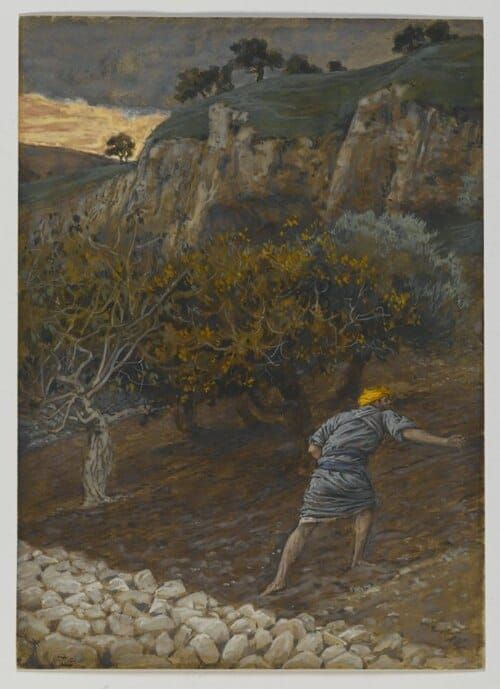
Among the questions that press most heavily upon the soul, few return with such persistence as this: why does God, who is all-powerful and all-holy, suffer evil to grow up beside the good? Today's Gospel does not answer with an argument; it answers with a field. The householder sowed good seed, and while men slept an enemy came and sowed weeds among the wheat; and when the servants, in their zeal, would have torn out the intruder at once, the Master forbade them, lest in rooting up the weeds they should root up the wheat as well. "Let them grow together until harvest." In that quiet command lies a whole revelation of the heart of God.
The Book of Wisdom prepares the soul to receive it. "Though you are master of might, you judge with clemency, and with much lenience you govern us." The lenience of God is not the hesitation of one who cannot act; it is the serenity of One whose power is so entire that it is never anxious, never hurried, never driven to the violence of the impatient. The Catechism teaches that God "shows forth his almighty power by converting us from our sins and restoring us to his friendship by grace," and the Church prays to the God "who manifests his almighty power above all in his mercy and forgiveness." Omnipotence is at its height not in the thunder that destroys but in the mercy that converts; and so the psalmist can say with perfect confidence, "Lord, you are good and forgiving."
Here, then, is the concrete lesson the soul must carry from this field: renounce the premature judgment. The field is the world, but the field is also the heart; and the line dividing wheat from weeds does not run neatly between one man and another, but through every man. The Catechism confesses that "in everyone, the weeds of sin will still be mixed with the good wheat of the Gospel until the end of time." St. Augustine, pondering this very parable, observed that "many are at first tares but then become good grain," and added that if these, when they are wicked, "are not endured with patience, they would not attain their praiseworthy transformation." The soul that appoints itself harvester before the time usurps an office entrusted to the angels at the end of the age; and such a reaper, had he been given his sickle, would have cut down Augustine in his wandering years, and Peter on the night of his denial.
Yet the patience of God is no warrant for indolence. It was "while everyone was asleep" that the enemy came; and Pope Benedict XVI, meditating on this Gospel, taught that we must be ready "to preserve the grace received from the day of our Baptism, continuing to nourish faith in the Lord that prevents evil from taking root." The mustard seed and the leaven speak the same counsel from the other side: the work of God in the soul is small, hidden, and silent, and it must not be despised for its smallness nor measured by what the eye can presently see. Grace, like leaven, does its work in the dark, and moves the whole mass.
And when the sight of evil — in the world, or discovered within one's own heart — leaves the soul without words, it is not left without prayer. "The Spirit comes to the aid of our weakness," writes St. Paul, "for we do not know how to pray as we ought, but the Spirit himself intercedes with inexpressible groanings." The Catechism calls the Holy Spirit "the artisan of God's works" and "the master of prayer." The soul does not stand alone in the field, waiting; the very sighs it cannot utter are gathered up and made intercession before the One who searches hearts.
So the parable ends not in the fire but in the sun: "Then the righteous will shine like the sun in the kingdom of their Father." God has "given his children good ground for hope" in permitting repentance for their sins; and the same long summer that seems to delay the harvest is in truth ripening it. The love of God is patient because it is certain; and the soul that consents to grow slowly under so gentle a Master will find, at the last, that nothing of the wheat has been lost.
Lord God, master of the harvest, teach me the patience that flows from Your power, that I may neither despair over the weeds within me nor pass sentence upon the field of another. Guard in me the grace of my Baptism, and let Your Spirit pray within me when I do not know how to pray. Give me good ground for hope, and gather me at the last into Your barn. Through Christ our Lord. Amen.
Sources & References
- "Though you are master of might, you judge with clemency…"; "good ground for hope… repentance for their sins" — Wisdom 12:13, 16-19 (First Reading, USCCB Lectionary 106)
- "Lord, you are good and forgiving" — Psalm 86:5-6, 9-10, 15-16 (Responsorial Psalm)
- "The Spirit comes to the aid of our weakness… inexpressible groanings" — Romans 8:26-27 (Second Reading)
- "Let them grow together until harvest"; "while everyone was asleep"; "the righteous will shine like the sun" — Matthew 13:24-43 (Gospel)
- "shows forth his almighty power by converting us from our sins…" — Catechism of the Catholic Church, 277
- "In everyone, the weeds of sin will still be mixed with the good wheat of the Gospel until the end of time" — Catechism of the Catholic Church, 827
- "the artisan of God's works… the master of prayer" — Catechism of the Catholic Church, 741
- "many are at first tares but then become good grain…" — St. Augustine, Seventeen Questions on the Gospel of Matthew (Quaest. septendecim in Ev. sec. Matth.), 12, 4 (PL 35, 1371)
- "preserve the grace received from the day of our Baptism…" — Pope Benedict XVI, Angelus, 17 July 2011 (Vatican News, Word of the Day, 19 July 2026)
La paciencia de la cosecha
📖 Sagrada Escritura Diaria
19 de julio de 2026 — XVI Domingo Ordinario
Lecturas: Sabiduría 12, 13. 16-19 • Salmo 85, 5-6. 9-10. 15-16a • Romanos 8, 26-27 • Mateo 13, 24-43
Entre las preguntas que más pesan sobre el alma, pocas vuelven con tanta insistencia como ésta: ¿por qué Dios, todopoderoso y todo santo, consiente que el mal crezca junto al bien? El Evangelio de hoy no responde con un argumento; responde con un campo. El dueño sembró buena semilla, y mientras los hombres dormían vino un enemigo y sembró cizaña entre el trigo; y cuando los trabajadores, en su celo, quisieron arrancar de inmediato al intruso, el amo se lo prohibió, no fuera que al arrancar la cizaña arrancaran también el trigo. "Dejen que crezcan juntos hasta el tiempo de la cosecha." En ese mandato sereno se encierra toda una revelación del corazón de Dios.
El libro de la Sabiduría prepara al alma para recibirla. "Siendo tú el dueño de la fuerza, juzgas con misericordia y nos gobiernas con delicadeza." La delicadeza de Dios no es la vacilación de quien no puede actuar; es la serenidad de Aquel cuyo poder es tan pleno que nunca se angustia, nunca se apresura, nunca se deja arrastrar a la violencia de los impacientes. El Catecismo enseña que "Dios manifiesta su omnipotencia convirtiéndonos de nuestros pecados y restableciéndonos en su amistad por la gracia", y la Iglesia ora al Dios "que manifiestas especialmente tu poder con el perdón y la misericordia". La omnipotencia alcanza su cumbre no en el trueno que destruye, sino en la misericordia que convierte; por eso el salmista puede decir con entera confianza: "Tú, Señor, eres bueno y clemente."
He aquí, pues, la lección concreta que el alma debe llevarse de este campo: renunciar al juicio prematuro. El campo es el mundo, pero el campo es también el corazón; y la línea que separa el trigo de la cizaña no corre limpiamente entre un hombre y otro, sino por dentro de cada hombre. El Catecismo confiesa que "en todos, la cizaña del pecado todavía se encuentra mezclada con la buena semilla del Evangelio hasta el fin de los tiempos". San Agustín, meditando esta misma parábola, observó que muchos "primero son cizaña y luego se convierten en buen trigo", y añadió que si éstos, cuando son malos, no fueran soportados con paciencia, no alcanzarían su laudable transformación. El alma que se constituye a sí misma en segadora antes de tiempo usurpa un oficio confiado a los ángeles al fin del mundo; y semejante segador, de habérsele dado la hoz, habría cortado a Agustín en sus años de extravío, y a Pedro en la noche de su negación.
Sin embargo, la paciencia de Dios no es licencia para la desidia. Fue "mientras los trabajadores dormían" cuando llegó el enemigo; y el Papa Benedicto XVI, meditando este Evangelio, enseñó que debemos estar prontos a custodiar la gracia recibida el día del Bautismo, alimentando la fe en el Señor, que impide al mal echar raíces. La semilla de mostaza y la levadura dicen el mismo consejo desde el otro lado: la obra de Dios en el alma es pequeña, oculta y silenciosa, y no debe despreciarse por su pequeñez ni medirse por lo que el ojo alcanza a ver. La gracia, como la levadura, trabaja en lo escondido, y mueve toda la masa.
Y cuando la vista del mal — en el mundo, o descubierto dentro del propio corazón — deja al alma sin palabras, no la deja sin oración. "El Espíritu nos ayuda en nuestra debilidad", escribe san Pablo, "porque nosotros no sabemos pedir lo que nos conviene; pero el Espíritu mismo intercede por nosotros con gemidos que no pueden expresarse con palabras." El Catecismo llama al Espíritu Santo "artífice de las obras de Dios" y "Maestro de la oración". El alma no está sola en el campo, esperando; los mismos suspiros que no puede pronunciar son recogidos y convertidos en intercesión ante Aquel que conoce profundamente los corazones.
Así, la parábola no termina en el fuego sino en el sol: "Entonces los justos brillarán como el sol en el Reino de su Padre." Dios ha llenado a sus hijos "de una dulce esperanza", pues al pecador le da tiempo para que se arrepienta; y el mismo largo verano que parece retrasar la cosecha, en verdad la está madurando. El amor de Dios es paciente porque es seguro; y el alma que consiente en crecer despacio bajo un Amo tan suave hallará, al final, que nada del trigo se ha perdido.
Señor Dios, dueño de la cosecha, enséñame la paciencia que brota de tu poder, para que ni desespere por la cizaña que hay en mí ni dicte sentencia sobre el campo de otro. Custodia en mí la gracia de mi Bautismo, y que tu Espíritu ore dentro de mí cuando yo no sepa orar. Lléname de una dulce esperanza, y recógeme al final en tu granero. Por Jesucristo nuestro Señor. Amén.
Fuentes y referencias
- "Siendo tú el dueño de la fuerza, juzgas con misericordia…"; "una dulce esperanza… tiempo para que se arrepienta" — Sabiduría 12, 13. 16-19 (Primera lectura, Leccionario 106, USCCB en español)
- "Tú, Señor, eres bueno y clemente" — Salmo 85, 5-6. 9-10. 15-16a (Salmo responsorial, Leccionario de México)
- "El Espíritu nos ayuda en nuestra debilidad… gemidos que no pueden expresarse con palabras" — Romanos 8, 26-27 (Segunda lectura)
- "Dejen que crezcan juntos…"; "mientras los trabajadores dormían"; "los justos brillarán como el sol" — Mateo 13, 24-43 (Evangelio)
- "Dios manifiesta su omnipotencia convirtiéndonos de nuestros pecados…" — Catecismo de la Iglesia Católica, 277
- "en todos, la cizaña del pecado todavía se encuentra mezclada con la buena semilla del Evangelio…" — Catecismo de la Iglesia Católica, 827
- "artífice de las obras de Dios… Maestro de la oración" — Catecismo de la Iglesia Católica, 741
- "muchos primero son cizaña y luego se convierten en buen trigo" — San Agustín, Diecisiete cuestiones sobre el Evangelio de Mateo (Quaest. septendecim in Ev. sec. Matth.), 12, 4 (PL 35, 1371); versión española fiel a la traducción publicada por Vatican News
- Benedicto XVI, Ángelus, 17 de julio de 2011 (Vatican News, Palabra del día, 19 de julio de 2026)