
📖 Daily Scripture
Thursday, July 30, 2026 — Thursday of the Seventeenth Week in Ordinary Time
Readings: Jeremiah 18:1-6 • Psalm 146:1b-2, 3-4, 5-6ab • Matthew 13:47-53
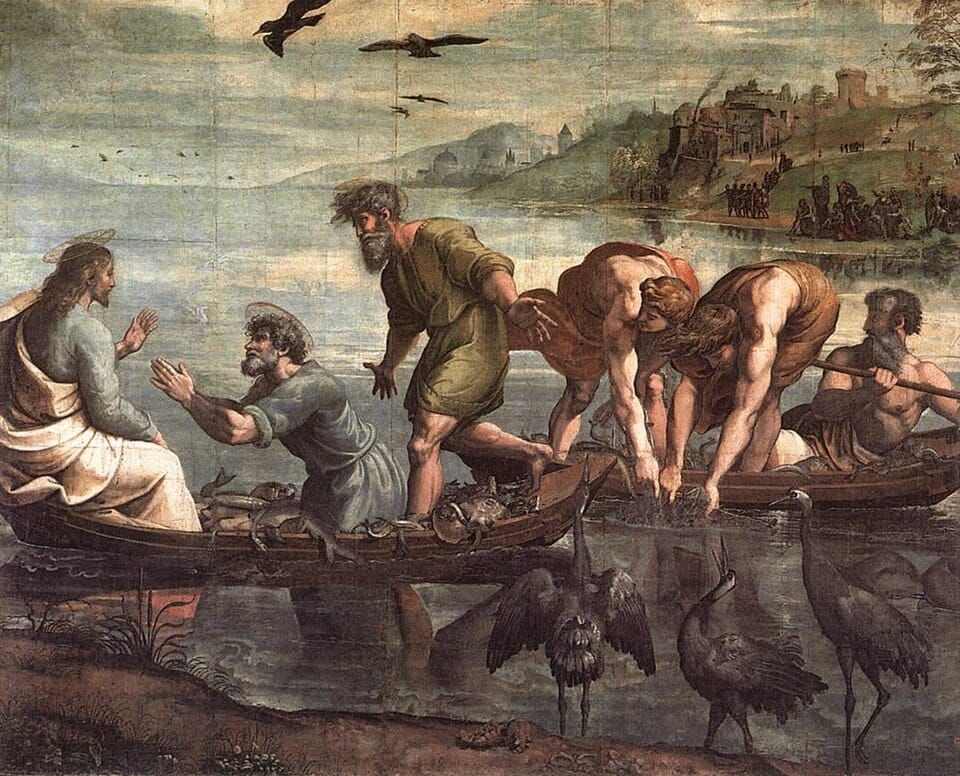
Two images stand at the threshold of this day, and they are not so distant from one another as they at first appear. The prophet is sent down to the potter's house, where a craftsman sits at his wheel with the patience of long habit; and when an unpromising lump of clay collapses beneath his palm, the Lord draws the prophet's attention not to the ruin but to the second attempt — he tried again, making of the clay another object of whatever sort he pleased. In the Gospel a net is let down into the sea and hauled up heavy with every living thing the water holds, and it is only on the shore, and not a moment before, that anything is sorted. Between the wheel and the shore lies the whole of a human life.
The soul is quick to draw the wrong lesson from either picture. From the potter it is tempted to take a comfortable fatalism: if I am only clay, then nothing whatever is asked of me, and the shaping is another's business entirely. From the net it is tempted to take a cold arithmetic: if the sorting is already determined, then let me learn my number and trouble myself no further. But the Scriptures are more delicate than our impatience with them. The clay in Jeremiah's parable is not inert; it is spoiled, and it is spoiled in the potter's hand. Something in it resists. The sorrow the prophet was sent down to watch was not that a vessel had been crushed, but that a vessel had gone hard.
Irenaeus, who dwelt long upon this passage, put the matter with a craftsman's plainness: Offer to Him your heart in a soft and tractable state, and preserve the form in which the Creator has fashioned you, having moisture in yourself, lest, by becoming hardened, you lose the impressions of His fingers. Here, then, is the concrete duty of this day, and it is not a grand one. It is the duty of remaining workable. It is the willingness to be corrected without argument, to be interrupted without resentment, to be told a truth about oneself that one had arranged not to hear. Every refusal of these small things is a small hardening, and no single instance of it looks like ruin — which is precisely why the ruin, when at last it is noticed, has so long a history.
And the Church does not permit the soul to hide behind the image of clay, as though grace were something done to us while we sleep. God is the sovereign master of his plan. But to carry it out he also makes use of his creatures' cooperation. The wheel turns; the hands are steady; but the yielding is ours, and it is asked of us today, in the apology not yet made, in the grievance still fondly kept, in the appetite we have agreed to call a need.
Then comes the net, and it is a sterner mercy. The net gathers fish of every kind, and the Church on earth is exactly that — the Church, clasping sinners to her bosom, at once holy and always in need of purification, follows constantly the path of penance and renewal. To be inside the net is not yet to be chosen upon the shore. Chrysostom, reading this very parable, would not let his people rest in the comfort of mere membership: the ones condemned here, he says, are condemned for wickedness of life, having attained to His knowledge, and being caught, but not even so capable of being saved. And he counts the perils on his fingers: Do you see how many are the ways of destruction? By the rock, by the thorns, by the wayside, by the tares, by the net. The moral is not that we should tremble at the shore, but that we should stop mistaking proximity to holy things for the possession of them.
Yet notice where the mercy lies. The sorting is at the end, and we are not at the end. The message of the Last Judgment calls men to conversion while God is still giving them "the acceptable time, . . . the day of salvation." It inspires a holy fear of God and commits them to the justice of the Kingdom of God. Pope Francis, teaching on discernment, observed that the fisherman's craft costs something: long nights at sea, hard labour, and the willingness to throw part of the catch away. Discernment, he said, is demanding but indispensable for living. So it is with the soul's daily work of choosing: it is costly, it is nobody else's to do for us, and it is the very thing the delay of judgment was given for.
The Psalm shows us where to lean while the wheel turns and the net fills. Put not your trust in princes, in the sons of men, in whom there is no salvation. Every other hand will fail; this one does not. The clay is still moist, the boat is still on the water, and the fingers that shaped us have not been withdrawn. That is not a small hope. It is the whole of it.
Lord, keep me soft in Your hands today. Where I have hardened, add water; where I have resisted, teach me to yield; and let me not mistake the sound of Your voice for the noise of my own preferences. Sort me now, gently, while there is still time to be sorted. Through Christ our Lord. Amen.
Sources & References
- "he tried again, making of the clay another object of whatever sort he pleased" — Jeremiah 18:4 (First Reading, Jeremiah 18:1-6)
- "Put not your trust in princes, in the sons of men, in whom there is no salvation" — Psalm 146:3 (Responsorial Psalm, Psalm 146:1b-2, 3-4, 5-6ab; refrain: "Blessed is he whose help is the God of Jacob")
- "The Kingdom of heaven is like a net thrown into the sea, which collects fish of every kind" — Matthew 13:47 (Gospel, Matthew 13:47-53)
- "Offer to Him your heart in a soft and tractable state… lest, by becoming hardened, you lose the impressions of His fingers" — St. Irenaeus of Lyons, Against Heresies, IV.39.2
- "having attained to His knowledge, and being caught, but not even so capable of being saved" and "Do you see how many are the ways of destruction? By the rock, by the thorns, by the wayside, by the tares, by the net" — St. John Chrysostom, Homily 47 on Matthew, §3
- "God is the sovereign master of his plan. But to carry it out he also makes use of his creatures' cooperation" — Catechism of the Catholic Church, 306
- "the Church, clasping sinners to her bosom, at once holy and always in need of purification, follows constantly the path of penance and renewal" — Catechism of the Catholic Church, 827 (citing Lumen Gentium, 8)
- "The message of the Last Judgment calls men to conversion while God is still giving them 'the acceptable time, . . . the day of salvation'" — Catechism of the Catholic Church, 1041
- "Discernment is demanding but indispensable for living" — Pope Francis, General Audience, 31 August 2022; quoted as the papal commentary for this day in Vatican News, Word of the Day, 30 July 2026
- Readings text: USCCB, Daily Readings for 30 July 2026
Las manos del alfarero y la orilla que aguarda
📖 Sagrada Escritura Diaria
Jueves, 30 de julio de 2026 — Jueves de la XVII semana del Tiempo ordinario
Lecturas: Jeremías 18, 1-6 • Salmo 145, 2abc. 2d-4. 5-6 • Mateo 13, 47-53
Dos imágenes se alzan en el umbral de este día, y no están tan distantes entre sí como parecen a primera vista. El profeta es enviado a la casa del alfarero, donde un artesano trabaja en su torno con la paciencia del oficio largamente aprendido; y cuando un trozo de barro poco prometedor se estropea bajo su mano, el Señor no dirige la mirada del profeta hacia la ruina, sino hacia el segundo intento: volvía a hacer otra con el mismo barro, como mejor le parecía. En el Evangelio, una red es echada al mar y sacada a la playa cargada de cuanto el agua encierra, y solo en la orilla, y no un instante antes, se escoge algo. Entre el torno y la orilla cabe toda una vida humana.
El alma se apresura a sacar de cada imagen la lección equivocada. Del alfarero se siente tentada a extraer un fatalismo cómodo: si no soy más que barro, entonces nada se me pide, y el modelado es asunto exclusivamente de otro. De la red se siente tentada a extraer una aritmética fría: si la selección ya está decidida, que aprenda mi número y no me inquiete más. Pero la Escritura es más delicada que nuestra impaciencia con ella. El barro de la parábola de Jeremías no es inerte; se estropea, y se estropea en la mano del alfarero. Algo en él resiste. La tristeza que el profeta fue enviado a contemplar no fue que una vasija hubiera sido aplastada, sino que una vasija se hubiera endurecido.
Ireneo, que meditó largamente este pasaje, lo dijo con la sencillez de un artesano: Ofrécele tu corazón blando y dócil, y conserva la forma con que el Creador te modeló, guardando en ti la humedad, para que, al endurecerte, no pierdas la impronta de sus dedos. He aquí, pues, el deber concreto de este día, y no es un deber grandioso. Es el deber de permanecer moldeable. Es la disposición a ser corregido sin discutir, a ser interrumpido sin resentimiento, a que se nos diga una verdad sobre nosotros mismos que habíamos dispuesto no escuchar. Cada negativa en estas cosas pequeñas es un pequeño endurecimiento, y ninguna de ellas parece por sí sola una ruina; precisamente por eso la ruina, cuando por fin se advierte, tiene ya tan larga historia.
Y la Iglesia no permite que el alma se esconda detrás de la imagen del barro, como si la gracia fuera algo que se nos hace mientras dormimos. Dios es el Señor soberano de su designio. Pero para su realización se sirve también del concurso de las criaturas. El torno gira; las manos son firmes; pero el ceder es nuestro, y se nos pide hoy: en la disculpa aún no pedida, en el agravio todavía guardado con cariño, en el apetito que hemos convenido en llamar necesidad.
Luego viene la red, y es una misericordia más severa. La red recoge toda clase de peces, y la Iglesia en la tierra es exactamente eso: la Iglesia, abrazando en su seno a los pecadores, es a la vez santa y siempre necesitada de purificación y busca sin cesar la conversión y la renovación. Estar dentro de la red no es todavía haber sido escogido en la orilla. Crisóstomo, leyendo esta misma parábola, no dejó que sus oyentes descansaran en el consuelo de la mera pertenencia: los aquí condenados, dice, lo son por la maldad de su vida, habiendo alcanzado su conocimiento y habiendo sido capturados, y ni aun así capaces de salvarse. Y cuenta los peligros con los dedos: ¿Ves cuántos son los caminos de la perdición? Por la piedra, por las espinas, por el camino, por la cizaña, por la red. La lección no es que debamos temblar ante la orilla, sino que dejemos de confundir la cercanía a las cosas santas con su posesión.
Pero adviértase dónde está la misericordia. La selección es al final, y nosotros no estamos en el final. El mensaje del Juicio final llama a la conversión mientras Dios da a los hombres todavía "el tiempo favorable, el tiempo de salvación". Inspira el santo temor de Dios. Compromete para la justicia del Reino de Dios. El Papa Francisco, enseñando sobre el discernimiento, observó que el oficio del pescador cuesta algo: largas noches en el mar, fatiga, y la disposición a descartar una parte de la pesca. El discernimiento, dijo, es agotador pero indispensable para la vida. Así es la tarea diaria del alma que elige: cuesta, nadie puede hacerla en nuestro lugar, y es precisamente aquello para lo que se nos ha dado la demora del juicio.
El Salmo nos muestra dónde apoyarnos mientras el torno gira y la red se llena. No pongas tu confianza en los que mandan ni en el mortal, que no puede salvarte. Toda otra mano fallará; esta no. El barro sigue húmedo, la barca sigue sobre el agua, y los dedos que nos formaron no se han retirado. No es una esperanza pequeña. Es toda la esperanza.
Señor, mantenme blando en tus manos hoy. Donde me he endurecido, añade agua; donde he resistido, enséñame a ceder; y no permitas que confunda el sonido de tu voz con el ruido de mis preferencias. Escógeme ahora, con dulzura, mientras aún hay tiempo de ser escogido. Por Jesucristo nuestro Señor. Amén.
Fuentes y referencias
- "volvía a hacer otra con el mismo barro, como mejor le parecía" — Jeremías 18, 4 (Primera lectura, Jeremías 18, 1-6)
- "No pongas tu confianza en los que mandan ni en el mortal, que no puede salvarte" — Salmo 145, 3 (Salmo responsorial, Salmo 145, 2abc. 2d-4. 5-6; respuesta: "Dichoso el que espera en el Señor")
- "El Reino de los cielos se parece también a la red que los pescadores echan en el mar y recoge toda clase de peces" — Mateo 13, 47 (Evangelio, Mateo 13, 47-53)
- "Ofrécele tu corazón blando y dócil… para que, al endurecerte, no pierdas la impronta de sus dedos" — San Ireneo de Lyon, Contra las herejías, IV, 39, 2
- "¿Ves cuántos son los caminos de la perdición? Por la piedra, por las espinas, por el camino, por la cizaña, por la red" — San Juan Crisóstomo, Homilía 47 sobre San Mateo, §3
- "Dios es el Señor soberano de su designio. Pero para su realización se sirve también del concurso de las criaturas" — Catecismo de la Iglesia Católica, 306
- "la Iglesia, abrazando en su seno a los pecadores, es a la vez santa y siempre necesitada de purificación y busca sin cesar la conversión y la renovación" — Catecismo de la Iglesia Católica, 827 (cita de Lumen Gentium, 8)
- "El mensaje del Juicio final llama a la conversión mientras Dios da a los hombres todavía 'el tiempo favorable, el tiempo de salvación'" — Catecismo de la Iglesia Católica, 1041
- "El discernimiento es agotador pero indispensable para la vida" — Papa Francisco, Audiencia general, 31 de agosto de 2022; citado como comentario papal de este día en Vatican News, Palabra del día, 30 de julio de 2026
- Texto de las lecturas: USCCB, Lecturas del 30 de julio de 2026