
📖 Daily Scripture
Thursday, November 12, 2026 — Memorial of Saint Josaphat, Bishop and Martyr
Readings: Philemon 7-20 • Psalm 146:7, 8-9a, 9bc-10 • Luke 17:20-25
There is in every soul a restless appetite for the visible and the decisive, for some sign in the heavens that would settle every doubt at a stroke and spare it the long, patient labor of faith. The Pharisees gave voice to that appetite when they asked the Lord when the Kingdom of God would come; and He, as was His way, turned their gaze from the far horizon to the ground on which they stood. “The coming of the Kingdom of God cannot be observed,” He told them, and then, more searchingly still, that “the Kingdom of God is among you.” It was not to be looked for in portents, nor pursued from one rumor to the next, but recognized where it already quietly dwelt.
How quietly it dwells may be learned from the shortest of St. Paul’s letters. An old man in chains writes to a friend on behalf of a runaway slave, one who “was once useless to you but is now useful to both you and me,” and asks that he be received back “no longer as a slave but more than a slave, a brother.” Nothing in the scene would have caught the eye of the world: a fugitive returning, a letter carried by hand, a master asked to forgive. Yet here the Kingdom was at work, unannounced, loosening an order of things that seemed fixed forever. The Church has never ceased to read the letter so, recalling that St. Paul directed a Christian master to treat his Christian slave “no longer as a slave but more than a slave, as a beloved brother.”
Here lies the lesson for the soul, and it is a searching one. Every soul keeps, somewhere in the ledger of the heart, an Onesimus: someone it has quietly judged useless, or who has wronged it, or who owes it a debt it does not mean to forget. The soul would gladly see the Kingdom in signs and wonders; it is slower to receive it at the door in the person it had set aside. Yet no law, no arrangement, however wise, can do this work in its place. The Catechism says plainly that the pride and selfishness which divide men will cease only through “the charity that finds in every man a ‘neighbor,’ a brother.” The Kingdom advances one reconciliation at a time, and it advances in me when I welcome as a brother the one I had written off.
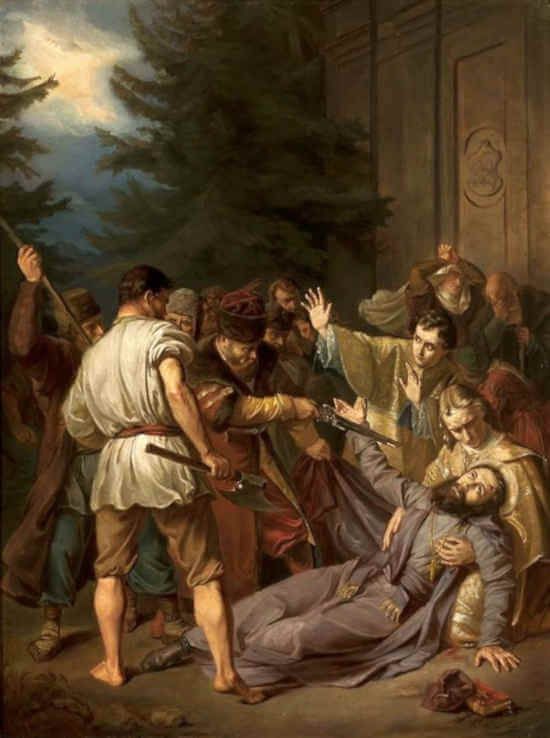
Nor is such charity cheap. Paul does not merely plead; he pays. “If he has done you any injustice or owes you anything, charge it to me.” In those plain words the soul may hear an echo of Christ Himself, who took our debts upon His own account and, before His day of glory, had first to “suffer greatly and be rejected by this generation.” To receive a brother is often to absorb a loss, to forgo a just claim, to let love bear what justice might have exacted. It was so for St. Josaphat, whom the Church honors today, who spent himself and at last gave his life for the unity of Christ’s scattered flock.
Pope Francis, reflecting on this Gospel, observed that the Kingdom is found “hidden in that holiness of daily life, that everyday holiness,” and that “the Kingdom of God is not far from us, it’s close.” It is close in the Sacrament above all, for, as the Church teaches, “in the Eucharist, it is in our midst.” And St. Cyprian, meditating on the Lord’s Prayer, ventured that “the Kingdom of God means Christ himself, whom we daily desire to come.” To seek the Kingdom, then, is to seek a Person; and that Person, having come among us, waits to be recognized in the brother the soul is asked to receive.
The soul need not, therefore, run after every rumor of signs, nor grow anxious that the Kingdom tarries. It is already sown, and it grows in secret wherever a grudge is surrendered and a debt is forgiven. The day will come when the Son of Man shines like lightning from one end of the sky to the other; until then, He asks only to be welcomed in the hidden places of ordinary love. And there, in the welcome, the heart that forgives discovers that it, too, has been refreshed in Christ, received by a love that never once regarded it as useless.
Lord Jesus, whose Kingdom comes not with display but dwells hidden among us, teach me to look for You where You have chosen to be found. Soften within me every grudge and every reckoning of debts, that I may receive as a brother the one I had set aside. Refresh my heart in Your love, and make it a quiet dwelling of Your reign. Through Christ our Lord. Amen.
Sources & References
- “The coming of the Kingdom of God cannot be observed”; “the Kingdom of God is among you” — Luke 17:20-21
- “Suffer greatly and be rejected by this generation”; the lightning that lights up the sky — Luke 17:24-25
- “Was once useless to you but is now useful to both you and me”; “no longer as a slave but more than a slave, a brother”; “charge it to me”; “refresh my heart in Christ” — Philemon 11, 16, 18, 20
- Responsorial Psalm: “Blessed is he whose help is the God of Jacob” — Psalm 146:5a (refrain); Psalm 146:7, 8-9a, 9bc-10
- St. Paul directed a Christian master to treat his Christian slave “no longer as a slave but more than a slave, as a beloved brother” — Catechism of the Catholic Church, 2414
- “The charity that finds in every man a ‘neighbor,’ a brother” — Catechism of the Catholic Church, 1931
- “In the Eucharist, it is in our midst” — Catechism of the Catholic Church, 2816
- “The Kingdom of God means Christ himself, whom we daily desire to come” — St. Cyprian of Carthage, On the Lord’s Prayer, 13 (as quoted in CCC 2816)
- “Hidden in that holiness of daily life, that everyday holiness”; “the Kingdom of God is not far from us, it’s close” — Pope Francis, homily at Santa Marta, November 13, 2014 (Vatican News, Word of the Day, November 12, 2026)
- Readings: USCCB Lectionary for Mass, Lectionary 494, Memorial of Saint Josaphat, Bishop and Martyr
El Reino silencioso y el hermano que vuelve
📖 Sagrada Escritura Diaria
Jueves 12 de noviembre de 2026 — Memoria de San Josafat, obispo y mártir
Lecturas: Filemón 7-20 • Salmo 145, 7. 8-9a. 9bc-10 • Lucas 17, 20-25
Hay en toda alma un ansia inquieta de lo visible y lo definitivo, de alguna señal en los cielos que disipe de un golpe toda duda y le ahorre la larga y paciente labor de la fe. Los fariseos dieron voz a esa ansia cuando preguntaron al Señor cuándo llegaría el Reino de Dios; y Él, como era su costumbre, apartó su mirada del horizonte lejano y la volvió hacia el suelo que pisaban. «El Reino de Dios no llega aparatosamente», les dijo, y luego, con palabra aún más penetrante, que «el Reino de Dios ya está entre ustedes». No había que buscarlo en prodigios ni perseguirlo de un rumor en otro, sino reconocerlo allí donde ya habitaba en silencio.
Cuán silenciosamente habita puede aprenderse en la más breve de las cartas de san Pablo. Un anciano encadenado escribe a un amigo en favor de un esclavo fugitivo, uno que «en otro tiempo te fue inútil, pero ahora es muy útil para ti y para mí», y le pide que lo reciba de nuevo «ya no como esclavo, sino como algo mejor que un esclavo, como hermano amadísimo». Nada en la escena habría llamado la atención del mundo: un fugitivo que regresa, una carta llevada de mano en mano, un amo a quien se le pide perdonar. Y sin embargo, allí obraba el Reino, sin anunciarse, aflojando un orden de cosas que parecía fijo para siempre. La Iglesia nunca ha dejado de leer así esta carta, recordando que san Pablo ordenaba a un amo cristiano que tratase a su esclavo cristiano «no como esclavo, sino [...] como un hermano [...] en el Señor».
Aquí está la lección para el alma, y es una lección que escudriña. Toda alma guarda, en algún rincón del libro de cuentas del corazón, un Onésimo: alguien a quien ha juzgado calladamente inútil, o que la ha agraviado, o que le debe algo que no piensa olvidar. Con gusto contemplaría el alma el Reino en señales y maravillas; es más lenta para recibirlo a la puerta en la persona que había dejado a un lado. Pero ninguna ley, ningún arreglo, por sabio que sea, puede hacer esta obra en su lugar. El Catecismo enseña con claridad que la soberbia y el egoísmo que dividen a los hombres sólo cesan con «la caridad que ve en cada hombre un “prójimo”, un hermano». El Reino avanza de reconciliación en reconciliación, y avanza en mí cuando acojo como hermano a aquel a quien había dado por perdido.
Tampoco es barata esta caridad. Pablo no se limita a suplicar; paga. «Si en algo te perjudicó o algo te debe, ponlo a mi cuenta. Yo, Pablo, te lo pagaré». En esas palabras sencillas el alma puede oír un eco de Cristo mismo, que cargó nuestras deudas a su propia cuenta y que, antes de su día de gloria, tuvo primero que «padecer mucho y ser rechazado por los hombres de esta generación». Recibir a un hermano es a menudo absorber una pérdida, renunciar a un reclamo justo, dejar que el amor cargue lo que la justicia habría podido exigir. Así fue para san Josafat, a quien la Iglesia honra hoy, que se desgastó y al fin dio la vida por la unidad del rebaño disperso de Cristo.
El Papa Francisco, reflexionando sobre este Evangelio, observó que el Reino está «escondido en esa santidad de la vida cotidiana, esa santidad de todos los días», y que «el reino de Dios no está lejos de nosotros, está cerca». Está cerca sobre todo en el Sacramento, pues, como enseña la Iglesia, «por la Eucaristía está entre nosotros». Y san Cipriano, meditando sobre la oración del Señor, se atrevió a decir que «puede ser que el Reino de Dios signifique Cristo en persona, al cual llamamos con nuestras voces todos los días». Buscar el Reino, pues, es buscar a una Persona; y esa Persona, habiendo venido entre nosotros, espera ser reconocida en el hermano que se le pide al alma recibir.
El alma no necesita, por tanto, correr tras cada rumor de señales, ni inquietarse porque el Reino parezca tardar. Ya está sembrado, y crece en secreto dondequiera que se entrega un rencor y se perdona una deuda. Llegará el día en que el Hijo del hombre brille como el relámpago de un extremo a otro del cielo; mientras tanto, sólo pide ser acogido en los lugares escondidos del amor ordinario. Y allí, en la acogida, el corazón que perdona descubre que también él ha sido confortado en Cristo, recibido por un amor que jamás lo tuvo por inútil.
Señor Jesús, cuyo Reino no llega aparatosamente sino que habita escondido entre nosotros, enséñame a buscarte allí donde has querido ser hallado. Ablanda dentro de mí todo rencor y todo ajuste de cuentas, para que reciba como hermano a aquel a quien había dejado a un lado. Conforta mi corazón en tu amor y hazlo morada silenciosa de tu Reino. Por Jesucristo nuestro Señor. Amén.
Fuentes y referencias
- «El Reino de Dios no llega aparatosamente»; «el Reino de Dios ya está entre ustedes» — Lucas 17, 20-21
- «Padecer mucho y ser rechazado por los hombres de esta generación»; el fulgor del relámpago — Lucas 17, 24-25
- «En otro tiempo te fue inútil, pero ahora es muy útil para ti y para mí»; «ya no como esclavo, sino como algo mejor que un esclavo, como hermano amadísimo»; «ponlo a mi cuenta. Yo, Pablo, te lo pagaré»; «confortes mi corazón en Cristo» — Filemón 11, 16, 18-20
- Salmo responsorial: «El Señor ama al hombre justo» — Salmo 145, 7. 8-9a. 9bc-10 (Leccionario de México)
- San Pablo ordenaba a un amo cristiano que tratase a su esclavo cristiano «no como esclavo, sino [...] como un hermano [...] en el Señor» — Catecismo de la Iglesia Católica, 2414
- «La caridad que ve en cada hombre un “prójimo”, un hermano» — Catecismo de la Iglesia Católica, 1931
- «Por la Eucaristía está entre nosotros» — Catecismo de la Iglesia Católica, 2816
- «Puede ser que el Reino de Dios signifique Cristo en persona, al cual llamamos con nuestras voces todos los días» — San Cipriano de Cartago, De dominica oratione, 13 (citado en CIC 2816)
- «Escondido en esa santidad de la vida cotidiana, esa santidad de todos los días»; «el reino de Dios no está lejos de nosotros, está cerca» — Papa Francisco, homilía en Santa Marta, 13 de noviembre de 2014 (Vatican News, Evangelio y palabra del día, 12 de noviembre de 2026)
- Lecturas: USCCB, Leccionario 494 (textos del Leccionario de la Conferencia Episcopal Mexicana), Memoria de San Josafat, obispo y mártir