
📖 Daily Scripture
Monday, November 9, 2026 — Feast of the Dedication of the Lateran Basilica in Rome
Readings: Ezekiel 47:1-2, 8-9, 12 • Psalm 46:2-3, 5-6, 8-9 • 1 Corinthians 3:9c-11, 16-17 • John 2:13-22
The prophet Ezekiel is led to the entrance of the temple and shown a strange and lovely sight: water flowing out from beneath the threshold, at first a trickle, then a river, running eastward into the bitter sea and making it fresh. Wherever it goes, life follows. Fruit trees grow along its banks, bearing every month, and of them it is said: “Their fruit shall serve for food, and their leaves for medicine.” The Psalmist sings of the same mystery: “The waters of the river gladden the city of God, the holy dwelling of the Most High!”
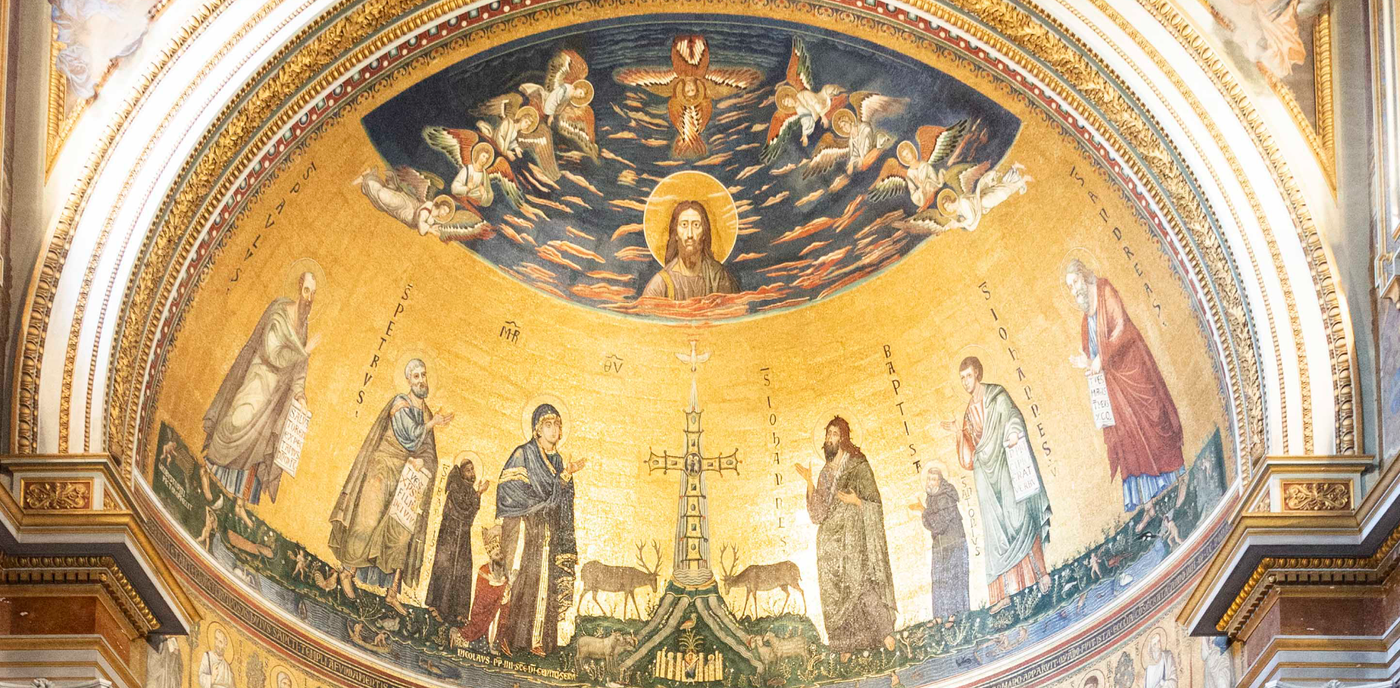
Today the Church keeps the feast of a building, the Lateran Basilica in Rome, the cathedral of the Bishop of Rome and the mother of all churches. It may seem strange to honour stone and mortar with a feast, yet the Church has always understood that her buildings speak. The Catechism teaches that “these visible churches are not simply gathering places but signify and make visible the Church living in this place, the dwelling of God with men reconciled and united in Christ.” The stones are a sermon on what God intends to make of the soul.
For Saint Paul will not let the reader rest in the outward temple. “Do you not know that you are the temple of God,” he asks the Corinthians, “and that the Spirit of God dwells in you?” The foundation is Christ, and no other can be laid; but what is built upon it is the living soul. The Catechism says that Baptism makes the believer a “member of Christ and coheir with him, and a temple of the Holy Spirit.” Saint Augustine expressed the same truth about the whole Church in a sentence the Catechism has made its own: “What the soul is to the human body, the Holy Spirit is to the Body of Christ, which is the Church.”
And so the Gospel takes on its full weight. Our Lord enters the temple and finds it crowded with oxen, sheep and doves, with money-changers at their tables, and He drives them out: “Stop making my Father’s house a marketplace.” The disciples remember the psalm, “Zeal for your house will consume me.” If the soul is now God’s temple, then this scene is not only history; it is a mirror. Every heart has its forecourts where commerce has crept in: the bargaining spirit that gives to God only in exchange for favours, the noisy traffic of distraction that leaves no silence for prayer, the small idols set up in corners where the Lord alone should dwell.
Here is the concrete lesson of the feast. The soul must allow Christ to cleanse His temple, and must not defend the tables He comes to overturn. This is not a violence done against the soul but a rescue of it, for the marketplace is always crowded and always anxious, while the house of prayer is spacious and at peace. To consent to His zeal is to let the river flow again from the threshold.
Nor need the soul despair if it finds its temple sadly ruined. “Destroy this temple and in three days I will raise it up,” Jesus says, speaking of His own body. Pope Francis, reflecting on this Gospel, drew from it a word of immense consolation: “three days are enough for the Lord to rebuild his temple within us!” The Risen Christ does not merely repair; He makes new. Where He is welcomed, the waters rise once more, and what was salt becomes sweet, and what was barren bears fruit in every season, fruit for food and leaves for healing, that the whole city of God may be glad.
Lord Jesus, You who cleansed Your Father’s house with holy zeal, enter the temple of my heart and overturn whatever has made it a marketplace. Let the river of Your Spirit flow within me, rebuilding what is ruined and making me a house of prayer. Through Christ our Lord. Amen.
Sources & References
- “Their fruit shall serve for food, and their leaves for medicine” — Ezekiel 47:12
- “The waters of the river gladden the city of God, the holy dwelling of the Most High!” — Psalm 46, responsorial refrain (Ps 46:5)
- “Do you not know that you are the temple of God, and that the Spirit of God dwells in you?” — 1 Corinthians 3:16
- “Stop making my Father’s house a marketplace”; “Zeal for your house will consume me”; “Destroy this temple and in three days I will raise it up” — John 2:16, 17, 19
- “these visible churches are not simply gathering places but signify and make visible the Church living in this place, the dwelling of God with men reconciled and united in Christ” — CCC 1180
- “member of Christ and coheir with him, and a temple of the Holy Spirit” — CCC 1265
- “What the soul is to the human body, the Holy Spirit is to the Body of Christ, which is the Church” — St. Augustine, Sermo 267, 4, quoted in CCC 797
- “three days are enough for the Lord to rebuild his temple within us!” — Pope Francis, Homily, 9 November 2019 (Vatican News, Word of the Day, 9 November 2026)
El río que brota del umbral
📖 Sagrada Escritura Diaria
lunes, 9 de noviembre de 2026 — Fiesta de la Dedicación de la Basílica de Letrán
Lecturas: Ezequiel 47, 1-2. 8-9. 12 • Salmo 45, 2-3. 5-6. 8-9 • 1 Corintios 3, 9-11. 16-17 • Juan 2, 13-22
El profeta Ezequiel es llevado a la entrada del templo y se le muestra un espectáculo extraño y hermoso: por debajo del umbral mana agua, primero apenas un hilo, luego un torrente, que corre hacia el oriente, entra en el mar de aguas saladas y lo sanea. Por dondequiera que pasa, prospera la vida. En sus márgenes crecen árboles frutales que dan fruto nuevo cada mes, y de ellos se dice: “Sus frutos servirán de alimento y sus hojas, de medicina.” El salmista canta el mismo misterio: “Un río alegra a la ciudad de Dios.”
Hoy la Iglesia celebra la fiesta de un edificio, la Basílica de Letrán en Roma, catedral del Obispo de Roma y madre de todas las iglesias. Puede parecer extraño honrar con una fiesta la piedra y la argamasa; pero la Iglesia ha comprendido siempre que sus edificios hablan. El Catecismo enseña que “estas iglesias visibles no son simples lugares de reunión, sino que significan y manifiestan a la Iglesia que vive en ese lugar, morada de Dios con los hombres reconciliados y unidos en Cristo”. Las piedras son un sermón sobre lo que Dios quiere hacer del alma.
Porque san Pablo no permite que el lector se detenga en el templo exterior. “¿No saben acaso ustedes que son el templo de Dios y que el Espíritu de Dios habita en ustedes?”, pregunta a los corintios. El único cimiento válido es Jesucristo; pero lo que se edifica sobre él es el alma viva. El Catecismo dice que el Bautismo hace del creyente “miembro de Cristo, coheredero con Él y templo del Espíritu Santo”. San Agustín expresó la misma verdad acerca de toda la Iglesia en una frase que el Catecismo ha hecho suya: “Lo que nuestro espíritu, es decir, nuestra alma, es para nuestros miembros, eso mismo es el Espíritu Santo para los miembros de Cristo, para el Cuerpo de Cristo que es la Iglesia.”
Así el Evangelio adquiere todo su peso. Nuestro Señor entra en el templo y lo encuentra lleno de bueyes, ovejas y palomas, con los cambistas en sus mesas, y los echa fuera: “No conviertan en un mercado la casa de mi Padre.” Los discípulos recuerdan lo que estaba escrito: “El celo de tu casa me devora.” Si el alma es ahora templo de Dios, esta escena no es sólo historia; es un espejo. Todo corazón tiene sus atrios donde se ha infiltrado el comercio: el espíritu negociante que da a Dios sólo a cambio de favores, el tráfico ruidoso de la distracción que no deja silencio para la oración, los pequeños ídolos colocados en rincones donde sólo el Señor debería habitar.
Ésta es la lección concreta de la fiesta. El alma debe permitir que Cristo purifique su templo, y no defender las mesas que Él viene a volcar. No es una violencia hecha contra el alma, sino su rescate, porque el mercado siempre está lleno y siempre inquieto, mientras que la casa de oración es espaciosa y está en paz. Consentir a su celo es dejar que el río vuelva a brotar del umbral.
Tampoco debe desesperar el alma si encuentra su templo tristemente arruinado. “Destruyan este templo y en tres días lo reconstruiré”, dice Jesús, hablando del templo de su cuerpo. El Papa Francisco, meditando este Evangelio, extrajo de él una palabra de inmenso consuelo: “¡al Señor le bastan tres días reconstruir su templo dentro de nosotros!” Cristo resucitado no sólo repara; hace nuevas todas las cosas. Donde es acogido, las aguas vuelven a subir, y lo que era salado se vuelve dulce, y lo que era estéril da fruto en todas las estaciones, fruto para alimento y hojas para sanar, para que toda la ciudad de Dios se alegre.
Señor Jesús, que purificaste con santo celo la casa de tu Padre, entra en el templo de mi corazón y vuelca todo lo que lo ha convertido en un mercado. Haz que el río de tu Espíritu corra dentro de mí, reconstruyendo lo que está en ruinas y haciendo de mí una casa de oración. Por Jesucristo nuestro Señor. Amén.
Fuentes y referencias
- “Sus frutos servirán de alimento y sus hojas, de medicina” — Ezequiel 47, 12
- “Un río alegra a la ciudad de Dios” — Salmo 45, estribillo responsorial (Sal 45, 5)
- “¿No saben acaso ustedes que son el templo de Dios y que el Espíritu de Dios habita en ustedes?”; el único cimiento es Jesucristo — 1 Corintios 3, 11. 16
- “No conviertan en un mercado la casa de mi Padre”; “El celo de tu casa me devora”; “Destruyan este templo y en tres días lo reconstruiré” — Juan 2, 16. 17. 19
- “estas iglesias visibles no son simples lugares de reunión, sino que significan y manifiestan a la Iglesia que vive en ese lugar, morada de Dios con los hombres reconciliados y unidos en Cristo” — CIC 1180
- “miembro de Cristo, coheredero con Él y templo del Espíritu Santo” — CIC 1265
- “Lo que nuestro espíritu, es decir, nuestra alma, es para nuestros miembros, eso mismo es el Espíritu Santo para los miembros de Cristo, para el Cuerpo de Cristo que es la Iglesia” — San Agustín, Sermo 268, 2, citado en CIC 797
- “¡al Señor le bastan tres días reconstruir su templo dentro de nosotros!” — Papa Francisco, Homilía, 9 de noviembre de 2019 (Vatican News, Evangelio del día, 9 de noviembre de 2026)